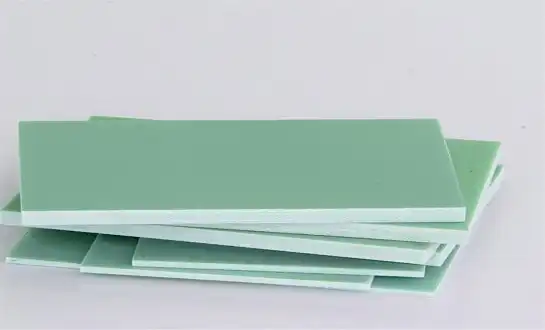
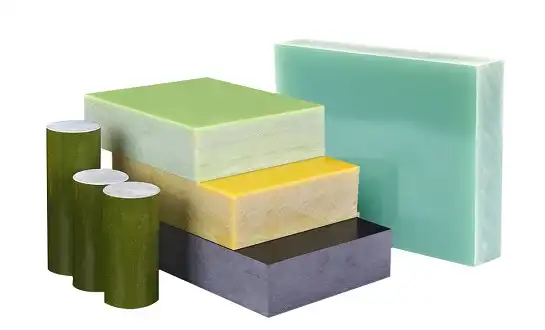
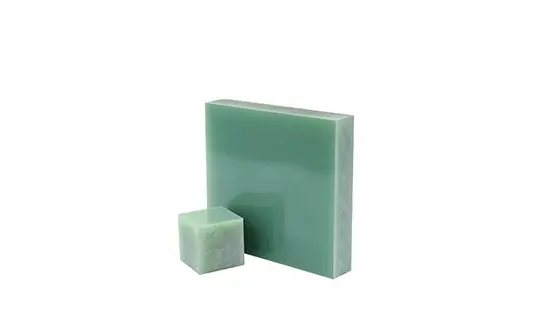
Manufacturing Phenolic Cotton Sheet with CNC Cutting and Precision Tools
Manufacturing phenolic cotton sheet involves a sophisticated process where woven cotton fabric layers are thoroughly saturated with phenolic resin under controlled conditions. Advanced CNC cutting and precision tools have revolutionized how manufacturers produce these composite materials, transforming raw laminated sheets into precisely dimensioned components that meet exact specifications for electrical insulation, mechanical strength, and thermal stability across diverse industrial applications.
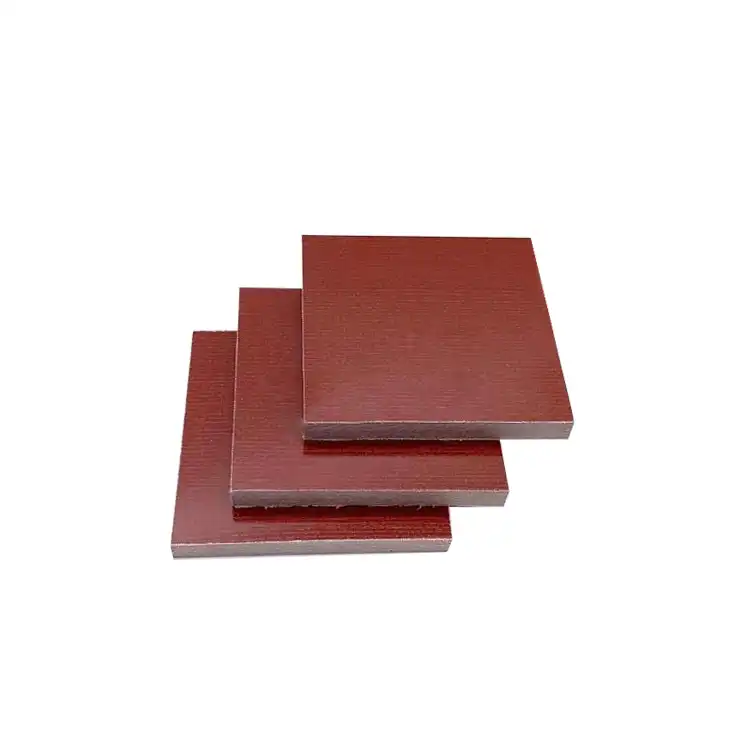
Understanding Phenolic Cotton Sheet: Properties and Manufacturing Basics
What Defines Phenolic Cotton Sheet as an Industrial Material?
When you mix natural cotton fabric with synthetic phenolic resin, you get Phenolic Cotton Sheet laminates, which are a great engineering solution. The process of making something starts with choosing high-quality bleached cotton cloth with a constant weave density and fiber quality. These layers of fabric are fully saturated with phenolic resin, which is also known as bakelite. This makes sure that all the fibers are bonded together at the molecular level. This mixed material is in between metals that are only good for mechanical purposes and electrical insulators. It has benefits that neither type of material can get by itself.
Curing is done in hydraulic presses that are hotter than 150°C and have a lot of pressure. This turns the cloth that has been soaked in resin into stiff, stable sheets. As a result, a material is made that has great dielectric strength and can be used in electrical applications. It is also very tough and can withstand heavy impact loads without breaking, which is a major advantage over alternatives like phenolic paper.
Core Properties That Drive Industrial Adoption
This material is essential in many industrial fields because of its technical features. This material is very good at withstanding heat; it keeps its shape and insulation properties at high temperatures, where many other materials fail. Chemical stability makes sure that the material can handle oils, solvents, and other corrosive materials that are common in industrial settings. Low moisture absorption stops changes in size and keeps the electrical properties the same even when the humidity level changes.
The natural dampening qualities that lower noise and shaking in machines are especially important to mechanical engineers. When Phenolic Cotton Sheet laminates are used for gears or bushings, they absorb shock loads and work more quietly than metal-on-metal contact. The material also has a built-in safety feature: if a part gets stuck under too much stress, it tends to shred instead of sending damaging forces that could damage costly motors or drive shafts.
Manufacturing Process: From Raw Materials to Finished Sheets
In traditional manufacturing, there were many steps that required a lot of work and a lot of wasted materials and measurements that weren't always accurate. In modern production, technology is used at key points while quality control is kept up throughout the whole process. Before resin is applied, cotton cloth is pre-treated to get rid of sizing agents and other flaws. After carefully stacking several layers in the right order, they are put onto heated platens where the temperature and pressure profiles are set to follow specially designed curves that make resin flow and cure more quickly.
The length of time needed for hot pressing depends on the thickness of the sheet. Thicker laminates need longer cure cycles to make sure that the polymerization is complete across the cross-section. After being fixed, sheets are cooled in a controlled way to keep them from twisting or developing internal stress. The finished panels have the same properties all over their surface and are ready for precise machining steps that turn standard sheets into custom parts.
How CNC Integration Elevates Manufacturing Standards
When CNC cutting technology was introduced, it completely changed how things could be made and how well they turned out. With computer-controlled machining, measuring and cutting are done by a computer instead of a person, so parts have limits measured in hundredths of millimeters. Programming freedom lets you quickly switch between different part shapes without retooling. This cuts setup time by a huge amount and makes small-batch production and high-volume runs more cost-effective.
Delamination, edge chipping, and fiber pull-out are all problems that can happen with layered materials that can be avoided with precision tools made just for them. CNC machines have dust collection systems that keep the work area clean and protect workers from flying particles. This unified method guarantees the same level of quality whether ten or ten thousand are made, so purchasing teams can be sure they will get exactly what they need.
CNC Cutting and Precision Tools in Phenolic Cotton Sheet Manufacturing
Limitations of Traditional Cutting Methods
When cutting by hand, a lot depended on how skilled the operator was; the accuracy of the measurements varied between shifts and between workers. When general-purpose saw blades and drill bits were used, they often damaged the edges of stacked Phenolic Cotton Sheet composites or caused them to separate. A lot of material was wasted because workers added safety gaps to make up for differences in cutting, and the rate of rework raised costs and lengthened lead times. For quality control, finished parts had to be carefully inspected, and mistakes were only found after a lot of money had been spent on making them.
These issues made things harder for electrical and electronics companies that needed to make PCB support structures and equipment parts with very tight tolerances. Dimensions that weren't uniform made it hard to put together, and rough sides could have caused electrical arcing or mechanical interference. Power sector customers were also irritated when transformer barriers and coil insulation parts came in different sizes, which made installation more difficult.
CNC Technology: Precision, Speed, and Repeatability
Three main improvements made by computer numerical control change the way things are made. Cutting tools are moved along programmed paths by servomotor-driven positioning systems that are accurate to within 0.02 mm over thousands of cycles. Speed comes from optimal toolpaths that get rid of unnecessary motion while keeping cutting settings that get rid of the most material as quickly as possible without affecting the quality of the edge. Repeatability makes sure that the thousandth part is the same as the first, which gets rid of the measurement changes that happen when things are done by hand.
Specialized Tooling for Laminated Composites
To cut Phenolic Cotton Sheet laminates, you need tools that are made to work with strengthened thermoset materials. Diamond-coated tools last longer when working with rough materials, and carbide-tipped router bits with special flute geometries cut through fabric layers smoothly without pulling threads. When used in electrical applications, drill bits with Brad point or spiral shapes help keep the dielectric strength high by reducing delamination at the entry and exit places.
Quality Control Integration in CNC Workflow
Modern CNC systems build steps for measuring and checking right into the manufacturing process. Probe cycles check the thickness of the material before cutting, which lets the machine automatically make up for small differences in the size of the stock. Before agreeing to whole production runs, key measurements are checked on pilot parts during mid-process verification. Using coordinate measuring equipment to check after machining makes sure that finished parts match the requirements in the drawing.
Statistical process control checks for changes in dimensions between batches of products and lets workers know when tools are wearing out or setups are moving around before parts go outside of acceptable ranges. This proactive quality management cuts down on defects by a huge amount and builds up proof of manufacturing control that meets the needs of ISO certification and customer quality checks. OEMs of industrial machinery and procurement experts in the power sector value this written quality assurance the most when they are looking for long-term partnerships with suppliers.
Comparative Insights: Phenolic Cotton Sheet vs Alternative Materials
Phenolic Cotton Versus Phenolic Paper Laminates
The phenolic resin chemistry is the same in both groups of materials, but the reinforcements used are very different. Kraft paper is used as the base for paper-based laminates, which have great electrical insulation qualities and a smooth surface finish that is great for artistic uses or fine detail machining. However, paper reinforcement doesn't give these types much mechanical strength, so they can't be used in structural uses or on parts that will be hit hard.
The mechanical toughness and impact resistance of Phenolic Cotton Sheet fabrics are much higher. Comparing materials of the same thickness, cotton-based laminates usually have 40–60% higher bending strength and three to four times better impact resistance before they break. Because of this, cotton grades are the best choice for gears, bushings, wear strips, and structural spacers in heavy machinery. The electrical insulation performance is still very good, though a little lower than paper grades because cotton fibers are more reactive than cellulose.
Performance Against Fiberglass Laminates
Fiberglass-reinforced epoxy laminates are very strong mechanically and are also very resistant to a wide range of chemicals. These materials work great in places where corrosion is a problem and where the structure needs to be as strong as possible. But fiberglass can't be used in places where cotton laminates work well because of a number of issues.
Cost is an important factor to think about, and fiberglass laminates usually cost 30–50% more than cotton-based materials that are similar. Different materials have very different machinability properties. Fiberglass makes abrasive dust that speeds up tool wear, and the hard glass strands can chip and crack edges when cutting. It's easier to make cotton laminates, which means lower cutting costs and better edge quality in complicated shapes. Because cotton cloth naturally dampens sound and vibration, it is better for use in protected equipment where noise and vibration need to be kept down.
Evaluating Lifecycle Costs and Performance Balance
A total cost analysis that looks at more than just the unit price can help with buying decisions. It should look at things like machining costs, assembly efficiency, and service life. Polyvinyl acetate laminates made from cotton are very valuable in many ways. Compared to plastic options, the cost of making parts from these materials is 20–35% less because they are easier to work with, take less time, and wear out less quickly.
Performance adequacy is more important than maximum capability. Choosing materials whose properties are better than what the application needs wastes resources and doesn't improve results. For most industry uses, cotton phenolic laminates are strong enough in terms of mechanical strength, electrical insulation, and temperature stability. These materials are great for motor brackets and insulation frames in home appliances, where performance needs are clear and cost-effectiveness is what makes them competitive. Builders of power distribution tools also benefit from using materials that meet specifications without adding too many extra features.
Procurement Guide: How to Source Phenolic Cotton Sheets Effectively
Evaluating Manufacturer Capabilities and Certifications
To start sourcing successfully, you need to carefully evaluate each provider, paying special attention to their manufacturing skills, quality control systems, and industry certifications. Manufacturers with quality management systems that are ISO 9001 qualified show that they are dedicated to consistent processes and constant growth. UL certification for materials means they meet safety standards that are important for electrical and electronic uses, and RoHS certification makes sure that products don't contain any restricted substances that are needed to sell them in regulated markets.
An evaluation of production capacity makes sure that suppliers can meet both current needs and future growth in volume. Modern CNC machining centers and precision cutting equipment in facilities give better accuracy in measurements and faster turn-around times than operations that mostly use manual processes. By asking for facility audits or virtual tours, you can see how Phenolic Cotton Sheets are made and how quality control is done, which has a direct effect on how consistent the products are.
Understanding Minimum Order Quantities and Volume Pricing
Manufacturers of sheet items usually set minimum order amounts that depend on the type of material, the thickness, and any customization needs. Standard grades in common thicknesses often have lower minimums, sometimes as low as 10–20 sheets. This means that prototypes and small production runs can be made with them. Custom sizes or CNC-cut parts usually need higher minimums to make up for the extra costs of setup and programming, but these levels vary a lot from one provider to the next.
When you compare small and large order amounts, volume price structures offer discounts that range from 15% to 25% off per unit. These discounts are given to customers who make bigger commitments. By negotiating annual blanket orders with scheduled releases, buyers can get better prices on large orders while keeping their inventory flexible and managing their working capital well. Creating these relationships is especially helpful for companies that make parts for cars and appliances that people buy on a regular basis.
Leveraging CNC Customization for Competitive Advantage
Customizing sizes and making precise cuts change how parts fit into systems and how production processes work. Receiving parts that are already cut to the right size gets rid of the need for in-house cutting, which cuts down on labor costs and frees up production space for activities that add value. CNC processing lets you get very close tolerances, which improves the fit and function of assemblies and lowers the number of quality issues and warranty claims.
Working together with suppliers during the design process can often reveal chances to combine parts or add features that make assemblies easier and lower the number of parts needed. Manufacturers of electrical equipment have successfully built mounting holes, alignment features, and cable routing pathways directly into insulation components by working closely with material sources. This has eliminated the need for extra steps and cut assembly time by 30 to 40 percent in some cases.
Logistics Considerations and Supply Chain Reliability
One of the most important measures of a supplier's performance is how reliable their deliveries are and how consistent their lead times are. Setting clear expectations about normal wait times, the ability to handle rush orders, and the best way to communicate helps keep schedules on track and avoids production delays. When suppliers keep enough safety stock of common grades, they can often meet urgent needs within days instead of weeks. This gives customers a lot of flexibility in case equipment breaks down or unexpected orders come in and create urgent needs.
Maintenance, Longevity, and Best Practices for Phenolic Cotton Sheets
Storage and Handling Protocols
Proper storage keeps the qualities of materials and makes sure that parts work as expected when they are put. Phenolic Cotton Sheets should be kept in climate-controlled spaces that are between 15°C and 25°C and have a relative humidity of 40 to 60%. Extreme humidity makes things absorb water, which can temporarily change their electrical and dimensional stability. On the other hand, very dry conditions can make things break easily. Keeping sheets flat on flat surfaces keeps them from warping, and the height of stacks should be limited to keep bottom sheets from being compressed and deformed.
The way things are handled reduces edge damage and contamination that hurt performance. When handling parts that will be used in electrical systems, workers should wear clean gloves because skin oils and residues can make conductive paths on insulating surfaces. Edge guards or protective wrapping during transport stop chips and cracks that can act as stress concentrators and cause the material to fail too soon when mechanical loads are applied.
Cleaning and Chemical Exposure Management
Cleaning surfaces on a regular basis keeps them clean, which is important for electrical applications, and gets rid of any dirt or dust that could get in the way of adhesive bonding or assembly. When used with lint-free cloths, isopropyl alcohol gets rid of oils, fingerprints, and light dirt without harming the phenolic resin core. You should stay away from rough cleaners and acids because they can damage surfaces chemically or make them rough.
Knowing how chemicals react with each other keeps materials from breaking down while they're being used. Most oils, greases, and weak acids that are common in industrial settings won't damage phenolic resins. But being exposed to strong alkaline solutions or concentrated reactive acids for a long time can wear down surfaces and properties. When using chemicals, making sure they are compatible by testing or talking to the supplier can save a lot of money in the long run.
Maximizing Component Service Life
Design factors have a big effect on how long something lasts in tough situations. By avoiding sharp edges and stress concentrations, you can spread loads more widely, which makes it less likely that cracks will start. Both generous radii and chamfered edges make parts that are loaded and unloaded over and over again more resistant to fatigue. Proper sizing makes sure that safety factors are met without using too much material. Parts that are too small risk breaking early, while parts that are too big waste resources.
A transformer maker said that their products worked much better after they switched to precision CNC-cut coil insulation barriers. In the past, parts that were cut by hand had different sizes, which made them hard to put together and sometimes left gaps that made it hard for the insulation to coordinate. CNC-cut alternatives had uniform sizes, which made assembly faster and more reliable and got rid of electrical problems caused by bad insulation. The expected 25% longer life of the components and 35% shorter installation time show that the quality of production directly affects operating results.
Conclusion
CNC cutting and precision tools are used to make Phenolic Cotton Sheet solutions, which combines material science and advanced manufacturing technology. These composite laminates are very good at insulating electricity, being strong, and staying stable at high temperatures. They are needed in electrical equipment, industrial tools, power distribution, making auto parts, and making appliances. Modern CNC processing gets rid of the differences in size and quality that come with older methods. This gives sourcing workers reliable sources for parts that meet exact requirements. Knowing about the properties of materials, their relative advantages, and sourcing strategies helps buyers choose the best materials and build partnerships with suppliers that make them more competitive and improve operational efficiency.
FAQ
How does CNC cutting make Phenolic Cotton Sheet better than the old ways of doing things?
When CNC cutting, the accuracy of the dimensions is within 0.02 mm, which gets rid of the human mistake that causes size differences when cutting by hand. Computer-controlled toolpaths make clean edges that don't delaminate or pull out fibers, which keeps the structure's strength and the insulation's ability to keep electricity out. During production, automated quality checks built into CNC workflows check important measurements. This way, possible flaws are found before the job is finished, instead of after it's been inspected.
What kinds of thicknesses are there for phenolic cotton laminates?
Standard thickness ranges are usually between 0.5 mm and 50 mm, and most sellers keep 1 mm, 1.5 mm, 3 mm, 6 mm, 10 mm, and 12 mm types in stock. Thicknesses can be made to order to meet specific application needs, but the minimum order quantity usually goes up for non-standard sizes. With CNC machining, providers can get very close specs on thickness and make stepped or tapered shapes when plans call for different thicknesses in the same part.
Are Phenolic Cotton Sheets Safe for Insulating Electrical Systems in Hot Environments?
Phenolic Cotton Sheet laminates have great dielectric strength and insulation resistance at temperatures up to 120–130°C, and they can go up to 150°C for short periods of time. The material naturally doesn't catch fire and can put itself out, so it meets UL94 V-0 rates in many grades. Because of these electrical and thermal properties, cotton phenolic laminates are perfect for switches, motor parts, transformer barriers, and other places where solid insulation performance at high temperatures is needed.
Partner with J&Q for Superior Phenolic Cotton Sheet Solutions
When working with a Phenolic Cotton Sheet supplier, J&Q brings more than twenty years of experience making high-quality products and more than ten years of experience in international trade. Our advanced CNC cutting capabilities allow us to make precisely machined parts that meet your exact requirements while still maintaining the tight tolerances needed for electrical equipment, industrial machinery, and automotive applications. We have partnerships with some of the biggest trading companies in the United States and other countries. This shows that we are committed to quality and dependability, which procurement professionals trust.
From production to delivery, our integrated logistics division makes it easier to coordinate shipping, giving you a true one-stop service that makes managing your supply chain easier. Our technical team works closely with your engineering and buying departments to make sure that the materials you choose and the designs of the parts you need are the best they can be. This is true whether you need standard sheet stock or special CNC-cut parts. Get in touch with our knowledgeable experts at info@jhd-material.com to talk about your unique needs, find out about the price benefits of buying in bulk, and learn how our manufacturing skills can improve the performance and competitiveness of your product.
References
1. Goosey, M. & Kellner, R. (2019). Phenolic Resins: Chemistry, Applications, and Performance. Materials Engineering Press.
2. Harper, C.A. (2018). Handbook of Plastics Technologies: The Complete Guide to Properties and Performance. Industrial Materials Publishing.
3. Richardson, T. & Lokensgard, E. (2020). Industrial Plastics: Theory and Applications, 7th Edition. Technical Publishing International.
4. Society of Manufacturing Engineers (2021). CNC Machining of Composite Materials: Best Practices and Quality Control. SME Technical Papers Collection.
5. Zhang, W. & Davidson, P. (2019). "Comparative Analysis of Laminated Insulation Materials for Electrical Applications." Journal of Electrical Insulation Systems, Vol. 34, pp. 127-145.
6. Kumar, S. et al. (2020). "Precision Machining Techniques for Thermoset Composites: Process Optimization and Quality Enhancement." International Journal of Advanced Manufacturing Technology, Vol. 108, pp. 2841-2856.

Get a complete product list and quotation
J&Q New Composite Materials Company