FR4 Epoxy Sheet CNC Machining Process for Precision Electrical Insulation Parts
When engineering managers and procurement specialists search for reliable electrical insulation solutions, FR4 Epoxy Sheet consistently emerges as the material of choice. This high-pressure thermoset laminate, composed of woven fiberglass cloth impregnated with flame-retardant epoxy resin, delivers the perfect balance of dielectric strength, mechanical durability, and CNC machinability. Understanding the machining process for these glass-epoxy laminates is essential for producing precision components that meet strict UL94 V-0 standards while maintaining dimensional stability across demanding applications in electronics, power systems, and industrial machinery.
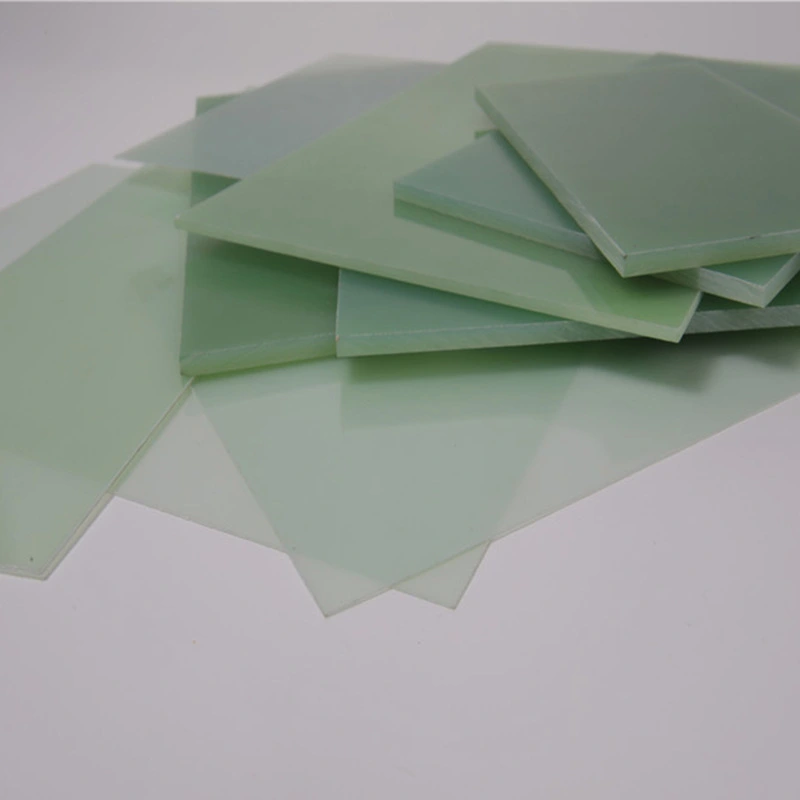
Understanding FR4 Epoxy Sheet and Its Key Properties
The NEMA-designated FR4 Epoxy Sheet material is a big step forward in the technology used to insulate electrical systems. FR4 Epoxy Sheet has brominated chemicals that make it self-extinguish within seconds when exposed to flame, unlike its predecessor G10, which is not resistant to flame. Because of this important safety feature, it is the first choice in many businesses that need approved fire protection.
Composition and Structure of Glass-Epoxy Laminates
Each layer of continuous-woven fiberglass cloth joins with epoxy glue using controlled heat and pressure. This makes a composite structure that is very strong for its weight. The resin core spreads out the mechanical loads, and the glass support stops cracks from spreading. This gives the material a density of 1.85 to 2.10 g/cm³. This designed structure explains why epoxy resin sheets stay strong in situations that would break phenolic options or composites that aren't as strong.
Critical Performance Parameters for Industrial Applications
FR4 Epoxy Sheet is better for making precise electrical parts for a number of scientific reasons. According to ASTM D570 testing, the material absorbs less than 0.2% water, which means that its dielectric properties stay stable in wet places. A tensile strength of more than 340 MPa ensures mechanical stability in load-bearing situations, and a breakdown voltage of more than 40kV perpendicular to the laminations guarantees reliable insulation performance. Standard grades have a glass transition temperature of 130°C to 140°C. High-Tg versions can be used at temperatures above 170°C. These factors directly address the concerns of power distribution engineers who need materials that won't separate during thermal cycles or lose their ability to insulate in harsh weather.
Material Comparisons: FR4 vs. Alternative Insulation Solutions
FR4 Epoxy Sheet is often compared to FR1, CEM-1, and phenolic cotton laminates by procurement teams. FR1 is cheaper, but the paper-based support soaks up water and breaks down more quickly when electrical stress is applied. The CEM-1 mixture has layers of paper and glass, but it can't match the uniform mechanical properties of FR4 Epoxy Sheet in all directions. Aluminum-clad boards are good for managing heat in some situations, but they aren't pure insulation, which is what high-voltage barriers need. Over the past 20 years, we've learned that FR4 Epoxy Sheet always provides the best long-term value for projects that need to meet IEC 60893 and MIL-I-24768/27 standards and have solid performance measures.
CNC Machining Process for FR4 Epoxy Sheets: Step-by-Step Breakdown
It takes special skills that go beyond standard CNC operations to turn raw glass-epoxy laminates into precise insulation parts. Because fiberglass reinforcement is rough and FR4 Epoxy Sheets are sensitive to heat, they present special problems that need careful process control.
Material Selection and Pre-Machining Verification
Checking the right grade standard is very important before any cutting starts. Standard FR4 Epoxy Sheet is good for most PCB board uses and general insulation parts that are kept at temperatures below 130°C all the time. For lead-free soldering or transformer uses that need to work at high temperatures, high-Tg versions are needed. Using calibrated measuring tools, we check incoming sheets for surface flaws, signs of delamination, and even thickness. This quality gate stops machining failures that cost a lot of money and makes sure that every part starts from certified stock that meets customer requirements.
Programming and Tooling Considerations for Glass-Reinforced Materials
When setting a CNC machine for fiberglass boards instead of metal, the feed rates and spindle speeds need to be changed. Standard high-speed steel tools quickly become dull on the woven glass structure, so carbide or diamond-coated bits are needed to keep the dimensions within the limits. Tool paths need to take into account that the material makes fine, dangerous dust. Our machining protocols include climb milling methods that lower edge delamination while programming enough dwell times to avoid localized heating that could weaken the integrity of the epoxy matrix. The choice of coolant is very important. Some formulas can get into the material and change its electrical properties, so we only use approved lubricants that keep the insulation working well.
Precision Cutting, Drilling, and Milling Operations
Each part of machining has its own set of problems. When routing complex forms, the cutting depth must be constantly checked to make sure that the back surface doesn't get damaged by breakthrough. For fitting hardware or electrical pass-throughs, drilling holes needs peck drilling cycles that get rid of chips well and keep the drill bit from getting too hot. For threading thicker sheets, you need spiral point taps that push chips forward instead of pulling them backward through weak material. To keep the sides clean and free of fuzzy glass fiber protrusion, milling pockets for component spaces needs sharp tools and enough chip clearance. During these processes, our skilled technicians change parameters based on real-time feedback to make sure that each part stays within the tight tolerances needed by switchgear assemblies and motor components.
Quality Control and Edge Finishing Protocols
Using coordinate measuring tools and optical comparators, post-machining checking makes sure that the dimensions are correct. Edge cleaning gets rid of tiny glass threads that could cause short circuits or pathways for water to get in. We use deburring methods to make the sides of the cuts smooth without changing the size requirements. This is followed by cleaning methods that get rid of the machining waste. Electrical testing shows that the dielectric strength stays the same after being mechanically processed. This is an important proof step that is supported by our quality system documentation. This thorough inspection process gives procurement specialists peace of mind that the parts they receive will work properly in their assemblies, with no problems in the field or with the guarantee.
Selecting the Best FR4 Epoxy Sheet for CNC Machining Applications
More than any other procurement choice, the success of a project depends on how well the material specs match the needs of the application. There are different grades of FR4 Epoxy Sheet in the electrical insulation industry. Knowing the differences between them keeps you from either over-specifying, which drives up costs, or under-specifying, which increases the chance of performance failures.
Evaluating Standard versus High-Tg Glass-Epoxy Grades
Standard FR4 Epoxy Sheet with a glass transition temperature of 130°C works well for most electrical insulation tasks. This inexpensive choice works well for power distribution parts that work in normal conditions, appliance insulation frames, and general PCB support structures. When parts are soldered at temperatures above 250°C, run continuously at temperatures above 130°C, or go through thermal cycling that normal grades can't handle without changing size, high-Tg materials are the way to go. The higher efficiency usually comes at a higher cost, so it's important to do a careful thermal study when choosing a material. Our expert team helps customers do this evaluation and often finds places where standard materials go above and beyond what is needed, saving customers money without sacrificing safety or dependability.
Certification Compliance and Documentation Requirements
When engineering managers buy insulation parts for UL-listed assemblies, they need material certifications that show how the resin was made and what the glass cloth specifications are. RoHS compliance paperwork makes sure that restricted substances are not used in car and consumer tech products. In the power industry, customers often ask for test reports that confirm flame resistance classification, arc resistance values, and tracking index performance comparisons. Our quality management system keeps full records and gives customers paperwork packages that make compliance checks and regulatory submissions easier. This administrative help is especially helpful for OEM sourcing managers who need to show that they are doing their jobs carefully all along their supply chains.
Navigating Custom Sizing, MOQ, and Lead Time Optimization
Standard sheet widths work for a lot of projects, but for more specific tasks, custom measurements that reduce material waste during CNC processing are often needed. Ordering sheets that are already cut to rough part sizes cuts down on machining time and dust production while increasing material yield. Minimum order amounts are based on how much it costs to make something. Standard-sized bulk purchases can be shipped quickly from stock, but custom specs may need production scheduling. Our combined logistics skills let you place orders in a way that fits your needs and your budget for wait times. Customers gain from advice that helps them find the best way to buy things at the best total cost, not just the lowest price per unit.
Case Study: Transformer Manufacturer Achieves 23% Cost Reduction
A local company that makes power tools came to us because the quality of the arc barrier parts they were getting from their current source wasn't consistent. Their old supplier gave them common FR4 Epoxy Sheet that hadn't been tested at high temperatures, which caused delamination problems during thermal stress tests. We looked at how they were working and suggested high-Tg material with a confirmed glass transition temperature of 170°C. Even tho the cost of materials went up a little, the total cost of their parts went down by 23% over 18 months because there were no more field breakdowns or guarantee claims. The manufacturer also benefited from our direct relationship with the factory, which got rid of the markup that distributors added and gave them technical support that fixed problems with the machines that were lowering the quality of the edge finish. This partnership shows that choosing the right materials and working with knowledgeable suppliers can add value that goes beyond just comparing prices.
Optimizing Procurement and Supply Chain for FR4 Epoxy Sheets
To source materials efficiently, you need to think strategically about more than just buying things. Because FR4 Epoxy Sheet supply lines are global, they include a lot of factors that proactive procurement management can use to gain a competitive edge.
Identifying Reliable Factory-Direct Suppliers with a History of Success
Distributor networks are useful, but they often add extra costs without providing any professional help. When you work directly with a factory, you can get production advice, the ability to customize products, and prices that reflect how much it costs to make things. When looking at possible providers, make sure they can meet your production needs by having their facilities inspected or getting third-party certifications. Check to see if their quality management systems meet ISO 9001 requirements and other recognized industry standards. We've been making insulation sheets for more than twenty years, so we know how to help a wide range of customers, from prototype developers who need small amounts to appliance makers who need regular shipments of several tons. This ability to grow with the business makes sure that customers don't outgrow their ties with suppliers.
Managing Shipping Logistics and Delivery Timing Factors
When shipping FR4 Epoxy Sheets internationally, they need to be carefully packed so that the edges don't get damaged and the laminate doesn't get wet during transit. How the containers are loaded, the right dunnage, and climate-controlled storage during port handling all affect the state of the goods when they arrive. Lead times change a lot depending on the method of transportation. Ocean freight is the most cost-effective way to ship large amounts of goods, but it takes 4 to 6 weeks to get there. On the other hand, air freight is faster but costs more. Our own transportation operations allow us to coordinate in a way that many of our rivals can't. We handle customs paperwork, freight forwarding, and planning deliveries as a single set of services, rather than as complicated tasks that are outsourced. This one-stop approach makes the procurement process easier, which is especially helpful when project deadlines are tight or demand spikes happen out of the blue.
Bulk Purchasing Strategies and Volume Negotiation Approaches
When output efficiencies are reached, material prices drop by a large amount. By knowing these break points, you can make smart purchases that balance the cost of buying more inventory with the cost of lowering unit prices. Price protection is provided by annual blanket orders with scheduled releases, which also allow for flexible cash flow. High-volume manufacturers who need just-in-time shipping but don't want to carry a lot of inventory can use consignment deals. Our procurement specialists work with customers to make agreements that fit their business needs. For example, some customers like getting bulk shipments every three months, while others would rather have their supplies restocked every month based on how much they're using. This expert method knows that the best way to buy something depends on the size and type of business and the amount of cash on hand.
Customization Options: Copper-Clad versus Plain Insulation Sheets
Copper-clad laminates are what PCB makers need. During production, electrical layers bond to the FR4 Epoxy Sheet core. As pure insulation, plain sheets without copper cladding are used in switchgear, as machinery spacers, and as thermal barriers. By knowing this difference, you can avoid buying things that aren't needed and that add to the cost. For some uses, colored epoxy formulations are better than plain green. Natural green is the standard, but black versions make assemblies stand out, and tan versions meet certain aesthetic needs. You can choose a matte finish for better adhesion or a glossy finish for easier cleaning. Our product line includes all of these different options, so buying teams can be clear about what their applications need without having to pay for features that won't be used.
Enhancing Performance and Longevity of CNC Machined FR4 Electrical Insulation Parts
The efficiency factor is only half of what it takes to make precision parts. Using the right tools, following the right steps for installation, and keeping up with operational maintenance are what determine how long FR4 Epoxy Sheet insulation parts last.
Addressing Common Machining Challenges and Preventive Solutions
When cutting, delamination usually happens because the tools are dull or the feed rates are too fast, which creates tearing forces between the laminate layers. This problem can be avoided by replacing tools on a regular plan and keeping an eye on the force during production. When there isn't enough cooling, localized heating can happen, which can cause damage like discoloration or resin softening. Intermittent cutting processes and mist cooling systems are good ways to keep heat from building up. Fuzzy edges happen when worn pieces tear glass fibers instead of cutting them. When you use cutting tools that are sharp and properly polished, you get clean lines that don't need a lot of extra work. Our machining routines take these problems into account in a planned way. They are based on decades of production experience that has made our processes better by making them better all the time.
Optimal Tool Selection and Coolant Management Practices
When cutting glass-reinforced materials that are rough, carbide tools last longer than high-speed steel ones. Diamond-coated bits are worth the extra cost in high-volume production where frequent tool changes slow down work. Tools made just for composite materials have sharper cutting angles and better chip evacuation channels because of their geometry. Picking the right coolant means finding the right balance between lubrication, cooling, and material compatibility. Water-based methods are good at getting rid of heat, but they can't get through the plastic structure. Using minimal lubrication systems lets you exactly control the flow of fluid that cools cutting areas without covering the whole piece. These technical details set professional FR4 Epoxy Sheet machining operations apart from general CNC shops that are trying to work with materials that aren't their main area of expertise.
Maintenance Protocols for Preserving Electrical and Mechanical Properties
Installed insulation parts don't need much upkeep, but they do benefit from regular inspections. A visual inspection can find surface cracks, changes in color that show thermal stress, or contaminants that could make tracking tracks. Solvents that break down epoxy resins or leave behind conductive residues should not be used for cleaning. Pay attention to the mechanical fastening points. If they are too tight, stress builds up and can cause cracks, and if they are not tight enough, movement wears out the mounting holes. In high-voltage situations, checking the insulation resistance once a year finds wear and tear before it happens. These simple steps greatly increase the useful life of parts, which lowers the cost of replacing and avoids unnecessary downtime that delays production.
Emerging Material Advancements and Automation Trends
Material science is always changing. For example, halogen-free flame retardant formulas help the earth while still meeting UL94 V-0 standards. Better high-Tg resins can now reach glass transition temperatures of 180°C, which means they can be used in more extreme thermal environments. New developments in CNC automation make it possible to machine complicated parts without turning on the lights. This allows for in-process testing that keeps tolerances tighter. When working with big production batches, robotic handling systems cut down on contamination and improve accuracy. We keep a close eye on these changes and only invest in skills that give real value to customers. We don't chase technology just for the sake of it. Our upcoming facility expansion will include high-tech automation that speeds up delivery while still allowing for the quality control that precision insulation parts need.
Conclusion
To CNC-machine FR4 Epoxy Sheet glass-epoxy laminates, you need to know a lot about material science, production methods, and managing the supply chain. People who work in procurement for electrical, industrial machinery, power distribution, automotive, and appliance industries have to balance the need for high technical performance with the need to make money. To successfully source components, you need to know the differences between FR4 grades, choose sellers with a track record of machining knowledge, and set up buying relationships that improve total cost rather than just unit price. In this specialized market, strategic suppliers are different from transactional vendors because they have quality standards, the ability to customize products, and dependable transportation.
FAQ
What Thickness Options Are Available for CNC Machining Projects?
The thickness of standard FR4 Epoxy Sheets can be anywhere from 0.5 mm to 100 mm, but most electrical insulation uses materials that are between 1.0 mm and 25 mm thick. Thinner laminates are good for high-voltage barriers and structural insulation parts, while thinner sheets are better for PCB substrates and flexible spacers. When there are enough orders to support setting up a factory, special production runs can be used to meet requests for custom thicknesses.
How Does Thermal Conductivity Affect Insulation Performance?
Around 0.3 to 0.4 W/mK, FR4 Epoxy Sheet has a low thermal conductivity, which makes it useful for thermal barrier applications that keep heat-sensitive parts safe. This feature goes well with its ability to insulate against electricity, so it can be used as a single material in situations that need to isolate both heat and electricity. In some high-power situations, heat-dissipating materials are better than shielding ones.
Can We Order Custom-Sized Sheets for Specialized Components?
When making parts that are much smaller than normal stock sizes, custom sheet measurements cut down on waste and machining time. Due to the needs of setting up production, there are minimum order numbers, but even modest volumes often support custom sizing. Our technical team checks to see if pre-cut blanks, standard sheets, or fully machined parts are the best value for each project.
What Certifications Should We Require from Our FR4 Supplier?
The necessary certification package includes UL certification for flame retardancy, proof of RoHS compliance, and material test results that include dielectric strength, water absorption, and mechanical qualities. Depending on the end-use, industry-specific standards may be used, such as IEC 60893 for electrical uses or MIL specs for defense projects.
Partner with J&Q for Reliable FR4 Epoxy Sheet Solutions
Glass-epoxy laminate procurement is easier to understand when you work with an experienced FR4 Epoxy Sheet supplier who knows about both material science and manufacturing realities. Every customer that works with J&Q benefits from their more than twenty years of experience making insulation sheets and their more than ten years of experience trading internationally. Our factory-direct plan gets rid of extra cost layers that aren't needed while still giving engineering teams the technical help they need. We make your supply chain easier to use and more reliable by using our own logistics to provide a true one-stop service from sourcing materials to delivering them. Our team is ready to help you with your projects by communicating clearly and completing them reliably, whether you need standard sheets for simple cutting or custom solutions for unique electrical insulation problems. Get in touch with us at info@jhd-material.com to talk about your unique needs and find out how our unified approach to providing FR4 materials and CNC cutting support can help you stay ahead of the competition.
References
1. National Electrical Manufacturers Association (NEMA). "Industrial Laminating Thermosetting Products - NEMA LI 1-1998 Standards for Glass-Epoxy Laminates." Washington, DC: NEMA Publications, 2019.
2. Harper, Charles A. "Handbook of Plastics Technologies: The Complete Guide to Properties and Performance." New York: McGraw-Hill Professional, 2018.
3. Coombs, Clyde F. "Printed Circuits Handbook, Seventh Edition." New York: McGraw-Hill Education, 2016.
4. International Electrotechnical Commission (IEC). "IEC 60893-3-2: Specifications for Industrial Rigid Laminated Sheets Based on Thermosetting Resins for Electrical Purposes." Geneva: IEC Publications, 2020.
5. Mallick, P.K. "Fiber-Reinforced Composites: Materials, Manufacturing, and Design, Third Edition." Boca Raton: CRC Press, 2017.
6. ASM International Handbook Committee. "Composites: Engineered Materials Handbook Volume 1." Materials Park, OH: ASM International, 2019.

Get a complete product list and quotation

J&Q New Composite Materials Company



