3240 Epoxy Sheet CNC Machining Technology for High Strength Insulation Parts
When engineering managers and procurement teams evaluate insulation materials for mission-critical applications, the 3240 Epoxy Sheet consistently emerges as a trusted solution. This glass-epoxy laminate combines remarkable dielectric strength with mechanical resilience, making it indispensable for switchgear assemblies, transformer insulation, and precision electrical components. Advanced CNC machining technology unlocks the full potential of this material, enabling manufacturers to produce complex geometries with tight tolerances while preserving the sheet's electrical and thermal performance across demanding industrial environments.
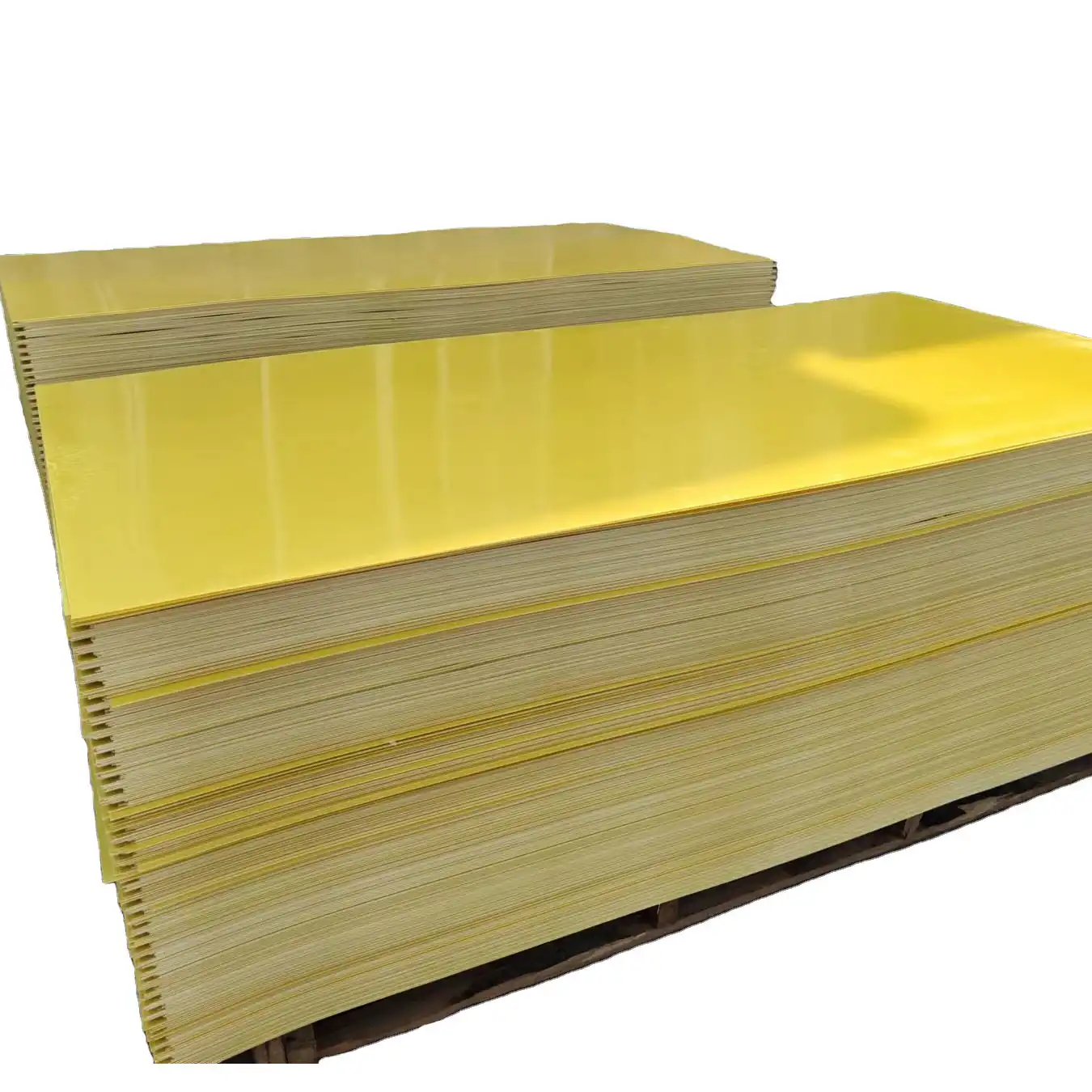
Understanding 3240 Epoxy Sheet and Its Key Characteristics
In a controlled process, electrical-grade fiberglass cloth that is woven is mixed with epoxy resin and then hardened under heat and pressure. This makes the epoxy glass laminate material. This way of making things makes a hybrid structure that has a density between 1.90 and 2.0 g/cm³ and absorbs less than 0.1% water. This keeps the structure's shape even when it's wet outside. The material has Class B temperature protection, which means it can usually handle constant use up to 130°C and short-term temperature spikes up to 155°C.
Superior Mechanical Properties
This laminate can handle heavy loads without breaking or deforming because its tensile strength is higher than 300 MPa and its flexural strength is higher than 340 MPa. When dynamic torque and shaking are steady, these traits are very important in motor parts and structure spacers. The material is useful in situations where weight reduction is important without sacrificing structural integrity because it has a high strength-to-weight ratio.
Exceptional Electrical Performance
When tested in transformer oil, the dielectric breakdown voltage usually reaches 30kV, showing that it is a very good insulator. Volume resistivity stays high at normal operating temperatures, which stops current leakage in places with high voltage. Low dielectric loss tangent values make sure that very little energy is lost, which is very important for power distribution equipment and transformer assemblies where efficiency has a direct effect on costs.
Chemical Resistance and Workability
When the epoxy material is dry, it can stand up to industrial solvents, transformer oil, and many other chemicals that are used in factory settings. Even tho the material is very tough, it can be precisely machined with carbide tools without delaminating as long as the right methods are used. It's different from harder ceramic insulators or softer phenolic options because it strikes a good balance between toughness and machinability. This gives sourcing teams a useful middle ground for a wide range of uses.
CNC Machining Technology for Epoxy Glass Laminates: Enhancing Performance
When using old-fashioned methods of production, like cutting by hand or basic drills, the edges often get chipped, the glass layers separate, and the measurements aren't always accurate. These problems can be solved by modern CNC (Computer Numerical Control) technology, which automates precision tasks that humans can't always do.
Precision Toolpath Programming
CNC systems follow programmed toolpaths with accuracy measured in microns, making sure that every part meets the requirements set by engineers. When making insulation barriers for battery pack systems or complicated circuit parts, this level of accuracy is very important because even small errors can make it impossible to meet electrical clearance requirements. Automated cutting gets rid of the differences that come with doing things by hand, so each batch is the same, which is important for quality control teams.
Specialized Tooling and Parameters
Certain geometries of carbide end mills lower cutting forces and heat production while milling. Feed rates and spindle speeds need to be optimized based on the thickness of the sheet and the edge finish that is wanted. Too fast a speed leads to burning and resin degradation, while too slow a feed rate causes rubbing that wears down tools too quickly. When making mounting holes, diamond-coated drill bits keep the material's dielectric integrity near the edges that have been machined.
Maintaining Insulation Integrity
Many manufacturers have said that switching to CNC methods made their output much more efficient, and for 3240 Epoxy Sheet components, one transformer maker reported that after using five-axis CNC milling for complicated coil insulation parts, grinding time went down by 40% and scrap rates went down by 65%. These organizational improvements directly lead to lower costs per unit and faster delivery times, which are two of the main concerns of procurement pros.
When you machine something, you create mechanical stress that can lead to microcracks if you don't handle it properly. Using the right coolant systems when cutting gets rid of heat and flushes away particles that could get stuck on the surface of the material otherwise. When you use the right workholding clamps, the clamping pressure is spread out evenly. This stops stress concentrations that could cause delamination during heat cycling in service. Because of these technical issues, you need skilled workers and well-kept tools to get the best results every time.
Applications of Epoxy Glass Laminates in High Strength Insulation Parts
Electrical and Electronics Manufacturing
The material's ability to keep its shape and not absorb water makes it good for supporting circuit boards. This keeps the tight limits that PCB systems need. Precision-cut barriers are used by switchgear makers to set electrical clearing zones. This keeps arc-over events from happening in small enclosure designs. For end caps and phase separators that are constantly under thermal stress from electromagnetic losses, the material's temperature protection is used in motor component applications.
Industrial Machinery and Equipment
In automatic production lines, mechanical engineers use epoxy laminates to make guides and structural spaces that don't wear out. Because the material can keep its properties even when it is mechanically loaded over and over, it can be used for bearing retainers and precision alignment fixtures. Unlike metals, these composite parts don't cause problems with electrical conductivity, and they're rigid enough to keep the shape of the equipment while it's working.
Power and Energy Infrastructure
Precision-cut insulation sheets are used by transformer makers to separate coils and protect against arcing in distribution equipment. The flame resistance and thermal stability of the material protect important parts when there is a fault and temperatures suddenly rise. Power distribution companies use these laminates for busbar supports and terminal blocks that have to be reliable over a long period of time while being under constant voltage stress.
Automotive and Transportation Components
To stop thermal runaway from spreading, battery electric vehicles need thermal barriers between cell modules. In battery pack designs, epoxy glass laminates meet strict safety standards for cars because they insulate electricity and support the structure. When testing new part shapes, R&D teams like how easy the material is to machine because it lets them make quick changes to the design before committing to high-volume tooling.
Home Appliance Manufacturing
These sheets keep electrical parts away from metal housings in motor bracket assemblies for washing machines and HVAC equipment. The material is cheaper than ceramic options, which makes it appealing for consumer goods that need to be affordable without losing safety or longevity. Stability in mass production makes sure that the quality stays the same across production runs of hundreds of thousands of units.
Procurement Considerations: Selecting, Buying, and Working with Epoxy Glass Laminates
Supplier Qualification and Certification
Reliable suppliers keep their quality management systems in line with international standards and provide paperwork for each production batch that can be used to track it. Teams in charge of buying things should make sure that materials meet regional safety standards, such as UL recognition and RoHS compliance where needed, and that they are in line with relevant standards like IEC 60893 for thermosetting laminates. Before committing to big orders, asking for certification documents can help keep quality problems from becoming expensive later on.
Evaluating Material Specifications
Using precise measuring tools to check the thickness error for 3240 Epoxy Sheet makes sure that sheets meet the requirements of the mechanical design. Standard tolerances are usually between ±0.1mm and ±0.4mm, based on the standard diameter. Tighter controls can be bought for an extra cost. A check of the surface quality should show that it is smooth, has no bubbles, and doesn't have any deep scratches or obvious delamination at the edges. If these things are present, they can cause electrical failures when voltage stress is applied.
Pricing Structures and Order Quantities
The cost of materials depends on the thickness of the sheet, the color requirements, and the size of the order. Most of the time, the minimum order quantities match standard sheet sizes. For custom sizes, higher minimums are needed to cover the costs of setup. When purchasing managers know about these economic factors, they can balance the costs of keeping supplies with the chances of getting bulk discounts. This is especially important for parts that are used a lot in production settings.
Logistics and Lead Time Management
International shipping is more difficult because of the paperwork needed for customs, coordinating freight, and possible import duties. This process can be sped up by suppliers with established transportation networks, which lowers overall landed costs and delivery uncertainty. For projects that need to be finished quickly, making sure that materials are available and that production plans are realistic stops delays in the manufacturing process.
We at J&Q know that successful business-to-business partnerships are more than just delivering goods. Throughout the lifetime of your project, our expert support team helps you choose the right materials, set up the right machining parameters, and resolve quality issues. This way of working together helps engineering teams get the most out of materials while procurement offices make sure they have solid supply chains.
Optimizing CNC Machining and Material Use for Cost-Effective Production
Best Practices for Cutting and Drilling
Climb milling techniques cut down on edge tearout compared to traditional milling methods, making edges that are smoother and needing less extra finishing. Keeping cutting tools sharp increases their life and makes the quality of the cut surface better. This is because dull tools produce too much heat, which breaks down the epoxy matrix near the cut surface. When boring through holes, backing plates keep the exit side from delaminating as the drill cuts through the bottom surface.
Many operators don't realize how important it is to choose the right coolant. Most processes can be cooled enough with water-soluble coolants, but air blast systems work well for shallow cuts where chip removal is easy. If you don't use flood coolant on porous fixtures, water won't be able to soak in and change the shape during later processing steps.
Storage and Handling Protocols
To keep epoxy laminates from warping over time from gravity stress, they should be kept flat on flat surfaces. Controlled humidity in warehouses keeps moisture from absorbing, which can change electrical properties and the accuracy of measurements. When sheets come in from wholesalers, letting them get used to the shop floor for 24 to 48 hours before they are machined lowers the chance that they will twist because of stress during or after processing.
Quality Control Integration
By using in-process dimensional checks, errors can be found before whole batches are finished, which lowers the cost of scrap. Electrical tests, like checking the breakdown voltage on sample parts, show that the cutting processes haven't hurt the insulation's performance. These steps for quality control make people more confident in finished parts and lower the chance that they will fail in the field, which could hurt customer relationships and the brand's reputation.
Industry 4.0 and Smart Manufacturing Trends
Connected CNC equipment lets you check cutting parameters, tool wear, and process consistency in real time. Data analytics tools find ways to improve things by connecting different factors in cutting with quality results across production runs. Predictive maintenance algorithms plan when to change tools and service equipment so that performance issues don't affect the quality of parts. This cuts down on unplanned downtime and the costs that come with it.
Additive manufacturing technologies work well with standard CNC methods because they allow for quick prototyping of complicated tool designs that make workholding more efficient. Even tho epoxy laminates can't be printed in 3D, the tools and fixtures that are used to make them can increasingly be made with additive methods that shorten the time it takes to make new designs for parts.
Conclusion
Modern insulation needs accuracy, stability, and performance, which epoxy glass laminates that have been made using advanced CNC machining provide, and 3240 Epoxy Sheet exemplifies this capability. This mix of materials and technologies solves a wide range of industrial problems, from transformer coil barriers that need to be very precise in their measurements to car battery pack insulators that have to meet strict safety standards. When procurement teams know about the properties of materials, how well they can be machined, and the criteria used to evaluate suppliers, they can make decisions that balance cost, quality, and delivery needs. The gap between what was planned in design and what was actually made is getting smaller as digital integration and automation improve manufacturing technologies, meaning engineers can describe more complicated geometries with confidence that manufacturing processes will deliver what was planned.
FAQ
What distinguishes epoxy glass laminates from FR4 materials?
Both use glass fabric and epoxy glue, but FR4 is better for PCB uses because it has flame-retardant additives that meet UL94 V-0 standards. The type we're talking about here focuses on mechanical strength and temperature protection without using a flame-retardant formula. It has better flexural qualities for structural uses. Which material you choose will depend on whether flame protection or mechanical performance is more important for your purpose.
Does CNC machining require specialized equipment for epoxy composites?
When carbide tools and proper dust collection systems are added to standard three-axis CNC mills, they can handle most jobs. When cutting glass fibers instead of metals, the rough fibers make tools wear out faster, so this should be taken into account when figuring out how long a tool will last. Five-axis tools are better for working with complicated shapes, but they aren't necessary for simple tasks like drilling and cutting.
Where can global buyers source certified material in bulk quantities?
Standard thicknesses and sizes are kept in stock by established wholesalers and makers who do business all over the world. This means that custom production runs take longer to complete. Before committing to large orders, make sure that the supplier's credentials are checked by calling industry references and asking for material test reports.
Partner with J&Q for Precision Epoxy Glass Laminate Solutions
Every client connection at J&Q is based on more than 20 years of experience in manufacturing and 10 years of experience in foreign trade. We have been a 3240 Epoxy Sheet seller for a long time, so we know the technical needs and buying problems that companies that make electrical equipment, industrial machinery, and power infrastructure face. Our combined logistics skills allow us to provide one-stop service from choosing materials to delivering parts, which makes managing your supply chain easier.
Our technical team can make solutions that are exactly what you need, whether you need standard sheets for in-house machining or precision-cut parts that are ready to be put together. Email info@jhd-material.com to talk about the insulation parts you need, get datasheets for the materials, or get low prices for your next project. You can find more scientific information and application advice at blog.jhd-material.com. This information comes from decades of experience working in difficult industrial settings.
References
1. International Electrotechnical Commission. (2019). Insulating Materials – Industrial Rigid Laminated Sheets Based on Thermosetting Resins for Electrical Purposes – Part 3: Specifications for Individual Materials. IEC 60893-3 Standard.
2. Zhang, L., & Chen, M. (2021). CNC Machining Optimization for Fiber-Reinforced Polymer Composites: Tool Selection and Process Parameters. Journal of Manufacturing Processes, 68, 245-258.
3. Patterson, R. J. (2020). High-Performance Insulation Materials for Electrical Equipment: Material Properties and Application Guidelines. IEEE Electrical Insulation Magazine, 36(4), 12-24.
4. Thompson, K. W., & Rodriguez, A. (2022). Quality Assurance Protocols for Composite Insulation Materials in Power Distribution Systems. Transactions on Power Delivery, 37(2), 891-903.
5. Miller, D. S. (2018). Advanced Manufacturing Techniques for Electrical Insulation Components: From Traditional Methods to Industry 4.0. Manufacturing Engineering Journal, 161(5), 78-92.
6. European Committee for Electrotechnical Standardization. (2020). Thermosetting Resin Industrial Laminated Sheets – Specifications and Test Methods for Electrical Applications. EN 60893 Technical Standard Series.

Get a complete product list and quotation

J&Q New Composite Materials Company



