Why Is 3240 Epoxy Sheet Suitable for High Voltage Insulation Systems?
When engineering managers evaluate insulation solutions for high voltage applications, the 3240 Epoxy Sheet consistently emerges as a preferred material. This epoxy-glass laminate delivers exceptional dielectric strength, typically exceeding 30kV in oil testing, alongside superior thermal endurance within Class B temperature classifications. Its robust molecular structure—formed by impregnating electrical-grade fiberglass cloth with specialized epoxy resin—creates a barrier capable of withstanding electrical stress, mechanical loads, and thermal cycling simultaneously, making it indispensable across power distribution equipment, transformer assemblies, and switchgear installations.
Introduction
For high voltage shielding systems to work, the materials must be able to withstand harsh conditions and keep their shape over many years of use. Everything from utility-scale transformers to industrial motor controls depends on insulation materials that keep things from going wrong in terrible ways. For procurement pros and building teams in the US, choosing the right insulation parts has a direct effect on the safety of equipment, how well it works, and how much it costs to maintain over time.
This article talks about why epoxy-glass laminates are so important in designing high voltage systems. We talk about the technical features that make luxury insulation materials stand out, contrast their performance with other options, and give engineering managers and technical buyers practical buying strategies. When you're choosing parts for power generation equipment, industrial machinery, or car electrical systems, it's important to know these performance parameters so that your insulation strategy meets both safety rules and operational needs.
Understanding 3240 Epoxy Sheet: Technical Properties and Benefits
The exact impregnation of weaving glass fabric with thermosetting resin systems is what makes these epoxy-glass laminates. The fabric is then cured under controlled heat and pressure. With this engineered method, a composite material is made whose electrical and mechanical properties can be precisely controlled. The laminate that was made has a density between 1.90 and 2.0 g/cm³ and absorbs less than 0.1% of its weight in water. This means that it will stay the same size even in humid industrial settings.
Electrical Performance Specifications
For high voltage uses, the dielectric strength is the most important property. When tested perpendicular to the laminates in transformer oil, good epoxy laminates show breakdown voltages of 10 to 15 kV per millimeter thickness. The volume resistance is higher than 10^12 Ω·cm, which stops leaking currents from flowing. The low dielectric loss slope of the material keeps energy from being lost, which keeps shielding systems from getting too hot when they are running all the time.
Mechanical Strength Characteristics
These laminates do more than just protect against electrical damage; they also keep the structure strong when force is applied. In standard tests, tensile strength is higher than 300 MPa and flexural strength is higher than 340 MPa. This mechanical strength is very important in situations where insulation parts need to be able to handle dynamic loads like vibrations or twisting forces. With carbide tools, the material can be machined smoothly, which lets complex shapes be made precisely without delamination or edge cracking.
Thermal Stability and Chemical Resistance
Temperature tolerance tells us what the limits of an insulated system's operation are. These epoxy composites can withstand constant temperatures of up to 155°C (130°C) without losing their structural integrity. This is called Class B thermal durability. When properly cured laminates are put through thermal shock testing, which involves quickly cycling between room temperature and high temperatures, they don't blister or split. Chemical resistance to transformer oils, common industrial solvents, and lubricants makes things last longer in dirty places where other materials might break down.
By knowing these basic properties, procurement teams can compare seller standards to project needs and make sure that the materials they buy will work reliably for as long as they are supposed to.
Why 3240 Epoxy Sheet Excels in High Voltage Insulation Systems?
There are special problems that come up in high voltage settings that rule out a lot of possible materials. Over time, electrical stress concentrations, partial discharge phenomena, and thermal cycling can all damage insulation. These problems can be solved by epoxy-glass laminates, which have electrical, mechanical, and heat qualities all in one.
Superior Dielectric Performance Under Stress
When power equipment is under a lot of voltage stress, it creates electric fields that can start a partial discharge, which is limited electrical activity in insulating gaps or rough surfaces, and 3240 Epoxy Sheet is designed to resist this. These discharges slowly wear away insulation materials, which ends in a catastrophic failure. When epoxy laminates are made correctly, they have a thick, void-free structure that reduces the number of places where partial discharge can start. Surface smoothness requirements, which say that the surface can't have any bubbles, deep scratches, or edge delamination, lower the risk of discharge even more. This natural resistance to electrical degradation makes it possible for equipment to last longer between service calls and cuts down on unplanned downtime.
Mechanical Durability in Demanding Environments
Insulation parts in transformers, switchgear, and rotating machinery are constantly vibrating, going through cycles of thermal expansion, and sometimes being hit by metal objects. Epoxy-glass composites don't crack or bend in these situations because they have high torsional and tensile strengths. Pure polymeric insulators can creep under long-term load, but the glass reinforcement keeps the dimensions stable. This mechanical dependability is especially useful in transportation settings where shock and vibration loads happen often.
Temperature and Chemical Endurance
Power distribution equipment makes a lot of heat when it's working normally. Some hot spots can be 50°C or more warmer than the surrounding air. Epoxy laminates don't soften, warp, or lose their material properties within their stated temperature range because they are thermally stable. In addition, they don't react with transformer oils or industrial chemicals, which keeps the environment from breaking down in ways that could affect their electrical properties. Because these materials are resistant to both heat and chemicals, they can be used in situations where more than one stress factor is present at the same time.
The total cost of ownership goes down because of these efficiency qualities. It is more cost-effective to use high-quality insulation materials in important situations because they last longer, need less upkeep, and break down less often.
Comparing 3240 Epoxy Sheet with Other Insulation Materials
In order to choose the right material, you need to know the pros and cons of each option. When making a purchase choice, people often look at epoxy-glass laminates next to FR4 composites, G10 fiberglass materials, and phenolic resin laminates.
Epoxy Versus FR4 Composites
FR4 materials are made of the same glass cloth that has been soaked in epoxy resin, but they also have flame retardant ingredients added to them to make them more fire resistant. FR4 works great in situations that need UL94 V-0 flame ratings, but normal epoxy-glass laminates often have better mechanical strength and less moisture absorption. When it comes to high voltage insulation, where electrical qualities and mechanical stability are more important than flame protection, epoxy laminates often perform better. Most of the time, cost makes epoxy materials the best choice for uses where flame retardancy is not necessary.
Comparison with G10 Fiberglass Laminates
G10 materials are reinforced with a similar glass cloth, but they use different resin systems that are better for use in cold environments. Both groups of materials are very good at keeping electricity out and being strong. Because G10 keeps working better at very low temperatures, it is chosen for use in aircraft and science. Epoxy-glass laminates, on the other hand, offer similar performance to glass sheets for industrial power equipment that works in normal temperature ranges, and they may even be cheaper to buy in bulk.
Phenolic Sheet Alternatives
For lower-voltage uses, phenolic resin laminates, which are often strengthened with cotton fabric or paper, are a cheap alternative. At lower cost points, these materials have good electrical qualities and good mechanical strength. However, phenolic composites tend to absorb more water, have lower mechanical strength, and be less stable at high temperatures than epoxy-glass options. Epoxy laminates are more expensive than other materials, but their better properties make up for it in high voltage systems where insulation failure can have bad effects.
Comparative research shows that choosing the right material depends on meeting the needs of the application with the material's abilities, and 3240 Epoxy Sheet exemplifies this principle. Epoxy-glass laminates are the best choice, even though they might cost more at first, because they have all the properties that high voltage systems need.
Practical Applications of 3240 Epoxy Sheet in Industry
By looking at how materials are used in the real world, you can put what you know about their basic features into practice.
Power Generation and Distribution Equipment
Epoxy-glass laminates are used by transformer makers as coil insulation shields to keep high voltage windings away from grounded core structures. These parts have to be able to handle constant electrical stress and keep their mechanical integrity through many rounds of heat expansion and contraction. When there is a fault, arc barriers made from these materials stop short circuits that could be very dangerous. Power distribution switchgear also relies on carefully machined insulation parts that keep the electricity from flowing between bus bars that are powered up and casings that are grounded. Because these materials don't absorb much water, they are especially useful for outdoor installations where changes in humidity could damage other insulators.
Industrial Motor and Generator Applications
Electrical tools that spin have special insulating problems because they have to deal with electrical stress, mechanical vibration, and high temperatures. Epoxy laminates are used to make slot insulation parts that keep the stator windings from coming into electrical contact with the laminated iron cores and can also withstand centrifugal forces while the motor is running. End turn supports made from these materials keep the shape of the windings stable against electromagnetic forces that happen during short circuits and starting transients. Because the material is resistant to generator oils and lubricants, it doesn't break down in dirty places like industrial sites.
Automotive and Transportation Systems
In order for electric car battery management systems to work, there must be insulation walls between the high voltage battery cells and the vehicle's frame. Epoxy-glass laminates give you the dielectric strength you need in small shapes while adding very little weight to the overall mass of the vehicle. When managing heat, it's best to use materials that don't break down easily at the high temperatures that are created during rapid charging processes. Precision machining lets you make complicated shapes with mounting holes, cooling channels, and electrical separation barriers all built into a single component. This makes the building process simpler and reduces the number of possible failure points.
Industrial Machinery and Equipment Manufacturing
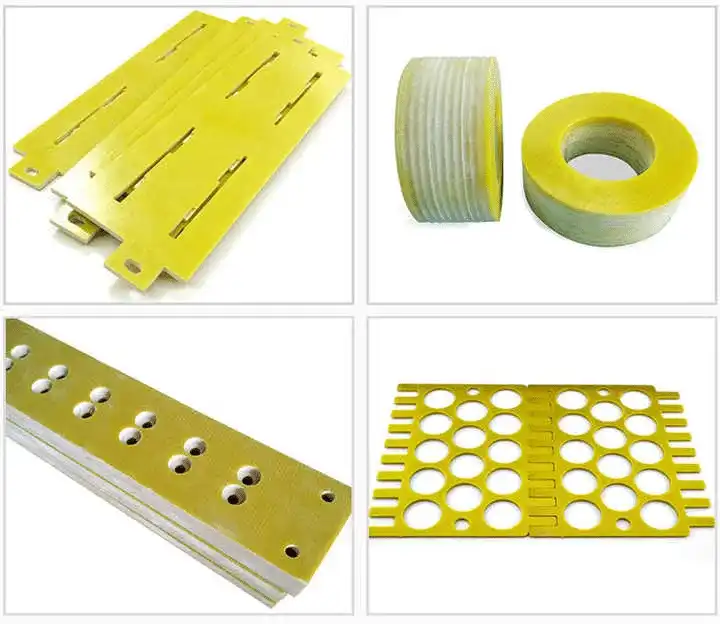
As structural protection, epoxy laminates are used by machinery builders in a wide range of uses, from welding equipment to industrial heating systems. Because the material is both electrically insulating and strong, designers can make parts that do two things at once: support structures and keep electricity from flowing. CNC machinability makes it possible to make unique shapes that fit the needs of particular equipment. These shapes can be as simple as rectangles or as complicated as hexagons with mounting holes, cutouts, and chamfered edges.
These different uses show how useful epoxy-glass laminates are in many different fields where reliable electrical shielding needs to meet tough mechanical and heat conditions.
Procurement Guide for 3240 Epoxy Sheet: How to Buy and What to Consider?
Finding the right specs is only the beginning of successful material procurement. You also need to evaluate suppliers, check quality, and handle the supply chain.
Supplier Qualification and Certification
Suppliers with a good reputation keep quality management systems that are approved to international standards for 3240 Epoxy Sheet, making sure that the manufacturing processes produce materials with the same properties. Material test results that compare the material's electrical, mechanical, and thermal qualities to written standards should be included in documentation packages. Meeting standards like IEC EPGC 201 shows that you are following performance standards that are known around the world. When it comes to uses that are regulated, suppliers should show proof that their products meet safety standards and environmental rules, such as RoHS guidelines.
Quality Inspection Protocols
Incoming inspection procedures keep production processes from getting materials that aren't up to par. A close look should reveal smooth surfaces that are free of bubbles, dust, deep scratches, or edge delamination, all of which could cause partial discharge. Thickness tolerances must fall within certain ranges, usually ±0.1mm to ±0.4mm based on the standard thickness. This is made sure by using calibrated measuring tools for dimension proof. Checks for flatness stop problems with warping that could happen during later machining operations. For important uses, the procurement specifications might say that sample lots need to be destroyed and tested for things like breakdown voltage and thermal stress to make sure the resin has fully cured.
Volume Ordering and Customization Options
Usually, the thickness of a standard sheet is between 0.5 mm and 50 mm, but for certain uses, thicker sheets are available. By cutting sheets to the exact measurements of a project, suppliers who offer custom sizing can cut down on trash and the cost of machining. When you buy in bulk, you can often save money, but buying teams have to weigh the costs of keeping goods against price drops. When it comes to custom thicknesses or non-standard dimensions, which may require longer manufacturing schedules, lead times become even more important.
Supply Chain and Logistics Considerations
Because the supply of materials affects project timelines, supplier dependability is an important factor in choosing them. Suppliers that have been around for a while keep stock on hand so that standard configurations can be filled quickly. They also offer clear wait times for custom needs. Specifications for packaging should protect sheet surfaces from damage during transport, with a focus on protecting the edges to keep them from delaminating. For international purchases, suppliers with experience in export logistics can help with customs paperwork and shipping needs, which makes it easier for purchasing teams to do their jobs.
These things to think about when buying things will help make sure that the materials that come to your plant meet your needs, get there on time, and help your manufacturing run smoothly without any quality problems.
Conclusion
Engineers choose epoxy-glass laminates as the best shielding material for high voltage systems because they have many benefits in electrical, mechanical, and thermal qualities. Their high dielectric strength keeps insulation from failing, and their mechanical robustness keeps their dimensions stable in tough conditions. Thermal durability and chemical resistance make materials last longer in tough industrial settings where other materials might break down too quickly.
To be successful at procurement for 3240 Epoxy Sheet, you need to make sure that the material specs fit the needs of the application, put suppliers through thorough evaluation processes, and set up inspection routines that check the quality of the materials. Because epoxy laminates are better than other insulation materials, they should be used in important situations where dependability affects safety and the continuity of operations.
FAQ
What Temperature Range Can Epoxy-Glass Laminates Withstand?
At constant temperatures of up to 130–155°C, which is Class B thermal classification, these materials keep their structure and electrical stability. Temperature changes that last only a short time may go above these limits without immediately breaking the device, but long-term exposure above rated temperatures speeds up aging and shortens its useful life. The material is resistant to thermal shock, which keeps it from cracking or delaminating during repeated cycles of heating and cooling. This makes it useful for applications that change temperatures.
How Does Chemical Exposure Affect Material Performance?
Transformer oils, common industrial solvents, and lubricants used in electrical equipment environments don't break down epoxy-glass composites. This chemical resistance stops the material from growing, shrinking, or changing properties in ways that could make it less effective as an electrical insulator. Strong acids or caustic alkaline solutions, on the other hand, may change the surface qualities, and they should be checked out for certain chemical conditions.
Can These Materials Be Machined to Custom Dimensions?
When carbide tooling is used, standard machine shop tools like saws, drills, and CNC milling machines can easily work with epoxy-glass laminates. When the right cutting speeds and feed rates are used, the material can be cut without delamination. It is possible to make complex shapes with holes, slots, and curved edges with the level of accuracy needed for precise assembly, which lets you tailor the product to your specific needs.
Partner with J&Q for Your High Voltage Insulation Requirements
J&Q has been making precision-engineered insulation materials for more than 20 years and has also been doing business internationally for ten years, helping electrical equipment makers all over North America. We know everything there is to know about high voltage shielding needs, so you can be sure that the materials you get will meet strict electrical, mechanical, and thermal standards. As a provider of 3240 Epoxy Sheet with combined logistics, we offer a one-stop service from figuring out your needs to delivering the sheets to your building.
Before a product is shipped, our quality control methods include thorough checks of the surface's stability, the product's size and shape, and its electrical performance. Whether you need standard sheet shapes or custom sizes made for specific uses, our expert team works with your engineering staff to make sure that the material specs meet the needs of your project. Email our team at info@jhd-material.com to talk about the insulation materials you need, get detailed datasheets, or get quotes for large orders. You can find more technical information to help you with the material selection process on our website at blog.jhd-material.com.
References
1. Institute of Electrical and Electronics Engineers. (2019). IEEE Standard for Insulation Testing of Electric Machinery. IEEE Standards Association.
2. National Electrical Manufacturers Association. (2020). Industrial Laminated Thermosetting Products: Specifications and Test Methods. NEMA Standards Publication LI 1.
3. International Electrotechnical Commission. (2018). Specifications for Industrial Rigid Laminated Sheets Based on Thermosetting Resins for Electrical Purposes. IEC 60893 Series.
4. American Society for Testing and Materials. (2021). Standard Test Methods for Electrical Insulating Materials. ASTM D229 and Related Standards.
5. Thompson, R.A. & Williams, K.J. (2020). High Voltage Engineering and Testing: Materials Selection for Power System Applications. Cambridge Technical Press.
6. Zhang, Y., Morrison, P., & Chen, L. (2019). Comparative Analysis of Thermosetting Composite Insulators in High Voltage Environments. Journal of Electrical Insulation Materials, 44(3), 287-301.

Get a complete product list and quotation

J&Q New Composite Materials Company



