How to Prevent Delamination When Processing 94V0 FR4 Fiberglass Sheet?
Preventing delamination when processing 94V0 FR4 Fiberglass Sheet requires precise control of thermal and mechanical parameters during machining and handling. The key approach involves maintaining optimal cutting speeds with carbide or diamond-coated tools, controlling feed rates to minimize heat accumulation, ensuring proper material storage in controlled humidity environments, and implementing gradual cooling protocols after thermal processing. Additionally, selecting certified material with verified resin cure levels and avoiding excessive mechanical stress during drilling, routing, or punching operations significantly reduces layer separation risks. These combined measures protect the epoxy-glass bond integrity critical for maintaining electrical insulation properties and mechanical strength throughout the product lifecycle.
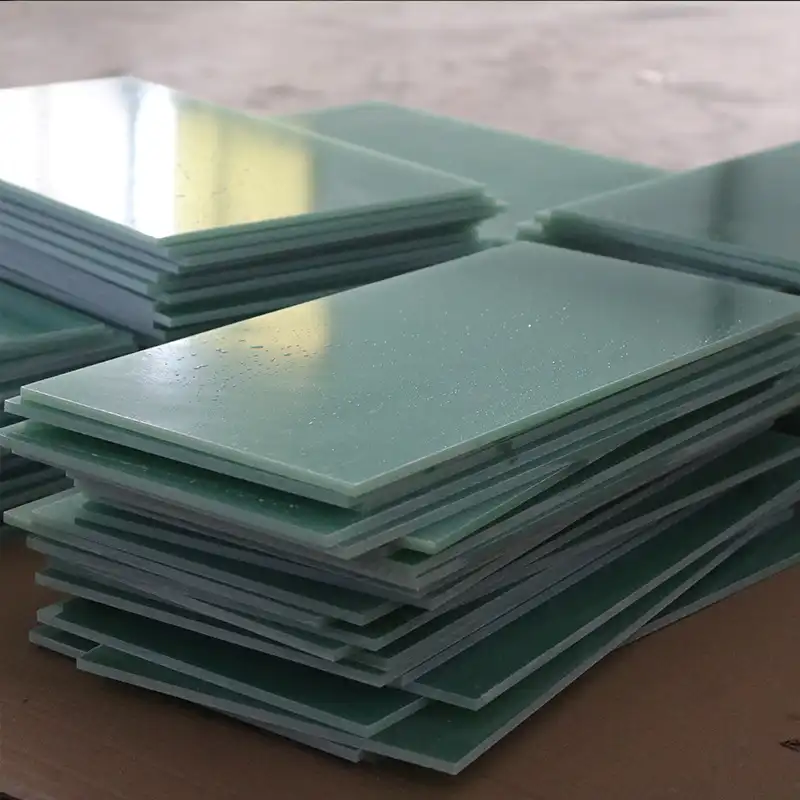
Introduction
Materials must be honest for manufacturing to work reliably. Delamination is one of the most expensive problems that engineering managers and procurement teams have to deal with when working with flame-retardant laminates for PCB boards, switchgear insulation, or precision machining fixtures. The problems that come with 94V0-rated fiberglass laminates are discussed in this guide. It gives useful information for companies that make electrical and electronic goods, industrial machinery, power sector supplies, auto parts, and home appliances all over the United States.
When a product delaminates, it creates secret failure points that lower the mechanical load capacity, weaken the dielectric strength, and go against the safety approvals needed by UL and ROHS standards. When technical procurement teams are looking at suppliers or engineering managers are trying to make CNC machining protocols work better, they need to know what causes problems and how to stop them so they can stay ahead of the competition and cut down on rework costs.
We've been making and exporting insulating materials for 20 years, and we've seen how the right processing techniques can change how well materials work. When working with flame-retardant epoxy laminates, the sections that follow will help you get consistent, error-free results by combining best practices from the industry with real-life examples.
Understanding Delamination in 94V0 FR4 Fiberglass Sheets
When the joined layers in a composite laminate separate, they leave holes that hurt the structure and the insulation's ability to keep electricity out. When materials are made for high-voltage uses, this effect is especially important because any loss of layer bonding can cause catastrophic arc flashes or early component failure.
Root Causes of Layer Separation
Thermal stress is the main cause of delamination that happens during processing. Cutting or drilling creates too much localized heat, which causes the epoxy resin matrix to expand differently than the woven glass substrate. This difference creates shear forces at the point where the resin and glass meet. At glass transition temperatures of around 130°C to 140°C, standard epoxy formulations change from a rigid to a rubbery state. High-temperature variants, on the other hand, stay stable up to 180°C. When these limits are crossed during machining, the resin binder becomes less stiff, which lets the layers move and separate.
If you don't choose the right tool or handle the feed rate properly, mechanical stresses can make thermal impacts worse. When the cutting edges are dull, they tear instead of split, which pulls at the edges of the layers. When drilling, too much feed pressure causes peel stresses that are perpendicular to the laminate plane. These stresses directly affect the weakest part of the composite architecture's structure.
Impact on Critical Applications
Delamination affects more than just the defects that can be seen. It also changes the long-term dependability measures that OEM clients and end users care about the most. In PCB use, secret delamination makes ways for moisture to get in, which lowers the dielectric breakdown voltage over time. Similar risks exist for power distribution equipment, where arc barriers with even small delaminations can fail catastrophically when there is a fault.
Visual inspection for edge lifting and ultrasonic C-scan imaging for mapping internal voids are some of the ways that things can be found on 94V0 FR4 Fiberglass Sheet. Manufacturers who care about quality use thermal stress screening, which involves passing samples through temperatures between -40°C and 125°C to speed up any latent delamination that might happen before they ship them to customers.
Core Principles for Preventing Delamination During Processing
To successfully stop delamination, you need to keep an eye on a lot of different processing variables, from the time the material is received until it is machined. The following ideas give you a complete plan for keeping the purity of laminates.
Thermal Management During Machining
Controlling the temperature during drilling and cutting operations determines whether the epoxy matrix keeps its structure or softens enough to let layers slip. The best thermal management combines the right spindle speeds with the best ways to cool the machine.
When using carbide tooling for routing, spindle speeds between 18,000 and 24,000 RPM are best because they create chip sizes that are small enough to carry heat away efficiently without the frictional heating that comes with slower speeds. Using compressed air or mist systems to apply coolant gets rid of both heat and rough glass dust that would build up and add to the thermal load.
Drilling is difficult because the sealed hole shape makes it hard for heat to escape and trash to be removed. Peck drilling processes that pull the bit back every so often let the heat build up and clear out the glass fiber particles. During the drilling stage, high-pressure coolant is pumped through the drill tube to keep the temperature under control.
Tool Selection and Maintenance Protocols
Because woven glass cloth is rough, it needs certain types of crafting materials and shapes to keep mechanical damage to a minimum while it is being cut. Tungsten carbide tools are the bare minimum that can be used, but diamond-coated alternatives last longer and keep their edges better.
The shape of the tool has a big impact on the chance of delamination because it changes the cutting forces and the formation of chips. Compression router bits have both upcut and downcut flutes that work together to apply opposing forces that keep the laminate from lifting on the top and tearing out on the bottom. The points on drill bits made just for composite materials are shaped in a way that cleanly shears fibers instead of pushing them apart.
Cutting edges lose their effectiveness over time, but regular inspection and repair plans stop this from happening. When a sharp tool cuts through material, it creates a lot less heat and mechanical stress than when a worn edge tears and crushes the same material.
Storage and Handling Best Practices
Pre-conditioning the material before processing sets the stage for good cutting. Epoxy-glass laminates take in water from the air, but only at a very slow rate—less than 0.2% by weight in normal conditions. Even this small amount of absorption changes how the resin matrix behaves during machining by making it more flexible and changing how it reacts to cutting forces.
When things are stored correctly, they stay in climate-controlled spaces that are between 18°C and 24°C and have a relative humidity below 50%. Before cutting, the material should be left to get used to the shop floor for at least 24 hours. This will get rid of any temperature differences that might cause stress-induced delamination. Gravitational sliding can cause warping, so vertical storage racks are important. This is especially true for bigger sheets, where even a small curve can make cutting more difficult.
To avoid flexural stresses, handling guidelines stress the importance of holding the full sheet dimensions during shipping and setup. Damage to the edges during handling creates stress concentration points where delamination can start more easily during the next step of processing. Corner guards and padded clamps are simple ways to stop these flaws from happening.
Case Studies: Successful Delamination Prevention in Industrial Applications
Real-life examples show how paying systematic attention to processing factors for 94V0 FR4 Fiberglass Sheet can lead to measured quality gains and cost savings in a wide range of manufacturing settings.
High-Volume PCB Lamination Operation
During the hot-press lamination cycle, where copper-clad laminates join together under heat and pressure, a big electronics maker that makes multilayer circuit boards kept having problems with delamination. An investigation showed that the pressure wasn't evenly spread across the press platen, leaving some areas that weren't fully consolidated and could easily separate.
As part of the process changes, servo-controlled hydraulic systems were added to keep the pressure uniform across the whole platen area within 2%. Thermal analysis showed that all zones met their goals within a 5°C range. Slow cooling protocols, which lower the temperature by 3°C every minute instead of quickly quenching, made it possible for the epoxy matrix to solidify under controlled stress conditions.
Over six months, these changes cut the amount of repair needed because of delamination from 4.2% to 0.3%. This saved a lot of material and made delivery faster. The maker now lists these processing factors as the bare minimum that new laminate providers must meet.
Automotive Sensor Housing Production
An automotive tier-one supplier that makes parts for battery management systems needed flame-resistant housings that were precisely machined and had no delamination defects. Using general-purpose tools for traditional cutting methods led to problems with edge quality and too much heat.
To solve the problem, special tools made for composite materials had to be switched to. These included compression end mills and drill shapes that are made for that purpose. Adaptive feed rates were built into CNC code so that cutting speed was slowed down in corners and complicated shapes where heat buildup was more likely to happen. Improvements to the coolant supply system let high-pressure mist cool the cutting zone directly.
Implementation cut the amount of scrap from 8% to less than 1% and made the consistency of the dimensions better. The sensor housings now pass all of the thermal cycling tests without delaminating, which meets the strict quality standards of the client's automotive business.
Distributor Quality Assurance Program
A specialized wholesaler that works with the energy and power industry set up thorough receiving checking processes to make sure the quality of the laminate before sending it to companies that make transformers and put together switchgear. The program included both visual inspection and standard mechanical testing, as well as requirements for supplier certification.
When materials come in, they are tested for dielectric breakdown according to ASTM D149 standards. They are also checked for tensile strength and heat stress. If materials don't meet any of the criteria, they should be sent back to the sellers with proof. This thorough method found three suppliers whose resin cure levels were too low, which made their products vulnerable to latent delamination.
The quality program made the distributor a reliable partner by offering pre-tested materials. This made it easier for customers to inspect the goods and gave them faith in just-in-time delivery. After the program started, customer complaints about delamination dropped by 85%.
Procurement Considerations to Support Delamination Prevention
Strategic decisions about where to get materials set the standard for material quality that processing excellence builds on. Teams that focus on the total cost of ownership instead of just the purchase price get better results by carefully choosing suppliers and managing their relationships.
Material Certification and Traceability
As a minimum, certified materials must meet UL 94 V-0 flammability standards. However, extra certifications offer even more quality assurance. Look for providers that have ISO 9001 quality management systems and written process rules for how the resin is made, how the glass fabric is chosen, and how the laminate is applied. Batch traceability makes it easy to fix problems quickly when they happen during processing.
Instead of general compliance statements for 94V0 FR4 Fiberglass Sheet, ask for certificates of conformance that show individual test results. Some important factors are the glass transition temperature, the dielectric breakdown voltage, the bending strength, and the rate at which the material absorbs water. These qualities can be measured and are directly linked to how well the material performs in use and how resistant it is to delamination during processing.
Customization Benefits for Processing Optimization
Standard thicknesses might not work best for your application, which means you'll have to do extra work on the machine that raises the risk of delamination. Custom thickness specifications get rid of the need for multiple grinding or routing passes, which lowers the total thermal load and mechanical stress.
Customizing tolerance has the same benefits. If the width is more regular, the machining allowance needs to be smaller, and if the cosmetic surface standards are less strict on non-critical areas, costs may go down. Talk to your suppliers about your entire processing processes to find ways to save time and money that normal catalog items might not cover.
Technical Partnership and Support Services
The best ties with suppliers include more than just buying things from them. They also include real professional collaboration. Find partners who can test samples, give advice on the process, and help you figure out what's wrong when delamination issues come up. Suppliers with decades of experience using their products in a wide range of industries can give you useful insights that speed up your efforts to improve your processes.
Ask for technical visits to your facility so that supplier engineers can see how your machining is done and make suggestions for how to make it better. This way of working together often leads to small changes that make big differences in quality without spending a lot of money. We've helped many clients in the electrical, industrial, automobile, and appliance industries get solid processing results by giving them this kind of hands-on support.
Comparing 94V0 FR4 Fiberglass Sheet with Alternatives in Delamination Resistance
When deciding which material to use, it's important to know how the different options affect performance, as each has its own benefits for different uses.
Standard FR4 Versus High-Performance Variants
As long as the temperature stays below 130°C for long periods of time, standard epoxy-glass laminates are a great balance between price and performance. When processed with the right settings, these materials provide solid resistance to delamination and can handle normal electrical and mechanical loading conditions in consumer electronics and industrial control equipment.
High-temperature versions with changed epoxy chemistries can withstand continuous operating temperatures of 170°C or higher, which is necessary for situations where soldering needs to be done over and over or where the temperature is high. The improved resin systems are also better at resisting delamination during machining because they are more stable at high temperatures and don't soften as easily when heated by cutting.
Alternative Laminate Systems
Other composite materials are used in specific situations where the way their properties work together is useful. Phenolic cotton laminates are cheaper and have better mechanical features than epoxy-glass systems, but they are not as resistant to fire and don't work as well with electricity. They are used in mechanical parts like gears and structure spacers, where protection against electricity is not the main concern.
Polyimide-glass laminates have great temperature performance for use in harsh environments, but they are very expensive, so they are only used in the military and aircraft industries. To prepare them, you need special tools and knowledge that aren't usually needed in industry. Knowing about these options helps procurement teams make smart choices that balance the need for performance with the limitations of the budget.
Conclusion
For processing 94V0 FR4 Fiberglass Sheet, keeping thermal management under control, choosing the right tools, and making sure the materials are of good quality are all important to avoid delamination. When engineering managers and buying teams use all-encompassing methods that take into account all factors, they get more reliable results with lower rework costs. The strategies in this guide are tried-and-true methods that have been used in a wide range of industrial settings, from making a lot of electronics to making precise auto parts. Choosing the right materials and making sure the processing is done right work together to create a synergistic effect. Good materials make manufacturing more efficient, and using the right processing methods brings out the best in materials. By using an integrated method, producers can meet strict safety standards and keep their production costs low.
FAQ
Why does the 94V0 rating matter for delamination resistance?
The UL 94 V-0 flame retardancy approval shows that the epoxy resin contains certain bromine-based additives. When compared to grades that aren't flame retardant, these compounds can change how resin cures and how stable it is at high temperatures. This makes it more important to optimize processing parameters. Materials with V-0 ratings put out their own fires within ten seconds, which stops electrical equipment fires from spreading.
How can we test materials for delamination susceptibility before production?
Thermal stress screening is an effective way to check before production. Put sample pieces through at least ten rounds of temperature changes between -40°C and 125°C. Then, look at them visually and test their ability to peel. During this rapid testing, materials that don't fix properly or don't stick well to glass-resin will show delamination.
Does material color affect delamination resistance?
The normal green color comes from resin additions and doesn't affect how resistant the material is to fire or delamination. The black, yellow, and white versions all have the same UL 94 V-0 ratings because of the way the resin is made, not because of the colors they use. Instead of performance standards, choosing a color should be based on what it's used for, like how well it shows up under review, or how you like it to look.
Partner with J&Q for Superior 94V0 FR4 Fiberglass Sheet Quality
With more than 20 years of experience making insulating materials and a full supply chain, J&Q can provide consistent, delamination-resistant epoxy-glass laminates for your most demanding uses. Our expert team works directly with electrical, industrial, car, and device makers all over the United States. They provide custom thickness specs, tight tolerance control, and proof that their products comply with UL and ROHS standards. As a supplier of 94V0 FR4 Fiberglass Sheet with a lot of experience, we have strict quality control measures in place, such as the ability to track batches and test their performance. Our integrated logistics operations also make sure that we can meet your production needs with reliable delivery schedules. Email our engineering support team at info@jhd-material.com to talk about your specific problems with preventing delamination, to get sample materials for process proof, or to get full technical specs and quotes. For more processing help and application ideas, check out our technical resource library at blog.jhd-material.com.
References
1. Institute for Interconnecting and Packaging Electronic Circuits, "IPC-4101 Specification for Base Materials for Rigid and Multilayer Printed Boards," 2021 Edition.
2. National Electrical Manufacturers Association, "NEMA LI 1-1998 Industrial Laminating Thermosetting Products," Revised Standards for Composite Materials.
3. Underwriters Laboratories, "UL 94 Standard for Safety: Tests for Flammability of Plastic Materials for Parts in Devices and Appliances," Current Edition with Vertical Burning Test Protocols.
4. American Society for Testing and Materials, "ASTM D709 Standard Specification for Laminated Thermosetting Materials," Including Dimensional and Physical Property Requirements.
5. Coombs, Clyde F., "Printed Circuits Handbook," Seventh Edition, McGraw-Hill Professional, Chapter on Base Material Properties and Processing Considerations.
6. Jawitz, Marc W., "Materials for Rigid and Flexible Printed Wiring Boards," CRC Press, Section on Epoxy-Glass Laminate Manufacturing and Quality Control Methods.

Get a complete product list and quotation

J&Q New Composite Materials Company



