How to Optimize Speed and Feed for G10 Epoxy Sheet CNC?
Optimizing speed and feed for G10 epoxy sheet CNC machining requires careful balance between cutting parameters and material properties. The recommended approach starts with conservative settings—typically 12,000-18,000 RPM spindle speed paired with 60-120 inches per minute (IPM) feed rate for routing operations. Using carbide or diamond-coated tooling significantly reduces abrasive wear from the woven fiberglass structure. Adjustments depend on sheet thickness, desired surface finish, and tooling geometry, with proper dust extraction being non-negotiable for both tool longevity and operator safety.
Introduction
Over two decades of producing insulation materials has taught us that precision machining glass-reinforced epoxy composites is harder than machining metals or plastics that don't have reinforcements. G10 epoxy sheet is one of the most useful bonded materials in industry because it has a high dielectric strength (400–500 V/mil) and is very tough. It is used in the aircraft, electrical, and power distribution industries.
This guide is written to help engineering managers and procurement specialists who need reliable cutting results without using too many tools or delaying production. When you optimise the CNC settings for this rough composite, you get lower scrap rates, longer tool life, and consistent measurement accuracy, all of which have a direct effect on your bottom line. These ideas will make your manufacturing much more efficient whether you're making PCB support structures, transformer barriers, or precise mechanical spacers.
Understanding G10 Epoxy Sheet and CNC Machining Fundamentals
What Makes G10 Epoxy Sheet Different from Other Laminates
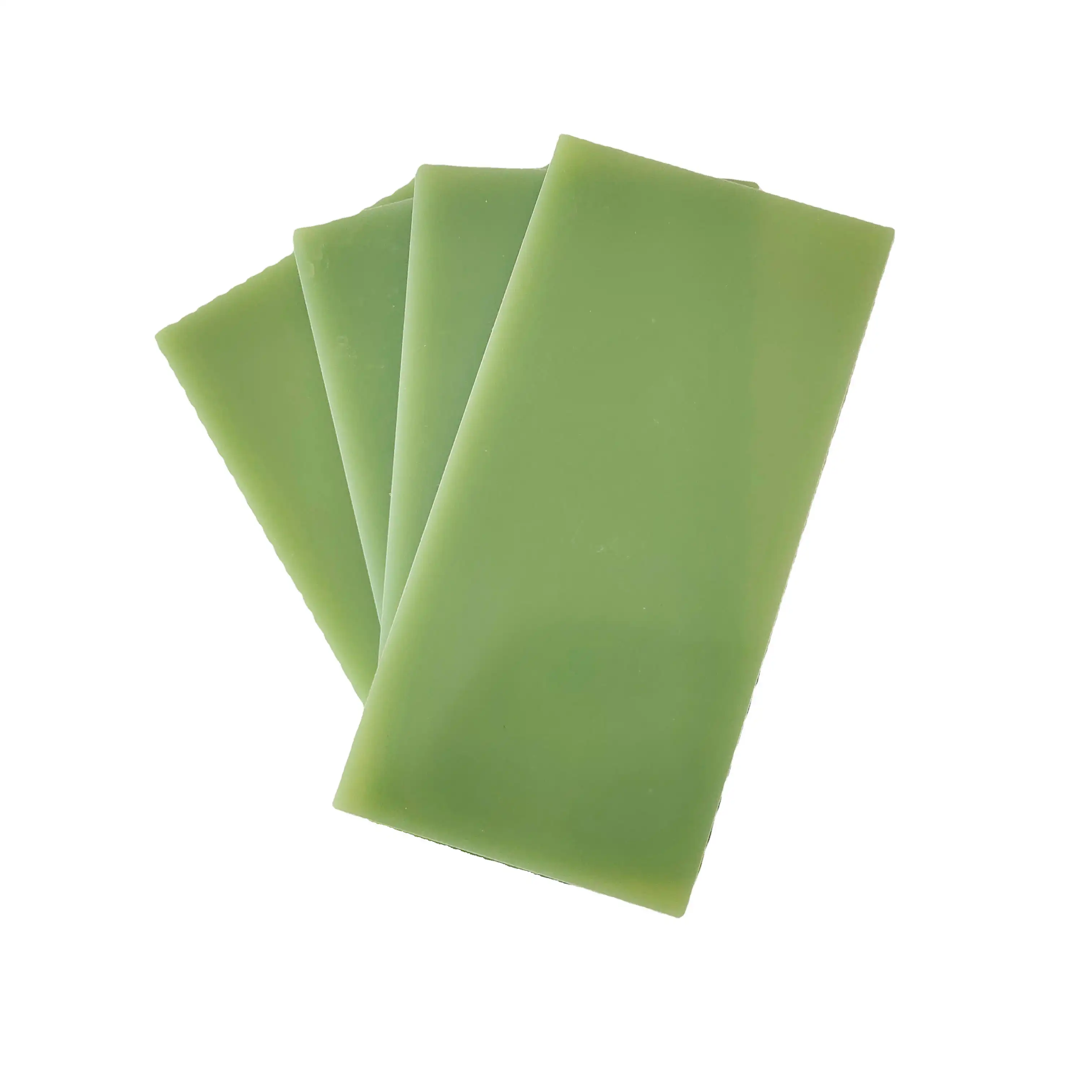
G10 epoxy sheet is made of continuous-woven fibreglass cloth that is mixed with epoxy resin binder and then hardened by heat and pressure. Unlike phenolic paper-based materials, which can soak up to 2% of their weight in water, this glass epoxy laminate absorbs less than 0.1% of its weight in water, so it stays stable in wet places. The material has a tensile strength of about 40,000 psi and a flexural strength of up to 75,000 psi, which makes it much stronger than regular Bakelite or phenolics made from paper.
The woven glass structure makes a rough surface that wears down tools very quickly when they are being used. Each fibre acts as a tiny cutting edge against your tools, so you need to use techniques that are very different from how you would machine aluminium or steel. During cutting, the epoxy matrix also generates heat, which can soften the resin and pull out the fibres if the parameters aren't controlled correctly.
Common CNC Machining Challenges with Glass Epoxy Laminates
When machining these materials, there are three main problems that come up. When cutting harder materials like glass epoxy, tool wear goes much faster. For example, a carbide end mill that lasts 40 hours when cutting aluminium may only last 4 to 6 hours when cutting glass epoxy continuously. The poor thermal conductivity of the material makes it hard for heat to escape, which can lead to high temperatures in the cutting zone that can damage the quality of the surface.
The third big worry is decontamination, especially at entry and exit points. If the feed rates are wrong and there are too many cutting forces, or if the tools are dull and tear the fibres instead of cutting them neatly, the layered structure can split. By knowing these basics, you can set reasonable goals for production and choose the right pay methods before you start optimising parameters.
Key Factors Influencing Speed and Feed Optimization for G10 Epoxy Sheet CNC
Tooling Selection and Geometry Considerations
The right tool specifications are the first step to successful machining. Carbide machining is the bare minimum that can be used, but diamond-coated tools last longer even though they cost more at first. Compression spiral bits are great for turning and profile cutting because they use opposite forces to stop both the top and bottom surfaces from delaminating at the same time.
The shape of the tool is very important. Cutting curves that are 12 to 15 degrees sharper produce less cutting force and heat than profiles that are less sharp. In composites, two-flute designs usually work better than four-flute designs because they have more chip-clearing space, which keeps the fine fibreglass dust that these materials make from getting stuck.
Balancing Spindle Speed and Feed Rate
Chip load, or how much material each cutting edge removes per turn, is based on the link between rotational speed and linear feed rate. Too many strong chip loads break tools and leave a rough surface finish, while modest settings make too much heat by rubbing instead of cutting.
For routing tasks, a good place to start is by figuring out the chip load, which should be between 0.003 and.006 inches per tooth. This is equal to 90 to 180 IPM for a two-flute bit running at 15,000 RPM. Tests show that faster spindle speeds with proportionally faster feed rates usually give better results than heavy, slow cuts that let heat build up.
Coolant Strategy and Dust Management Systems
When working with metal, flood cooling is common. When working with glass epoxy laminate, air blast or mist systems are more common. Compressed air directed at the cutting area does two things: it clears away dust that would otherwise keep the cutting area warm, and it also cools it down a bit.
The fibreglass dust that is made is very bad for your health and breaks down quickly if it is left to build up. For grinding to work, you need to have industrial vacuum extraction systems that can handle small particles. Class-H filtration gets rid of the submicron particles that aren't picked up by regular dust collection. This keeps people and equipment safe from this rough pollution.
Step-by-Step Process to Optimize CNC Speed and Feed for G10 Epoxy Sheet
Establishing Your Processing Requirements
Start by making success criteria that are unique to your application. Transformer barriers may need very tight standards for flatness but can handle a slightly rougher edge finish, but artistic panels need a perfect surface. PCB support structures need holes to be precisely placed within ±0.005 inches, which can change how fast you decide to drill.
Write down the details of the material you're using, such as its thickness, grade approval, and whether it's normal G10 epoxy sheet or the flame-resistant FR4 version. Because they require more cutting force and heat buildup, thicker sheets (above 0.5 inches) need different methods than thin laminates. All choices about parameters after these baseline needs are based on them.
Conducting Initial Test Cuts and Data Collection
Instead of just using theory formulas, practical optimisation needs to be tested in the real world. Prepare sample pieces from the batch of material you will use for production. The way they machine will depend on the differences in the resin content and fibre weave. Start with safe settings, like 12,000 RPM and an 80 IPM feed rate with a sharp two-flute carbide bit.
Do test cuts while keeping an eye on a number of indicators. Look closely at the edge quality to find fibre pull-out, fuzzing, or delamination. Using an infrared thermometer, check the temperature of the tool right after cutting. Readings above 200°F mean that the tool is making too much heat. Take pictures of the cutting edges of your tools at regular times to keep track of how quickly they wear down.
Systematic Parameter Adjustment and Fine-Tuning
Change one variable at a time based on test results to find out what effects it has. If the quality of the edges looks great but the output rate seems slow, slowly raise the feed rate by 15-20% while keeping the RPM the same. On the other hand, if you see that the tools are burning or wearing down too quickly, slow down the spindle by 2,000 RPM at a time.
Write down each change and what happened as a result in an organised way. When switching to different material layers or tooling setups, this real-world data is very helpful. For many businesses, the best range is between 15,000 and 18,000 RPM and 100 and 150 IPM feed rates. However, your specific circumstances may be different.
Implementing Process Monitoring for Production Consistency
Once the best conditions have been set, they need to be actively monitored to stay consistent. When you measure cutting forces through spindle load, you can see early signs of tool wear. A slow rise of 20 to 30 percent means that you need to change the tool before it fails completely. Regular inspections of the surface finish catch parameter shifts before it leads to large amounts of scrap.
Changes in the ambient temperature and humidity affect the qualities of materials and the performance of machines. Because heat softens resin, summer conditions may need slightly lower feed rates than winter conditions. Keeping specific process logs makes it easy to find problems quickly when they happen, which cuts down on fixing time and production stops.
Comparing G10 Epoxy Sheet with Alternative Insulation Materials in CNC Applications
Performance Characteristics Across Material Options
There are a few alternatives to normal G10 epoxy sheet that can be used as insulation laminates for CNC uses. FR4 is the flame-retardant type that has bromine added to it to get a UL 94 V-0 grade for flammability, which is needed for uses that need the ability to put out fires on its own. The flame retardant chemicals may slightly make the material more abrasive, but the cutting properties are still very similar to normal grades.
The constant working temperature of G11 grade material goes from 130°C to between 155°C and 180°C because it uses higher temperature epoxy resin systems. This update costs more in materials and makes the workpiece even rougher when it's being machined. Phenolic paper laminates, like standard Bakelite, are easier to work with and less expensive, but they are not as resistant to moisture and don't have as much mechanical strength, so they can't be used for precise tasks in damp places.
Supplier Considerations and Procurement Strategy
Predictability in machining is directly affected by how consistent the material is. Manufacturers with a good reputation keep a tight grip on resin-to-glass ratios, cure profiles, and thickness tolerances that less-than-stellar sources can't match. It is not a good idea to guess about certification paperwork like NEMA grade compliance, UL recognition, and RoHS compliance.
Working with well-known suppliers who know what you need for machining lets you solve problems together when they come up. After 20 years of making these materials, we've learned that even small changes to the recipe can have a big effect on CNC results. Even if their unit prices are higher, suppliers who offer expert support, custom thickness specs, and consistent batch quality will lower your total cost in the end.
Bulk procurement strategies should balance inventory carrying costs against price advantages and supply continuity. When stored properly, glass epoxy laminates have great shelf stability, which means that high-volume operations can use contracts every three or six months. When you buy things from other countries, logistics become very important. Our combined shipping capabilities take away the hassle of coordinating when to buy things and when to send them.
Case Studies: Successful CNC Machining of G10 Epoxy Sheets
Aerospace Component Manufacturing Application
A company that makes aerospace parts came to us because they were having a lot of problems with tool consumption while cutting custom insulation brackets from 0.25-inch G10 epoxy sheet. Their first settings—8,000 RPM at 50 IPM using normal HSS tooling—made good parts, but they had to change the tools every 90 minutes, which caused too much downtime.
We told them to switch to diamond-coated compression spiral bits with higher settings (16,000 RPM at 120 IPM). The faster surface speed kept heat from building up, and the special covering stopped sharp wear. The tool could be used for 12 to 15 hours without having to be changed, and the better edge quality got rid of the need for a second deburring step. The money spent on the tools was returned in three production runs thanks to less work and faster cycle times.
High-Volume Electrical Insulation Production
A company that makes transformers and makes thousands of arc barriers every month had trouble with delamination at the mounting hole locations. Their drilling operation used 3,000 RPM and a feed rate of 0.003 IPM, which are very modest settings that made the problem worse by letting the fluid stay in place for too long, creating heat.
The results were much better when the drill speed was sped up to 8,000 RPM with a feed rate of 0.015 IPM and special brad-point carbide bits were used. Because the parameters were faster and the geometry was sharper, there was clean shearing action instead of the heating and tearing that happened at slower speeds. The number of rejects dropped from 8% to less than 1%, and production throughput went up by 40% because the cycle time was cut down.
When working with rough materials, these real-life examples show that being too cautious can backfire. When used with the right tools, the material's special qualities encourage bold cutting parameters, which goes against what you might think from metal machining experience.
Conclusion
Understanding the unique properties of G10 epoxy sheet and conducting thorough tests to determine the ideal machining range are necessary for finding the best CNC settings for glass-reinforced epoxy laminates. Because G10 epoxy sheet has a highly abrasive structure, it requires carbide or diamond tools and cutting speeds that are faster than many standard materials. Ensuring that dust from G10 epoxy sheet machining is safely removed helps protect both equipment and operators. Starting with reliable standard parameters of around 12,000 to 15,000 RPM and 80 to 100 IPM, then gradually adjusting settings based on real-world machining results, allows manufacturers to achieve efficient production, consistent quality, and acceptable tool life. Investing in the optimisation of G10 epoxy sheet processing reduces material waste, extends tooling intervals, and increases production output, helping manufacturing businesses remain more competitive.
FAQ
What spindle speed works best for routing G10 material?
When using carbide or diamond-coated cutter bits, the best results are seen between 15,000 and 18,000. For bigger pieces over 0.75 inches, slower speeds around 12,000 RPM may be fine, while speeds up to 20,000 RPM are sometimes okay for thin sheets. The important thing is to keep the surface moving fast enough to cleanly shear the fibres without letting them rub together, which would create too much heat.
How can I reduce the extreme tool wear from fiberglass content?
Even though it costs more at first, diamond-coated equipment is usually 5–10 times longer than bare carbide in continuous production, making it the best choice. Keeping the cutting edges sharp by replacing them when they wear out stops them from switching from cutting to breaking, which speeds up wear by a huge amount. When compared to factors that cause rubbing contact, feed rates that keep the chip load at the right level also reduce wear.
Does material thickness significantly affect feed rate selection?
The thickness has a direct effect on the cutting forces and heat production, so the parameters need to be changed. Thin sheets less than 0.125 inches thick can handle feed rates as high as 180 IPM, but material thicker than 0.5 inches usually needs to be slowed down to 80–100 IPM to keep the edge quality and keep the tool from deflection. When going from one thickness to a much thinner one, you should always do test cuts instead of thinking that the parameters will transfer smoothly.
Partner with J&Q for Superior G10 Epoxy Sheet Solutions
J&Q has been making high-quality insulation laminates for more than twenty years and has also been serving foreign business-to-business markets for more than ten years. As a reliable source of G10 epoxy sheet, we know that the quality of the material you use directly affects how well your machine works. Our factories use strict process controls to make sure that the thickness specs are always the same, that the resin is spread out evenly, and that the electrical properties are always approved to meet NEMA, UL, and RoHS standards.
In addition to providing materials, we also offer technical advice to help you solve your specific machining problems. Our integrated logistics company takes care of everything from production to delivery, so you don't have to worry about the complicated logistics that can slow down your supply chain. Whether you need standard sheet stock or blanks that are machined to your exact specifications, our engineering team works together to make sure that the material we choose and the way it is processed are both as good as they can be.
Get in touch with info@jhd-material.com right away to talk about your needs and get samples for testing in your location. Let us show you how better material consistency and expert teamwork can make your production more efficient.
References
1. Johnson, M. & Stevens, R. (2019). Advanced Machining of Composite Materials: Techniques and Tooling Strategies. Industrial Press.
2. National Electrical Manufacturers Association. (2021). NEMA LI 1-2021: Industrial Laminating Thermosetting Products. NEMA Standards Publication.
3. Williams, T. (2020). "Optimizing CNC Parameters for Glass-Reinforced Epoxy Laminates." Journal of Manufacturing Processes, 56(2), 234-247.
4. Chen, K. & Rodriguez, A. (2022). Tool Wear Mechanisms in Composite Machining: Analysis and Prevention. Society of Manufacturing Engineers.
5. Peterson, L. (2018). "Thermal Effects During High-Speed Routing of Fiberglass Composites." International Journal of Advanced Manufacturing Technology, 98(5), 1847-1859.
6. Anderson, B. (2021). Industrial Insulation Materials: Selection, Processing, and Application. Technical Publishing Group.

Get a complete product list and quotation

J&Q New Composite Materials Company



