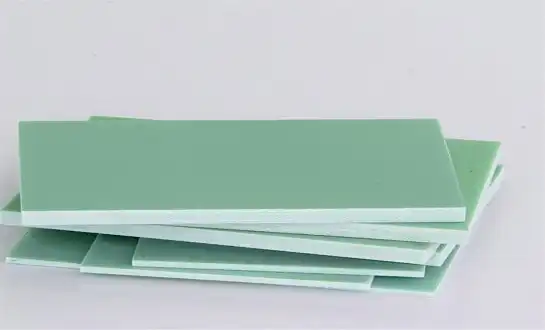
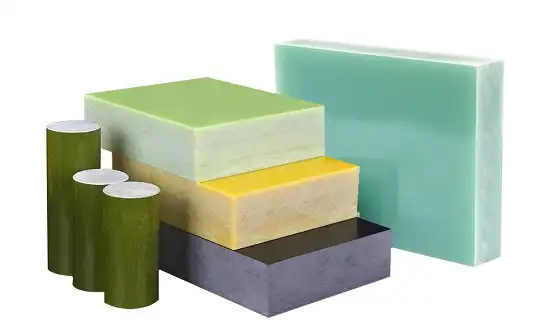
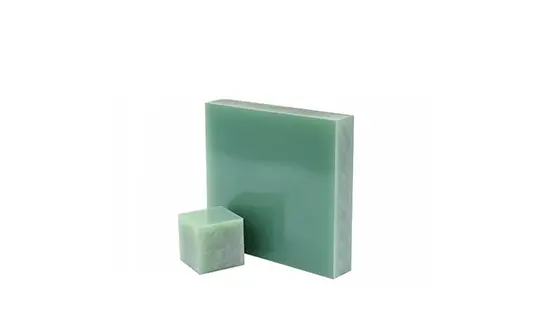
How to Improve Dimensional Accuracy When Milling Phenolic Laminates
Improving dimensional accuracy when milling phenolic laminates starts with understanding both the material and the process. Commercial Phenolic Laminates — such as cotton fabric-reinforced phenolic resin sheets — respond differently to cutting forces compared to metals or thermoplastics. Their layered structure makes them prone to edge chipping, delamination, and thermal distortion if milling parameters are poorly set. Selecting the right grade, controlling spindle speed, using carbide tooling, and stabilizing the shop environment are all practical steps that directly reduce tolerance deviations and rework rates in production.
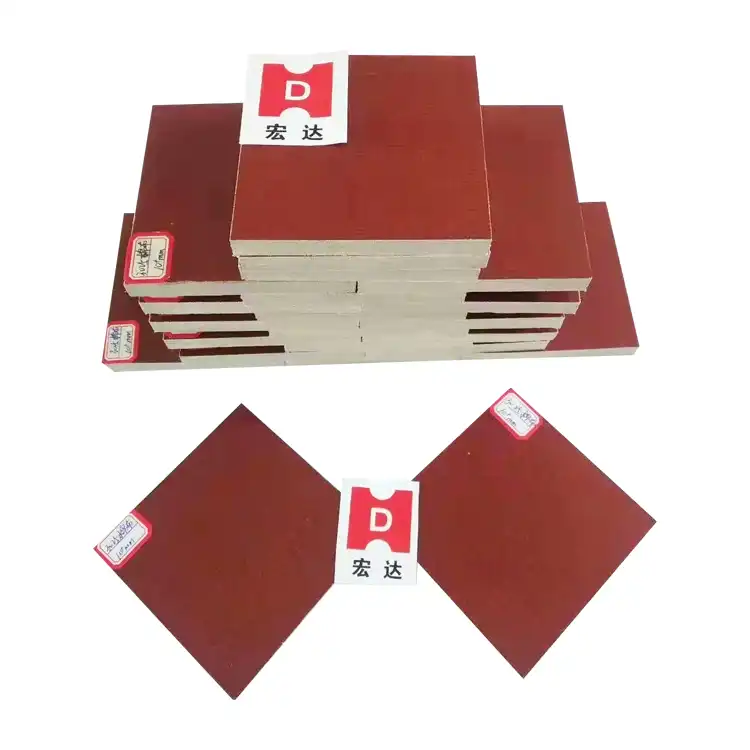
Understanding Dimensional Accuracy Challenges in Milling Phenolic Laminates
What Dimensional Accuracy Means in This Context?
Making a part means making sure it is the right shape in terms of its thickness, hole width, flatness, and edge outline. Even a difference of 0.1 mm can make electrical insulation boards, switchgear spacers, or mechanical gears work and fit together differently over time. The phenolic sheets made of cotton cloth are stressed during the lamination process. Sheets lose some of their stress when they are cut, which can make parts a little bigger or smaller than they were supposed to be.
Common Milling Problems with Phenolic Boards
On the shop floor, three things happen all the time. It starts to chip the edges when the feed rates are too high for the weak phenolic resin matrix. Second, sheets bend when different parts of them get hot. Third, the range of tolerances changes a lot when tool wear isn't checked. Everything on this list has a clear cause and an easy fix.
Material and Environmental Contributors
Phenolic laminates will grow at a rate of 14 to 20 × 10⁺/°C if you turn them the right way. A 10°C change in the shop can make a 500 mm part move by as little as 0.1 mm. Also, you should know the humidity because phenolic materials are hygroscopic, which means they take in water and get bigger. A lot of small mistakes are made as moving parts from nearby machines move across the table of the machine over and over again.
Core Principles to Improve Milling Dimensional Accuracy
Start with Consistent, Certified Raw Material
When you set the sizes, you make sure that the elements are always the same. Parts made from a sheet where the resin isn't spread out evenly or where the thickness changes won't fit together right, no matter how well you set up the machine. Before you buy phenolic laminate sheets, make sure the company has proof of how thick the sheets are, how quickly they soak up water, and how strong they are when bent. Grade 3025 and 3026 sheets from JingHong can bend up to 100 MPa and 140 MPa, respectively. This is a good place for engineering teams to begin.
Set Correct Spindle Speed and Feed Rate
Here are the main cutting factors that have a direct effect on the size and quality of the surface:
For Commercial Phenolic Laminates, this is how fast the spindle moves: Set the speed to between 6,000 and 12,000 RPM for phenolic sheets made from cotton. As speed goes up, the cutting force goes down. This keeps the cut edge from coming apart.
- Spindle speed: Run between 6,000 and 12,000 RPM for cotton fabric phenolic sheets. Higher speeds reduce cutting force per pass, which limits delamination at the cut edge.
- Feed rate: Keep feed rates moderate — typically 0.05 to 0.15 mm per tooth. Aggressive feeding tears the cotton fiber reinforcement and widens the kerf unpredictably.
- Depth of cut: Take shallow passes (0.5–1.5 mm) for finish cuts to maintain tight tolerances. Reserve deep passes for roughing only.
Depth of cut: For end cuts, make short passes (0.5–1.5 mm) to keep the tolerances tight. This kind of pass should only be used to make the surface rough.
Control the Milling Environment
By making sure these settings are correct from the start, you can avoid the main reason why tolerances break when phenolic sheet is being machined.
Step-by-Step Milling Process Optimization for Phenolic Laminates
Inspect and Condition Raw Material Before Cutting
Check the thickness of the sheet several times with a caliper that has been calibrated before you load it. For another look, you should keep sheets that are more than 0.1 mm thicker than what should be there. New stock should be left at room temperature for 24 hours to get ready. This evens out any moisture that was picked up during shipping and eases the stress inside the box. This makes it less likely that the fabric will twist after you cut it.
Calibrate Equipment and Select Tooling
End mills with a diamond coating or a carbide tip are the best tools for cutting composite or hard thermoset materials. Because these don't dull as quickly as high-speed steel, the kerf width stays the same during the whole press run. Before each shift, check the machine axes against a standard gauge block to make sure they are set up correctly. Check the wheel's runout. If the difference is more than 0.005 mm, it will show up as holes and slots that are not the same size. As planned, tools should be thrown away when they break instead of being used until they break.
Monitor and Verify During and After Machining
Laser measurement tools that work in real time can show any changes in size as the work is being done. This way, any gaps can be fixed before they turn into scrap. Once the model has been ground, make sure that the important measurements match the model. You can use a coordinate measuring machine (CMM) or just put them next to each other. Note down the amounts for each batch so that you can keep track of them. Using this knowledge to look for trends is also helpful. Let's say that drift always comes after 200 cuts. That means we need to get a new tool.
Comparative Insights: Phenolic Laminates Milling vs. Other Laminates
Machinability Comparison
Melamine-faced boards are harder to clean in the machine than Commercial Phenolic Laminates because phenolic resin is harder and more stable at high temperatures. When you score melamine, the lines tend to break, but if you fix a phenolic sheet well, the edge will be smooth. Glass-fiber epoxy laminates like FR4 are harder to work with than cotton phenolic grades. This means they last longer and get worn out less often.
Durability and Cost Trade-offs
Cotton fabric phenolic sheets are a good price per kilogram for how strong they are. More electricity can't flow through FR4 plastic boards, but each sheet costs a lot more. Cotton phenolic types with a tensile strength of at least 80 MPa are a good choice when measuring accuracy and compressive strength are the most important things. This is the case for mechanical spacers, gears, and bearing housings. Not the grade with the best specs, but the grade that meets your most important performance needs.
Material Selection Guidance
Paper phenolic grades might work better than cotton ones when they are put under a lot of power for a long time. Metal parts that hold weight in industrial equipment work better with supports made of cotton cloth because they can handle hits better. Impact strengths with notches can go up to ≥8.8 kJ/m². Before you place an order, you should always compare the information about the material to the job's temperature range, chemical environment, and needed tolerance band.
Procurement and Supplier Guidance to Ensure Milling Excellence
Evaluate Suppliers on Technical Depth
Someone who is in charge of the production process can give you phenolic pieces that are all the same and can be machined. Make sure the sellers you buy from give you test results that meet GB/T5130 or a similar standard for electrical strength, bending strength, moisture absorption, and density. Find out how much can be made every year. When a seller makes more than 10,000 tons of a product a year, they can usually make batches that are all the same.
Negotiate Custom Thicknesses and Tolerances
Sheet sizes that are 1020 mm × 2020 mm and 1220 mm × 2440 mm work well most of the time. Some parts, though, need the width tolerances to be tighter than what they say on the catalog sheets. It is important to talk about the custom thickness ranges and tolerance bands before you sign the payment contract. Find out what the rules are for packing. Sheets arrive flat and undamaged when they are sent on safe pallets. So, one reason why goods are often turned down when they get there is no longer the case.
Collaborate Technically with Your Supplier
Better material advice is given to buying teams when they tell sellers about the parts they need to make and what shape, size, and type of tool they need. If a provider has been around for more than 20 years and handles its own shipping by sea, land, and air, it can set supply and lead times that keep production going. If you hire someone, you should ask for application notes and instructions on how to machine something.
Conclusion
You need to be careful about more than one thing when cutting Commercial Phenolic Laminates. It works like that when the process is proven, the right tools are used, the material is good, and the machine is set up correctly. Because engineers already know how strong and how well they conduct electricity, cotton cloth phenolic sheets are a good place to begin. Use sharp carbide tools, make sure the spindle parameters are right, and do a full inspection after milling to keep tolerance scatter in check and avoid having to do a lot of expensive rework. A lot of parts don't have to be thrown away because of process control, and parts that work better last longer.
FAQ
How do phenolic laminate properties affect milling accuracy?
Because cotton fibers hold phenolic sheets together, the sheets are stiffer and can spread in different directions. Cutting lines that run along the layers of laminate are smoother than those that cut across them. The stock can swell because it soaks up a lot of water before being machined—up to 540 mg for bigger sheets that are only treated on one side if you don't condition them first.
How often should milling tools be replaced?
CBN end mills that cut cotton phenolic at slow feed rates should have their cutting edges checked every 150 to 200 linear meters of cut. You should get new tools before the kerf width changes because the old ones are worn out. When you use old tools until they break, the limits get bigger, and the edges chip more.
What role does temperature play in dimensional stability?
When the temperature changes, you can feel the difference in the size of phenolic laminates. A 500 mm part can move by 0.07 to 0.10 mm when the temperature changes by 10°C. When measurements go wrong in this way, weather is usually to blame. Turn the milling setting down to 18°C to 22°C and let the sheets warm up before cutting them. This will cut it down a lot.
Can phenolic laminates be used for tight-tolerance parts?
Yes. Phenic cotton sheets can hold tolerances of ±0.05 mm on flat profiles with the right fixtures, sharp tools, and controlled feed rates. Most of the time, you need a finish pass and a CMM test for smaller hole specs.
Partner with J&Q for Precision-Ready Commercial Phenolic Laminates
You can get phenolic laminate sheets from Jing Hang by going through J&Q. They come in Grades 3025 and 3026 and are 2 mm to 100 mm thick. Every year, they can make 30,000 tons of them. Commercial Phenolic Laminates has been made by our company for more than 20 years. From the time you choose the materials until they are shipped, we can help you with scientific questions. Email us at info@jhd-material.com or go to blog.jhd-material.com to get a datasheet or talk about your project.
References
1. NEMA Standards Publication LI 1-2020. Industrial Laminated Thermosetting Products. National Electrical Manufacturers Association, 2020.
2. International. ASTM D709-21: Standard Specification for Laminated Thermosetting Materials. ASTM International, 2021.
3. GB/T 5130-2007. Phenolic Cotton Cloth Laminated Sheet — Specifications and Test Methods. Standardization Administration of China, 2007.
4. Brydson, J. A. Plastics Materials, 7th Edition. Butterworth-Heinemann, 1999.
5. Mallick, P. K. Fiber-Reinforced Composites: Materials, Manufacturing, and Design, 3rd Edition. CRC Press, 2007.
6. Davim, J. P. (Ed.). Machining of Polymer Composites. Springer, 2009.

Get a complete product list and quotation

J&Q New Composite Materials Company