CNC Machining Solutions for Precision Phenolic Paper Laminate Parts
CNC can make accurate Phenolic Paper Laminate parts as long as you use sharp carbide or diamond-coated tools, hold the sheet firmly, and keep an eye on the feed rates and dust. Make sure the sheet's grade and thickness match what's written on the plan. You can make clean slots, holes, and shapes for fixings, transformer barriers, terminal boards, and switchgear parts and pieces with this method. I wrote this guide for people in the US who want to buy things that can be used more than once, have clear paperwork, and get them all the time. I'll talk about the material, how it's cut, common mistakes, and the steps that are taken to make a part from a model.
Why Precision CNC Machining Matters for Phenolic Paper Laminate Components?
What Phenolic Paper Laminate Is?
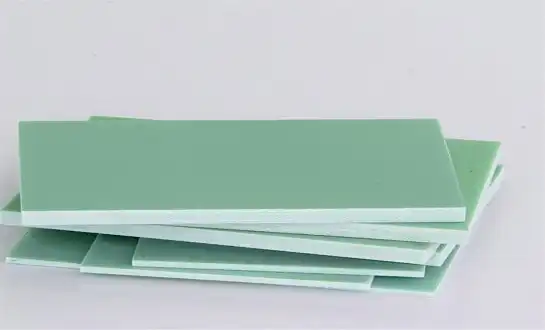
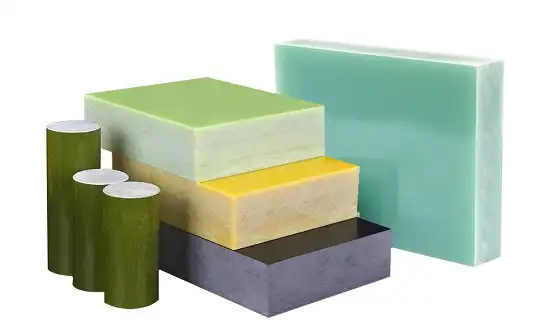
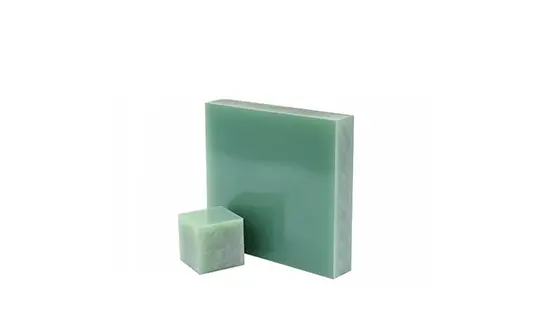
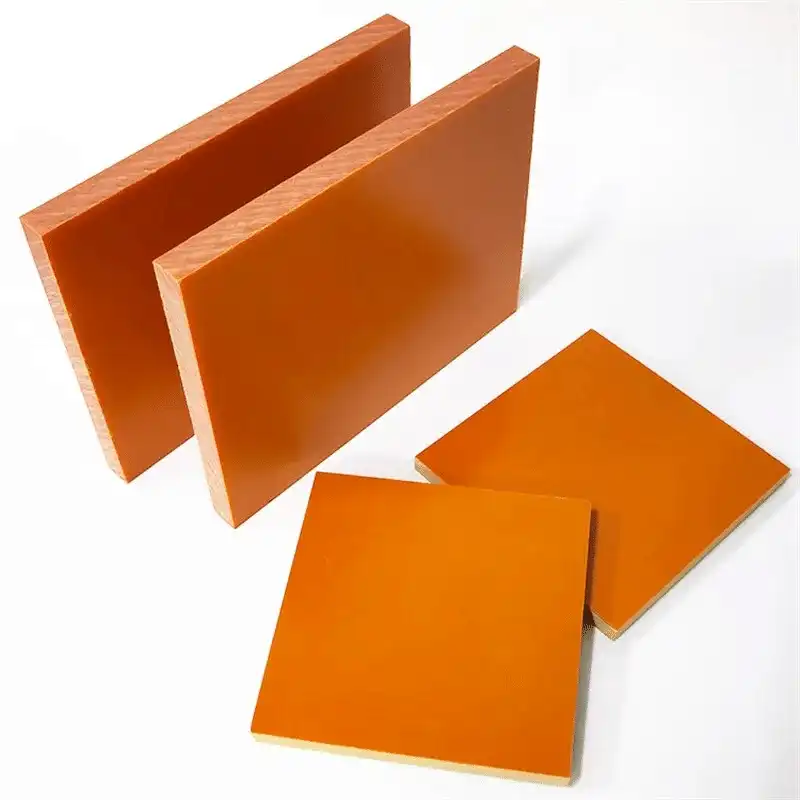
Phenolic Paper Laminate is a thermosetting composite that is rigid. The company that makes it mixes the craft paper layers with phenolic glue. It is then fixed under a lot of heat and pressure. It's also known as paper-based Bakelite. You can buy blanks, sheets, tubes, and rods that are made to order. The grades are based on letters and numbers from NEMA, like X, XX, XXX, XP, XXP, and XXXP. It is used to make electrical insulation, junction boards, transformer parts, circuit parts, and fixings. FR4 is more expensive than this, so it can be used instead to protect medium-voltage wires when FR4 is too expensive. Because the end part is made up of layers, it looks different depending on how you cut it.
What CNC Machining Adds?
Parts made with CNC cutting have exact slots, grooves, holes, shapes, and locations for these features. They are made from flat stock. If a company makes electronics, that means insulator plates and PCB support parts that fit the whole thing the first time. Machine builders have to make sure that all of the wear parts and holes are the same thickness and edge quality. You don't need a special cutting die for this method. As well as prototypes and small batches, it can also be used for OEM production. You should still aim for a lot of points, even with the XP grades. You can make changes more quickly and have more design options when you set up a CNC. This helps with all sorts of jobs, big and small.
Why the Material Demands Care?
It does a good job of keeping heat in, but since it's made of layers, it can chip, peel, and gather dust. If the weather is bad while you're cutting, the edges might get rough around holes or between layers. Either of these flaws can shorten the path of creepage on an insulated part. Dust is another thing to worry about. Fine dust can hurt your lungs and break machines, so you need to clean the air to keep people and machines safe. There are four things you need to make sure of before you start milling something: the right tools, stable supports, measured cutting parameters, and good dust collection. These are always at the start of the order; if I skip any, they show up at the end.
Phenolic Paper Laminate Properties and Material Selection
Key Properties That Affect Machining
It tells you how to cut the piece and what to do with it afterward. Most phenolic paper laminate has a specific gravity of 1.30 to 1.45 g/cm3, and the best grades can bend more than 100 MPa. In oil studies, the dielectric strength across the laminations is usually between 300 and 500 V/mil. For X grades, it takes in about 2.5% of their grade, which is less than 1%. Most of the time, the temperature is Class E (120°C) or Class B (130°C). Numbers change depending on the grade, thickness, and brand of the sheet you want to buy, so you should always read the detailed information first.
Grades and Thickness
There is a different NEMA grade for each job with Phenolic Paper Laminate. Grade X is strong enough to be used for building, but it doesn't hold up well against water. Grade XX electrical wire can be used for many things. The most resin is in Grade XXX, which makes it a better guard and less likely to soak up water when it rains. The P grades (XP, XXP, and XXXP) are easy to punch whether they are warm or cold because they have plasticisers in them. It is also important to be thick. Thick stock stays straight when cut, but thin sheets bend. When cutting bigger stock, though, you need to be more careful about heat and tool wear. Before you sign off on a drawing, make sure that the grade and width meet your needs for load, surface finish, and air gap.
Comparison with FR4 and Other Laminates
Don't pick something based on how well it works, no matter how much it costs or what it's called. FR4 will wear out faster, be more difficult to work with, and be more expensive than Phenolic paper laminate. In terms of how well it handles high-frequency electricity, FR4 is stronger and better at protecting against impacts. The paper-based grade works best at 50/60 Hz, and the most important thing is price. Standard grades are graded by UL 94 HB, but FR4 is graded by V-0. To make parts that won't catch fire, you might need a different grade or lamination. When phenolic cotton sheets are put over wear parts like gears and other moving parts, they can take more hits before they break. What does "Bakelite" really mean? Before you accept something else, make sure you know what kind of reinforcement it is, how good it is, and what standards it meets.
CNC Machining Process and Defect Prevention
Step-by-Step Machining Process
The first things that need to be filled out for a process to work are forms. We look over limits, datums, surface finish, testing standards, and sketches. After that, we look at the surface of the new sheets for folds, cracks, holes, and other flaws before cutting blanks. Then, the CNC drills, winds, turns, and cuts the parts to make the slots, bushings, collars, and profiles. When we're done cutting each piece, we clean up and smooth out the edges. We don't change any important sizes or make the gaps between the insulation smaller. When you store sheets, they stay flat and dry for longer, which makes them easier to cut. Sheets won't bow if they are kept flat on boards in a room that is close to 20°C and has less than 50% relative humidity.
Tooling, Fixturing, and Cutting Parameters
It's easy to cut the layers of paper with sharp tools that are wrapped in carbide or diamond. To tear them, use dull tools. Because the tool contact is light and controlled, not much force or heat is needed to make the cut. When the clamps are spread out, the sheet doesn't break. A base plate holds the part that sticks out of each hole in place. Also, watch how the tool goes in and out, because a hard drop could hurt the edge. We didn't stick to a recipe; instead, we changed the feeds and speeds based on the grade and thickness. To keep the part surface and people working on it safe, get rid of the dust before the cut.
Preventing Common Defects
In flaws, you can often find broken edges, cracks, delamination, burns, tool wear, measurement drift, and loss of shape. Most of the time, they happen because the tools are worn out, there is too much feed, the support is weak, the stock is wet, or there is too much clamping pressure. One good idea is to use backing plates, do roughing and finishing passes one after the other, keep an eye on how long the tools last, and always clean up the dust. This idea is supported by a study that was written about how to machine polymer materials. The study shows that delamination and tool wear can be changed by the cutting conditions and the shape of the tool. We use precise measuring tools to check the key dimensions and look for cracks, bits stuck inside, contamination, and the right amount of creepage and clearance after the parts are made.
Applications of CNC-Machined Phenolic Paper Laminate Parts
Electrical and Electronics Applications
CNC parts are used to make support blocks, PCB cutting tools, insulation plates, and terminal boards by companies that make electronics and electrical items. Metal oil and transformer oil don't mix with solid plastic, and it stays stiff in transformer oil. This is why it's used to make parts for switches and generator barriers. Engineers should check the temperature, contamination, creepage, clearance, and dielectric performance of every high-voltage part. It is stable at normal frequencies, and it costs less than options made of glass and cement. Needs to be able to go public? Please let us know as soon as possible. We can then look at all of our choices.
Machinery, Power, and Energy Applications
Wear elements, spacers, guides, bushings, washers, and pulleys are some of the things that machine builders buy in Phenolic Paper Laminate. Metal parts need to have their speed, load, friction, lubrication, and wear checked. For heavy loads, a phenolic grade with cotton reinforcement might work better than a paper grade. Some of the parts that people who buy power and energy use are wire insulation, spark plugs, and thermal safety. It's important to know how temperatures stay steady and how flames act. Both groups worry a lot about thickness clearance because parts that are stacked on top of each other don't fit together right when the stock isn't level. We measure the thickness of the finished parts and sheets that come in to make sure the stack stays level.
Automotive and Home Appliance Applications
In order to make heat-resistant fixtures, battery pack barriers, insulation pads, and other parts for cars, suppliers need fixtures that can handle high temperatures, tight cuts, and stable batch quality. Different machine brands use insulator frames, motor clamps, and parts that keep heat separate. Why do they care about price? Because they want to know how fast they can deliver and how stable mass production is. There are sources that can turn a trial into a full sale and CNC programs that always do the same thing. These are both good for everyone. For those who make many appliances, you might want to talk about P grades that are easy to punch. You can make a lot of clean punched lines with these grades. Let us know early on what you need each year, and we'll help you find the best way to get it.
Quality Control, Supplier Selection, and Procurement Workflow
Quality Control and Documentation
People who want to buy need to be able to keep records and expect the same level of quality everywhere. It looks at the grade, thickness, size, batch number, and condition of the surface when the review comes in. We check for holes, features, smoothness, thickness, and good edges while the product is being made. We look at the first piece sometimes too. Depending on the use, one of the last checks might be for size, energy, motor parts, or heat. You can ask for listing sheets, proof that they meet standards like ASTM D709, NEMA LI 1, or IEC 60893, and proof that they do. If you need something, please let us know in your question if it has RoHS or UL paperwork. Because of this, we can see what files are out there.
How to Choose a CNC Machining Supplier?
Good providers know about the materials, have used CNC before, have testing tools, and can talk to you clearly. Make sure they know how to use power tools, insulation parts, transformer parts, and switches. The shop should be able to work from samples, drawings, or CAD files and keep track of each batch and the different materials that are used. It is a good idea to ask about things like tolerances that can be met, inspection tools, first-article reports, corrective action procedures, prototype support, minimum order quantities, lead times, and packaging. J&Q has made and sold insulation sheets for over 20 years. They've done business with other countries for more than 10 years. We also run our own shipping company, which makes it easy for us to send things.
From Drawing to Delivered Part
Since the process is being watched, growth is less likely to happen. You start by sending them drawings, CAD files, details about the job, the material you need, how much you need each year, and any tolerances. The second thing we talk about is how easy it is to make: the grade, the thickness, the fixings, how to cut it, and how to check it. Third, you agree to the price quote, and we make samples, or first items, to make sure they are the right size and meet your needs. Fourth, there is control over changes, agreed-upon inspection plans, a way to keep track of materials, agreed-upon packing standards, and set delivery dates. We check the labels, shipping terms, and HS-code support right away to make sure the goods are safe during shipping and that water doesn't get inside them. With this list, you can figure out when the repeat supply will happen.
Conclusion
When you machine Phenolic Paper Laminate, you need to make sure that both the material and the process are right for the job. Different types of materials have different NEMA designations, which determine how well they protect, how strong they are, and how well they work for cutting. It is put next to FR4 and phenolic cotton to see how it fits in. Cut down on chipping and delamination by using sharp tools, backing plates, even support, and measured feeds. Get rid of any dust that's still there. Along with being transformer barriers, spacers, bushings, battery pack barriers, and machine mounts, these parts can be used in a lot of different ways. Each and every one needs its own study of how the flame, load, temperature, and creepage act. Supply can be done again because of review records, paperwork, and a step-by-step process that starts with the picture and ends with the finished product. It is important to know the material, follow the steps in the process, and communicate well with the person in order to get a good part.
FAQ
Can Phenolic Paper Laminate be CNC machined to tight tolerances?
But the limits that can be reached depend on the size of the part, how stable the material is, the tools that are used, how they are set up, and how they are checked. Please send us your drawing so that we can check the tolerance against the grade and thickness.
Is Phenolic Paper Laminate flame retardant?
It means that they burn slowly and doesn't go out on its own for UL 94 HB. FR4 drops to 0V. Let us know before we give you a price if your part doesn't catch fire at all.
How do you reduce chipping and delamination?
There are things like controlled feeds, sharp tools, and the right tool paths that we use. Also, dry, flat stock is helpful.
What should a quotation request include?
Include any drawings or CAD files you have, along with the grade, thickness, quantity, tolerances, surface requirements, and where the goods will be delivered.
Request a Quote for CNC-Machined Phenolic Paper Laminate Parts
Send your drawings to J&Q and let our team review your CNC-machined Phenolic Paper Laminate parts. As an experienced Phenolic Paper Laminate supplier with over 20 years in insulating sheets and more than 10 years in foreign trade, we offer one-stop service through our own logistics company. Email info@jhd-material.com with your grade, thickness, quantity, and tolerances, or read more at blog.jhd-material.com.
References
1. NEMA LI 1, Industrial Laminated Thermosetting Products, National Electrical Manufacturers Association, 1998.
2. ASTM D709, Standard Specification for Laminated Thermosetting Materials, ASTM International, 2017.
3. IEC 60893, Insulating Materials – Industrial Rigid Laminated Sheets Based on Thermosetting Resins for Electrical Purposes, International Electrotechnical Commission, 2011.
4. UL 94, Tests for Flammability of Plastic Materials for Parts in Devices and Appliances, Underwriters Laboratories, 2013.
5. ASM Handbook, Volume 21: Composites, ASM International, 2001.
6. Machining of Polymer Composites, Jamal Sheikh-Ahmad, Springer, 2009.

Get a complete product list and quotation

J&Q New Composite Materials Company