How to Control Edge Quality in CNC Machining Phenolic Cloth Laminates
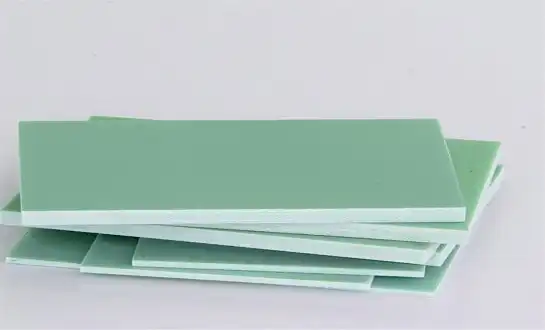
Controlling edge quality in CNC machining phenolic cloth laminates starts with understanding the material itself. The 3026 Phenolic Cloth Laminated Sheet is a thermosetting composite built from coarse cotton canvas layers impregnated with phenolic resin, pressed under high heat and pressure. This structure gives it flexural strength ≥ 100 MPa and thermal stability up to 120°C (Class E). However, that same woven architecture makes edges prone to fiber pull-out, chipping, and delamination when machining parameters are wrong. For engineering managers, OEM sourcing teams, and technical procurement specialists, understanding how to manage these risks directly protects component performance, dimensional accuracy, and production yield.

Understanding Edge Quality Challenges in CNC Machining Phenolic Cloth Laminates
The layered cotton-weave structure of phenolic cloth laminates makes them strong physically, but it also makes it easy to see how they will fail at the ends where they are cut. When a CNC tool cuts, it affects both the resin matrix and the fiber bundles at the same time. If the cutting force, speed, or sharpness of the tool are not matched, one will be damaged before the other.
Delamination and Fiber Pull-Out
When cutting, delamination happens when the interlaminar shear stress is higher than the resin bond strength. The coarse canvas weave in the 3026 grade absorbs a lot of impact energy. However, a dull tool concentrates stress at the layer interfaces instead of spreading it out. This doesn't really cut the fiber bundles off from the matrix; it just tears them apart.
Chipping and Edge Burning
Chipping generally means that the feed rate is too high or that the tool doesn't have enough support. Edge burning is a temperature issue: phenolic resin starts to break down above 150°C, and frictional heat from a worn tool or not enough chip clearance can easily go over that limit locally, leaving a scorched, brittle edge that weakens dielectric strength in electrical insulation uses.
Impact on Mechanical and Electrical Performance
A damaged edge isn't just for looks. When phenolic cloth laminates are used to make gears, bearings, and mechanical spacers, an edge that is rough or delaminated wears out faster. Micro-cracks at the edge lower the dielectric breakdown voltage for switchgear insulation and transformer structural supports. This creates a safety risk that qualified makers must avoid.
Key CNC Machining Parameters to Optimize Edge Quality
Getting the parameters right before the first cut gets rid of most problems with the edges of a 3026 Phenolic Cloth Laminated Sheet. For phenolic cloth laminate types like 3026, the table below shows the main factors and the levels that they should be in.
Most of the quality of an edge result is controlled by three factors.
- Tool selection: Solid carbide end mills with positive rake geometry are the standard choice. Diamond-coated tools extend service life significantly in production runs because phenolic composites are highly abrasive to tool edges. A dull tool is the single most common cause of delamination, so scheduled tool rotation intervals should be defined and enforced.
- Cutting speed and feed rate: Spindle speeds between 3,000 and 6,000 RPM with feed rates of 0.05–0.15 mm/tooth balance heat generation against mechanical impact. Reducing feed rate during finish passes lowers surface roughness without increasing temperature significantly.
- Depth of cut and cooling strategy: Shallow depths of cut (0.5–1.5 mm per pass) reduce interlaminar shear stress. Compressed air is the preferred cooling method because it evacuates abrasive dust without introducing moisture that can warp the laminate. Mist cooling is acceptable for thicker sections. Flood coolant is generally discouraged because phenolic cotton boards absorb water, which degrades dimensional stability.
Solid carbide end mills with a positive rake shape are the most common type of tool. Because phenolic composites are very rough on tool edges, diamond-coated tools last a lot longer in production runs. The most common reason for delamination is a dull tool, so established and enforced tool rotation times should be set.
Advanced Techniques and Best Practices to Enhance Edge Quality
Even if the conditions are right, there are advanced steps in preparation and finishing that separate good edges from precision-grade edges.
Pre-Machining Material Conditioning
Phenolic cloth bonded sheets should be kept flat and in a dry place with a relative humidity of 40 to 60%. When more than about 0.5% of the weight of the material is saturated with water, internal stress shows up as warping and edge cracking when it is cut. JingHong ships items on pallets with protective packaging to keep their shape while in transit. However, you should still condition the items in your facility for 24 hours before they are machined.
Multi-Pass Roughing and Finishing Strategy
When you rough at a higher feed rate with 0.3 to 0.5 mm of finishing stock left over, and then do a light finish pass, the edges are noticeably cleaner than when you only cut one pass. The roughing pass quickly gets rid of large amounts of material, while the finish pass only gets rid of the roughing tool's broken top layer. When phenolic laminates are used to make precision gears and bushings, this is how they are usually done.
Inspection and Quality Control
After machining a 3026 Phenolic Cloth Laminated Sheet, look at the sides with a sweeping light to see if they are chipped or delaminated. A contact roughness tester or surface profilometry can confirm that Ra values are within the allowed range. Before putting electrical insulation parts together, non-destructive dielectric testing of the cut ends makes sure that the insulation is still good. To meet the needs of the customer audit, make sure that your inspection standards are in line with the ISO 9001 process control paperwork.
Comparing Phenolic Cloth Laminates and Alternative Materials for Edge Control
Phenolic cloth fused sheets work better than other materials in certain areas that they don't fully replicate.
Epoxy glass laminates, like FR4, have better dielectric strength and resistance to moisture. However, the glass fiber support in them is much rougher on cutting tools and makes edge burrs that are sharper. Machinability problems with fiberglass composites are similar. Melamine-based laminates are easier to work with, but they aren't as tough against impact or oil as the 3026 grade, which is used for quiet gears, rolling mill bearings, and terminal boards in low-voltage power distribution equipment.
For uses like coil supports, structural wedges, and mechanical spacers that need both high mechanical load-bearing capacity and moderate electrical insulation, phenolic cloth laminates are the best choice. Pure engineering plastics and glass-reinforced epoxies can't compare. The 3026 grade is better at handling compressive loads that are perpendicular to the laminations than finer-weave grades. This is why OEM buying managers in the tier-1 supply chains for big machinery and cars always ask for it when they need high-wear parts.
Procuring High-Quality Phenolic Cloth Laminated Sheets for Optimal Machining Results
The quality of the procurement directly affects the quality of the work. Different amounts of resin, uneven pressing, or cotton fabric that isn't up to par can all cause edges to behave differently, and no change in the cutting parameters can fully fix this problem.
It is important to look for a 3026 Phenolic Cloth Laminated Sheet provider that has ISO 9001 approval, UL 94 flammability compliance, and ASTM D578 documentation. These certifications show that the company keeps an eye on the whole process, from choosing the raw materials to checking them one last time. JingHong makes 13,000 tons of insulating sheet material every year. The 3026 grade is available in standard 1020 × 2020 mm sheets with thicknesses ranging from 3 mm to 100 mm, and 2,500 tons are in stock. On request, custom sizes can be made.
The minimum order size is 500 kg, and payment terms are T/T. Ocean, land, and air freight are all possible for logistics. With more than 20 years of experience in production and its own logistics operation, JingHong offers a single-source supply arrangement that makes it easier for technical procurement teams to meet tight project deadlines by reducing the amount of work that needs to be coordinated.
Conclusion
When CNC cutting a 3026 Phenolic Cloth Laminated Sheet, controlling the quality of the edges needs attention at three stages: choosing the material, setting the machine parameters, and inspecting the work after it has been cut. The first step is to pick the right grade, which means picking one with the right mechanical and heating qualities for your needs. Setting the right spindle speed, feed rate, and tool shape for the material is the second step. The loop is closed by checking and writing down the edge condition against set standards. Before any tools are even used, the biggest variable is taken out of the equation when procurement teams buy from certified manufacturers whose quality is always the same batch to batch.
FAQ
What tools work best for machining phenolic cloth laminates?
Solid carbide end mills with positive rake angles are the standard recommendation. Diamond-coated tools extend tool life in production environments because phenolic composites wear tool edges rapidly. Replace tools on a defined interval schedule rather than waiting for visible wear, since a dull tool causes delamination before the edge visually deteriorates.
How do I reduce delamination risk during CNC cutting?
Use shallow depths of cut (0.5–1.5 mm), maintain sharp tooling, and adopt a two-pass roughing-finishing strategy. Securing the sheet firmly with vacuum fixturing or clamping prevents vibration, which is a secondary cause of delamination. Cutting with the fiber weave direction rather than across it also reduces interlaminar stress.
What inspection methods confirm acceptable edge quality?
Visual inspection under raking light detects surface chipping. Contact profilometry measures Ra surface roughness against specification. For electrical insulation components, dielectric strength testing of machined edges confirms that cutting has not introduced micro-cracks that reduce breakdown voltage. Document results against ISO 9001 process records for traceability.
Does moisture affect machining edge quality?
Yes. Phenolic cotton boards absorb moisture, which causes internal stress and dimensional instability during cutting. Store sheets at 40–60% relative humidity and condition them in your facility for 24 hours before machining to achieve stable, repeatable edge results.
Request a Quote from J&Q — Your Trusted 3026 Phenolic Cloth Laminated Sheet Manufacturer
The technical team at J&Q is ready to help you find consistent, certified material. You can buy our 3026 Phenolic Cloth Laminated Sheet in standard sizes or have sheets cut to your exact needs. It comes with all the necessary ISO 9001 and UL 94 paperwork. You can email us at info@jhd-material.com or go to blog.jhd-material.com to get examples, specs, or a bulk quote that fits the needs of your project.
References
1. Rosato, D. V., & Rosato, M. G. Reinforced Plastics Handbook. Elsevier, 2004.
2. Davim, J. P. Machining Composites Materials. ISTE/Wiley, 2009.
3. ASTM International. ASTM D578: Standard Specification for Glass Fiber Strands. ASTM International, 2020.
4. IEC. IEC 60893: Insulating Materials — Industrial Rigid Laminated Sheets Based on Thermosetting Resins for Electrical Purposes. IEC, 2003.
5. Teti, R. "Machining of Composite Materials." CIRP Annals — Manufacturing Technology, 2002.
6. Hocheng, H., & Tsao, C. C. "The Path Towards Delamination-Free Drilling of Composite Materials." Journal of Materials Processing Technology, 2005.

Get a complete product list and quotation

J&Q New Composite Materials Company