How FR4 Epoxy Sheet Manufacturers Use CNC Equipment for Custom Components
FR4 Epoxy Sheet manufacturers rely on advanced CNC (Computer Numerical Control) equipment to transform standard laminate materials into precision-engineered custom components. Through computer-guided drilling, milling, and routing operations, these manufacturers achieve tolerances within ±0.005 inches, producing intricate geometries for PCB substrates, insulation barriers, and structural supports. CNC technology eliminates human error inherent in manual fabrication while accelerating production cycles from weeks to days. The process involves specialized carbide tooling designed to handle the abrasive nature of fiberglass-epoxy composites, ensuring clean edges and consistent dimensional accuracy across high-volume production runs critical to electronics, power distribution, and automotive industries.
Introduction
Materials used in modern industrial manufacturing need to be very good at resisting heat, electricity, and mechanical stress under tough conditions. Because they meet these strict needs, FR4 Epoxy Sheets have become the main material used in transportation, power infrastructure, and electronics construction. But raw sheet stock can't solve the wide range of part specs that engineering teams have to deal with every day. Customization to exact sizes, hole patterns, and profile forms is no longer a choice; it's a must.
This is where CNC cutting technology turns the abilities of materials into solutions that are ready to be used. CNC equipment is computer-controlled and more precise than older methods of fabrication or cutting by hand. It can handle small quantities for prototypes up to large quantities for mass production without losing accuracy. When engineering managers and procurement specialists are choosing suppliers, they need to know how this manufacturing integration affects the performance of parts, the reliability of deliveries, and the total cost of the project.
Figuring out how the features of a material affect its ability to be machined helps people make decisions about where to get parts that really match technical drawings and performance standards. The way these parts are made is what really decides how well they work for their intended uses, whether they are PCB substrate blanks, switchgear insulation barriers, or car battery pack separators.
Understanding FR4 Epoxy Sheet Essentials for Custom Components
Material Composition and Standards Compliance
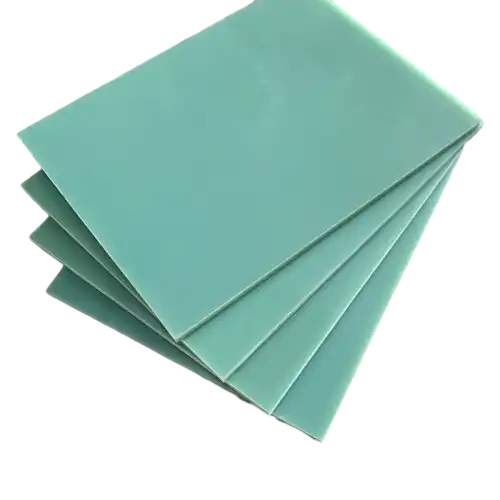
FR4 Epoxy Sheets are made up of layers of continuous woven fiberglass cloth that have been saturated with flame-resistant epoxy resin. These layers are then heated and pressed together to make rigid laminates. The "FR" label means that the product meets the flammability standards set by UL94 V-0. This is made possible by brominated epoxy formulas that put out fires on their own when fuel sources are taken away. This flame resistance sets FR4 Epoxy Sheet apart from its predecessor, G10, which has similar mechanical properties but doesn't have the fire safety standards that are needed for business electronics and power equipment.
The NEMA LI 1-1998 and IEC 60893 standards are often used as references in material datasheets. These standards give engineering teams uniform guidelines for measuring electrical breakdown voltage, dielectric constant, and arc resistance. Standard sheet thicknesses run from 0.008 inches to 3.0 inches, and panels can be made up to 48 by 96 inches. Manufacturers keep thickness tolerances very close (±10% for standard grades) because even small differences can change how CNC machines figure out the depth of cuts and how well finished parts work in stacked assemblies.
Key Physical and Electrical Properties
The composite structure has a flexural strength of more than 340 MPa along its length, which means it can support mechanical loads in fixture applications and structural insulation parts. Density levels usually fall between 1.85 and 2.10 g/cm³. This means that the material is strong without being too heavy, which is important in aircraft and car uses where reducing mass affects fuel economy and payload capacity.
Electrically, FR4 Epoxy Sheet keeps its dielectric strength above 500 volts per mil, which stops current from leaking between conductive paths in switchgear assemblies and high-density circuit boards. According to ASTM D570 tests, water absorption stays below 0.2%. This means that insulation resistance is kept even in wet industrial settings where moisture weakens less durable materials. Standard grades have a glass transition temperature (Tg) of 130°C to 140°C. High-temperature variants can hit 170°C+ for lead-free soldering and car under-the-hood parts.
Why Manufacturing Process Consistency Matters for CNC Machining
The layup process—how the fiberglass cloth sheets are stacked, mixed with resin, and allowed to dry—has a direct effect on how the machine works. When resin isn't distributed evenly, it leads to changes in density that make CNC tools chatter, bits wear out too quickly, and edges chip. When manufacturers use automated resin application systems and hydraulic press curing chambers, they can make laminates that are the same hardness throughout the thickness of the sheet. This makes it possible to predict tool paths and the quality of the surface finish.
The epoxy cure profiles also change the stress inside the laminate. If sheets are properly cured, they can be machined cleanly with little chance of delamination. On the other hand, materials that aren't properly cured may have resin smearing that makes cutting tools less accurate and clogs them up. Companies that make good products keep records of the curing times and test the consistency of each batch on a regular basis. This way, CNC operators can trust that the feeds and speeds they program will work without having to make adjustments based on trial and error.
CNC Equipment and Its Impact on FR4 Epoxy Sheet Customization
Limitations of Traditional Fabrication Methods
When using hand-held tools for manual routing, there is a lot of variation between operators, which makes it almost impossible to keep tolerances tighter than ±0.030 inches, which is not good enough for PCB mounting holes or precision-fit insulation sleeves. Waterjet cutting doesn't leave heat-affected areas, but it does leave rough lines that need extra work to be done on them, which costs more in labor and takes longer. Laser cutting is quick, but it leaves carbonized edges and spots where the resin breaks down, which weakens its mechanical properties and makes the electrical insulation at the cut edges less effective.
These traditional methods also have trouble being used again and again across production batches. A skilled worker might be able to get good results with a prototype, but it's hard for humans to keep the same specs for thousands of parts. When shaping is done by hand, 15–20% of the sheet stock is often wasted, which means more material waste and higher costs that are passed on to the component prices.
CNC Machining Advantages for Glass-Epoxy Laminates
Computer-controlled machining centers follow pre-programmed tool paths that are accurate to within 0.001 inches. They drill holes in patterns that perfectly match the layout of PCB conductors or the mounting hardware specifications. Three-axis and five-axis CNC routers can handle complicated curves, pockets, and chamfers in a single setup. This means that parts don't have to be repositioned, which can happen when they are moved from one human operation to another.
The technology directly solves problems with production scaling. After a CNC program has been checked and proven to work, makers can make thousands of similar parts without any quality issues. Within seconds, automated tool changers can switch between drill bits, end mills, and edge-finishing cutters. This keeps the process under tight control while reducing the amount of work that needs to be done by hand. This consistency is especially helpful for car tier-one suppliers and gadget makers who have to make sure that parts can be switched out between production lines.
FR4 Epoxy Sheet utilization is also optimized through advanced nesting software on CNC machines that arrange part profiles to reduce scrap. Manufacturers often get 90% or more of the material they use, which cuts down on the amount of raw materials they need and the cost of each piece. This saves money on buying budgets without sacrificing quality.
Specialized Tooling for Abrasive Composite Materials
Cutting tools wear out much faster on FR4 Epoxy Sheet laminates with fiberglass reinforcement than on metals or plastics that don't have fiberglass reinforcement. CNC shops that do glass-epoxy grinding use carbide or polycrystalline diamond (PCD) tools with cutting edges that stay sharp over long production runs. The shape of the tool, such as the helix angles, flute count, and covering options, is specially designed for composite materials to lower cutting forces and heat production.
When CNC machines are used, dust filtration systems are built in to collect the glass fibers that are released into the air during machining. This keeps the workplace safe while keeping the fine parts of the equipment from abrasive contamination. Chip buildup in tool flutes can be stopped by high-velocity coolant delivery or compressed air assist. This keeps the surface finish and dimensional accuracy the same from part to part. These unique skill sets set skilled FR4 Epoxy Sheet machinists apart from general production shops that try to do glass-epoxy work.
Comparing FR4 Epoxy Sheets with Other Materials for CNC Custom Components
FR4 Versus G10 Fiberglass Laminates
Both materials are made of fiberglass and resin and have about the same mechanical strength, so they can both be used for structural purposes like gear flats and wear plates. The main difference is how resistant they are to flames. FR4 Epoxy Sheets meet UL94 V-0 self-extinguishing standards, but G10 burns more easily when exposed to ignition sources. Electrical equipment makers put FR4 Epoxy Sheet at the top of their list for safety compliance, especially in sealed switches and control panels where a fire could have terrible effects.
When buying things, FR4 Epoxy Sheet is usually 10–15% more expensive than G10 because it has flame-retardant additives and has to go through more certification testing. G10, on the other hand, can't be used in places that need UL or CSA approvals, no matter how much it costs. The CNC machining characteristics are almost the same for both materials, so manufacturers can easily switch between them based on the needs of the project.
Phenolic Cotton Laminates for Industrial Machinery
Phenolic sheets are made of phenolic resin and cotton cloth reinforcement. They have better mechanical properties than glass-epoxy grades and cost less. For gears, bushings, and structural gaps in industrial machinery, phenolic materials are preferred because they are resistant to wear and maintain their shape under load. Electrical protection is not as important with these materials. The material is easy to work with standard CNC tools, and it makes less dust than options made of glass fiber.
When it comes to electrical performance, phenolic laminates are not as good as FR4 Epoxy Sheet because they absorb more moisture and have lower dielectric strength. This means they can't be used in places where power is present or where it is wet. Also, its thermal stability isn't as good; it can only handle temperatures of about 105°C continuously, while FR4 Epoxy Sheet can handle temperatures up to 130°C. Engineers choose between these materials based on whether the application needs electrical insulation or long-term mechanical strength.
Metal and Carbon Fiber Alternatives
Aluminum plates are better at conducting heat and electromagnetic waves, but they also carry electricity, which means they can't be used for insulation, which is what FR4 Epoxy Sheet is for. Metal parts usually have lower machining costs because they can be cut more quickly. However, higher material costs and extra weight can cancel out this benefit in situations where insulation and light weight building are important. Carbon fiber materials have great strength-to-weight ratios, but they are very expensive, so they can only be used in aircraft and high-performance cars.
For each project, the best material choice takes into account electrical needs, mechanical loads, thermal exposure, weight limits, and the project's budget. FR4 Epoxy Sheet is very popular in the electronics, power distribution, and device-making industries because it meets all the requirements for reliable electrical insulation, flame resistance, and mechanical integrity at a price that can be afforded by most businesses.
Procurement Considerations for Custom FR4 Epoxy Sheet Components
Supplier Capability Assessment
When engineers are looking at CNC machining suppliers, they should make sure that the equipment has the right amount of ability for the size of the job. Large panel work, like that found in power equipment insulators, can be done on multi-axis CNC routers with beds that are more than 60 by 120 inches. Smaller precision machining centers, on the other hand, are better for making a lot of PCB parts. If a seller has coordinate measuring machines (CMMs), optical comparators, and dielectric strength testers in-house, it shows that they are committed to quality verification that goes beyond eye inspection.
Certifications set standards for consistent production that can be measured. ISO 9001 quality management systems show that process controls are written down, and UL recognition shows that materials and manufacturing methods meet the safety standards that companies that make electrical equipment need. Suppliers that work with the aerospace or automotive industries often have IATF 16949 or AS9100 certifications, which show that they can meet the strict quality and traceability standards that these industries need.
Minimum Order Quantities and Lead Time Realities
Setting up a CNC machine, which includes programming tool paths, mounting fixtures, and checking the dimensions of the first piece, costs the same amount no matter how many are made. Suppliers usually set FR4 Epoxy Sheet minimum order numbers (MOQs) that make sure that these setup costs are spread out over enough parts to keep prices low enough per piece. MOQs for special parts are usually between 50 and 500 pieces, but this can change based on how complicated the part is and how the seller runs their business.
Lead times take into account getting materials, planning production, checking for quality, and shipping. Stock sheet material in common thicknesses may be ready to be machined right away. It takes an extra two to four weeks to get material in special grades or custom panel sizes. When it comes to production times, complex shapes that need special tools or multiple setups take longer than simple drilling and measuring work. Purchasing teams should give suppliers project timelines up front so that suppliers can come up with realistic delivery times that work with production planning needs.
Pricing Models and Total Cost Considerations
The prices of components take into account the costs of materials, CNC machine time, tool wear, inspection labor, and the distribution of overhead costs. Setup costs are spread out over longer production runs, which means that as order numbers rise, per-piece costs fall by a large amount. Suppliers may offer price breaks at certain volume levels. Knowing these break points helps procurement managers figure out the best order size to balance the costs of keeping inventory with the benefits of lower prices per unit.
A total cost study should look at more than just unit price. It should also look at quality uniformity and delivery reliability. In the end, cheap parts that need to be reworked or cause delays on the assembly line cost more than slightly more expensive parts that come on time and meet all the requirements. Suppliers with strong quality systems, quick technical support, and flexible production schedules add value that goes beyond the line item on the purchase order. These things are especially important in production settings where a lack of a part can stop production, which costs a lot more than the material savings that come from low-bid sourcing strategies.
Case Studies: Successful Applications of CNC-Customized FR4 Components
High-Density PCB Substrate Fabrication
Electronics companies that make multilayer circuit boards need FR4 Epoxy Sheet substrates that have been precisely drilled. The electrical connections depend on how accurately the holes are placed in relation to each other. CNC drilling can place holes within ±0.003 inches of each other across panels with thousands of vias, which makes layer registration during board lamination reliable. Edge profiling cuts complicated board shapes with rounded corners and precise slots for edge connectors. This gets rid of the need for extra routing steps that could cause delamination at the cut edges.
With a dielectric strength of more than 40 kV perpendicular to laminations and consistent dimensions achieved through CNC machining, circuit designers can increase the number of conductors without compromising the integrity of the insulation. This feature is very important in small consumer gadgets, car control units, and telecommunications infrastructure, where board space is very valuable.
Power Distribution Switchgear Components
Manufacturers of transformers and switches ask for custom-machined FR4 Epoxy Sheet arc barriers, phase separators, and busbar supports that can keep their shape even when exposed to high voltage. CNC routers make complex patterns of slots and mounting holes that line up perfectly with metal parts when the electronics are put together. The flame-retardant properties stop the fire from spreading if an arc happens, keeping people and equipment nearby safe.
Dimensional stability across temperature cycling—from subzero installations outside to heat caused by electrical loads inside—makes sure that mechanical assemblies keep the right contact pressure and gaps throughout their useful lives. Controlled production and CNC-precise machining make sure that the materials used are always the same. This lets these important safety parts meet the decades-long service requirements that utility companies expect from distribution equipment.
Automotive Battery Pack Insulation
Electric vehicle battery makers use FR4 Epoxy Sheet that has been cut with a CNC machine to keep high-voltage cell modules away from the vehicle's frame ground and to keep them from getting too hot. Custom profiles can fit complicated container shapes while still meeting the minimum distance requirements set by electrical safety standards. The material doesn't conduct heat well, so it takes longer for heat to move during thermal runaway events. This gives battery management systems important seconds to set off protective disconnects.
Precision machining, which means taking away material only when it's needed for structural reasons, helps car engineers meet strict vehicle mass goals that affect driving range. Accuracy in CNC cutting means that thousands of vehicles will all fit the same way, so there are no more problems with fit-up on the assembly line that slow down production. These applications demonstrate how material properties and manufacturing precision combine to solve complex engineering challenges in emerging transportation technologies.
Conclusion
Computer numerical control (CNC) technology has changed FR4 Epoxy Sheets from normal sheet stock to custom parts that meet exact mechanical, electrical, and size requirements. Computer-controlled accuracy gets rid of the variations that come with making things by hand, and it makes it possible to make things with complicated shapes and tight tolerances that aren't possible with traditional methods. It's helpful for engineering teams and procurement experts to know how the qualities of materials, manufacturing processes, and machining skills affect each other. This helps them figure out which parts will work and whether they can be made.
As well as price, good buying strategies look at the technical skills, quality systems, and output flexibility of each provider. Experienced manufacturers provide value that goes beyond unit prices. They also provide design help, consistent quality, and reliable delivery, all of which are important for project success in competitive industrial markets.
FAQ
What thickness ranges are available for CNC-machined FR4 components?
Standard FR4 Epoxy Sheet stock is usually between 0.008 inches and 3.0 inches thick, but you can order it in any thickness you want. All of this can be done with CNC equipment, but drilling small holes in very thin sheets (less than 0.020 inches) needs special micro-tools and slower feed rates to keep the material from bending. For thicker pieces bigger than 1 inch, you need carbide tools with longer flute lengths and strong machine rigidity to keep the measurements accurate all the way through the material.
Does CNC machining affect the electrical properties of FR4 material?
When CNC processes are done correctly with sharp carbide tools, the material's electrical integrity is kept. The key is a clean cutting action that breaks fibers instead of breaking them. This keeps the material from delaminating at the edges of the cut, where water could get in and weaken the dielectric strength. Edge quality inspection makes sure that the cutting parameters made clean cuts with no visible fiber pullout or resin damage that could cause current leakage in high-voltage situations.
Can FR4 sheets be machined into complex three-dimensional shapes?
FR4 Epoxy Sheet works great for flat sheet uses, but its thermoset resin structure means that it can't be heated or bent after it has cured. CNC machining with multiple axes can make complex shapes by milling pockets, chamfers, and curved surfaces within the thickness dimension. Injection-molded polymer insulators work best for truly three-dimensional parts that need compound curves. FR4 Epoxy Sheet is only used for situations where its better electrical properties allow for flat or simply curved shapes.
Partner with J&Q for Precision CNC-Machined FR4 Components
J&Q has been making insulation materials for more than 20 years and has advanced CNC cutting skills that allow them to make unique FR4 Epoxy Sheet parts that exactly match your needs. Our vertically integrated operations, which include making raw materials, precision machining, and logistics, get rid of the coordination delays that come with working with multiple vendors. Engineering support teams help with design optimization, choosing materials, and tolerance analysis. This makes sure that parts work as they should in your assemblies.
As a well-known provider of FR4 Epoxy Sheet to the automobile, industrial machinery, and electrical equipment industries, we keep our quality systems ISO-certified and our materials UL-recognized to make your compliance paperwork easier. Our in-house transportation department handles direct shipping coordination, which cuts down on wait times and freight costs while keeping everyone in the supply chain informed about delivery. Get in touch with our technical team at info@jhd-material.com to talk about your project needs and get detailed quotes backed by decades of reliable manufacturing experience.
References
1. National Electrical Manufacturers Association. (2018). Industrial Laminating Thermosetting Products - NEMA Standards Publication LI 1-1998. Rosslyn, VA: NEMA.
2. Institute of Electrical and Electronics Engineers. (2020). Electrical Insulation Materials for Power Systems: Selection and Application Guidelines. New York: IEEE Press.
3. Harper, C.A. (2015). Electronic Materials and Processes Handbook, Fourth Edition. New York: McGraw-Hill Education.
4. Society of Manufacturing Engineers. (2019). CNC Machining of Composite Materials: Tooling Strategies and Process Optimization. Dearborn, MI: SME Press.
5. Underwriters Laboratories. (2021). UL 94: Standard for Safety of Flammability of Plastic Materials for Parts in Devices and Appliances. Northbrook, IL: UL LLC.
6. ASM International. (2017). Composites Engineering Handbook: Processing and Fabrication Technologies. Materials Park, OH: ASM International.

Get a complete product list and quotation

J&Q New Composite Materials Company



