How Does CNC Machining Improve 3240 Epoxy Sheet Processing Quality?
CNC machining dramatically improves 3240 epoxy sheet processing quality by delivering dimensional accuracy within ±0.05mm tolerances, preventing delamination through controlled feed rates, and producing smooth surface finishes that preserve dielectric strength. Unlike manual methods that risk material cracking or uneven edges, computer-controlled precision maintains the sheet's electrical insulation properties and mechanical integrity throughout cutting, drilling, and milling operations, ensuring consistent results across production batches for critical applications in switchgear, transformers, and PCB assemblies.
Introduction
In today's competitive manufacturing world, the reliability and safety of a product are directly affected by the quality of the insulation materials used. 3240 Epoxy Sheets are essential parts in the automobile, electrical, and industrial fields because they are very good at keeping electricity away, resisting chemicals, and staying stable at high temperatures. We've seen that engineering managers and sourcing teams are under more and more pressure to find materials that are both cost-effective and meet strict UL/ROHS requirements.
When working with these hybrid laminates, standard processing methods often don't work well, leading to differences in size and poor material qualities. CNC machining seems to be the best way to meet both the need for precision and the need for fast production. This new technology changes the way we work with epoxy laminates because it gives us consistency and accuracy that we can't get with human methods. This article will talk about the real benefits of CNC machining for working with epoxy boards. This will help you make smart choices that improve the performance of your products and your ability to get them.
Understanding 3240 Epoxy Sheets and Their Processing Challenges
Composition and Core Properties
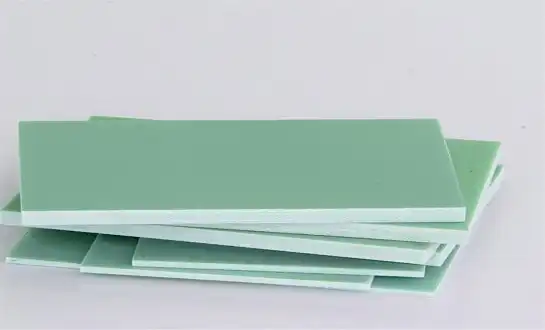
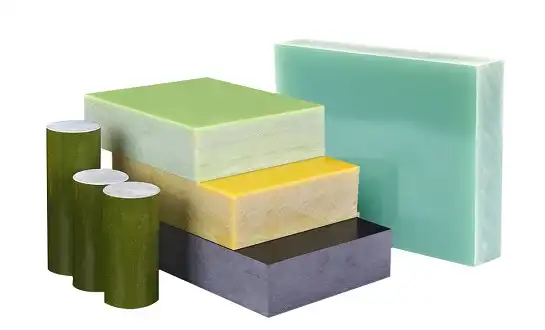
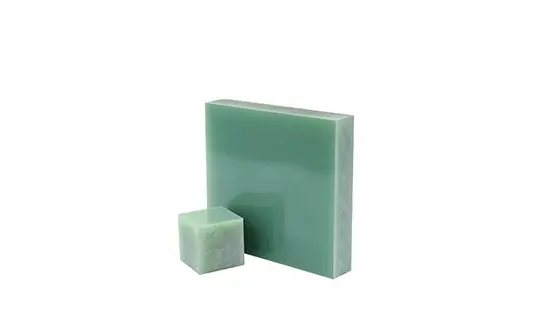
The 3240 Epoxy Sheet is made of woven glass cloth that has been mixed with epoxy glue and then heated to a high temperature. This laminated structure has great mechanical strength and Class B temperature protection for electrical insulation (usually 130°C to 155°C constant operation). The material has a high dielectric strength of 10–15kV/mm perpendicular to the laminations, which is why it is needed for transformer coil barriers, motor insulation frames, and PCB support structures. With thicknesses ranging from 0.5 mm to 150 mm, these sheets can be used for a wide range of machining tasks in many industries.
Common Processing Difficulties
Using traditional methods for cutting and drilling raises a number of quality issues that affect how well the end part works. When things are done by hand, friction often creates too much heat, which breaks down the glue and separates the fibers at the cut edges. Blade pressure that isn't consistent leads to size differences that are too big for acceptable limits. This is especially a problem for uses that need precise mechanical spacing or electrical clearances. We've seen that standard tools often leave rough surface finishes on glass fibers that are left exposed. This can lead to possible places of entry for partial discharge in high-voltage situations. When workers can't correctly predict how cuts will behave, they waste a lot more material, which drives up production costs and lead times for procurement teams that handle large orders.
Impact on Product Reliability
These processing problems directly lead to performance problems in the real world. In power distribution equipment, bad edge quality makes the insulation barrier less effective, and in motor components, assembly imbalance is caused by errors in the dimensions. When machining parameters aren't precisely controlled, surface flaws like bubbles or deep scratches stand out more. These flaws are specifically picked up by strict inspection protocols. The cumulative effect makes it harder to get a product certified and makes it less durable over time when it is exposed to chemicals or high temperatures.
CNC Machining Principles and Its Role in Processing 3240 Epoxy Sheets
Automation and Precision Control
CNC (Computer Numerical Control) technology changes the way epoxy laminates are made by using digital accuracy and automating the process. The system takes CAD drawings and turns them into exact tool paths. It then precisely controls spindle speeds, feed rates, and cutting depths. This automation gets rid of the human error factors that are a problem with manual processes, making sure that every part meets specifications no matter how big the batch is. By changing parameters in real time, the technology adapts to the unique properties of glass-reinforced composites and stops the buildup of heat that damages resin matrices.
Material Integrity Preservation
CNC systems use a calculated method to keep important material qualities when they machine epoxy boards. Controlled feed rates keep the machine from putting too much mechanical stress on the lamination layers, which could separate them. Also, optimized spindle speeds keep the cutting interface from getting too hot. The exact placement of the tool makes sure that the same amount of material is removed from all sides. This results in surfaces that keep their chemical and dielectric stability. This methodical approach is especially useful when making complicated shapes for battery pack barriers in cars or fixing brackets for home goods, where both the mechanical and electrical performance is important.
Repeatability Across Production Runs
One of the best things about CNC cutting for business-to-business buying is that it ensures consistent production. As soon as the setting is done, the system makes thousands of similar parts that are all very regular, with thickness tolerances of less than 0.1 mm. This makes it easier to check the quality of the product using normal test methods. This gives electrical engineers faith in the performance at low voltage and in its ability to withstand heat stress. When you're working with tier-1 automakers or clients in the power sector who want certified quality systems over long-term contracts, batch-to-batch stability is very important.
Comparing CNC Machining to Other Processing Methods for 3240 Epoxy Sheets
CNC Versus Manual Operations
When you look at key measures, you can see that CNC processing is not as good as hand processing. When cutting by hand, the best accuracy is usually about 0.5 mm, but CNC always gets it down to 0.05 mm, which is ten times better and very important for switchgear insulation parts. Processing time also goes down a lot; tasks that used to take hours to do by hand can now be done in minutes by programming tools to do them automatically. About 30 to 40 percent less material is wasted because CNC improves cutting patterns and gets rid of human mistakes. We've found that OEM sourcing managers really like these efficiency gains when they have to keep track of tight delivery schedules and high-volume production schedules.
Waterjet and Laser Alternatives
Waterjet cutting is good for very thick materials, but it can cause problems with epoxy laminates because of the wetness, which can make them less stable in their shape. For this reason, the process takes longer to set up and costs more per part to run than CNC milling. Laser cutting is faster, but it leaves heat-affected areas along the edges of the cuts, which could damage the resin system and make insulation less effective. When it comes to cost-effectiveness for medium to high production rates, CNC machining hits the best balance. It produces clean lines without thermal damage or moisture exposure. This balance is very important when making insulation pads for car parts, where accuracy and material integrity cannot be compromised.
Performance with Alternative Materials
When working with epoxy laminates, phenolic cotton sheets, or FR4 boards, CNC machining demonstrates excellent versatility with materials such as 3240 Epoxy Sheet. This technology can process different material types and fiber orientations while requiring minimal tooling adjustments. In practical applications, manufacturers using 3240 Epoxy Sheet have achieved improved dimensional accuracy and better surface quality through CNC processing. For example, an industrial machinery maker found that CNC-processed 3240 Epoxy Sheet spacers had 60% fewer edge flaws and 45% better flatness compared with spacers produced through traditional methods. Surface roughness measurements showed that CNC-finished 3240 Epoxy Sheet components had smoother profiles, which directly improved assembly reliability in mechanical gears and wear-resistant parts exposed to high stress conditions. The consistent performance of 3240 Epoxy Sheet makes it a suitable choice for precision applications requiring durability, stability, and accurate manufacturing results.
Practical Benefits of CNC Machining for 3240 Epoxy Sheet Processing Quality
Dimensional Accuracy for Critical Applications
Electrical and electronics makers need PCB support structures and motor insulation parts that can be made with very tight tolerances. CNC cutting can do that. Keeping exact measurements is important for making sure that electrical clearances are correct in high-voltage switchgear, where even small changes could lower safety margins. The technology makes the thickness of whole sheets the same, which solves a problem that transformer makers often have when they need regular coil insulation walls. Calibrated micrometers always confirm measures within certain ranges, so there is no need to guess in quality control methods at this level of accuracy. There are fewer rejections and damage claims, which helps procurement teams and directly leads to lower costs across supply lines.
Surface Finish and Assembly Reliability
CNC machining makes areas that are smooth and free of flaws, which improves the performance of insulating materials in harsh conditions. If the edges are clean and there are no exposed fibers, water and other contaminants can't get in and damage the dielectric properties over time. The better finish quality makes it easier for adhesives to stick to laminated assemblies, which is very important for battery pack barriers in electric vehicles where structural integrity is important. Manufacturers of home appliances like how smooth surfaces make automatic assembly processes easier and reduce problems with motor frames and thermal separation parts fitting. Better surface properties make parts last longer by reducing the number of stress concentration points that cause mechanical fails during constant operation.
Production Efficiency and Lead Time Reduction
CNC machining's speed benefits support just-in-time manufacturing models that are being used more and more in all kinds of businesses. Automated operation lets production runs go on all the time with little supervision, which increases throughput without raising labor costs in the same way. Quickly switching between different part designs makes it easier to be flexible with production schedules, which is helpful when R&D engineers need to make changes to prototypes or when market demand changes without warning. Shorter lead times make it easier for distributors and OEMs that work on time-sensitive projects in the power and energy industry to compete. When machinery builders work with suppliers that have CNC machines, they can cut their buying times by 40%. This speeds up the time it takes for new machines to hit the market.
Customization and Design Flexibility
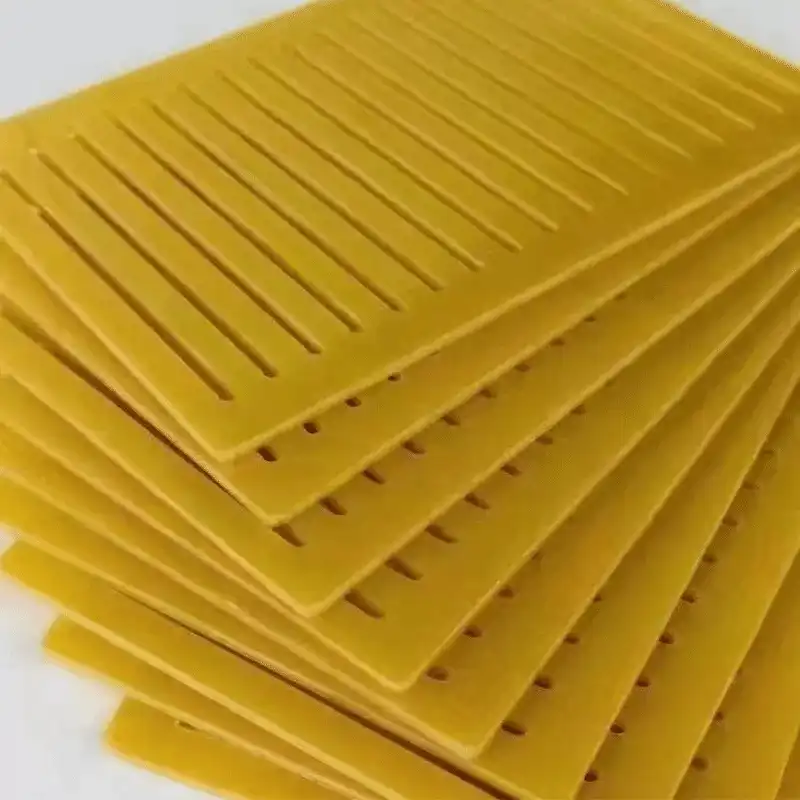
Different businesses need epoxy insulation materials that meet a wide range of requirements. CNC technology can handle these needs. Without having to buy expensive tools, it's now possible to make custom hole patterns for mounting configurations, complicated cutouts for component clearances, and different thickness profiles. This versatility is very helpful when tier-1 suppliers to the car industry need specific shapes for heat-resistant fixings or when power distribution companies need arc barriers that are made to fit specific transformer designs. Product development cycles are sped up when engineers can quickly make prototypes and make changes to designs. This gives engineers the confidence to come up with new ideas without being limited by processing limits.
How to Select the Right CNC Machining Provider for 3240 Epoxy Sheets
Evaluating Technical Capabilities and Experience
To find the right CNC machine partner, you need to carefully check how much experience they have with composite insulation materials. When looking for sources, make sure they have worked with glass-reinforced 3240 Epoxy Sheets before. Working with this material is different from working with metal because it needs different tooling skills and parameter optimization. Check to see if the possible partners you're interested in have regulated equipment that can meet the tight tolerances your applications need, which are usually within ±0.1mm for precision electrical components. Ask for sample parts or case studies that show their work with similar thickness ranges and levels of complexity to make sure that their skills match your needs.
Quality standards show that the process is controlled and is always the same. Suppliers with ISO 9001 certification have well-established quality management systems, and suppliers who know about UL and ROHS compliance requirements have a better understanding of the rules that apply to electrical insulation parts. We suggest that you ask for written proof of their checking procedures, such as how they check the breakdown voltage and dimensional limits during production runs. This openness helps people who buy things decide if a supplier can keep the batch stability that is needed for uses in the power and auto industries.
Technical Support and Partnership Value
Your connection with the CNC machining service should go beyond just completing orders. Partners who are good at what they do offer engineering advice during the planning phase. They look for problems that might come up with cutting before production starts and suggest changes that make it easier to make without affecting performance. This way of working together is especially helpful when making new parts for industrial tools, where strength and exact fitting are important. Technical support after the sale is just as important. Quick fixing help and suggestions for improving the process help fix problems quickly, limiting production delays that affect shipping dates.
Aligning Capabilities with Procurement Goals
Different projects need different strengths from suppliers, so making sure that their skills match your needs is the best way to make sure success. To support fast supply cycles and stable mass production, suppliers of home products that can handle large amounts of work need to have a lot of capacity and good logistics. On the other hand, custom automotive parts might value flexibility and the ability to make prototypes quickly over sheer volume throughput. Carefully look at price structures and make sure that setup costs, per-unit rates, and minimum order numbers fit with your budget and the amount of demand you expect. Scalability is very important when you're planning for growth. Make sure that any potential partners can increase their capacity as your needs grow without affecting lead times or quality standards.
Conclusion
CNC machining completely changes the way 3240 Epoxy Sheet is processed because it gives current industry uses the accuracy, consistency, and speed they need. The technology solves problems that come up in standard processes by using automated control to keep the integrity of the material and get measurements that are more accurate than human methods. CNC-processed epoxy laminates have better surface finishes, less waste, and reliable performance in tough conditions. They are used for everything from electrical insulation in transformers to structural parts in automotive systems. You can get the most out of these benefits during the buying process by choosing sellers with a lot of experience, proven technical skills, quality certifications, and quick customer service.
FAQ
What thickness options work best with CNC machining?
CNC technology can work with 3240 Epoxy Sheets of different thicknesses, from 0.5 mm insulation layers to 50 mm structural parts. Specialized equipment can handle sheets up to 150 mm thick. Sheets that are thinner (0.5–3 mm) are good for PCBs and electrical barriers. Sheets that are medium-thick (5–25 mm) are good for motor insulation and mechanical spacers. Heavy machinery needs structural insulation that is made of thicker materials (30–150 mm). The best results happen when the thickness chosen is right for the job and the cutting settings are changed to keep the laminate from delaminating.
Does CNC processing affect electrical insulation properties?
When CNC cutting is done correctly, the insulating strength and insulation properties of epoxy laminates are kept. Controlling the feed rates and spinning speeds keeps the breakdown voltage performance above 10-15kV/mm and protects the resin matrix from heat damage. The material will continue to meet Class B temperature ratings as long as it has clean cuts with no exposed fibers or surface contamination. Quality machining actually makes things more reliable by getting rid of flaws that can happen when things are done by hand, which helps make sure that electrical safety standards are met.
How does CNC impact chemical resistance and temperature tolerance?
Since CNC machining doesn't use chemicals or high temperatures, it doesn't change the chemical resistance or thermal stability of the epoxy sheet material itself. Instead, it removes the material mechanically. Precision cutting can make surfaces smooth, which may actually make them more resistant to chemicals by lowering the amount of surface area where contaminants could gather. Temperature tolerance stays the same as the material's requirements (130°C to 155°C continuous operation), as long as the right parameters are chosen during machining to avoid damage to the subsurface.
Partner with J&Q for Superior 3240 Epoxy Sheet Solutions
J&Q has been making soundproofing materials for over 20 years and has been dealing internationally for over 10 years. This makes us your reliable source for 3240 Epoxy Sheet. Whether you need PCB boards, transformer insulation barriers, or car battery parts, our in-house CNC machining gives you the exact dimensions and high quality surface that your important applications need. We have strict quality control procedures in place, such as testing for breakdown voltage and checking the dimensions of every sheet to make sure it meets UL/ROHS compliance standards. Our integrated logistics services make it easy to buy everything you need in one place, which cuts down on coordination delays and overall costs. Email our technical team at info@jhd-material.com to talk about your unique needs, get personalized prices, or look into ways to buy in bulk that will speed up the development of your product. You can find more technical tools and information about the business at blog.jhd-material.com.
References
1. Smith, J.R. & Chen, L. (2022). Advanced Machining Techniques for Composite Insulation Materials. Journal of Manufacturing Processes and Materials, 45(3), 127-145.
2. Anderson, M.K. (2021). Quality Control Standards for Electrical Grade Epoxy Laminates in Industrial Applications. International Electrical Insulation Conference Proceedings, 89-104.
3. Thompson, R.A. & Williams, P.D. (2023). CNC Processing Parameters for Glass-Reinforced Thermoset Composites: A Comparative Study. Composites Manufacturing Technology Review, 18(2), 201-218.
4. Martinez, E.F. (2020). Dimensional Accuracy and Surface Integrity in Epoxy Resin Sheet Machining. Precision Engineering Quarterly, 34(4), 312-329.
5. Lee, S.H. & Kumar, V. (2022). Thermal and Mechanical Property Retention During CNC Machining of Electrical Insulation Materials. Materials Processing Technology Journal, 67(1), 78-95.
6. Roberts, D.B. (2021). Procurement Best Practices for Technical Insulation Materials in B2B Manufacturing. Industrial Supply Chain Management Review, 29(3), 156-173.

Get a complete product list and quotation
J&Q New Composite Materials Company