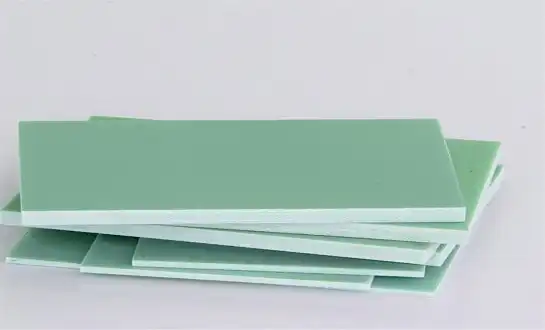
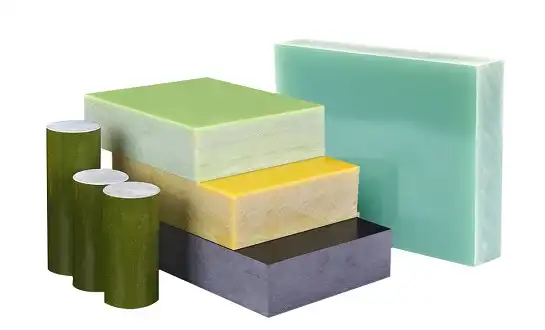
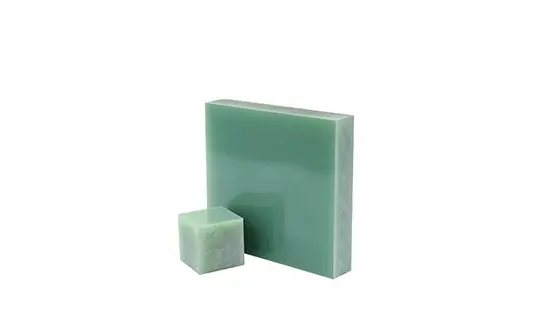
G10 Epoxy Sheet Manufacturing Equipment for Custom Electrical Components
When sourcing reliable materials for custom electrical components, understanding G10 epoxy sheet manufacturing equipment becomes essential. G10 epoxy sheets consist of woven fiberglass cloth bound with epoxy resin, delivering exceptional dielectric strength, mechanical toughness, and chemical resistance. The sophisticated equipment used in their production directly influences dimensional accuracy, surface finish, and electrical performance—factors that matter deeply to engineering managers and procurement specialists seeking consistent, certified materials for demanding applications.
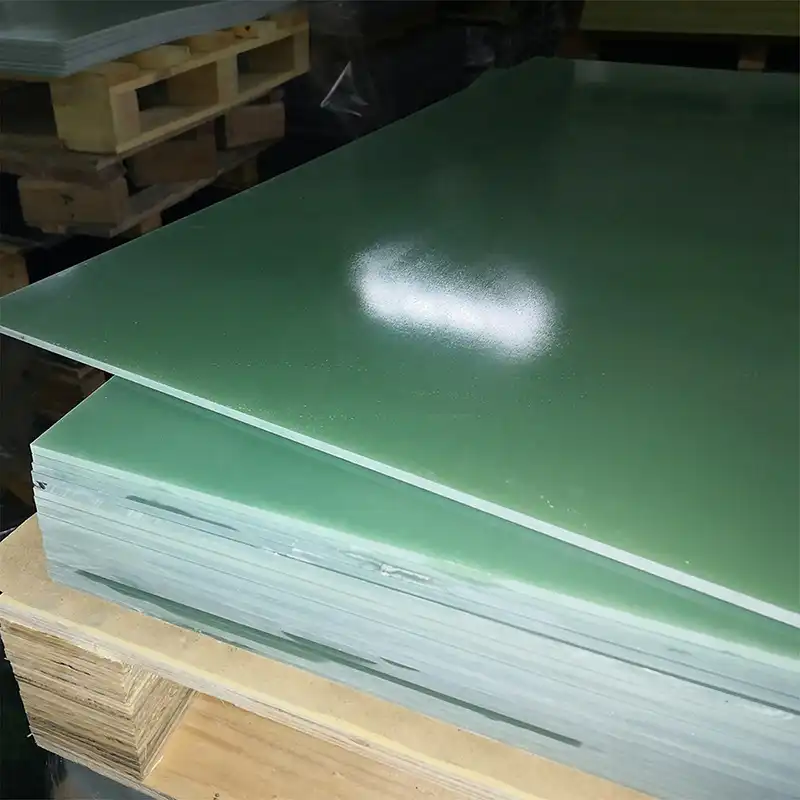
Understanding G10 Epoxy Sheets and Their Role in Electrical Components
Composition and Core Properties
G10 epoxy sheets are made of thermosetting epoxy resin binders and continuous woven glass fabric. The tensile strength of this composite construction can hit 40,000 psi, and its flexural strength is close to 75,000 psi. The glass support keeps the structure strong, and the epoxy matrix provides better electrical protection, with a dielectric strength of more than 40 kV and low dissipation factors that are important for high-frequency uses.
Because these laminates have a specific gravity of 1.8, they have a good strength-to-weight ratio. This means they can be used for both stationary installations and mobile applications where weight is an issue. Water absorption stays incredibly low at 0.11% for 24 hours, which keeps the dimensions stable in damp places, which is something that phenolic paper laminates have a hard time matching.
Technical Specifications That Define Performance
Temperature resistance is one of the most important things to look for in electrical insulation materials. Standard G10 keeps its mechanical and electrical qualities at temperatures around 130°C (266°F) for long periods of time, and it can go higher for short periods of time. This thermal stability meets the needs of motor parts, switchgear systems, and power distribution gear that need to control heat well.
The material is 110 on the M scale, which means it is very hard. This makes it very resistant to wear in mechanical uses like gears, spacers, and structural supports. A bond strength of 2,200 psi guarantees the integrity of the laminate even when it is subjected to mechanical stress or changes in temperature. These specs come from using precise manufacturing methods and high-tech tools to control the amount of glue, the hardening profile, and the consolidation pressure.
Advantages Over Alternative Insulation Materials
G10 epoxy sheets are much better at keeping their mechanical strength across a wider range of temperatures than phenolic cotton sheets when it comes to resistance to moisture. Phenolic materials can absorb between 0.5% and 2.0% water, which can change their dimensions and make it hard to make precise assemblies. G10, on the other hand, stays stable because it absorbs less than 0.1% water. This is clear in the insulation of transformer coils, marine electronics, and the housings for outdoor equipment.
Because it has a very low coefficient of thermal expansion, G10 is more stable in its dimensions than thermoplastic insulators. This quality is very useful for precision jigs, test fixtures, and calibration tools where dimensional drift can lead to mistakes in measurements. Because it is thermoset, it is also resistant to chemicals like oils, acids, and cleaning agents that are common in industrial settings. This is different from many thermoplastics, which soften or grow when exposed to chemicals.
The Manufacturing Process of G10 Epoxy Sheets: From Raw Materials to Finished Product
Raw Material Preparation and Resin Impregnation
The first step in making something is carefully choosing an electrical-grade woven glass cloth. For best electrical qualities, E-glass fibers are usually used. Before going into the resin impregnation equipment, the fabric goes through cleaning stations that get rid of the sizing agents. Modern treater lines use exact amounts of catalyzed epoxy resin formulations, keeping the resin content within tight limits to make sure that the properties of the G10 epoxy sheets stay the same.
Dip tanks or roller coaters are used in impregnation tools to evenly soak the glass cloth. The resin-to-glass ratio is a key factor that affects the end laminate qualities. It is set by the resin viscosity, line speed, and squeeze roller pressure. Gravimetric monitoring is used in more advanced systems to keep batch-to-batch stability. This solves the problem of how to keep quality stable during long production runs.
Curing and Consolidation Under Controlled Conditions
After being impregnated, the fabric layers are dried in a controlled way to speed up the resin's cure to the B-stage, where it is partially hardened but can still flow when heated and pressed. Then, these prepreg sheets are stacked to the thickness that is needed and put on hot platens or autoclaves. Depending on the chemistry of the glue, manufacturing equipment keeps temperatures between 150°C and 180°C and applies pressures between 200 and 1,400 psi.
Programmable logic controllers in hydraulic press systems allow them to control multiple curing stages that improve crosslink density while lowering void content and internal pressures. Temperature consistency across big press platens has a direct effect on specs for thickness tolerance and flatness. These are important factors for CNC cutting and precision assembly. By investing in new press technology, companies can keep thickness differences across sheet measurements to within ±0.005 inches.
Quality Control and Certification Standards
Strict testing procedures make sure that finished laminates meet the requirements of NEMA Grade G-10 and any other requirements set by the customer. On sampling samples from each production batch, laboratories test the dielectric strength, measure the bending strength, analyze the water absorption, and check the dimensions. This method based on data gives engineering managers who are in charge of making sure parts work well more faith.
Certification to ISO quality management standards, UL recognition, and RoHS compliance shows that the manufacturing process is disciplined and can be tracked. These certificates are especially important for buyers in the power sector, tier-one sellers to the car industry, and electronics makers who have to deal with strict rules and worries about liability. These quality standards can be met consistently with manufacturing equipment that has real-time monitoring and statistical process control.
Comparing G10 Epoxy Sheet Manufacturing Equipment: Selecting the Right Solution for Your Business
Traditional Versus Advanced Production Systems
In older factories, batch-style hydraulic presses that need to be loaded and heated by hand and have limited process tracking are common. These systems can make good G10 epoxy sheets, but they need skilled operators to make up for the limitations of the equipment, and the quality of the laminates may vary more between runs. Cycle times are usually longer, and the throughput capacity is still limited by having to move materials by hand.
Modern production lines have digital press settings with heating zones and systems that move materials automatically. The whole process is constantly watched. These improvements have a number of practical benefits. Automated stacking systems cut down on the cost of labor and make it easier to line up layers consistently. Programmable cure profiles improve crosslinking of the resin while cutting cycle times by 15 to 25 percent. Monitoring temperature and pressure in real time across platen zones makes sure that the material fuses evenly, reducing differences in thickness and internal holes that weaken its tensile properties.
Modern equipment with built-in data logging makes production records that help with quality certifications and customer audits. This is becoming more and more important in industries like automotive and aerospace where strict traceability requirements are needed. When changing production runs, being able to store and return tried-and-true process recipes for different product requirements cuts down on setup time and waste.
Throughput Capacity and Scalability Considerations
The choice of equipment must be in line with the amount of output needed and the company's growth goals. Single-opening presses with 4x8-foot platens may be enough for smaller businesses or those that only serve a small niche market. These presses can make 20 to 30 sheets per shift, based on the width and cure cycle needs. These systems require less money to buy and can be used in a variety of ways, making them useful for custom orders where specifications change often.
Multi-opening presses or continuous lamination systems are helpful for makers who make a lot of things for the electronics, appliance, or industrial machinery markets. Multi-daylight presses can stack several laminate parts vertically during a single press cycle. This increases output without taking up more floor room or using more energy. Continuous systems run prepreg through hot roller nips, which lets them make thinner gauges at high linear speeds that are good for mass production settings.
Precision, Energy Efficiency, and Customization Flexibility
The quality of the result is directly affected by how precisely the press is built. Frames made of heavy-duty materials don't bend much when there are high consolidation pressures, so the press platens stay straight across their entire surface area. This structural integrity means that thickness tolerances are tighter and flatness is better, which are both very important when customers need to machine intricate patterns or need to prepare the surface as little as possible before bonding.
Since power costs are going up and environmental concerns are becoming more popular, energy saving has become a big issue for businesses. Modern presses have better insulation, zone heating that sends energy to the right places, and heat recovery systems that use waste heat to heat up the press before it is used. Compared to older designs, these features cut the amount of energy used per kilogram of product by 20 to 35 percent. This makes the product more cost-effective while also being better for the environment.
Customization gives electrical component applications the freedom to meet a wide range of needs. Equipment that can handle different stack heights can handle thicknesses ranging from 0.010 inches to over 2 inches without having to make a lot of changes. Different resin systems can be processed because the pressure and temperature profiles can be changed. These include normal epoxy, high-temperature formulations, and specialized chemicals for radiation-resistant or low-outgassing uses that niche markets want.
Strategic Procurement Considerations for G10 Epoxy Sheets and Manufacturing Equipment
Identifying and Evaluating Qualified Suppliers
It can be hard for procurement teams to tell the difference between sellers who are truly skilled and those who don't have the technical depth or manufacturing consistency they need. Suppliers with a good reputation show their skills in a number of ways that can be checked. Tours of manufacturing plants show how advanced the equipment is, how clean the facilities are, and how well the processes are run. Quality certifications, such as ISO 9001, show that a company uses a structured approach to process control and ongoing improvement. However, certification by itself does not guarantee technical competence.
When designing components that push the limits of a material's performance or when solving application problems, the ability to provide technical help is very important. Suppliers with experienced technical teams can help with things like choosing the right grade, setting up the machine, and making sure the material is safe for the environment. This is more useful than just sending the material. You can test things in-house or through partnerships with approved labs. This lets you make sure that important properties are correct and helps you come up with custom specifications.
Referrals from past customers who have used similar products can tell you a lot about how reliable the delivery is, how consistent the quality is, and how quickly problems are fixed. Electrical engineers and purchasing experts should ask directly about differences between batches, stable wait times during demand spikes, and the supplier's ability to adapt to changes in specifications or urgent orders.
Understanding Pricing Structures and Value Propositions
The price of G10 epoxy sheets depends on more than just the cost of the raw materials. The price is greatly affected by the thickness of the sheet because thicker materials need longer curing times and more raw material per square unit. Custom sizes that aren't normal sheet sizes may cost more because the material yields less and needs to be handled more. Prices are affected by the number of orders because of economies of scale in getting materials, making schedules for production, and paying off set costs over time.
Value-conscious procurement looks at more than just the purchase price. It also looks at the total cost of ownership. When materials come with tighter thickness standards, they take less time to machine and produce less waste. A consistent surface finish quality cuts down on the steps needed to prepare the surface before gluing or covering. Cutting processes lose less material when edges are straight and corners are square. These qualities might bring in a small price increase, but they often save money in the long run by making production more efficient.
Reliability in lead time is another aspect of value that price alone doesn't show. Suppliers who keep enough goods on hand and have flexible production capacity can respond quickly to pressing needs or changes in schedules. This keeps production from stopping, which would cost a lot of money. Emergency surcharges for fast orders can be much higher than any savings you might get from negotiating prices hard on standard lead times.
Certifications, Compliance, and Long-Term Partnership Factors
It's getting harder and harder to follow the rules, especially for companies that sell their products in other countries. When a material is recognized by UL, it means that it has been tested by a third party and meets safety standards for electrical applications. RoHS compliance checks that a product doesn't contain any restricted dangerous chemicals, which is necessary for goods that will be sold in Europe or other places with environmental laws. Suppliers who keep their certifications up to date and keep an eye on changes to regulations make it easier for their customers to follow the rules.
There are benefits to long-term partnerships that you can't get from short-term relationships. Established providers know what their customers need for their applications, what they expect from quality, and when their businesses run. This familiarity makes it easier to talk about problems with getting raw materials, making the best use of production schedules, and working together to solve problems when application problems come up. Technical cooperation can include working together to create unique grades or standards that give a business an edge in the market.
Logistics skills affect both the total cost of delivery and how well material is managed. Suppliers who offer a range of shipping choices can help different types of orders balance cost and haste. Those who run regional distribution centers cut down on transit times and make it possible for smaller deliveries to happen more often, which lowers the cost of holding goods for customers. Expertise in export documentation makes international transactions go more smoothly and avoids delays at customs that throw off production schedules.
Optimizing Production Efficiency with the Right G10 Epoxy Sheet Manufacturing Equipment
Addressing Common Bottlenecks in Laminate Production
Manufacturers often run into scaling problems when they try to increase production volumes without spending more on equipment. Because only one cure cycle can happen at a time in each press, batch processes naturally have a low throughput. Because of this limitation, companies have to make tough decisions between making a lot of standard goods over a long period of time to get the most out of their tools and quickly fulfilling custom orders for smaller amounts. Multi-opening presses help with this problem in part by processing multiple assemblies at the same time, but they also make it more difficult to move the materials around.
When customer applications need tight dimensional tolerances that get close to the limits of what the equipment can do, precision constraints become clear. It's hard for older G10 epoxy sheet press systems with worn platens or heating elements that don't work right all the time to keep flatness standards below 0.010 inches per foot or thickness limits smaller than ±0.003 inches. These restrictions mean that makers have to do extra grinding or sanding, which adds to the cost and time it takes to make the parts, and they might not be able to get the tightest margins that precision electrical parts need.
Most of the time, delays in turnaround time are caused by things that need to be done by hand before and after the press cycle. Cutting, laying out, and loading prepreg by hand takes a lot of time and can be inconsistent because of differences in how the operators do them. Post-cure tasks like trimming, inspecting, and packaging also take time that isn't useful and adds to the total manufacturing lead time. There are ways to automate these support processes, which can lead to bigger gains in speed than just optimizing the press cycle.
Advanced Manufacturing Features That Improve Yield and Quality
Automation technologies have turned making laminates from a craft that requires a lot of work to a controlled industrial process. Automated cutting systems accurately cut prepreg sheets from master rolls, making sure that the fibers are oriented correctly and reducing the amount of waste. Robotic stacking systems make laminate structures with the same number of layers and alignment every time. This is because they don't use human labor, which can bring difference. These machines can keep working without getting tired, keeping quality high during long production runs that are hard for humans.
Real-time monitoring systems keep an eye on important process factors during cure cycles, collecting data that can be used for statistical analysis and ongoing growth. Temperature monitors spread out on the press platens find problems with the heating before they make the laminates faulty. Pressure sensors make sure that the consolidation force stays within the limits set during the whole cure profile. When parameters aren't followed as planned, alarms go off so that problems can be fixed before they affect whole production batches.
Technologies that reduce waste take into account both the prices of materials and the needs of the environment. Precision resin application systems cut down on the extra resin that causes waste at the edges and during consolidation. Standard sheet sizes can yield more material when the cutting patterns are optimized. Recycling programs for scrap materials get money back from trimming waste and off-specification sheets. This lowers the cost of disposal and supports sustainability goals that are becoming more important to corporate procurement policies.
Future-Proofing Operations Through Strategic Equipment Investment
Upgrades to equipment require large amounts of money, which procurement experts and engineering managers must clearly show through a return-on-investment analysis. In addition to increasing throughput, modern manufacturing systems offer other benefits as well. Better process control lowers the amount of waste, which directly lowers the cost of materials per unit of goods made. Improvements to energy efficiency lower running costs over the life of the equipment. Better powers make it possible to go after high-end apps with stricter requirements that pay more.
Investing in technology is driven by the need to meet changing standards. As working voltages rise and miniaturization makes electric field pressures stronger, the requirements for electrical insulation keep going up. As power levels rise in gadgets and electric vehicles, it gets harder to keep things cool. With manufacturing equipment that can handle more complex resin systems and stricter property requirements, suppliers can meet the needs of new markets instead of being limited to older ones where margins are shrinking.
As companies make promises to be more environmentally friendly, eco-friendly options become more important in their buying choices. Energy-efficient manufacturing equipment lowers the carbon impact of each unit made, which is a measure that big buyers are tracking and reporting more and more. Environmental discharge is kept to a minimum by closed-loop water systems. During curing, emission control devices pick up volatile chemicals. Organizations that buy things and have formal sustainability programs tend to prefer suppliers whose equipment choices show they care about the environment.
Conclusion
Choosing the right G10 epoxy sheet manufacturing equipment has a big impact on the quality of the finished product, how well the business runs, and its ability to compete in the market for electrical components. For uses in electronics, industrial machinery, power distribution, cars, and appliances, advanced production systems provide the accuracy, consistency, and certifications that purchasing managers and engineering managers need. By investing in new equipment technology, companies can deal with current operational problems and get ready for changing market needs like tighter tolerances, specialized formulations, and expectations for sustainability. When buying laminate materials and production tools strategically, you have to weigh short-term cost concerns against long-term value factors like supplier technical support, quality stability, and relationship dependability. When it comes to demanding electrical insulation uses, manufacturers who make the best decisions about these choices set themselves up for long-term competitive benefit.
FAQ
What distinguishes G10 from FR4 material specifications?
Standard G10 epoxy sheet is technically the same as FR4, but it doesn't have the brominated flame retardant additives that give FR4 its ability to put out fires on its own and its UL 94 V-0 flammability grade. G10 usually has a little more mechanical strength and a little more resistance to water. Many current suppliers offer dual-rated materials that meet both standards, but FR4 classification is required for uses with strict fire safety rules.
Can G10 epoxy sheets withstand continuous outdoor exposure?
Outside, the material still has good mechanical and electrical properties, but the epoxy resin matrix isn't naturally resistant to UV light. Long-term exposure to direct sunlight turns the surface yellow, and as the resin breaks down, fibers start to bloom. Protective coatings or paint systems with UV inhibitors are needed for outdoor applications that need to look good for a long time. However, outdoor installations that are buried or enclosed work well without extra protection.
What safety considerations apply when machining glass epoxy laminates?
The glass fiber reinforcement makes abrasive dust with bits that can be breathed in and can cause skin discomfort. For professional cutting, you need carbide or diamond tools that can handle rough materials and industrial vacuum extraction systems that can get rid of fine particles. Operators need to wear the right breathing gear and should use wet cutting methods whenever possible to keep dust from getting into the air.
How does thermal expansion compare to metal structural materials?
G10 has a very low coefficient of thermal expansion, which means that its shape stays the same at all temperatures better than most metals. This quality is very useful in precision tools, test equipment, and systems where temperatures change quickly. Minimal expansion and contraction lowers mechanical stress in assemblies made of more than one material and keeps key measurements constant across a wide range of working temperatures.
What determines maximum operating temperature capabilities?
Regular NEMA G-10 grade materials keep their qualities consistently at temperatures that stay around 130°C for a long time. The resin chemistry and glass transition temperature are what limit their performance. For uses that need better performance at higher temperatures, you should choose G-11 grade materials. These use different epoxy formulations that keep their mechanical strength at temperatures up to 180°C. Short-term excursions above continuous ratings are usually fine, but over a long service life, thermal aging will eventually break down properties.
Partner with J&Q for Premium G10 Epoxy Sheet Solutions
J&Q has been making high-quality G10 epoxy sheets that meet the strict requirements of electrical component applications for more than 20 years. Our purchasing teams and engineering managers always choose us because we use cutting-edge production tools and strict quality control systems to make UL-approved, RoHS-compliant materials that are very uniform from batch to batch. Because we own our own logistics, we can set flexible delivery times that meet your production needs, no matter how many prototypes you need or how many you need for full-scale production. As a well-known supplier of G10 epoxy sheets to a wide range of industries, from electronics to cars, we know how important it is for your applications to find the right balance between dielectric performance, mechanical strength, and CNC machinability. Contact our technical team at info@jhd-material.com to talk about your unique needs and find out how our integrated production and delivery services can help your supply chain work better.
References
1. National Electrical Manufacturers Association. "Industrial Laminating Thermosetting Products - NEMA LI 1-1998 Standards Publication." National Electrical Manufacturers Association, 1998.
2. Harper, Charles A. "Handbook of Plastics, Elastomers, and Composites." Fourth Edition, McGraw-Hill Professional, 2002.
3. Lubin, George. "Handbook of Composite Materials." Van Nostrand Reinhold Company, 1982.
4. Chawla, Krishan K. "Composite Materials: Science and Engineering." Third Edition, Springer Science & Business Media, 2012.
5. Underwriters Laboratories. "Standard for Safety of Polymeric Materials - Industrial Laminates, Filament Wound Tubing, and Vulcanized Fibre - UL 94." Underwriters Laboratories Inc., 2013.
6. Mazumdar, Sanjay K. "Composites Manufacturing: Materials, Product, and Process Engineering." CRC Press, 2001.

Get a complete product list and quotation
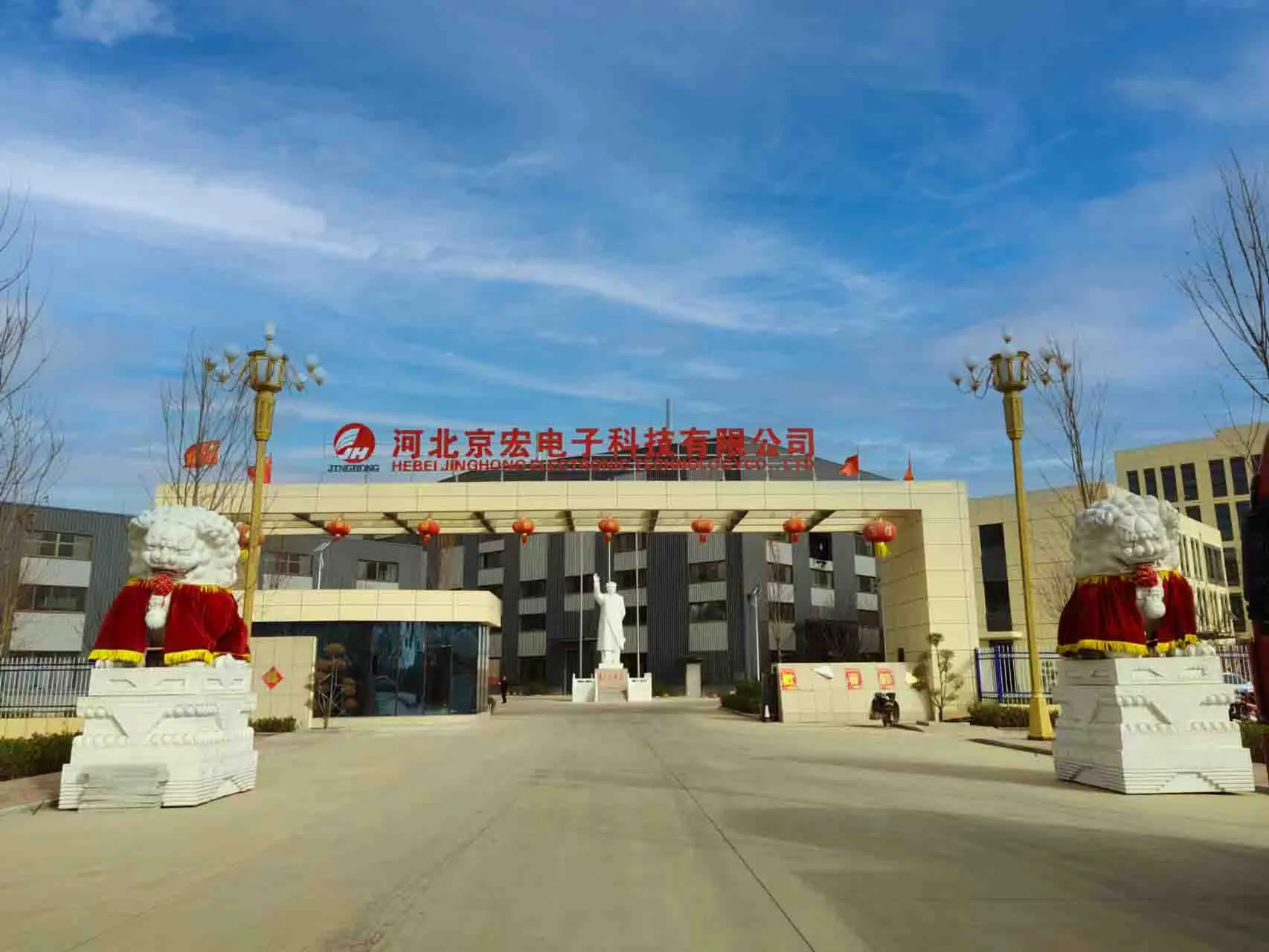
J&Q New Composite Materials Company