How Does NEMA Grade FR4 Epoxy Sheet Improve Insulation Reliability?
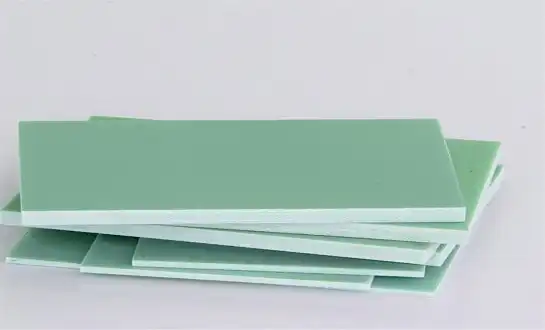
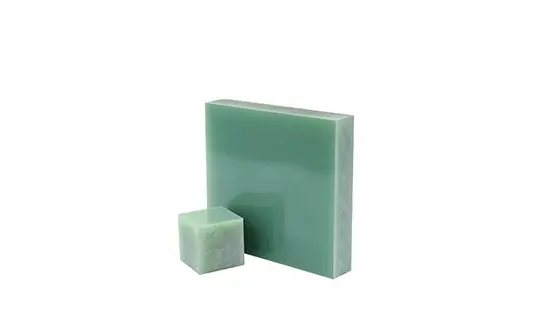
When engineering managers and procurement teams evaluate insulation materials for high-stakes applications, one question surfaces repeatedly: does the material hold up when thermal stress, voltage spikes, and mechanical load converge simultaneously? NEMA Grade FR4 epoxy sheet answers that question with measurable performance data. Constructed from 7628 E-glass fabric bonded with epoxy resin, this laminate delivers a dielectric breakdown voltage exceeding 50 kV, flexural strength above 415 MPa, and a glass transition temperature ranging from 130°C to 180°C depending on the grade — properties that collectively elevate insulation reliability across industrial, electrical, and automotive environments.
Understanding NEMA Grade FR4 Epoxy Sheet: Properties and Performance
What Defines the NEMA Grade Designation?
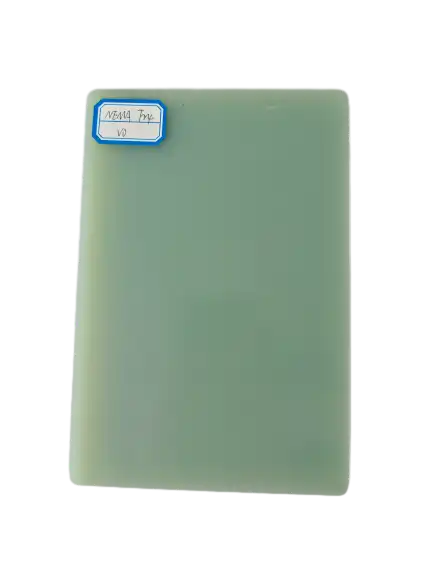
The NEMA LI-1-1990 standard sets very specific performance requirements that a glass-epoxy laminate must meet in order to be called FR4. An approved NEMA grade product, on the other hand, goes through controlled hot-press lamination that spreads resin evenly across the 7628 E-glass weave. This makes a board that is stable in terms of its dimensions and has the same dielectric qualities across its cross-section. This is very important for multi-layer PCB bases and high-voltage switchgear parts, where weak spots can fail catastrophically.
Core Material Parameters
The thickness of JingHong's FR4 epoxy sheet ranges from 0.3 mm to 100 mm, and the normal sheet size is 1030 mm × 1230 mm. Custom sizes, like 1030 mm × 2030 mm, 1220 mm × 2440 mm, and 1030 mm × 2070 mm, can be used for large-format cutting needs for industrial machinery panels and transformer barriers. The material doesn't absorb more than 0.25% water, so even in humid work environments, the surface insulation resistance stays the same. The specific gravity of about 1.85 g/cm³ gives it structural strength without the extra weight that comes with metal options.
These physical factors are not chosen at random. They directly lead to longer service intervals, fewer replacements in the field, and a lower risk of electrical failure while in use. Procurement specialists and engineering managers at electronics companies, power utilities, and Tier-1 automotive suppliers see these results as measurable cost savings over the lifecycle of the component.
Comparing NEMA Grade FR4 to Other Epoxy Sheet Materials
FR4 vs. G10 and Standard Epoxy Laminates
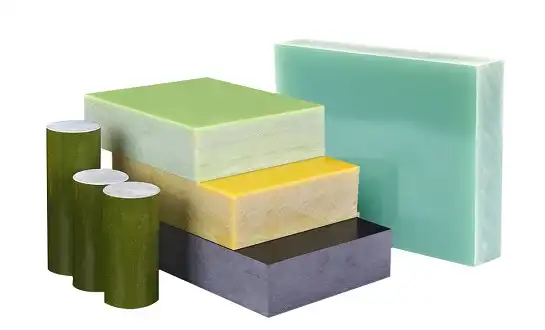
However, Nema Grade Fr4 Epoxy Sheet is not made of the flame-retardant brominated compound that gives FR4 its UL 94 V-0 rating. Instead, it is made of the same glass-cloth epoxy material. In real life, this difference is very important: switchgear enclosures, motor terminal boards, and battery pack barriers are all places where an ignition source could appear out of the blue. In a controlled flame test, a material with a V-0 rating goes out on its own within 10 seconds. G10 does not come with this guarantee.
Standard FR4 sheets that aren't NEMA may use lower-quality glass cloth or different resin ratios, which can cause the dielectric constant (Dk) to vary from batch to batch. It is very important for impedance-controlled PCB trace routing that Dk stays in the 4.2–4.8 range, which is controlled by NEMA-grade specifications. Picking the right grade isn't just a matter of theory; it has real effects on signal integrity in high-frequency circuits and arc reduction in power distribution panels.
In real life, here is a review of the three materials on some important performance dimensions:
- NEMA Grade FR4: Flame retardant (UL 94 V-0), controlled Dk (4.2–4.8), dielectric breakdown >50 kV, flexural strength LW >415 MPa, water absorption <0.25%. Best suited for PCB substrates, high-voltage insulation, and UL/RoHS-compliant applications.
- G10: No flame-retardant additive, similar mechanical strength, lower regulatory compliance. Appropriate for mechanical spacers and structural supports where ignition risk is negligible.
- Standard epoxy laminates: Variable resin content, inconsistent thickness tolerances. Suitable for low-voltage, non-critical insulation tasks where cost drives the decision.
Understanding these differences helps OEM sourcing managers spend their money wisely, choosing cost-effective choices when performance gaps allow and NEMA-grade materials when dependability is a must.
Applications of NEMA Grade FR4 Epoxy Sheet in Electrical Insulation
PCB Substrates and High-Voltage Switchgear
Since the 1960s, Nema Grade Fr4 Epoxy Sheet has been the most popular material for PCB substrates. This is because it stays the same size during thermal cycling, which means that copper trace alignment stays within a certain range of temperatures. For electrical equipment, the material's high Comparative Tracking Index (CTI) stops carbonized conductive paths from forming on its surface when electrical stress is applied for a long time. This is the type of failure that leads to arc-flash events in substations and industrial control panels.
Industrial Machinery, Automotive, and Power Sectors
FR4 sheets are cut by machinery builders into gear blanks, slot liners, and insulating spacers for motors that are constantly vibrating. The material has a tensile strength of more than 275 MPa, which lets thin cross-sections be used to save room without compromising the structure's strength. Automotive R&D engineers use FR4 laminates as heat-resistant fasteners and barriers for battery packs because they value the material's stable batch quality across production runs. This is something that Tier-1 supply chain managers make sure of through incoming inspection processes.
FR4 is used to insulate coils and stop arcs in the manufacturing and distribution of transformers. Its temperature index of 140°C and thermal conductivity of about 0.29 W/(m·K) through-plane meet the standards for Class F insulation in IEC 60085. This gives electrical engineers the official performance data they need to send to regulators.
Procurement Insights: Buying NEMA Grade FR4 Epoxy Sheets for Your Business
Evaluating Suppliers and Certifications
Verifiable certifications are the first step to reliable sourcing. JingHong has ISO 9001, ISO 14001, and ISO 45001, which are all about quality management, being responsible to the environment, and health and safety at work. These certificates show that production processes are checked by outside parties and that materials can be tracked from the raw glass cloth to the finished laminate.
With a building that covers 36,300 m² and the ability to produce 43,000 tons of Nema Grade Fr4 Epoxy Sheet every year, JingHong is able to handle large orders without having to wait for long lead times. With a minimum order quantity of 500 kg, you can buy both small prototypes and whole production runs. T/T is used for payment, and shipments can go by ocean, land, or air freight, based on how quickly they need to get there and where they are going. They can also go directly to the US and other countries. When sheets are shipped on pallets, they stay safe during transportation, which cuts down on damage claims that slow down production.
How to Test and Verify NEMA Grade FR4 Epoxy Sheets for Quality Assurance?
Essential Incoming Inspection Procedures
Technical procurement teams should set up a structured incoming inspection protocol before adding any laminate to a production line. The tests below look at the aspects of performance that are most important for ensuring the reliability of insulation:
- Dielectric breakdown voltage test (ASTM D149): Apply increasing AC voltage perpendicular to the laminate face until breakdown occurs. A compliant NEMA FR4 sheet should withstand >50 kV, confirming the epoxy matrix is free of voids or delamination.
- Flexural strength measurement (ASTM D790): A three-point bend test verifies that the laminate meets the >415 MPa LW threshold, ensuring mechanical integrity under assembly torque and operational vibration.
- Thermal resistance verification: Place samples in a calibrated oven at the rated continuous operating temperature for a defined dwell period, then re-measure dielectric properties to confirm no degradation occurred.
- Water absorption check (ASTM D570): Immerse specimens for 24 hours and weigh before and after. Results should remain below 0.25% to validate moisture resistance.
You can do these tests in-house using normal lab tools, or you can send them to third-party laboratories that are approved to do them. Keeping test records for each batch creates an auditable quality trail that meets the needs of quality audits by customers and regulatory inquiries right away.
Conclusion
Nema Grade Fr4 Epoxy Sheet makes shielding more reliable by being resistant to flames, having a high dielectric breakdown voltage, staying the same size, and being approved to be strong. These features address the real failure modes that engineers see in PCB circuits, switchgear, motor parts, and power distribution equipment. These include arc tracking, thermal degradation, moisture entry, and mechanical wear. When bought from a company whose credentials can be checked and whose production size allows for batch stability, this material stops being a risk and becomes a long-term asset that can be used in any insulation strategy.
FAQ
What distinguishes NEMA Grade FR4 from standard FR4 in practical applications?
Standard FR4 may have the FR designation, but it doesn't have the same level of specification control. This means that batch variations happen, which can affect PCB designs that are sensitive to impedance and high-voltage insulation assemblies.
Can FR4 epoxy sheets be machined into custom shapes?
Yes, CNC turning, drilling, and precise cutting work well with FR4 laminates. JingHong can make unique sizes up to 1220 mm × 2440 mm, and their OEM services let you choose the thickness, color, and cut shape to fit the needs of your project.
What thickness range is available, and how is it selected?
You can get sheets from 0.3 mm to 100 mm thick. Thick sections are used for structural spacers, bus bar supports, and transformer barriers, while thin gauges are best for PCB boards and insulation foils. The type chosen relies on the voltage level, the mechanical load, and the area available for fitting.
What are the typical lead times for bulk orders?
With an annual capacity of 43,000 tons, JingHong can easily handle standard bulk orders. Lead times depend on the width, the type of cuts needed, and the method of shipping. Get in touch with the sales team to get a production schedule based on the number of items you want to order.
Partner with J&Q for Certified NEMA Grade FR4 Epoxy Sheet Solutions
The people at J&Q have been working with insulation materials for more than 20 years and have been trading with other countries for more than 10 years. As a reliable company that makes Nema Grade Fr4 Epoxy Sheet, we back up every shipment with ISO 9001, ISO 14001, and ISO 45001 certifications, as well as in-house testing and a dedicated logistics network that can handle delivery by sea, land, and air. To get a custom price right away, email your requirements to info@jhd-material.com or go to blog.jhd-material.com.
References
1. National Electrical Manufacturers Association. NEMA LI 1: Industrial Laminating Thermosetting Products. NEMA, 1998.
2. Coombs, Clyde F. Printed Circuits Handbook. 6th ed., McGraw-Hill, 2007.
3. Harper, Charles A. Electronic Materials and Processes Handbook. 3rd ed., McGraw-Hill, 2004.
4. IEC. IEC 60085: Electrical Insulation — Thermal Evaluation and Designation. International Electrotechnical Commission, 2007.
5. ASTM International. ASTM D149: Standard Test Method for Dielectric Breakdown Voltage and Dielectric Strength of Solid Electrical Insulating Materials. ASTM, 2020.
6. Ullett, J. S., and R. P. Chartoff. "Unsaturated Polyester and Vinyl Ester Resins." Handbook of Thermoset Plastics, Elsevier, 2014.

Get a complete product list and quotation
J&Q New Composite Materials Company