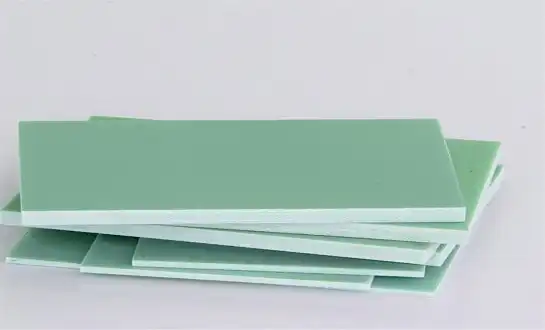
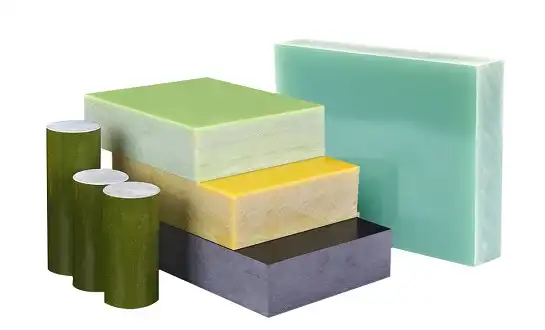
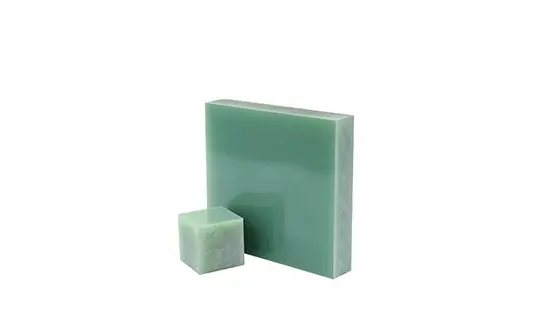
How Does Epoxy Fiberglass Tube Improve Electrical Safety?
An epoxy fiberglass tube improves electrical safety by combining alkali-free glass cloth with an epoxy phenolic resin matrix, producing a structural insulating component with outstanding dielectric strength, thermal stability, and chemical resistance. Unlike conductive metal conduits, this composite tube prevents electrical leakage, resists arc tracking, and maintains dimensional integrity under mechanical stress. With a volume resistivity reaching 2.4×10¹³ Ω·m and insulation resistance exceeding 5.5×10¹² Ω under normal conditions, it delivers measurable protection in high-voltage environments, transformer assemblies, and switchgear applications where electrical faults carry serious safety consequences.

Understanding Epoxy Fiberglass Tubes and Their Role in Electrical Safety
What Makes This Composite Material Distinctive?
To make the 3640 epoxy tube, alkali-free glass cloth is mixed with epoxy phenolic resin and then hot-rolled and baked to shape it. The end result is a thick tube with a smooth surface that comes in inner sizes ranging from φ8mm to φ550mm. Its phenolic resin base allows it to cure at temperatures ranging from 0 to 180°C, and its low shrinkage during polymerization keeps the tight dimensions that were set. Because of these qualities, it is a good choice for insulating structural parts of electrical equipment that need to work reliably in wet places and when transformer oil is immersed.
This material is often used by engineers who work with high-voltage switchgear, dry-type transformers, and motor coil assemblies because it can handle three types of failure at the same time: electrical breakdown, thermal degradation, and mechanical fatigue.
Why Epoxy Fiberglass Tubes Outperform Traditional Materials in Electrical Safety?
By their very nature, metal tubes carry electricity, which can lead to galvanic corrosion and shocks in live electrical systems. When acrylic and normal polymer tubes are heated and cooled many times, they crack. They also lose their dielectric integrity when they come in contact with oils or industrial solvents. These weaknesses directly lead to broken equipment and safety problems on the production floor.
Because they are made of a completely different material, Epoxy Fiberglass Tube composite tubes don't have these problems. Here are the main performance benefits that make this combination better than other options:
- Non-conductive by structure: The glass fiber and cured epoxy matrix carry no free electrons, making the tube inherently non-conductive. This eliminates ground fault risks in live panel assemblies and motor housings without requiring additional insulating coatings.
- Chemical durability: The cured resin system resists acids, alkalis, and organic solvents. In transformer oil immersion testing, the insulation resistance remains measurable at 1.9×10⁴ Ω after two hours of submersion, confirming sustained protection in wet operating conditions.
- Mold and tropical resistance: Unlike organic materials that degrade in humid climates, the epoxy matrix resists mold growth, making it suitable for outdoor switchgear and equipment deployed in high-humidity regions.
All of these benefits lower the costs of upkeep over the course of the product's lifetime and make it less likely that the dielectric will fail, which is something that regular metal or plastic tubes can't stop. Purchasing teams that switch from metallic spacers to epoxy laminate tubing usually report fewer calls for corrective maintenance and longer periods of time between component service.
How Epoxy Fiberglass Tubes Improve Electrical Safety: Technical Insights
Dielectric Strength and Leakage Prevention
When tested in oil at 90°C, this material's vertical layer electrical strength reaches 8 MV/m. This shows that it works well as insulation at normal operating temperatures. A volume resistance of 2.4×10³³ Ω·m shows that even at high voltages, there is almost no current loss through the tube wall. These checked numbers make it easier for engineering managers to choose the right materials for arc shields or coil supports during design reviews.
Thermal Stability Under Sustained Load
When tested for thermal safety at 150°C for 24 hours, the tube wall doesn't crack or bulge. This is very important in places where temperatures stay high for long periods of time, like transformer coil insulation and motor enclosures. Because the fiberglass grid has a low rate of thermal expansion, it doesn't warp, which would change the shape of the contacts in precision electrical systems.
Structural Integrity Supporting Long-Term Safety
With a density of 1.70 g/m³ and mechanical support from woven glass cloth, Epoxy Fiberglass Tube is designed to handle impact and not bend when it's under load. This strong structure stops the physical damage that causes arcing and the spread of electrical faults in circuit breaker fuse tubes and tap switch supports. When mechanical and dielectric traits are combined in one component, a system needs fewer separate parts. This cuts down on cost and the number of places where something could go wrong.
Procurement Insights: Choosing Epoxy Fiberglass Tubes for Electrical Projects
There's more to choosing the right insulating tube than just matching the inner width to a picture. Before committing to a seller relationship, B2B buying teams should look at a number of specification factors.
Long-term dielectric performance is directly affected by how much water is absorbed. Standardized tests show that a material's water absorption value of 0.6 MPa or less means that it keeps its shielding qualities even after being in wet or humid places for a long time. Before approving a new source, buyers should ask for certified test reports, not just product datasheets.
For product lines to be flexible, the range of dimensions is important. With an inner diameter range of φ8mm to φ550mm, it can be used for everything from small contactor coil inserts to big transformer structure supports, and each project size doesn't need its own special tooling. This range also makes it easier for OEM buying managers who offer more than one equipment platform to keep track of their stock.
Customization is a key differentiator for buyers of automotive and industrial equipment who need non-standard wall thicknesses or specific resin formulations. Making sure that a supplier uses fully automated production equipment instead of manual layup processes has a direct effect on batch-to-batch consistency. This is the specification that tier-1 supply chain managers look at very closely during qualification audits.
Real-World Applications Demonstrating Electrical Safety Improvements
Electric and motor systems use epoxy fiberglass insulation tubes in many different ways. In dry-type transformers and electromagnet coil systems, they keep live wires from touching grounded frames and act as the main structural insulators. They can work in transformer oil immersion, which makes them useful for liquid-cooled power distribution equipment where other polymers would expand or separate.
These tubes are used in the infrastructure for renewable energy to make arc-extinguishing chamber covers and support structures for tap changers in utility-scale inverters and wind turbine transformers. Flame retardancy, temperature stability, and a UV-resistant epoxy matrix work together to make outdoor shelters last longer without the upkeep problems that come with metal ones.
They are used as mechanical spacers and sleeve bearings in motor-driven systems by people who build industrial tools. In this case, the physical stability prevents fit degradation that would cause electrical contact between moving and still parts, a failure mode that can cause both safety risks and unexpected downtime.
Conclusion
Electrical safety is taken care of by Epoxy Fiberglass Tube, which has been tested for dielectric performance, thermal stability, chemical resistance, and structural durability, all in one engineered part. The scientific information, which includes a volume resistivity of 2.4×10²³ Ω·m, an electrical strength of 8 MV/m in oil, and thermal stability proven at 150°C, backs up their claims for use in transformer insulation, switchgear, motor assemblies, and industrial machinery. This group of materials offers a well-known and tested solution for procurement professionals who need to balance cost-effectiveness with safety requirements.
FAQ
How does an epoxy fiberglass tube compare to carbon fiber tubing for electrical insulation?
Because carbon fiber conducts electricity, it can't be used for most insulation tasks. With a volume resistance greater than 2.4×10²³ ©·m, Epoxy Fiberglass Tube is naturally not conductive. Because of this, it is the best material for spark barriers, coil supports, and circuit parts that need to be electrically isolated.
What is the expected service lifespan in high-voltage environments?
Epoxy laminate tubes usually last longer than ten years if they are used properly, which means they are kept within their stated temperature and voltage limits and are not mechanically overloaded. Long-term deployment trust is boosted by thermal stability tests at 150°C for 24 hours, which show that the structure doesn't break down.
Can these tubes be customized for non-standard dimensions?
Inner sizes range from φ8mm to φ550mm, and wall thickness can be changed to fit the needs of the project. Formulations for resins can be changed to deal with certain chemical exposure or temperature patterns. Before making large orders, buyers should make sure they can customize the items and ask for proof of dimensional tolerances.
Are these tubes suitable for use in transformer oil?
The material is clearly rated for use in wet areas and transformer oil immersion. This was proven by testing the insulation resistance after two hours of oil immersion.
Get Premium Epoxy Fiberglass Tube Supplies from J&Q — Request a Quote Today
Every Epoxy Fiberglass Tube order is backed by J&Q Insulation Materials, which has been making insulation for over 20 years and trading internationally for over 10 years. With a workshop that is fully automated and a production capacity of 43,000 tons per year, J&Q can provide stable batch quality for both large purchases and special orders. Our own logistics company handles shipments by sea, land, and air, so we can do everything from production to delivery in one place. You can email our technical team at info@jhd-material.com or go to blog.jhd-material.com to get samples, specs, or a price from a reliable Epoxy Fiberglass Tube provider.
References
1. Harper, C. A. (Ed.). Handbook of Plastics Technologies. McGraw-Hill, 2006.
2. Tanaka, T., & Imai, T. "Advances in nanodielectric materials over the past 50 years." IEEE Electrical Insulation Magazine, 2013.
3. NEMA Standards Publication LI 1. Industrial Laminated Thermosetting Products. National Electrical Manufacturers Association, 2020.
4. Dissado, L. A., & Fothergill, J. C. Electrical Degradation and Breakdown in Polymers. Peter Peregrinus Ltd. / IET, 1992.
5. Ku, C. C., & Liepins, R. Electrical Properties of Polymers: Chemical Principles. Hanser Publishers, 1987.
6. IEC 60893-3-2. Industrial Rigid Laminated Sheets Based on Epoxy Resin for Electrical Purposes. International Electrotechnical Commission, 2003.

Get a complete product list and quotation
J&Q New Composite Materials Company