EPGC308 Epoxy Sheet Improves Performance in High Voltage Equipment
When electrical insulation fails inside high-voltage equipment, the consequences extend far beyond a single component. Transformer coils overheat, switchgear arcs, and entire production lines halt. That is why engineering managers and procurement specialists across the United States continue to specify the EPGC308 epoxy sheet as their material of choice. Built on woven glass fiber reinforcement impregnated with a high-temperature epoxy resin system, this Class H laminate delivers continuous thermal endurance at 180°C — a threshold that standard FR4 and G10 materials simply cannot sustain. At J&Q, we have spent over 20 years helping industrial buyers source insulating laminates that perform without compromise.
Understanding EPGC308 Epoxy Sheet and Its Core Properties
What Defines This Material at a Technical Level?
It is called an IEC 60893-3-2 glass-fabric-reinforced epoxy laminate that is made for high-voltage electrical settings. Its glass transition temperature (Tg) is usually higher than 170°C, and its thermal index goes up to 180°C, which is what gives it the Class H label. When the material is at room temperature, its flexural strength is at or above 340 MPa. When measured at 150°C according to ISO 178, it retains more than half of that strength, which is an important standard for ensuring structural stability inside energized equipment.
The dielectric strength across the laminations is at least 10 kV/mm when tested in oil, and the Comparative Tracking Index (CTI) can go up to 600V based on the type of resin used. These numbers are not just guesses. At J&Q, every production batch goes through quality control checks that are in line with IEC 60243-1 for dielectric breakdown and ISO 62 for water absorption. This ensures that every sheet that leaves our facility meets the written requirements.
Production Standards and Quality Assurance
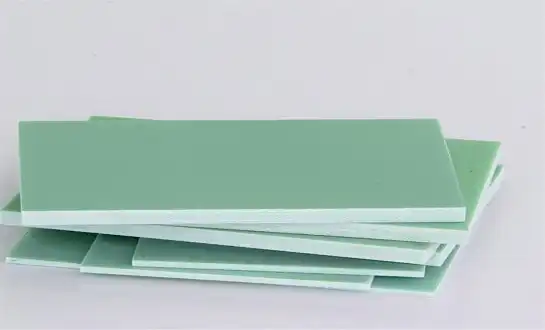
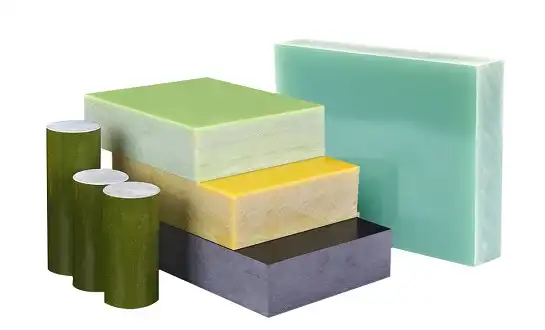
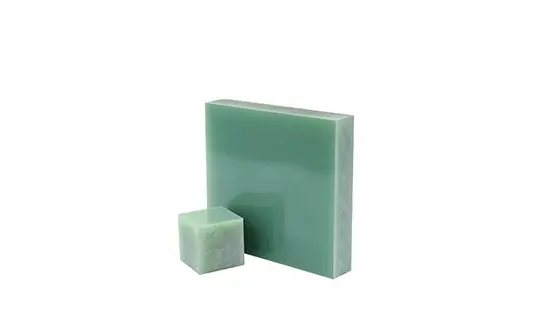
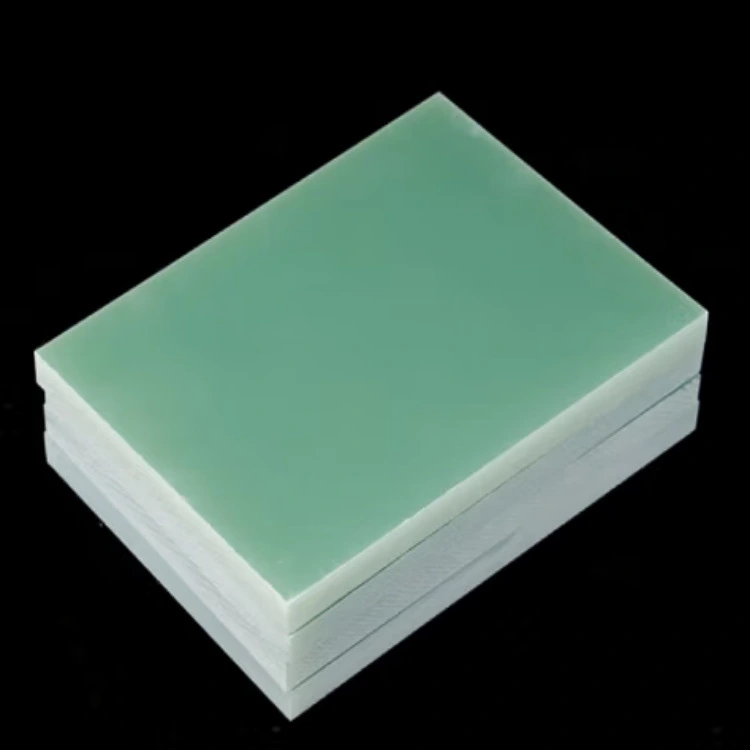
The JingHong brand Epgc308 Epoxy Sheets that J&Q sells are made with ISO-certified process controls and can produce 43,000 tons of sheets every year. As standard, sheets come in a size of 1030mm × 1230mm and a thickness range of 0.3mm to 100mm. Custom sizes, such as 1220mm × 2440mm and 1030mm × 2030mm, can also be made to meet the needs of OEM tooling. The natural color is light green, and the pallet packaging keeps the size stable while it's being shipped by sea, land, or air.
Why EPGC308 Epoxy Sheet Is Ideal for High Voltage Equipment?
Thermal and Electrical Performance Under Load
Purchasing managers often want to know why this laminate works better in tough situations than other, more basic options. The answer lies in how it acts when it is constantly under electrical and thermal stress, not just when it is at room temperature. The FR4 grade is only rated to 130°C (Class B), but the Epgc308 Epoxy Sheet grade stays mechanically sound and insulating at temperatures where most laminates would spread, delaminate, or carbonize. Because it doesn't let electrical tracking or corona discharge happen, it's very useful in places where surface pollution or partial discharge is a constant risk to operations.
- Sustained dielectric strength: at least 10 kV/mm in oil at 90°C ensures that the material keeps its insulating barrier even when it's buried in hot transformer oil, which stops catastrophic arc flaws.
- High-temperature flexural retention: Keeps more than half of its room-temperature bending strength at 150°C. This means that structural parts like slot wedges, phase barriers, and mechanical spacers keep their shape under load without creep deformation.
- Chemical inertness: Being resistant to transformer oils, solvents, and cleaning agents makes sealed electrical assemblies last longer and need less maintenance.
- Machinable precision: The material can be routed, milled, and drilled with carbide tools on a CNC machine, so it can be used to make parts with tight tolerances that don't bend after being machined.
All of these features make it less likely that switching panels, power transformers, and traction motor units will break down without warning. Material life is a direct cost-of-ownership factor in situations where replacing a part requires shutting down the whole system.
Documented Application Areas
Manufacturers of power generators use this epoxy glass laminate for stator slot wedges and coil packing blocks. These parts are subject to a lot of stress from thermal cycling and centrifugal force. Transformer OEMs use it to build phase barriers and arc chutes inside oil-filled and SF6 switchgear. In rail traction motors, the material doesn't delaminate when temperatures change quickly during acceleration and stopping, which is a way that trains have broken down in the past when cheap materials were used.
Making the Right Procurement Decisions for EPGC308 Epoxy Sheet
Matching Specifications to Application Requirements
To choose the right sheet configuration for Epgc308 Epoxy Sheet, you need to make sure that three factors are in sync: the thickness, the sheet size, and the surface finish. Thinner sheets, usually between 0.5 mm and 3 mm, are enough for coil insulation and arc barriers. For structural parts like motor wedges or switchgear spacers, the stock size usually needs to be between 10mm and 50mm. This is where dimensional tolerance comes into play. According to IEC 60893-3-2, a 10mm sheet has a standard tolerance of ±0.50mm. For applications that need tighter control, the surface needs to be ground again.
J&Q helps OEM buying managers by letting them order in different ways. We offer sample sheets for pre-production approval, and the minimum order quantity is 500KG. Payment terms are T/T. Customers can ask for custom sizes and colors, which cuts down on waste on the shop floor and makes cutting schedules easier.
Supply Chain and Logistics Transparency
We run our own transportation network, which lets us coordinate shipments from start to finish on land, sea, and air freight lines. This gets rid of the risk of handing off freight to a third party and gives buying teams a single point of responsibility from production to delivery.
Trusted Suppliers and Brands: Ensuring Quality and Compliance
It takes more than looking at a document to judge an epoxy laminate seller. Not only do certifications matter, but so does being able to check them. J&Q's JingHong-brand sheets meet ISO, UL, and ASTM standards. Our quality control paperwork includes high-temperature flexural testing, dielectric breakdown verification, and water absorption measurement, all of which are in line with IEC standards. Before a package goes out, procurement managers can ask for batch test records.
In addition to being certified, we have been trading internationally for over 10 years and have built relationships with distributors in both North America and Europe. Before an order is made, our expert team helps engineers choose the right grade and geometry by giving them advice based on the application. As part of the after-sales service, measurements are checked after delivery, and reorders can be tracked by production batch. Working with a supplier that handles production, quality control, and freight all in-house gets rid of the uncertainty that can lead to risk when buying critical parts.
Conclusion
For high voltage tools to work, the insulation materials must not break down when they are heated, put under voltage stress, or put under mechanical load. The Epgc308 Epoxy Sheet takes care of all three at the same time, providing Class H thermal endurance, proven dielectric performance, and machinable mechanical strength all in one laminate system. This material offers a documented, standard-compliant solution that is backed by strict production controls. It can be used in a power transformer, switchgear assembly, or traction motor. At J&Q, we offer full tracking, custom sizing, and combined shipping for this material. This makes buying easy for engineering teams that can't afford material uncertainty.
FAQ
What is the operating temperature limit for EPGC308?
The material has a Class H Thermal Index of 180°C, which means it can work continuously at that temperature. Since its Tg is higher than 170°C, its mechanical and electrical properties don't change much up to that point.
How does it compare to FR4 in high-voltage environments?
FR4 is rated to 130°C (Class B) and is mostly made for PCB boards that will be exposed to mild temperatures. Epgc308 Epoxy Sheet retains more than half of its flexural strength at 150°C and has a higher dielectric strength in oil. This makes it the best choice when operating temperatures or voltage levels are higher than what FR4 can handle.
Can sheets be customized for specific equipment dimensions?
Yes, J&Q lets you make your own sheets in sizes like 1220mm x 2440mm, 1030mm x 2030mm, and 1030mm x 2070mm, and you can choose from thicknesses of 0.3mm to 100mm. There are also different color options. OEM service agreements can help with custom orders.
Is this material halogen-free?
To meet today's environmental standards, especially for sealed or shipping uses, most high-end formulations don't contain any halogens. The Technical Data Sheet from the maker for that batch is always the best way to be sure.
What is the MOQ and lead time?
The least amount that can be ordered is 500KG. Lead times depend on the size and configuration of the order. Please contact our team directly to find out about current production schedules and availability.
Request Your EPGC308 Epoxy Sheet Sample from J&Q Today
It's been more than 20 years since J&Q has sold high-performance insulating laminates to electrical manufacturers and industrial OEMs. As a trustworthy Epgc308 Epoxy Sheet provider that handles production, quality control, and shipping around the world, we lower the risk of buying from you from the specification stage to the delivery stage. Email info@jhd-material.com with your technical needs or to ask for a sample of the material. You can also visit blog.jhd-material.com to learn more about all of our products.
References
1. International Electrotechnical Commission. IEC 60893-3-2: Industrial Rigid Laminated Sheets Based on Thermosetting Resins for Electrical Purposes — Specification for Epoxy Woven Fabric Laminated Sheets. IEC, 2003.
2. ASTM International. ASTM D709: Standard Specification for Laminated Thermosetting Materials. ASTM, 2021.
3. IEEE. IEEE Std 1-2000: IEEE Recommended Practice — General Principles for Temperature Limits in the Rating of Electrical Equipment and for the Evaluation of Electrical Insulation. IEEE, 2000.
4. Tanaka, T., & Greenwood, A. Advanced Power Cable Technology, Volume I: Basic Concepts and Testing. CRC Press, 1983.
5. Kreuger, F. H. Industrial High DC Voltage: Insulation, Breakdown, Testing. Delft University Press, 1995.
6. IEC. IEC 60243-1: Electric Strength of Insulating Materials — Test Methods — Part 1: Tests at Power Frequencies. IEC, 2013.

Get a complete product list and quotation
J&Q New Composite Materials Company