How Does EPGC308 Epoxy Sheet Handle High Temperature Environments?
When engineers and procurement managers evaluate insulating laminates for heat-intensive applications, one question surfaces consistently: can the material hold up when temperatures climb? The EPGC308 epoxy sheet answers that question with measurable confidence. Manufactured from woven glass fiber impregnated with a specialized high-temperature epoxy resin system, this laminate operates reliably under continuous thermal exposure up to 180°C (Class H thermal index per IEC 60893-3-2). With a Glass Transition Temperature exceeding 170°C and flexural strength retention above 50% at 150°C, it delivers structural and electrical integrity where standard alternatives simply fall short.
Understanding EPGC308 Epoxy Sheet and Its High Temperature Properties
What Makes This Material Thermally Distinct?
The thermoset polymer network in the material is tightly cross-linked, which gives it its thermal resilience. Unlike regular FR4, which has a Tg of about 130–140°C, the Epgc308 Epoxy Sheet can handle high temperatures for a long time because its Tg is higher than 170°C. This structural density stops molecular chains from relaxing when heated, which is exactly what keeps precision-machined parts from warping, creeping, and losing their shape.
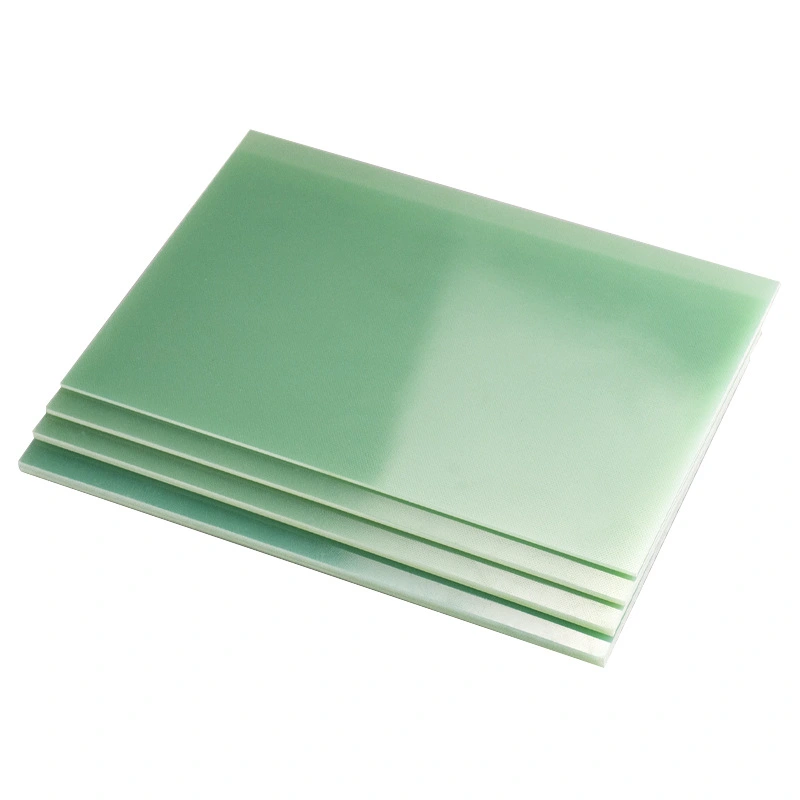
EPGC308 from JingHong comes in thicknesses ranging from 0.3mm to 100mm, and the standard sheet size is 1030mm × 1230mm. Custom sizes are also available, such as 1220mm × 2440mm and 1030mm × 2030mm. The natural light green color makes it easier to see while the sheets are being made, and each one is shipped in a box to protect the surface while it's in transit.
Because it meets ISO, UL, ASTM, and DIN 7735 HGW 2372.4 standards, procurement teams can safely choose this material for foreign projects without worrying about how it will work with other materials.
How EPGC308 Epoxy Sheet Perform Under High-Temperature Conditions?
Thermal Endurance in Real Operating Environments
Lower-quality laminates often break down at high temperatures, but the cross-linked epoxy matrix of the Epgc308 Epoxy Sheet stops these pathways. This glass epoxy laminate can handle both sustained heat and the thermal cycling that happens when the load changes in motor slot wedges and transformer coil insulation. Rapid changes in temperature, which happen a lot in rail traction motors when they speed up and slow down, can cause weak materials to separate. This can't happen with the EPGC308 because it has plastic systems that are made to handle heat shock.
Here are the most important temperature performance standards that set this material apart in tough settings:
- Continuous operating temperature: Rated at 180°C (Class H), sustained over long duty cycles without measurable degradation in dielectric properties.
- Flexural strength at 150°C: Retains ≥50% of its room-temperature flexural baseline (≥340 MPa), ensuring structural integrity inside hot motors and switchgear enclosures.
- Dielectric strength: Exceeds 10 kV/mm perpendicular to laminations when tested in oil at elevated temperatures, validating safe use as phase barriers in high-voltage environments.
- Water absorption: Maintained below 0.2% after 24-hour immersion, indicating dense resin impregnation that resists moisture-induced insulation failure under thermal stress.
These performance numbers are not theoretical upper limits; they come from IEC 60893-3-2 tests that were done on production runs. These standards directly mean lower failure rates and longer service intervals for engineering managers choosing materials for switchgear, generators, or industrial motor parts.
Comparing EPGC308 Epoxy Sheet to Alternative Materials in High-Temperature Use
Where It Outperforms Common Substitutes?
Phenolic cotton laminates have a moderately high mechanical strength and a moderately high cost, but they can't be used in Class H settings because they can only handle temperatures up to 120°C continuously. When heated above 100°C, standard polyester-based sheets soften mechanically more quickly and soak up more water. Mica composites can handle high temperatures, but they are very expensive and hard to machine for large production runs.
There is a useful middle ground that most industrial applications really need that the Epgc308 Epoxy Sheet fills. The 308 name under IEC 60893-3-2 has stronger mechanical retention standards at 150°C than EPGC307, which makes it the right specification for situations where thermal exposure and structural load happen at the same time.
Total cost of ownership is important for business-to-business purchases. A material that can handle more thermal cycles, needs to be replaced less often, and machines consistently with solid carbide tools lowers both downtime and sourcing friction over the lifespan of the equipment.
Procurement Considerations for High Temperature EPGC308 Epoxy Sheets
Sourcing Certified Material Without Compromise
The hardest part of getting custom laminates from around the world is making sure they are compliant. You should be able to track each batch of EPGC308 that comes from a qualified supplier back to documented quality control tests. These tests should include the ISO 178 high-temperature flexural test, the IEC 60243-1 dielectric strength protocol, and a visual inspection for delamination, blistering, or inclusion defects.
J&Q's minimum order size is 500KG, and they accept T/T as payment. They also offer ocean freight, land, and air shipping, so they can meet the needs of both large-scale industrial buyers and urgent project needs in North America and other areas. Supply consistency is not just a business claim because the company can produce 43,000 tons of goods every year.
You can choose from different colors (green, black, and yellow), thickness limits, and sheet sizes and shapes for the Epgc308 Epoxy Sheet. OEM services are also available for customers who need specifics. J&Q's own logistics infrastructure takes care of lead times and logistics, so they can really offer a one-stop service from production to delivery.
Installation and Application Best Practices for High Temperature Environments
Getting the Most Out of This Material on the Floor
Long-term thermal efficiency is greatly affected by how well the work is prepared. Before putting them together, the surfaces should be clean and free of any cutting dust. Because glass epoxy laminates are rough, you need solid carbide or diamond-tipped tools to make clean cuts, and dust extraction keeps both the tools and the people using them safe.
Different temperature growth between the laminate and nearby metal parts should be taken into account when mounting. When it's possible, mechanical fastening with clearance holes lets small changes in size happen during thermal cycling without putting too much stress on the edge of the sheet.
After placement, keeping the humidity in the air is important. Even well-cured laminates can show small increases in surface conductivity over time if they are kept or used in places with more than 60% relative humidity and no protective covering. Keeping sheets clean and dry at a temperature of about 20°C will protect their values forever.
For uses that involve repeated thermal cycles, like motor parts in variable-load industrial machines, checking for edge delamination or surface crazing on a regular basis lets you fix the problem before it gets worse.
Conclusion
As far as technology goes, the Epgc308 Epoxy Sheet is a good choice for engineers and procurement professionals who work in hot industrial settings. It meets IEC, ISO, UL, and ASTM standards, has a Class H thermal rating, and has been tested to work at 150°C. This gives it a good performance profile for use in electrical insulation, power distribution, cars, and industrial machinery. With more than 20 years of production experience, certified quality control, and combined operations, J&Q backs this material with dependability that works in real life, not just on a datasheet.
FAQ
What is the maximum continuous operating temperature of EPGC308?
According to IEC 60893-3-2, the material has a Class H temperature rating and can be used continuously at 180°C. This makes it different from regular FR4 or G10 laminates, which usually degrade a lot above 130°C.
How does this laminate handle thermal cycling rather than static heat?
Its cross-linked epoxy glue system doesn't delaminate when it goes through repeated rounds of expanding and contracting. This means it can be used in traction motors, switchgear, and other places where the temperature changes often while the machine is working.
Can EPGC308 sheets be machined to tight tolerances?
Yes, but the glass fiber in the cloth makes it rough. Tools with solid carbide or diamond tips are needed. IEC 60893-3-2 sets the standard for thickness limits. For example, a 10mm sheet usually has a range of ±0.50mm. When the job calls for it, secondary grinding can make the fit tighter.
Is the material halogen-free?
Most premium versions don't contain halogens, which is important for places that are closed off, like train cars and electrical boxes that are sealed. For compliance paperwork reasons, it is always best to check against the manufacturer's technical datasheet (TDS).
What certifications should procurement teams request?
Ask for proof that it meets the requirements of IEC 60893-3-2, ISO 178 flexural test results at 150°C, IEC 60243-1 dielectric strength data, and any UL or ASTM certifications that are relevant to your application.
Source Your EPGC308 Epoxy Sheet Through J&Q — Trusted Manufacturer, Reliable Supply
J&Q New Composite Materials is one of the trusted Epgc308 Epoxy Sheet manufacturers. They have been making products for over 20 years and have a dedicated foreign trading team with 10 years of experience doing business in other countries. With an annual capacity of 43,000 tons, in-house logistics, and the ability to fully customize for OEMs, we can make sure that your project requirements are met precisely and on time. To get a price or detailed datasheet, email info@jhd-material.com or go to blog.jhd-material.com right now.
References
1. International Electrotechnical Commission. IEC 60893-3-2: Industrial Rigid Laminated Sheets Based on Thermosetting Resins for Electrical Purposes. IEC, 2003.
2. ASTM International. ASTM D709: Standard Specification for Laminated Thermosetting Materials. ASTM International, 2017.
3. Deutsches Institut für Normung. DIN 7735: Laminated Plastics — Sheets Based on Thermosetting Resins (HGW). DIN, 1993.
4. Brydson, J. A. Plastics Materials, 7th ed. Butterworth-Heinemann, 1999.
5. Harper, C. A. Handbook of Plastics Technologies. McGraw-Hill, 2006.
6. ISO. ISO 178: Plastics — Determination of Flexural Properties. International Organization for Standardization, 2019.

Get a complete product list and quotation

J&Q New Composite Materials Company



