NEMA Grade FR4 Epoxy Sheet Supports High Precision Electronic Applications
When engineers and procurement teams need a substrate material that genuinely delivers under pressure, the Nema Grade FR4 epoxy sheet consistently rises to the top of the shortlist. Built from 7628 E-glass fabric bonded with epoxy resin, this fiberglass-reinforced laminate meets NEMA LI-1-1990 standards and carries a UL 94 V-0 flame rating. Its combination of mechanical toughness, dielectric stability, and thermal endurance makes it the go-to choice for PCB fabrication, switchgear insulation, and precision structural components across electronics, power, automotive, and industrial sectors.
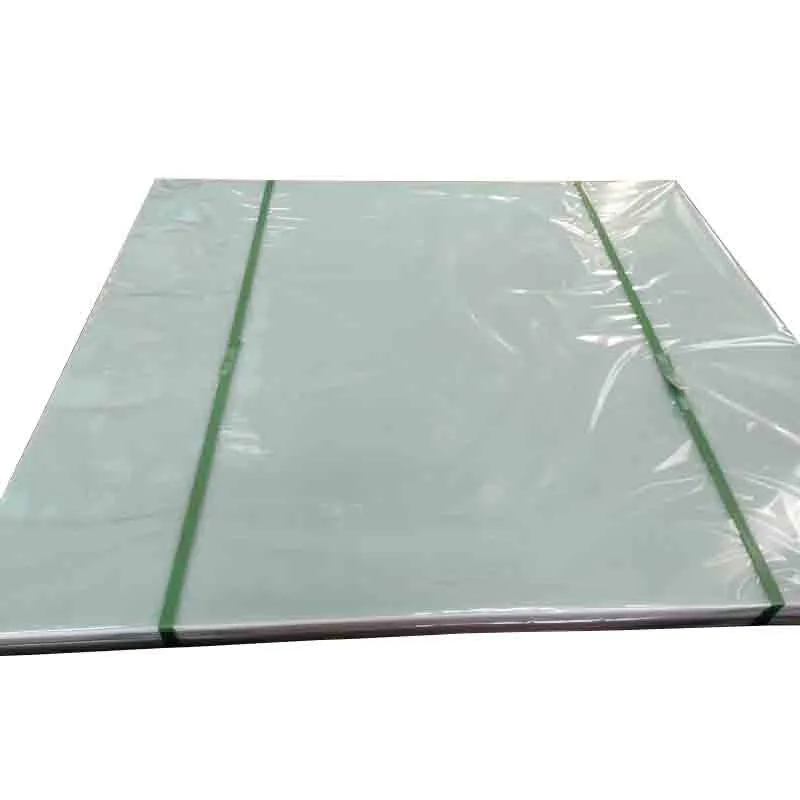
Understanding NEMA Grade FR4 Epoxy Sheet and Its Core Properties
What Defines FR4 Under NEMA Standards?
The NEMA grade designation is more than just a label; it's a strict set of performance standards for laminates made by the National Electrical Manufacturers Association. To get this label, an FR4 sheet must consistently show a bending strength greater than 415 MPa along its length, a dielectric breakdown voltage greater than 50 kV, and a water absorption rate less than 0.25%. These measurements are important because substitutes that don't meet the standards often fail to meet the required dimensions during CNC machining, which affects the alignment of the circuits in multilayer PCBs.
Critical Technical Specifications That Drive Precision
The qualities of an approved FR4 laminate directly affect how well it works in production. These are the most important technical factors that engineers use:
- Flexural strength: LW > 415 MPa, CW > 345 MPa — sufficient to support load-bearing structural applications beyond standard PCB use.
- Dielectric breakdown: > 50 kV parallel to laminations, with a relative permittivity of approximately 4.4, enabling precise impedance control in high-frequency circuit design.
- Thermal performance: Glass transition temperature (Tg) of 130°C–140°C for standard grade; High-Tg variants reach 170°C–180°C, accommodating lead-free soldering cycles.
- Density and stability: Specific gravity of 1.850 g/cm³ with thermal conductivity of 0.29 W/(m·K) through-plane, supporting effective heat dissipation in compact assemblies.
These requirements make sure that Nema Grade Fr4 Epoxy Sheet FR4 keeps its shape over a range of temperatures, which is important for layered board structures and high-density connection designs. When procurement teams check these values as part of qualifying suppliers, they protect the whole factory yield that comes after.
Comparative Analysis: NEMA Grade FR4 vs Other Epoxy Sheet Grades and Materials
How FR4 Stacks Up Against G10, FR1, and FR5?
Knowing where FR4 fits in the family of laminates helps buyers decide how to spend their money without sacrificing performance. G10 is also made of fiberglass and epoxy, but it doesn't have the flame-retardant formula that UL 94 V-0 requires. This is a major flaw for any application that has to follow IPC or UL safety rules. FR1 doesn't use woven glass fabric, but paper instead. This makes it much less strong and resistant to wetness, so it can't be used in settings with a lot of layers or a lot of humidity. FR5 and its cousin, G11, can handle higher temperatures, but they cost more, which is too much for most everyday tech uses.
FR4 is a good compromise because it is certified to be flame retardant, has good dielectric performance, can be machined reliably, and follows RoHS rules for chemistry. Most of the time, it's the best mix between performance and total cost of ownership for PCB substrate, switchgear insulation, and precision spacer uses. If you choose FR4 over phenolic-based laminates, you also lower the chance of moisture-induced delamination, which is a type of failure that makes devices less useful in the field.
Procurement Guide: Sourcing NEMA Grade FR4 Epoxy Sheets
Key Factors to Evaluate Before Placing an Order
There's more to finding Nema Grade Fr4 Epoxy Sheet FR4 epoxy laminates than just checking prices per kilogram. To make sure that a seller is reliable, you should first check their licenses. For example, ISO 9001 is for quality management, ISO 14001 is for environmental compliance, and ISO 45001 is for health and safety at work. All three of these certificates show that a company uses structured, auditable methods instead of making things on the spot.
Besides certification, buyers should look at the following:
- Dimensional range: Confirm that the supplier can fulfill both standard sizes (such as 1030 mm × 1230 mm) and custom formats (1220 mm × 2440 mm, 1030 mm × 2030 mm, and others) without lead time penalties.
- Thickness coverage: A reliable supplier should offer continuous thickness availability from 0.3 mm through 100 mm to support both thin PCB substrates and heavier structural insulation blocks.
- MOQ and logistics flexibility: An MOQ of 500 KG with ocean, land, and air shipping options ensures that both volume OEM buyers and smaller prototype runs can be accommodated within manageable supply chain windows.
- Payment and communication: T/T payment terms with transparent documentation reduce transaction friction for international B2B procurement teams.
Post-order support for Nema Grade Fr4 Epoxy Sheet, such as material certifications, batch test reports, and quick technical advice, is what sets suppliers who see a transaction as over at shipment apart from those who see it as the start of a partnership.
Application Insights: How FR4 Epoxy Sheets Support High-Precision Electronics
Where FR4 Performs Best Across Industries?
The fiberglass epoxy blend works really well in places where there is electrical stress, mechanical load, and temperature changes. When making PCBs, the material's physical stability makes sure that the orientation of the copper circuit stays the same through multiple reflow passes. When it comes to high-voltage switchgear, its high Comparative Tracking Index (CTI) stops surface discharge paths from forming between live wires. This directly lowers the risk of arc flash in transformer cabinets and bus-bar assemblies.
Automotive R&D workers use FR4 laminates for battery pack barriers and insulating pads because they are resistant to flames and can be machined with a CNC tool, which makes it possible to make stable batches of parts with tight tolerances. The material acts as both a structural spacer and an insulating barrier at the same time in industrial machinery, which cuts down on the number of parts and the complexity of assembly.
As we look to the future, the switch to lead-free assembly methods is speeding up the demand for High-Tg FR4 variants, and custom panel formats are going from being rare to being common. As electronics assemblies continue to get smaller while packing more power, manufacturers who can offer certified material in both standard and custom sizes will have a clear edge when it comes to buying.
Conclusion
In a lot of different businesses, Nema Grade Fr4 Epoxy Sheet FR4 epoxy fiberglass laminate has become the standard for PCB substrates and structural shielding. It meets the main needs of engineering managers and procurement specialists every day with its strong dielectric breakdown voltage, flame retardancy, and ability to be machined. It can be used as a solid base for everything from multilayer circuit boards to power distribution components if it comes from a certified, high-capacity manufacturer with clear quality systems and flexible logistics. Picking the right supplier is just as important as picking the right material specifications.
FAQ
Why is NEMA Grade FR4 preferred over non-certified alternatives for precision electronics?
NEMA-grade certification makes sure that all of the products made meet industry standards for heat, electricity, and mechanics. Non-certified laminates may look the same, but their dielectric constants or flexural strength are often not up to par. This creates a risk of yield loss in high-density PCB manufacturing and insulation panels.
How can buyers verify that a supplier's FR4 sheets are genuinely certified?
Ask the supplier for their most recent ISO 9001 certificate, UL 94 V-0 test reports, and NEMA LI-1-1990 compliance paperwork. If you ask, reputable manufacturers will give you test data that is specific to your batch and includes dielectric breakdown, water absorption, and flexural strength.
What standard and custom dimensions are typically available?
The standard panel size is 1030 mm x 1230 mm, and the width can be anywhere from 0.3 mm to 100 mm. If you need a different size, like 1220 mm × 2440 mm or 1030 mm × 2030 mm, just let us know. The minimum order quantity is 500 kg.
Is FR4 RoHS compliant?
Yes. Certified FR4 laminates are made without using restricted dangerous substances. This means they can be used with RoHS-regulated electronics that are going to be sold in the US and Europe.
Partner with J&Q for Certified FR4 Epoxy Sheet Solutions
Every sale of Nema Grade Fr4 Epoxy Sheet from J&Q is backed by more than 20 years of experience in both manufacturing and foreign trade. As a reliable FR4 epoxy sheet supplier with ISO 9001, ISO 14001, and ISO 45001 certifications, a 43,000-ton annual capacity, and our own logistics department, we guarantee quality from the time you place your order until it arrives at your door. You can get a sample or a custom quote today by emailing us at info@jhd-material.com or going to blog.jhd-material.com. We can make panels that fit your exact needs.
References
1. National Electrical Manufacturers Association. NEMA LI 1: Industrial Laminating Thermosetting Products. NEMA, 2020.
2. Coombs, Clyde F. Printed Circuits Handbook. McGraw-Hill Education, 2016.
3. IPC — Association Connecting Electronics Industries. IPC-4101: Specification for Base Materials for Rigid and Multilayer Printed Boards. IPC, 2017.
4. Harper, Charles A. Electronic Materials and Processes Handbook. McGraw-Hill, 2004.
5. Underwriters Laboratories. UL 94: Standard for Tests for Flammability of Plastic Materials for Parts in Devices and Appliances. UL, 2018.
6. Jawitz, Martin W. Printed Circuit Board Materials Handbook. McGraw-Hill, 1997.

Get a complete product list and quotation

J&Q New Composite Materials Company



