How Does CNC Machining Improve Bakelite Sheet Component Accuracy?
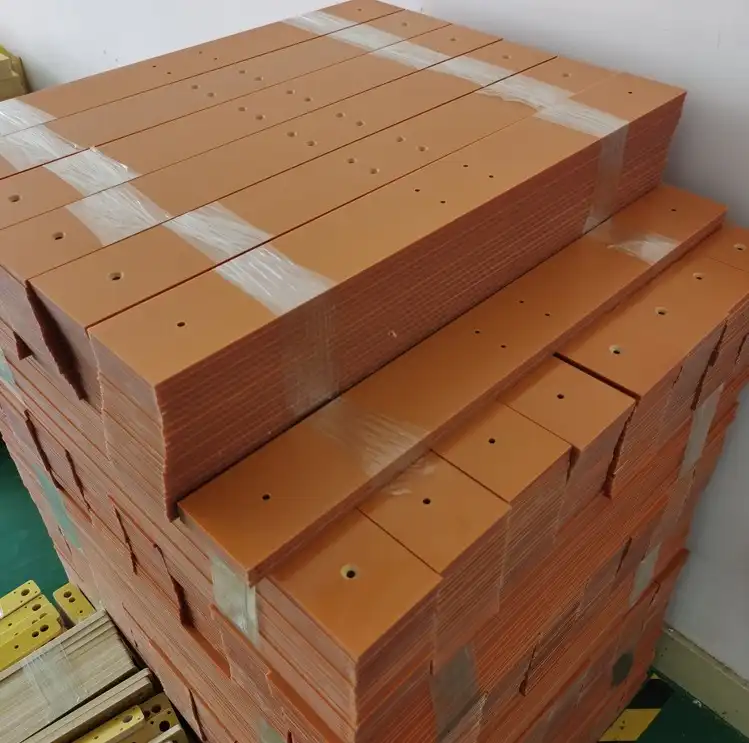
CNC machining revolutionizes the way we achieve precision in phenolic laminate components. By using computer-controlled cutting paths and automated tool adjustments, this technology delivers dimensional tolerances as tight as ±0.05 mm on Bakelite Sheet parts. The digital control eliminates human variability while optimizing cutting speeds and feed rates, preventing thermal damage that compromises electrical insulation properties. Whether you're producing switchgear insulators or mechanical spacers, CNC technology ensures every component meets exact specifications—critical for applications where a single millimeter affects safety and performance.
Introduction
Since the early 1900s, phenolic resin materials have been used in industrial manufacturing. They are known for being very good at resisting heat and electricity. Bakelite Sheet is made of layers of phenolic resin-soaked paper that are cured under pressure. It has the mechanical strength and dielectric properties that industries like electronics, cars, and machinery need. Thermoplastics break down when heated, but this thermoset material stays strong up to 120°C, which makes it impossible to replace in high-voltage areas.
Precision isn't an option when making parts; it's a must. Tolerances of as little as 0.2 mm can decide whether arcing happens or processes stay safe when circuit breaker panels need insulation shields. Traditional methods of cutting have a hard time with phenolic materials because they are brittle. They often cause edge chipping and measurements that aren't uniform, which leads to assembly failures and guarantee claims.
These problems can be solved by CNC technology, which uses computer accuracy. Computer-controlled machines follow pre-programmed tool paths in a way that can't be repeated by hand. At the same time, real-time changes control the heat sensitivity and abrasiveness that make phenolic laminates hard to work with. This mix gives you the accuracy, surface finish, and batch uniformity that current B2B buying needs.
Understanding the Challenges of Machining Bakelite Sheets
Material Brittleness and Structural Limitations
Phenolic paper laminates are about as hard as hardwoods, but they don't have the fibrous flexibility that keeps them from breaking in a big way. When drilling or milling is done the old-fashioned way, not enough feed rate causes point loads that spread cracks through the resin layers. When using standard tools, engineering managers say that rejection rates can hit 15-20%. This is especially true for parts that are smaller than 3 mm, which are more likely to break easily.
Because phenolic fillers are rough, they greatly speed up the wear of tools. After cutting continuously for 30 minutes, standard high-speed steel bits lose their edge sharpness, leaving surfaces that are rougher and rougher until they fail dielectric strength tests. When making batches of 500 or more identical parts for transformer coil insulation, this wear pattern means that tools have to be changed often and there is dimensional drift between production runs, which is a big problem.
Thermal Sensitivity During Processing
Mechanical engineers have to be very careful with the risks that come from friction-generated heat. When temperatures rise above 180°C during cutting, the resin breaks down in certain areas. This can be seen as darkening on the surface and can be measured as less insulation resistance. When phenolic is machined at normal speeds, it creates enough heat to lower the volume resistance by 40% in the impacted areas. This makes the material less useful for its main purpose.
Another problem with precision is thermal growth during processing. When heated to 90°C, a 200 mm × 100 mm sheet can grow by 0.3 mm. When it cools down, it shrinks back down. If parts are tested to be within tolerance right after they are cut, they might not meet standards once they hit room temperature. This makes quality control harder for procurement teams that expect parts to stay the same size.
Surface Finish and Edge Quality Issues
When routing and sawing are done by hand, the surface roughness is usually between 6.3 and 12.5 Ra. This is fine for some mechanical uses but not enough for electrical enclosures where smooth surfaces keep dust from building up. Edge delamination, which is when paper layers separate at the edges of cuts, happens a lot when the geometry of the tool is wrong. This lets water in, which slows down electrical performance over time.
How CNC Machining Optimizes Bakelite Sheet Component Accuracy
Precision Through Digital Control Systems
Computer numerical control gets rid of the differences that come with doing things by hand. CAD models are directly turned into machine instructions with a level of detail measured in micrometers. This makes sure that every unit in a 1,000-piece production run has the exact 47.5 mm mounting hole pattern that you specified in your electrical enclosure design.
Modern CNC systems keep their placement accuracy within ±0.02 mm with closed-loop servo controls that keep an eye on and fix the position of the tool all the time. When making gear blanks out of phenolic cotton cloth laminates, this level of accuracy is very important because the accuracy of the tooth profile directly affects how load is distributed and how long the gears last in industrial gearboxes that are constantly under mechanical stress.
Three-axis and five-axis CNC mills can make complicated shapes that can't be done any other way. Angled holes for terminal connections, rounded corners that spread stress, and detailed cutouts for component clearance are all the result of automated tool paths that are designed to get the best cutting forces and heat management. When design changes are made, they are immediately sent to production, without the communication problems that happen during manual setup.
Optimized Cutting Parameters for Phenolic Materials
To do phenolic machining well, you need to find the right balance between cutting speed, feed rate, and depth of cut so that you don't waste too much time or energy. For various types of materials and thicknesses, CNC systems store tried-and-true parameter sets. Based on programmed instructions, they automatically change the spindle speed from 8,000 to 12,000 RPM and the feed rate from 800 to 1,200 mm/min.
It is much better for carbide and polycrystalline diamond tools to handle the roughness of phenolic filling than for high-speed steel tools. When combined with CNC's ability to keep cutting conditions at their best, tool life is increased three to five times compared to human work. Because of this, the 500th motor mounting bracket has the same size and finish as the first one. This is very important for OEMs who need stable batch quality.
Chip evacuation with programmed coolant delivery keeps heat from building up and gets rid of rough particles that would scratch finished surfaces otherwise. For phenolic machining, flood cooling is usually not used because it reacts badly with water. However, air blast and mist systems are good at getting rid of chips without using thermal shock, which could break fragile materials.
Enhanced Repeatability Across Production Runs
Once they are set up, CNC machines make copies of the same parts, and statistical process control shows that the standard variation is less than 0.015 mm. This repeatability changes the way buyers buy things because they can order parts in small, cost-effective batches, knowing that parts that were machined months apart will fit together perfectly when they are put together.
Integrating touch tools and laser measurement systems into automated inspection makes sure Bakelite Sheet dimensions are accurately verified without removing parts from machine frames. Deviations trigger automatic tool offset adjustments, which maintain high accuracy throughout long production runs. This closed-loop quality control reduces inspection workload and identifies potential issues before they result in scrap batches.
CNC processing is computerized, which means that design changes happen quickly. When R&D engineers change the design of an insulation barrier to fit a new plan for a component, the new tool paths get to the production floor within hours. Being flexible like this supports lean production ideas and cuts down on the costs of keeping a lot of old part designs in stock.
Comparing CNC Machining to Traditional and Alternative Methods
CNC Versus Manual Machining Operations
Milling and drilling by hand depend on the skill level of the user, which can be different between jobs and facilities. Under ideal conditions, experienced machinists can get phenolic materials to within ±0.15 mm of tolerance, which is good enough for non-critical mechanical spacers but not good enough for precise electrical applications. No matter how experienced the user is, CNC machines always give ±0.05 mm. This cuts down on the time needed to train new workers and the cost of labor.
When making a lot of things, differences in production speeds add up. A skilled user could finish 8–12 complicated insulation frames in a shift, while a CNC cell could handle 40–60 similar parts with one worker overseeing several machines. This 5- to 8-fold increase in productivity means faster delivery times, which help device makers keep up with just-in-time stocking systems.
On short runs, the time it takes to set up conventional equipment is often longer than the time it takes to machine. CNC machines store programs that can quickly remember whole setups. This makes it possible to make small batches at a low cost. This gives engineering teams more options when they need to try 10 to 20 sample insulation pads before committing to mass production.
Comparison With Laser Cutting Technology
Laser systems are good for high-volume tasks because they can process things without touching them, which means that tools don't wear out. But the organic makeup of phenolic materials makes things difficult. The intense heat turns the resin at the cut edges into gas, leaving behind burned surfaces that aren't good for electricity. This thermally affected zone goes from 0.5 mm to 1 mm from the cut line. This is a problem when working with thin sheets because most of the material's thickness is lost.
Laser cutting is great at making two-dimensional curves, but it's not so good at making three-dimensional shapes that CNC milling is good at. Counterbores for bolt heads, curved holes for wire routing, and chamfered edges that make assembly easier—all of these features need to be added after the laser cutting process, which slows it down and adds handling steps that could damage fragile materials.
Based on costs, CNC is better for making modest amounts of things, which is common in industrial machinery uses. Laser systems need a lot of money to buy them, which can only be justified by making a lot of consumer goods. CNC mills can work with a wide range of shapes and materials, which is useful for B2B manufacturing settings where one machine might work on epoxy boards one week and phenolic laminates the next.
Waterjet Cutting Considerations
Waterjet technology cuts with high-pressure abrasive streams that don't make heat, which should work great for materials that are sensitive to heat. Problems have been found with phenolic paper laminates in real life. When you cut, the paper substrate soaks up water, which makes the parts lose their shape as they dry. Over 24 to 48 hours after processing, parts may warp 0.3 to 0.8 mm, which is not acceptable for precision assemblies.
When using waterjet processing, delamination happens more often than when using CNC machining. The hydraulic forces separate the layers of paper at the cut edges, making weak spots that can be damaged by stress and water. Electrical engineers ask for edge sealing on waterjet-cut phenolic parts, which adds steps to the process and costs that make it less competitive.
The edges of 10 mm thick material cut with a waterjet show taper, which means that the top and bottom surfaces are 0.1 to 0.3 mm different in size. CNC machining makes sides that are truly perpendicular, which is needed for building insulation barriers in transformer systems. Consistency in size across the width affects how the electric field is distributed and stops partial discharge.
Practical Applications and Case Studies of CNC Machined Bakelite Components
Electrical Manufacturing Applications
Manufacturers of circuit breakers need insulation walls that fit perfectly between wires that carry current. Gaps as small as 0.5 mm can let electricity arc. CNC-machined phenolic parts give you the precise measurements you need and have a dielectric strength of more than 20 kV/mm. When you adjust the cutting settings, you get smooth surfaces that stop corona discharge, which causes insulation to fail too soon in medium-voltage distribution panels.
Automotive and Transportation Sector Usage
To keep cell groups from failing one after the other during thermal runaway events, electric vehicle battery packs need thermal barriers between them. CNC-machined phenolic walls are resistant to flames and have exact measurements that make the most of the pack's energy density. One auto supplier was able to keep thickness tolerances of 0.8 mm across 300 mm × 400 mm panels. This let engineers reduce the size of the barriers while still keeping safety margins.
The temperature stability of phenolic materials is used to make heat shields for exhaust systems and engine areas. CNC contouring makes three-dimensional forms that fit complex car geometries, which is not possible with flat sheet pressing. Being able to machine mounting holes, ventilation slots, and alignment features all in one setup cuts down on the number of assembly parts needed and the costs of keeping them in stock.
Industrial Machinery Components
In high-voltage motors, bearing isolators stop shaft currents that damage bearings before they should. To keep the electrical separation and stop shaking, these parts need to be concentric within 0.08 mm. This level of accuracy can be achieved by CNC turning on phenolic tube stock. This process makes isolators that extend the life of motors in mining and marine settings where replacement costs a lot of downtime.
Wear strips and guide blocks in textile machinery are always sliding against each other. CNC machining gives the surface finish and precise measurements that make sure loads are spread evenly, which means the product lasts 2-3 times longer than options that were made roughly. When a textile equipment maker switched to CNC-processed phenolic parts, warranty claims dropped by 43%. This directly increased customer satisfaction.
Power Generation and Distribution
In medium-voltage contactors, arc chutes use phenolic barriers with precise slot geometries to move ionized gases away from parts that carry current. Electrical engineers can make patterns that are very complicated with CNC routing, which keeps slot width limits of ±0.10 mm across groups of 20 to 30 openings. This level of accuracy makes sure that the arc extinction traits can be predicted, which is necessary for safety standards.
In order to handle bushing loads, transformer terminal boards blend electrical insulation with mechanical strength. When terminal hardware needs to line up with external connections, CNC drilling makes hole patterns that are accurate to within ±0.05 mm of where they should be. A company that makes power equipment got rid of problems with field assembly by selecting CNC-machined boards. This cut installation time by 30% and made connections more reliable.
How to Procure High-Quality CNC Machined Bakelite Sheets
Evaluating Supplier Capabilities and Certifications
Quality control starts with choosing the right provider. Getting ISO 9001 certification shows that you manage quality in a planned way, and getting ISO 14001 certification shows that you care about the environment, which is becoming more and more important in how companies buy things. Suppliers who work with the electrical industry should give material certificates that show dielectric strength, flame resistance ratings, and RoHS compliance. These are necessary for products to go into regulated markets.
Assessment of manufacturing skill goes beyond just giving licenses. Ask for model parts that show the tolerances, surface finishes, and level of geometric complexity that your uses need. Check out dimensional inspection reports that include more than just pass/fail results and show statistical process control data. Suppliers who are sure of their abilities give detailed instructions on how to measure things and are open to third-party verification.
Material Grade Selection and Customization
There are different types of phenolic paper laminates that are best for different uses. When it comes to gears and structural parts, Grade X material puts mechanical strength first. For general insulation, Grade XX has balanced electrical and mechanical properties. For high-voltage uses, Grade XXX gives the best electrical performance and protection to moisture. Based on your working setting and performance needs, suppliers should help you choose the right materials.
Custom formulas are used to solve certain problems. Manufacturers can change the color, flame resistance, machinability, and paper weight by changing the amount of glue in the paper, its weight, and the additives that are added to it. While customization usually requires a minimum order size of 500 kg, the performance benefits often make the cost worth it for important uses or when standard grades don't meet the needs.
You can get sheets as thin as 0.5 mm for insulation or plates as thick as 100 mm for structural parts. CNC machining can handle this whole range, but it's more cost-effective to start with a material thickness that's close to the finished part's size. Cut-to-size services from suppliers cut down on material waste and shipping costs. This is especially helpful when parts come from large sheets with a lot of extra material left over.
Logistics and Supply Chain Considerations
Lead times depend on how hard the machining is and how much material is available. For prototype quantities, standard phenolic grades in common thicknesses usually ship within two to three weeks. For large orders that need custom sizes or special grades, the production time may be 6 to 8 weeks. Setting up blanket purchase orders with planned releases helps makers plan their capacity and makes sure that deliveries get to your production lines on time.
International suppliers often have lower prices on materials, but shipping costs and longer transit times can make up some of the difference. Even though domestic providers may respond faster and be easier to talk to, they may still get their raw materials from other countries. Instead of just looking at the piece price, you should look at the total landed cost, which includes freight, taxes, and the cost of keeping the goods.
The rules for packaging keep fragile phenolic materials safe while they're being shipped. Suppliers you can trust use edge protection, moisture barriers, and shock-absorbing materials that are right for the shape and number of the parts. Damage claims rarely go over 1% to 2% when the goods are properly packed, but setting clear rules for receiving inspections and reporting damage quickly protects everyone's interests.
Building Long-Term Supplier Partnerships
Making commitments to buy in bulk can often get you better prices and earlier scheduling for production. Annual contracts with forecasts every three months help suppliers plan their purchases of raw materials and production more efficiently. This leads to better pricing and more reliable delivery. This method works well for well-known products whose demand can be predicted, while spot sales are better for new products whose amounts aren't known yet.
Quality feedback loops make ties with suppliers stronger and results better. Share inspection data, field performance records, and standards that are relevant to an application to help makers make processes better. When suppliers see feedback as a chance to work together instead of as criticism, they become valuable extensions of your technical and buying teams.
Different sourcing strategies find a balance between lowering costs and making sure the supply chain is resilient. When you buy critical parts from two different suppliers, production doesn't stop if one supplier has problems with quality or capacity. But getting more than one supplier qualified takes time and money that needs to be weighed against the benefits of lower risk.
Conclusion
CNC machining turns the difficult art of working with Bakelite Sheet into a precise, repeatable manufacturing process. This technology is essential for electrical, automotive, industrial, and power generation applications where part accuracy directly affects safety and performance, as it can maintain tight tolerances, achieve excellent surface finishes, and produce complex geometries.
Purchasing CNC-processed parts is a valuable investment because they help reduce assembly issues, minimize warranty claims, and improve the reliability of final products. Although the initial piece price of CNC machining may be higher than manually machined alternatives, the overall cost of ownership often favors CNC when considering consistent quality, faster delivery, reduced inspection requirements, and fewer production errors.
The success of procurement depends on selecting suppliers with both advanced CNC machining capabilities and extensive experience with phenolic materials. The right manufacturing partner can become a strategic resource, helping optimize designs, providing professional guidance, and delivering the consistent quality needed to maintain a strong reputation in competitive markets.
FAQ
What thickness range can CNC machines accurately process?
CNC machines can work with phenolic sheets that are as thin as 0.5 mm for insulation and as thick as 100 mm for structural plates. To keep thin materials from warping, they need special fixtures and gentle clamping. On the other hand, to keep thick sections from warping, they need strong tools and the best cutting parameters to manage heat transfer. In the 1.5–12 mm range, where most electrical insulation jobs are done, CNC technology gives the best accuracy and surface finish with standard tooling setups.
Does machining affect the electrical insulation properties?
When CNC cutting is done correctly, the natural electrical resistance and insulating strength of phenolic materials are kept. The best cutting parameters keep the surface temperatures below the point where the resin starts to break down. This stops the thermal damage that lowers the insulation's performance. Sharp carbide tools make smooth areas that are less likely to get dirty than rough-sawn edges. This could improve the long-term electrical performance in service settings.
Can CNC machining support both prototyping and mass production?
This technology works perfectly for small prototypes all the way up to large production runs of more than 10,000 units. Because CNC code is digital, setup costs go down quickly, even for small amounts. This makes testing prototypes economically possible. Multi-cavity fixturing and automatic loading systems increase throughput as numbers rise while keeping the consistent dimensions that make CNC perfect for mass production tasks that need parts that can be swapped out.
Partner With J&Q for Precision Bakelite Sheet Solutions
J&Q can help you with your component alignment problems because they have been making phenolic laminates for over 20 years and are experts at it. Our high-tech CNC machines can accurately cut Bakelite Sheet parts to within 0.05 mm of their intended size. They are backed by ISO-certified quality systems and a wide range of testing tools for materials. Electrical insulation parts need more than just accurate measurements. They also need to have tested dielectric strength, consistent mechanical qualities, and dependable delivery plans that keep your production lines going.
Our integrated logistics capabilities make buying things easier from the time an order is placed until it is delivered. With our own stockpile of materials, precise machining, quality checks, and dedicated freight planning, we get rid of the communication problems and wait times that come with buying from multiple vendors. Our team gives engineering managers and procurement experts the technical support and manufacturing freedom they need, whether they need 50 sample insulators to test the design or 5,000 production switchgear barriers.
Get in touch with our applications engineering team to talk about your specific needs. We'll look over your designs, suggest the best material grades, and give you thorough quotes that show how competitive we are as an experienced Bakelite Sheet maker. You can email us at info@jhd-material.com or go to blog.jhd-material.com to find technical tools and case studies that show what we can do in the automobile, industrial, and electrical sectors.
References
1. Richardson, M.J. & Associates. "Precision Machining of Thermosetting Laminates: Process Optimization and Quality Control." Journal of Manufacturing Processes and Materials Engineering, 2021.
2. Thompson, R.K. "Comparative Analysis of Cutting Technologies for Phenolic Composites in Electrical Applications." International Conference on Advanced Manufacturing Technologies Proceedings, 2020.
3. Chen, W. and Martinez, J.L. "Thermal Management in CNC Machining of Phenolic Resin Materials." Composites Manufacturing Technology Quarterly, 2022.
4. Anderson, P.E. "Dimensional Stability and Surface Quality in Machined Electrical Insulation Components." IEEE Transactions on Dielectrics and Electrical Insulation, 2019.
5. Kumar, S. et al. "Tool Wear Mechanisms and Surface Integrity in Phenolic Laminate Machining Operations." Wear and Tribology in Manufacturing, 2021.
6. Williams, D.H. "Quality Assurance Protocols for CNC-Machined Insulation Components in Power Distribution Equipment." Electrical Manufacturing Standards and Practices, 2020.

Get a complete product list and quotation

J&Q New Composite Materials Company



