How Does 3240 Epoxy Resin Support Lithium Battery Pack Assembly?
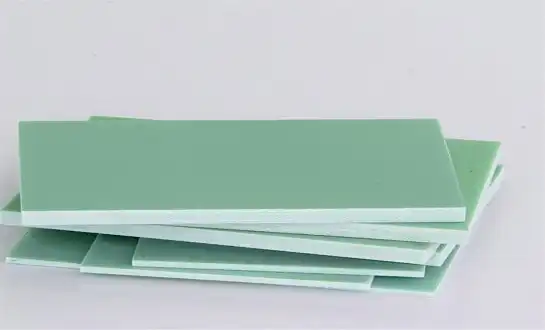
The Lithium Battery Pack 3240 Epoxy Resin helps with assembly by forming a rigid, glass-reinforced insulation layer between the metal frames, busbars, terminals, and cells. It maintains the distance between conductive parts and the clearance between them. An engineer can also use a flat sheet to cut, drill, and route into spacers, end plates, and support brackets. It's not a liquid potting compound; it's a laminate that has been dried. JingHong makes this material from E-glass fabric and epoxy/phenolic resin. It comes in different thicknesses, from 0.5 mm to 100 mm, so it can be used to cover a lot of different pack parts.
Before they commit, battery engineers, buyers, and OEM teams need to look at this guide to see how well the materials fit, how well the suppliers can meet their needs, and how risky the project is.

What Is 3240 Epoxy Resin for Lithium Battery Packs?
A Glass-Cloth Laminate, Not a Liquid Compound
"3240 epoxy resin" makes a lot of people think of a liquid that they pour into a pack. In real life, the term refers to a rigid laminate. Epoxy/phenolic resin is mixed with layers of woven E-glass fabric and then cured under heat and pressure to make a flat sheet. There are different jobs that liquid adhesives, encapsulants, and potting compounds do. They either join parts together or fill gaps. A laminate is stiff and keeps electricity from moving through it in a fixed shape. Make sure you know which form your design needs before you write a purchase specification. The two product types are not interchangeable.
JingHong Product Basics
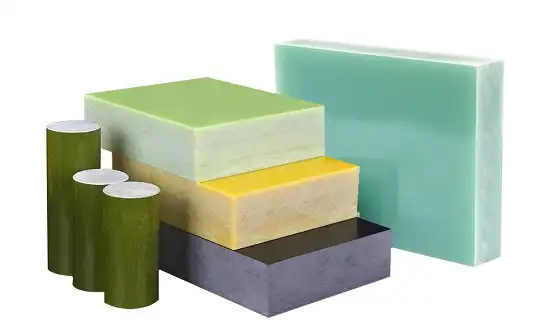
This laminate comes in natural yellow from JingHong. As thin as 0.5 mm or as thick as 100 mm, and the standard sheet size is 1020 mm by 2020 mm. Some barriers between cells are made of thin sheets, while end plates and brackets are made of thick sheets. Our management systems are certified by ISO 9001, ISO 14001, and ISO 45001, and we make 43,000 tons of goods every year. We ship sheets by sea, land, or air, and put them on pallets to keep them safe. You can pay by T/T, and the least you can order is 500 KG. You can see if these basics work before you ask for a datasheet.
Where Battery Teams Use It?
The sheet is used to make cell barriers, busbar separators, spacers, brackets, and support plates during pack assembly. Rigid insulation is often useful in places like forklift or AGV power units, energy storage racks, and battery packs for light electric vehicles. Test jigs, insulation plates, and switch insulation parts are all made from the same sheet. So, a material source can be shared between a battery program and other product lines, like motor parts, switchgear, or appliance frames. In shared sourcing, your purchasing team doesn't have to approve as many suppliers, and it's easier for them to place orders.
How Does 3240 Epoxy Resin Support Battery Pack Assembly?
Electrical Isolation Between Cells and Conductors
A pack has many cells close together on metal frames and busbars. These cells have different potentials. A laminate barrier sits between those parts and stops current from going in the wrong direction. It also helps keep the clearance and creepage distances that the design calls for. It says in our Grade A test report that the insulation has a resistance of 4.1×10²³ Ω and a vertical-layer breakdown voltage of 15.5 kV/mm. Even though those numbers come from lab samples, engineers should still check them with their own pack's thickness and voltage level.
Rigid Support and Dimensional Stability
Cells need something stable to live in with Lithium Battery Pack 3240 Epoxy Resin. Modules stay in place even when they are being shaken or vibrated by sheets that have been cut into end plates, spacers, and brackets. It says in the Grade A report that it can bend up to 484 MPa and squeeze up to 401 MPa. The description of the product also says that it shrinks less than 2% after curing, which helps the parts stay the size and shape they were cut to. From the first pack to the thousandth, the spacing between stiff parts stays the same. This helps automated assembly lines meet the same fixtures every cycle.
Machinability and Where Flexible Materials Still Help
Fabricators drill, slot, rout, and cut the laminate to make custom mounting features. This means that a single sheet can be used to make a lot of different part shapes. Still, a rigid board doesn't protect cells. If the pouch or prismatic cells get bigger or if parts move because of thermal expansion, you should use adhesives, foam, flexible films, or elastomers with the laminate. I tell the engineers that the laminate should be the layer that provides structure and insulation, and that soft materials should only be added where the pack needs to be able to absorb movement. With that split, each material can do what it does best.
What Properties Should Engineers Evaluate in 3240 Epoxy Resin?
Electrical Performance
Before you look at how close conductors can sit together, you should look at the dielectric strength, insulation resistance, and tracking behavior. In our Grade A report, we can see that the vertical breakdown is 15.5 kV/mm and the relative permittivity is 4.90 at 50 Hz. The Grade B report shows that the insulation had a 2.0×10⁹ © resistance after being soaked and 8.6 MV/m of vertical breakdown. Both reports use oil-bath tests to see how well they work, so only compare data that was collected in the same way. First, get the report for the grade you want to order. Then, compare it to your pack voltage and safety margin.
Mechanical and Thermal Behavior
Mechanical numbers tell you if a part can handle being clamped and vibrated. Grade A has a tensile strength of up to 368 MPa and an impact strength of 59.4 kJ/m² in a parallel layer. As for Grade B, it has a bending strength of about 200 MPa, a compressive strength of 438 MPa, and a temperature above 140 ℃ at which it bends. It weighs 1.96 g/cm³ for Grade A and 2.07 g/cm³ for Grade B. You should think about which mix of strength, weight, and heat tolerance works best for your module before you ask for samples of the two grades.
Moisture, Flammability, and Compliance Documents
Packs may be exposed to electrolytes, humidity, and condensation, so check how well they absorb water and how well they resist chemicals. Grade A says it absorbs 39.9 mg of water, while Grade B says it absorbs only 6.0 mg. However, the test samples are different sizes, so don't directly compare the two. The Grade A report shows flammability as V-0, while the Grade B report shows it as V-1. If you need RoHS, REACH, or UL documents, don't draw them from the name of the 3240. Instead, ask for the ones that are specific to your grade and thickness. During the quotation, we can talk about the paperwork you need.
How Is 3240 Epoxy Resin Used in Lithium Battery Pack Assembly?
From Design Inputs to Installed Parts
Design inputs, such as battery architecture, voltage, temperature range, mechanical loads, chemical exposure, and service-life goals, are the first step to getting good results with a Lithium Battery Pack 3240 Epoxy Resin. The team then chooses a form, like sheet stock, cut blanks, die-cut insulation, or parts that have been machined. During production, keep an eye out for dust, burrs, sharp edges, warping, and contamination on the surface. When installing the cells, keep the electrical clearances and protect them from point loads. Checks for dimensions, vibration, shock, thermal cycling, humidity, and pack-level aging should all be part of the validation process. IEC 62133-2 standards are used as a guide for testing the safety of lithium cells and batteries.
Comparing with Silicone and Polyurethane
Polyurethane and silicone are not the same thing. Silicone is better at absorbing movement and thermal cycling, while polyurethane is better at absorbing impact and can be used as a flexible covering. The laminate is stiffer, more stable in its dimensions, and easier to work with. Pick the laminate if your design needs a strong barrier that has a clear shape. Pick an elastomer if it needs to be padded or sealed. Because grade labels can be different between suppliers and standards, you should use verified electrical, thermal, mechanical, and processing data to compare any other laminate. Most of the time, rigid barriers are used with soft films or sealants in hybrid designs.
Common Mistakes to Avoid
The 3240 label isn't always the best choice for a job. Teams keep having the same issues. They use standard values, rigid board instead of flexible protection, don't pay attention to burrs, and don't clean up machining dust before putting the parts together. Another mistake is testing only the material and not the whole pack after it has been aged and heated and cooled many times. If you only look at the unit price, you might end up paying more for scrap, qualification, and warranties. Those costs can be avoided with a controlled approval path: first the supplier documents, then sample tests, pilot production, and validation at the pack level.
How Should Buyers Choose and Source 3240 Epoxy Resin?
Build a Clear Purchasing Specification
First, you need to decide on the battery's chemistry, cell format, voltage, pack architecture, operating environment, and production volume. Then make a list of the dielectric performance, resistance to temperature, mechanical strength, resistance to moisture and chemicals, thickness tolerance, resistance to fire, surface finish, and any certifications that are needed. Choose whether you need standard sheets, parts that are cut to size, or parts that are die-cut. It is fair for engineers and procurement to compare quotes when there is a written specification. Thickness tolerance and flatness should be added by mechanical engineers. Breakdown and insulation values should be added by electrical engineers. Not just the unit price; sourcing managers should add the lead time, the cost of packaging, and the total cost of landing.
What a Supplier Should Provide?
Don't just focus on selling things. Find out how the supplier handles nonconforming lots, how to track batches, how much they can produce, how long the lead times are, how they handle export paperwork, and if samples are available. For more than 20 years, JingHong has been making and selling insulating sheets. They have also been trading with other countries for more than 10 years. The factory we run is fully automated, and we have a professional team for foreign trade. For many years, we have worked with both domestic and international trading companies. Orders placed directly with us are the first ones to be made. What parts and sheet sizes can you get? Send us your drawings, and we'll let you know.
Ordering, Shipping, and Payment
Plan ahead for logistics. We ship by sea, land, or air, and our normal packing keeps sheets on pallets safe. Since we own our own logistics company, production and delivery are handled by the same team, from giving you a quote to making sure the goods get to your dock. You can pay by T/T, and the least you can order is 500 KG. Before placing a large order, U.S. buyers can ask for samples and technical information. This gives your team time to inspect the goods and make pilot builds. Questions about thickness, quantity, and shipping method are answered by a single person.
Conclusion
As a rigid insulation and structural layer, a Lithium Battery Pack 3240 Epoxy Resin supports the lithium battery pack assembly. It is not used as a liquid potting compound. It holds gaps between cells, busbars, and frames, separates them, and machines them into spacers, end plates, and brackets. Because Grade A and Grade B reports are different, the article showed that engineers should look at electrical, mechanical, thermal, moisture, flammability, and documentation data to find out the exact grade and thickness. Because rigid sheets don't allow cells to move, hybrid designs that use flexible materials can work with packs that get bigger or smaller. Pack-level validation, a written specification, and being able to track back to the supplier all lower the risk and costs of a project.
FAQ
Is 3240 epoxy resin the same as battery potting epoxy?
That's not right. The 3240 material is a cured glass-cloth laminate sheet that is used to make rigid insulation parts. Epoxy for potting is a liquid that sticks or fills.
Which properties should I review first?
Look at the documents that say what your exact grade and thickness are, as well as their dielectric strength, insulation resistance, mechanical strength, water absorption, flammability, and compliance. Then, test the packs to make sure they are correct.
What sizes and thicknesses does JingHong offer?
You can get sheets that are between 0.5 mm and 100 mm thick, and the standard size is 1020 mm by 2020 mm. If you need different sizes, send drawings.
What are the order terms?
You can pay by T/T, and you can ship by ocean, land, or air. The minimum order is 500 KG.
Request Lithium Battery Pack 3240 Epoxy Resin from J&Q
If you want to talk about Lithium Battery Pack 3240 Epoxy Resin for your next project, email J&Q at info@jhd-material.com. We are a supplier of Lithium Battery Pack 3240 Epoxy Resin and can make 43,000 tons of it every year. We also have our own logistics company and have been making insulating sheets for more than 20 years. We will send you a datasheet or quote after you send us drawings, thickness, voltage, quantity, and where the goods are going. You can find out more at blog.jhd-material.com.
References
1. IEC 60893-1, Insulating Materials – Industrial Rigid Laminated Sheets Based on Thermosetting Resins for Electrical Purposes – Part 1: Definitions, Designations and General Requirements, 2004
2. UL 94, Tests for Flammability of Plastic Materials for Parts in Devices and Appliances, Underwriters Laboratories, 2013
3. NEMA LI 1, Industrial Laminated Thermosetting Products, National Electrical Manufacturers Association, 1998
4. UL 2580, Batteries for Use in Electric Vehicles, Underwriters Laboratories, 2020
5. IEC 62133-2, Secondary Cells and Batteries Containing Alkaline or Other Non-Acid Electrolytes – Safety Requirements for Portable Sealed Secondary Cells, and for Batteries Made from Them, for Use in Portable Applications – Part 2: Lithium Systems, 2017
6. Linden's Handbook of Batteries, McGraw-Hill, 2011

Get a complete product list and quotation
J&Q New Composite Materials Company