How CNC Machines Improve Epgc308 Epoxy Sheet Cutting Precision
CNC machines can cut Epgc308 Epoxy Sheet better because they follow a planned tool path that has been programmed. This means it doesn't matter how skilled the user is; it's always accurate. The machine holds the sheet in place and cuts each piece in the same way. It also tells the feed and spindle how fast to go. That makes it less likely that you will chip, delaminate, burr, or drill holes in the wrong place when you saw or drill a glass-reinforced epoxy laminate by hand. You can buy soundproofing sheets at J&Q. I'll explain how it works, what to look for, and how to avoid having to pay a lot of money for extra work before you place your order.
Why Epgc308 Epoxy Sheet Is Hard to Cut Cleanly?
A Mix of Resin and Glass Fiber
Epgc308 is a laminate made of epoxy and glass cloth. Woven glass fibre makes it strong, and layers are held together by hot, hardened epoxy resin. Two very different things can be cut with a cutting tool. The glass threads are strong and tough, but the plastic can break. Because of this, most high-speed steel tools become dull very quickly. Strong carbide or diamond-tipped tools are used instead in shops. What's more, the glue doesn't melt and then flow again when it gets hot; it's already set. The part still has the damage from the rubbing. You can't fix a burnt line, so the cut has to be done right the first time.
Common Defects: Chipping, Delamination, and Burrs
You can see where you cut something badly. Along the edges, fibres come off, corners break, and layers separate where holes are. Back in 2007, drilling fibre-reinforced plastics caused a lot of damage. Abrão and his colleagues found that delamination was a common type of damage. This is because it weakens the area around a hole and makes it hard to see from the outside. When the edges are rough and burred, it's hard to put things together because the insulation moves around when a part doesn't sit flat. Another sign is a colour change caused by heat. This means the glue couldn't stand up to the pressure.
What These Defects Cost Buyers?
Mistakes lead to lost resources, extra work, and late packages. Something that takes too long to put together for an electrical engineer is a bolt hole that isn't lined up right. The first order was turned down, and now there is a second one. In switchgear barriers, transformer spacers, and motor parts, good edges also change how well live parts fit together and how much space there is between them. When people buy cars and appliances, they need to make sure that every batch is the same, because one dimension that moves can stop a queue. Some people are more interested in how much the sheet costs than in the cut itself. Look at the sheet and the cut line.
How CNC Machines Improve Cutting Precision?
Digital Tool Paths Replace Manual Judgment
CNC lets you use a computer to run things. When a worker puts in a valid CAD or CAM file, the machine turns it into exact tool coordinates. Every shape, slot, countersink, and hole in Part 1 and Part 500 has the same line. Along more than one line, the machine can reach pockets and sides that aren't straight on without having to re-clamp the sheet. That means there is no longer a source of error. Set feed rates keep the tool going at a steady speed. So, the cut won't stop and rub against the glue. In a way that cutting by hand can't, this makes shapes that can be used over and over again.
Fixturing and Cutting Parameters Control Heat
The Epgc308 Epoxy Sheet can move in any direction. There is an extra backing board on the exit side so the plywood doesn't get chipped. It stays flat thanks to Hoover tables, clamps, and support plates. You can change how much heat builds up by changing the feed rate and spinning speed. Moving too slowly will make the tool not be able to cut the resin. It will just rub it. If the tool moves too quickly, the fibres could get torn. By getting rid of rough chips from the work area, airflow and dust collection keep people safe. Our sheets are only 0.3 mm thick, so they need more support. For sheets up to 100 mm thick, you need sharp tools and more than one pass.
A Documented Workflow From Drawing to Shipment
You need to follow clear steps to do a good job with a CNC. First, I look for these three stages:
- Review of the plan and the material: Before they start cutting, the shop checks the grade of the material, the thickness of the sheet, any changes to the plan, and the tolerances. The programmer chooses the roughing, finishing, cutting, and fitting steps based on the part's shape, thickness, and surface finish needs. Going forward, this stops things from going badly.
- They use tools with diamond or carbide tips, clean up the dust, and watch how the tools wear down over the course of the batch. The name for this is "controlled milling." For people who buy from you again, it's important that the holes and edges stay the same from one part of the order to the next. If you don't replace your old tools when they're due, this could happen.
- After being cut, the parts are checked over and put away. The shop cleans and smooths each one first. Then, they look at the drawing and compare the thickness, hole locations, and key sizes. Before parts are shipped, pads are put around them to protect them from water and damage. You can always find the source of a question because inspection records match the batch and revision of the drawing.
These steps make things clear and create a record that can be used if someone has a question.
Choosing Cutting Methods, Thickness, and Tolerances
CNC Routing Versus Manual Sawing and Drilling
You can make prototypes or fix things just once by cutting them by hand. What happens depends on how good the person is, and the third part doesn't always match the first. Chipped edges and holes that aren't in the middle can be caused by clamp marks, drill bits that move, and uneven feed pressure. You can't do those things when you cut and turn with CNC. The set point, feed rate, and depth are always the same on the machine. This means that each batch has the same forms, slots, and hole designs. That level of uniformity cuts down on returns and problems with assembly for both OEM orders and orders that are bought again. You can still rough-cut sheets by hand, but I wouldn't use them for parts with holes close together or sides that fit together.
Laser and Waterjet Cutting Compared With CNC
When lasers cut, they heat up the things they cut. In a thermoset laminate, that can hurt the strands, change the colour of the plastic, or burn the edges, so make sure you know how thick it is before you buy it. This method of cutting without heat is called waterjet cutting. However, the water can reach the edge of the laminate and damage it. This means the parts need to dry and sometimes have extra work done to the edges. The edges may also fall a little if it's thick. Cuts and routes made with CNC keep things cool when everything is set up correctly. They also make a clean, dry edge and drill clear holes in the same setup. CNC is the most accurate, flexible, and inexpensive way to make most insulation barriers, spacers, and structural parts.
Selecting Thickness and Tolerances for Epgc308 Epoxy Sheet
The job itself, not the price list, tells you how thick something is. You need to think about the voltage that will be used, the distance between the insulation, the creepage, the temperature, the shaking, the suspended span, and the pressure that will be used to connect the wires. You can use our Epgc308 Epoxy Sheet for both thin frames and thick walls because it comes in sizes from 0.3 mm to 100 mm. It is possible to set tolerances based on the function. For parts that aren't important, like bolt holes and sides that fit together, leave edges that aren't as tight. ISO 2768-1 gives you general tolerance classes to work with if you don't have detailed tolerance notes for a measurement. There are tolerances for the thickness of laminate for sheets. If it's too close, the sheet might need to be ground down again. Prices and wait times go up everywhere when rules are too strict, but less work gets done.
Material Properties and JingHong Supply Details
Properties to Confirm Before Machining
Read through the sheet before you send a picture. IEC 60893-3-2 talks about the Epgc308 Epoxy Sheet grade, which can handle Class H temperatures of up to 180°C. A sheet should only have half as much folding power after being heated to 150°C for an hour. To go along with the numbers, you should also check the dielectric strength, water absorption, flatness, and stability of the dimensions. You should also look at the rules that were used to get each number. When you add layers of glass cloth to a laminate, the weakest part gets stronger than the strongest part. By moving this, both the way it is made and loaded are changed. The company that sold you the item should give you the most up-to-date technical data sheet and batch test records.
How It Compares With FR4 and Similar Laminates?
FR4 is best known for printed circuit boards. Epgc308 Epoxy Sheet is typically chosen for heavy electrical insulation and structural parts such as slot wedges, phase barriers, and switchgear supports, where heat and load act together. Compare grades on dielectric performance, temperature class, mechanical strength after heating, machining behavior, thickness range, and availability, not on unit price alone. Grade names can differ from one manufacturer to another, so ask for data sheets and test conditions instead of relying on a label. The right material is the approved grade that meets your electrical and mechanical requirements.
JingHong Supply, Sizes, and Logistics
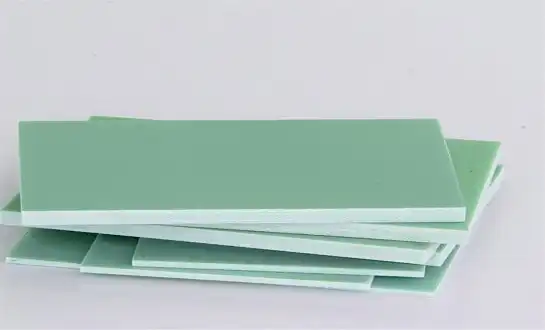
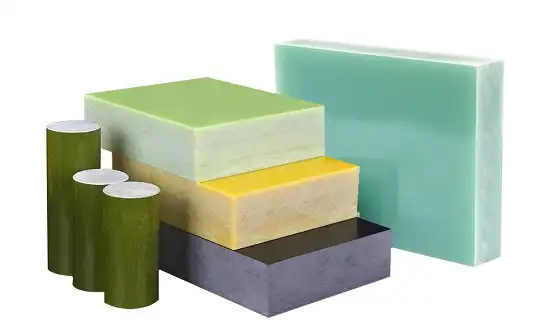
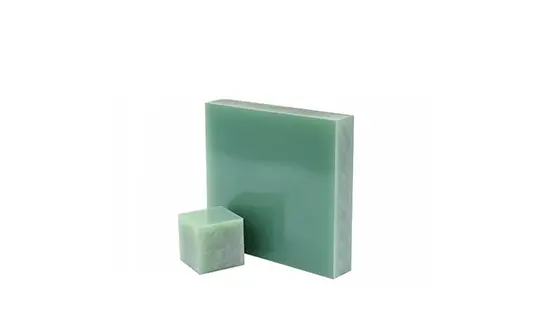
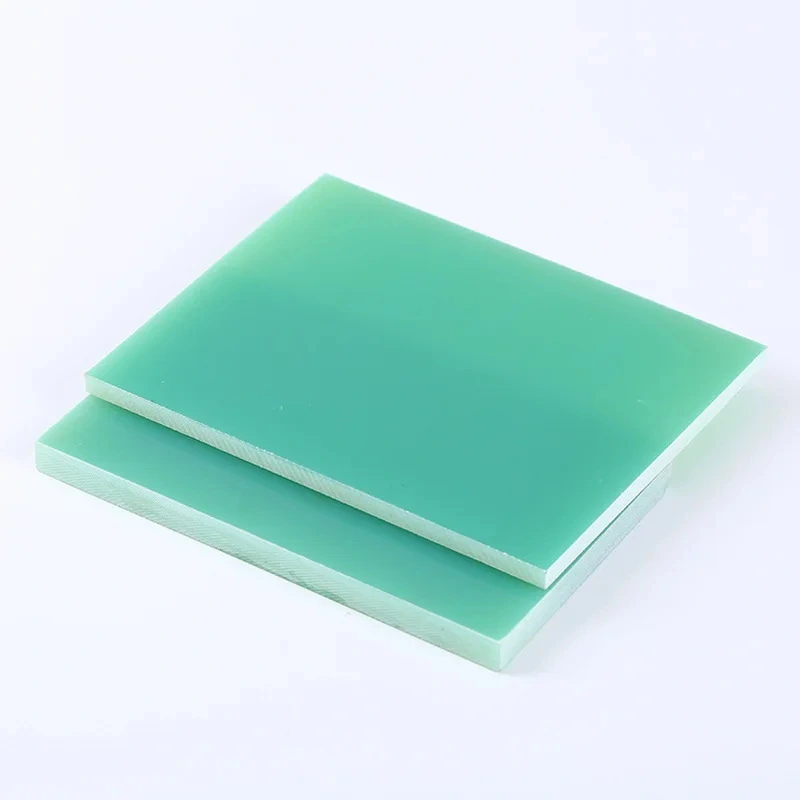
Epoxy resin is what our light green JingHong Epgc308 Epoxy Sheet is made of. It could be anywhere from 0.3 mm to 100 mm thick. The size of this thing is 1030 mm x 1230 mm. Custom sizes come in at 1030 mm x 2030 mm, 1220 mm x 2440 mm, 1030 mm x 1030 mm, and 1030 mm x 2070 mm. Sheets can be sent by sea, land, or air as long as they are properly packed on pallets to keep them safe. You can pay by T/T and buy at least 500 kg. It can hold up to 43,000 tonnes a year. It is made to meet ISO, UL, and ASTM standards, and the strength and insulation of each batch are checked. We can change the sizes and colours with OEM service. These sheets have been sold by J&Q for more than 20 years. For more than 10 years, it has done business with other countries. To make things easier, it even has its own shipping company.
Verifying Quality and Choosing the Right Supplier
First-Article Inspection Before Bulk Orders
Make some test pieces first that were cut on a CNC machine. Check the outside measurements, thickness, hole diameter, hole location, flatness, and condition of the edges. Then, make sure the part fits correctly into the whole. Not enough room, screws that aren't lined up right, and uneven insulation may look good on a calliper but not so good in the equipment. Check that the changes that were made to the drawing and the records of the inspection match. Look at the box too. While they are being shipped, parts need to be kept safe from things like water, pressure, dust, and fibres. Not only the sheet, but also the cutting, the tools, the inspection, the goods, the mistakes, and the fixes should all be added up.
What to Ask a Supplier?
See if the seller makes the laminate themselves. If so, find out what sizes and thicknesses of sheets they offer, how they keep track of limits, and what records they keep for each batch. Do not forget to bring test standards, inspection reports, and certificates. A high-temperature bending test, an oil-based electrical strength test, and a water absorption test are often used to make sure this grade is good. Each one is based on an IEC 60893 method. How long has the company been in business? What kinds of materials do they use? How long do projects in the US take to finish? Finally, go over how to accept samples, how much you need to order, and how accurate you need to be when you place another order. It's easier to compare sellers once you know the answers to these questions.
Practical Steps to Better Cutting Results
Send all the important information at the start, like the grade, thickness, size, tolerances, updated plan, number, application conditions, and compliance needs. Write down the important parts. First, talk about the technical side. Make a test next. Last, check the first piece to make sure it's fine. Finally, make a lot of them. The style you choose is also helpful. You should stay away from sharp inside corners cut with a round cutter because they leave a radius. Also, make sure there is enough space between the edges of the slots and holes so they don't break or chip. Functions and quality goals should be matched so that too many tolerances aren't added, which would raise costs without improving performance.
Conclusion
When CNC machines cut Epgc308 Epoxy Sheet, they can be more accurate because they don't have to deal with the problems that can happen with a thermoset material made of glass fibres. While cutting resin and glass threads by hand, they don't always cut the same way, so there are chips, delamination, burrs, and holes that aren't where they should be. Setting tool paths, solid clamps, the right speeds and feeds, carbide or diamond tools, and dust collection can help you keep the shape the same and the temperature low. Planning and milling with CNC is a better way to cut insulation parts because it gives you more control over the shape and sides. Hand sawing, laser cutting, and waterjet cutting are not as good. See what the material can do, set limits based on that, pick the right width for the load, look at first-article examples, and don't just judge sellers by the price of the sheet. You should also look at their paperwork and the total price.
FAQ
Can CNC machines cut custom shapes from Epgc308 Epoxy Sheet?
Yes. Cutting with a CNC router or mill is better than cutting by hand when it comes to making holes, slots, countersinks, custom sizes, and profiles that can be used over and over. You can start with a 1220 mm x 2440 mm sheet size that works for your idea.
Does CNC cutting change insulation performance?
The shielding works well most of the time thanks to controlled machining. Because of the risks of heat damage, cracks, delamination, and mess, it's important to keep tools and parts clean. Get a copy of the first piece.
What information do I need for a quotation?
Send them your plans and tell them what you need, where it's going, how thick the material is, and if there are any rules. Also, let them know when you need the stuff sent to you. It helps to have a picture or part to look at.
How should I compare suppliers?
When you compare sheets, don't just look at the price. You should also look at the professional skills, paperwork, experience with shipping, checking methods, and overall cost. All of them should give you test results and data sheets.
What are the order terms at J&Q?
It's possible to send things by sea, land, or air because we pack them in boxes. We accept T/T as payment. We need at least 500 kg for an order to go ahead.
Request a Custom Epgc308 Epoxy Sheet Solution From J&Q
Planning a CNC project with Epgc308 Epoxy Sheet? J&Q brings more than 20 years of insulating sheet experience, over 10 years in foreign trade, and our own logistics company for one-stop service. As an Epgc308 Epoxy Sheet manufacturer, we can review your drawings, thickness, sheet size, and quantity, then recommend a practical plan. Email info@jhd-material.com to request a sample or project quote. For details, please refer to the website: blog.jhd-material.com.
References
1. IEC 60893-3-2, Insulating Materials – Industrial Rigid Laminated Sheets Based on Thermosetting Resins for Electrical Purposes – Part 3-2: Specifications for Individual Materials – Requirements for Rigid Laminated Sheets Based on Epoxy Resins, 2011
2. Machining Technology for Composite Materials: Principles and Practice, Woodhead Publishing, 2012
3. Drilling of Fiber Reinforced Plastics: A Review, Journal of Materials Processing Technology, 2007
4. Effects of Special Drill Bits on Drilling-Induced Delamination of Composite Materials, International Journal of Machine Tools and Manufacture, 2006
5. ASTM D709, Standard Specification for Laminated Thermosetting Materials, 2017
6. ISO 2768-1, General Tolerances for Linear and Angular Dimensions Without Individual Tolerance Indications, 1989

Get a complete product list and quotation

J&Q New Composite Materials Company