Epgc308 Epoxy Sheet Production Equipment for Industrial Insulation
There are different ways to make resin, coat glass cloth with it, let it dry, hot-press, seal, cut, and test Epgc308 Epoxy Sheets for industrial insulation. In these tools, epoxy glue and knitted glass fibres are used together to make a tough substance. To find out the dielectric strength, thickness tolerance, and heat resistance, you need to know the fix control, pressure, temperature, and glue ratio. That's why this tool is important. This guide was written to help buyers and engineers make smart choices about process control, technical data, thickness, and sending a request. Foam sheets have been made by my business for over 20 years.

Epgc308 Epoxy Sheet Manufacturing Process: From Raw Materials to Finished Laminate
Resin Preparation and Glass-Cloth Impregnation
The first thing that needs to be done with the epoxy glue and stitched glass cloth is to check them. People mix it, and then the cloth goes through a step that soaks it in resin. That way, each group of threads will get glue. It's important how much glue there is. It leaves dry spots if there isn't enough resin. It changes the thickness and makes the glass reinforcement less strong if there is too much. The cloth is wet and then dried to make prepreg. It's easy to stack this sheet because it's mostly done. This is the first thing that a lot of people who are buying electronics and power tools ask about. That's why it sets the dielectric strength. Using the same pre-preg helps make sure that all of the sheets are the same thickness.
Lay-Up, Hot Pressing, and Curing
The prepreg layers are then stacked until they reach the required thickness, which, according to our standard product data, is between 0.3 mm and 100 mm. It is put into a hot press, which cures the epoxy and joins the pieces together with heat and pressure. How squished and twisted the inside is can be changed by the pressure, hold time, heating rate, and cooling rate. Plate parallelism in the press can also change how thick and flat something is. Some steps may be taken after the glue has hardened to make sure that motor and generator parts can handle heat. Engineers should be able to link any result to a batch if they keep written records of every press cycle.
Cutting, Machining, and Export Packaging
The sheet is cut and checked for damage after it has dried. About 1030 mm x 1230 mm is our size. You can order them in 1030 mm x 2030 mm, 1220 mm x 2440 mm, 1030 mm x 1030 mm, and 1030 mm x 2070 mm sizes. A lot of people then cut, drill, or CNC machine the sheets to make the boards' frames, supports, and spacers. To work with glass fibre, you need tools with solid carbide or diamond tips and a way to clean up the dust. A lot of HSS tools become useless very quickly. We can ship by air, sea, or land. As always, we pack and keep the boxes safe.
Core Epgc308 Epoxy Sheet Production Equipment and Its Quality Impact
Mixing, Dosing, and Impregnation Equipment
The tools that mix the resin, measure the dose, and remove air from the hoover are in charge of what goes into the laminate. There are no gaps when you use the right amount of glue, and degassing gets rid of the air that would have caused them. There are stress controls on the lines that hold the glass cloth in place so that it stays flat as it goes through the plastic. Dried heat sets the fixed stage of the prepreg. If any of these units move, the sheet might not have the same amount of resin, air could get stuck inside, or the electrical properties might not stay stable. Voids are important in parts that have a lot of power because they can cause some of the power to be lost. Find out how often and how the seller checks the amount of the resin.
Hydraulic Hot Presses and Temperature Control
The hot press is the main machine used to make an Epgc308 Epoxy Sheet. The pressure from a hydraulic press is even, and the heaters' heat doesn't change where they're placed on the plate. In places where it is cooler than others, the glue will not set up the same way everywhere. This could twist, peel, or change how thick it is. They help get rid of any extra air ahead of time, before the glue sets. If you want to heat something evenly on sheets that are 1220 mm x 2440 mm, you need to write down the temperature and pressure. A good provider is more than just a picture of the machine. A lot of the time, they also show press logs.
Laboratory Testing Equipment
What the line does has been shown by test tools. Dielectric-strength testers check for breakdown voltage, mechanical testers check for bending strength, and thermal-aging ovens check for heat behaviour. Thickness gauges are used to check for tolerance. We check every batch to see how strong it is and how well it keeps heat in. People who want to buy something should ask for inspection records that are specific to the batch they want to buy, since a list of tools doesn't show quality by itself. You can compare data from different sets as long as the test settings stay the same and the tools are all the same.
Epgc308 Epoxy Sheet Specifications, Technical Data, and Material Comparison
Product Data You Can Confirm
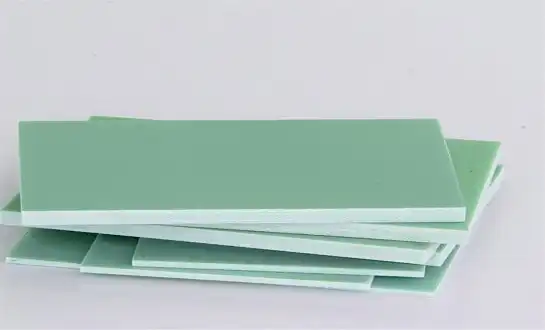
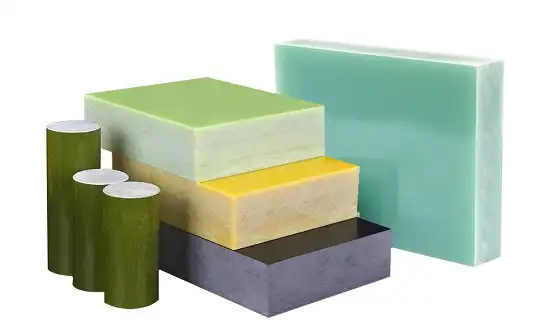
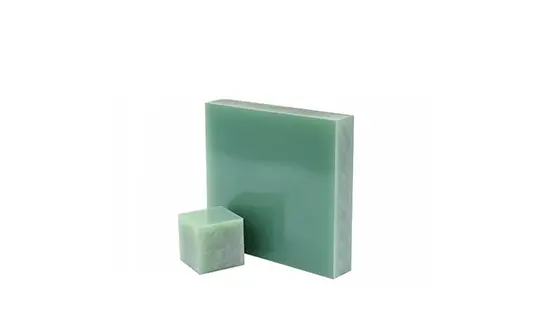
It's made of epoxy resin and is a light green colour. The JingHong Epgc308 Epoxy Sheet we sell works great. It can be as thin as 0.3 mm or as thick as 100 mm, but the standard size is 1030 mm x 1230 mm. The most that can be bought each year is 43,000 tonnes, and the least that can be paid for is 500 kg. The item needs to follow the rules set by ISO, UL, and ASTM. We take care of colours, shapes, and other details as part of our OEM service. Please look over the current document one last time before placing your order to make sure there aren't any important details left out, like the colour and width range.
Technical Properties and Test Conditions
This laminate class is written in IEC 60893-3-2. At room temperature, the bending strength is at least 340 MPa, and the dielectric strength is at least 10 kV/mm in oil, going across the laminations. The glass transition temperature is above 170 °C, and the thermal index is 180 °C (Class H). This is a picture of our technical information. At 150 °C, the strength must stay above 50% when bent. It's only fair to compare test results if the material diameter, test direction, training, and method are all the same. When you see numbers like ISO 178 for flexure or IEC 60243-1 for dielectric strength, you should always ask how they were made.
Comparing with FR4, G10, and EPGC202
Having a grade name doesn't mean anything. A lot of people use glass and resin laminates called FR4 and G10. EPGC202 is the name of a different type of IEC epoxy glass. One way to compare them is by how well they handle water, heat, electricity, and fire. Another way is by how easy they are to bend and how much they cost. You should make sure that the Epgc308 Epoxy Sheet is Class H grade and that it keeps its strength at 150 °C. This is important for switches, engines, and spinning machines that will be used in hot places. A different grade might work better and cost less for PCB support or low-heat fittings. Make sure that all of the datasheets have the same test standard, thickness, preparation, and thread direction. There are times when a certain number is not good.
How to Choose Epgc308 Epoxy Sheet Thickness for Industrial Insulation?
Electrical Factors
Working voltage and impulse voltage are the first things we will work with for an Epgc308 Epoxy Sheet. Stronger sheets break more slowly, but that doesn't mean they're safe. Your design standards should also tell you how much area and room there is for things to creep in. The amounts of dirt and water are also different. The datasheet has the Comparative Tracking Index. A thick sheet's surface can be followed all the way across its face. When it comes to plastic, ours often goes up to 600 V. Look for dielectric data that was saved in oil on things that have been soaked in oil. To match the data you give them with the width you pick, they will need to know the voltage class and the area.
Mechanical Factors
Take a look at the load now. How thick you need it depends on the distance between the supports, the force that holds them together, how much they shake, how hard they hit, and how much they bend. A thin sheet can bend over a big hole, but a thicker sheet stays straight. For parts of machinery that are stressed and worn out, such as gears, spacers, and structural supports, you often need a lot of stock. Thick sheets can be used for heat barriers, though. Cycling heat adds stress to hot motor parts, which helps them keep their shape at 150 °C. Also, it's important to be kind. The IEC 60893-3-2 says that a 10 mm sheet can be off by up to 0.50 mm. For the most part, you need to grind down the edges to make them tighter.
Cost and Drawings
And it takes longer and costs more to make a sheet that is too thin. It will also break, bend, or fail early. Sending pictures and details about how the machine works is the safest way to settle the issue. It should have charge, temperature, load, and parts that fit together. Then, for tests or large-scale production, we can offer a range from 0.3 mm to 100 mm. If you wish to buy many tools and car parts, try a small amount first. It only takes a small change in thickness to change how much the parts cost and how well they fit.
Quality Assurance, Buying Checklist, and Working with an Experienced Manufacturer
Quality Control and Common Defects
Holes, peeling, areas that don't have enough glue, uneven thickness, bending, blisters, surface cracks, and water damage are all common flaws. This is because they weren't fully wet and dried, and there weren't any cleaner or mixed material lots. For a skilled check, IEC 60893 codes are used. Checking for blisters, cracks, and edge delamination is one of these. Other tests include an ISO 178 bending test at 150 °C, an IEC 60243-1 dielectric strength test in oil at 90 °C, and an ISO 62 water absorption test. Checks should be done on the first item, samples should be approved, and everything should be checked before it is shipped. As soon as you get the sheets, lay them out flat in a dry room that is not near UV light.
Supplier and Quotation Checklist
It is easier to answer quickly when the question is clear. Type, standard, sheet size, thickness, number, needs for electricity and machinery, working space, plans, licence requirements, the goal's place and date should all be written down. Prices for different kinds of materials depend on their size, thickness, tolerances, order volume, packaging, goods, and Incoterms. You should look at the company's stock, lead time, production capacity, ability to be monitored, and shipping time. You can pay with T/T, and the least you can buy is 500 kg. We can ship by land, sea, or air. We'll let you know what we can do to get you the records you need for your job, such as batch inspection reports.
Why is an Experienced Manufacturer Lower Risk?
Over the past 20 years, we've made and sold insulation sheets. For over 10 years, we've also done business with other countries. We've had traders from the US and other places as clients for a long time. We can do everything in one place now that we have our own logistics company. We can make the goods and deliver them. It's less likely that grades will get mixed up, drawings will be wrong, and goods will take longer to get to the workplace when things are set up this way. That's why we can handle 43,000 tonnes of goods every year. We can handle both one-time sales and regular deliveries from companies that sell electronics, tools, power tools, cars, and tech. Any supplier will make it easy to get up-to-date datasheets, inspection reports, and project references.
Conclusion
The performance of Epgc308 Epoxy Sheet depends on the whole production chain, not on the grade name alone. Resin preparation, glass-cloth impregnation, hot pressing, curing, and testing each affect dielectric strength, thickness tolerance, and heat resistance. Equipment such as dosing systems, degassing units, multi-zone presses, and laboratory testers matters most when batch records back it up. Verified data, including Class H thermal endurance, flexural strength retention at 150 °C, and dielectric strength measured under stated conditions, allows fair comparison with FR4, G10, and EPGC202. Thickness should be selected based on voltage, load, environment, and cost together. Defect control and documented inspection reduce the risk of voids, delamination, and warpage.
FAQ
What is Epgc308 Epoxy Sheet used for?
Electric motors, switches, transformers, gears, spacers, and circuit board supports are all made of it. It is also used as insulation and support. Check the datasheet and how you plan to use it to make sure it fits.
Can I order custom sizes?
Yes, you can order sizes up to 1220 mm x 2440 mm. The standard size is 1030 mm x 1230 mm. The OEM service can alter the sizes and colours. It is possible to buy as little as 500 kg.
How do I check thickness tolerance?
How thick is your thing? Check out the IEC 60893-3-2 comfort level. A 10 mm sheet usually has a range of ±0.50 mm. That's why you need to grind the surface.
What should my quotation request include?
Send us the grade, size, thickness, amount, plans, working conditions, and where it's going so we can make sure it's right and give you the right price.
Request an Epgc308 Epoxy Sheet Technical Review and Quotation from J&Q
If you need an Epgc308 Epoxy Sheet supplier with more than 20 years of insulating sheet experience, J&Q is ready to review your drawings and operating conditions. Send your grade, size, thickness, and quantity to info@jhd-material.com, and our team will reply with a technical review and quotation. With 43,000 tons of annual capacity, a 500 kg MOQ, and our own logistics company, we support steady delivery. Visit blog.jhd-material.com for more guides.
References
1. IEC 60893-3-2: Insulating Materials – Industrial Rigid Laminated Sheets Based on Thermosetting Resins for Electrical Purposes, Part 3-2 (2011)
2. ISO 178: Plastics – Determination of Flexural Properties (2019)
3. IEC 60243-1: Electric Strength of Insulating Materials – Test Methods, Part 1 (2013)
4. ISO 62: Plastics – Determination of Water Absorption (2008)
5. ASTM D709: Standard Specification for Laminated Thermosetting Materials (2017)
6. IEC 60112: Method for the Determination of the Proof and the Comparative Tracking Indices of Solid Insulating Materials (2020)

Get a complete product list and quotation

J&Q New Composite Materials Company