G10 Epoxy Sheet CNC Processing Methods for High Precision Insulation Applications
When precision meets performance in electrical insulation, G10 epoxy sheet stands as the material of choice for demanding industrial applications. This glass-reinforced epoxy laminate delivers unmatched dimensional stability and dielectric strength, making it indispensable for components requiring tight tolerances and reliable electrical isolation. CNC processing transforms these robust sheets into custom insulation parts that power everything from switchgear assemblies to motor components across multiple industries.
Introduction
As electrical systems get smaller and more important for performance, the need for high-precision insulation parts keeps going up. G10 epoxy sheets have been used for many years and are a reliable choice when mechanical strength, electrical insulation, and heat stability are all important. This guide looks at how advanced CNC machining methods and the properties of materials can work together to help makers make insulation parts that are of the highest quality.
Our main goal is to meet the unique needs of engineering managers and procurement specialists who have to find a balance between performance standards and the ability to make the product. Knowing how CNC processing methods can bring out the best in this combination material helps people make decisions about the best way to do things for their needs. We've used our decades of experience in manufacturing to give you useful tips that will help you make better purchasing decisions and make the final product more reliable.
Understanding G10 Epoxy Sheet: Properties and Applications
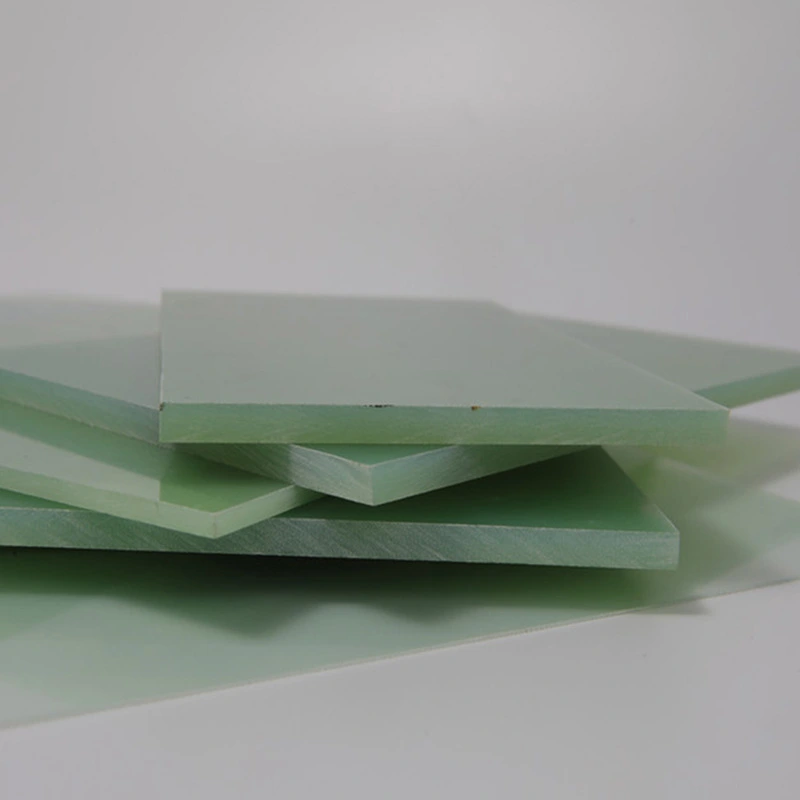
G10 epoxy sheet is a high-performance composite made by putting layers of woven fiberglass cloth on top of each other and then curing them under controlled heat and pressure. Using this method of production, a laminate is made that has great mechanical properties and great electrical insulation properties. The material started out in the 1950s as the first G10 epoxy sheet for printed circuits. It has since changed into a flexible engineering material that is used in many different industries.
Core Material Properties
This laminate is very strong mechanically; its tensile strength is up to 40,000 psi and its compressive strength is up to 65,000 psi. Flexural strength is about 75,000 psi, which means it can withstand stretching forces that would break down weaker materials. Because of these strong qualities, parts stay together even when they are under a lot of stress, which means they can be used as load-bearing shielding in machines and electrical equipment.
Because of its electrical properties, this material is unique for use as shielding. The dielectric strength keeps the dissipation factors low so that there is little energy loss and no electrical breakdown. Moisture absorption stays incredibly low at just 0.11% over 24 hours. This ensures stable performance in humid settings where phenolic alternatives might take 0.5% to 2.0% water and swell in size. This resistance to wetness is very important for precision parts that need to stay the same size in a wide range of weather conditions.
Temperature and Chemical Performance
Standard grade laminates can work steadily at temperatures of up to 130°C (266°F), which is hot enough for most electrical and industrial machinery uses. The material is good at resisting thermal shock and keeping its shape through changes in temperature that would stress thermoplastic alternatives. Most industrial cleaners, oils, and cleaning agents can't damage it chemically, which helps it last a long time in tough working conditions.
Its coefficient of heat expansion stays very low, making its physical stability better than that of thermoplastics and many other competing composites. This feature makes sure that precisely made parts stay within tight specs throughout the temperature range they are used in. When used as mechanical spacers, insulation barriers, or structural supports, the parts stay the same size and shape after being installed.
Industry Applications
These laminates are used by electrical and electronics companies to make PCB support structures, switchgear insulation panels, and motor component isolation. When you combine dielectric strength with CNC machinability, you can make complex shapes that fit into modern small electrical designs. Following UL and ROHS rules gives regulatory assurances that procurement teams need for approval of specifications.
Manufacturers of industrial machines use the material to make mechanical gaps, structural insulation parts, and parts that don't wear out easily when they're used all the time. Precision parts will fit and work properly if they can keep their thickness limits while being processed by CNC. These laminates are used as coil insulation, arc barriers, and thermal protection elements in power distribution systems to keep vital infrastructure safe from flames and changes in temperature.
Insulation pads for computer control units, battery pack barriers that need to handle heat, and heat-resistant parts in engine compartment sections are all examples of automotive uses. Because the material is stable at all temperatures, it works well in the harsh climate of an automobile. Home appliance makers like how cost-effective it is to make insulation frames and motor brackets because they can be made in large quantities and are delivered on time, which helps them stick to their production schedules.
CNC Processing Methods for G10 Epoxy Sheets: Techniques and Best Practices
Precision CNC machining makes G10 epoxy sheets work at their best by making complex shapes with close tolerances that are impossible to make by hand. Because the material is hard and rough, it needs to be worked with in a certain way, but CNC processes that are done correctly produce great results. To get the best results when making insulation components, you need to know how the cutting factors affect the behavior of the material.
Routing and Milling Operations
When it comes to G10 epoxy sheets, CNC routing is great at making curves, holes, and edge treatments. Carbide or diamond-tipped router bits are used in the process because they can handle the rough glass fibers without getting dull too quickly. Depending on the cutting width and the thickness of the material, spindle speeds are usually between 12,000 and 24,000 RPM. Feed rates match the speed of production with the quality of the surface finish. For example, edges on exposed surfaces with slower feeds are smoother.
Milling processes make holes, pockets, and flat, precise areas in laminate parts. Cutting forces are spread out over more than one edge of a multi-flute end mill, which makes the tool last longer and keep its accuracy. Most of the time, climb milling is better than regular milling because it makes edges that are cleaner and has less fiber pullout along the edges of cuts. Both tool wear and heat management are affected by the depth of cut per pass. Multiple short passes often produce better results than a single strong pass.
Drilling and Hole Making
To make accurate holes in G10 epoxy sheets, you need to pay attention to the shape of the drill and how fast it cuts. Standard high-speed steel bits wear out quickly, but specialized carbide drills with reinforced cutting edges last a long time. Point angles between 90 and 130 degrees are good for leveling and reducing delamination at the entry and exit points of holes.
Peck drilling cycles are good for drilling deeper holes because they let chips escape and heat escape, which keeps the bit from getting stuck. To keep exit-side delamination to a minimum, through-holes need backing support. This is because breakthrough forces can separate laminate layers on the exit side. Using coolants lowers the buildup of heat that can soften the epoxy matrix and speed up tool wear. However, dust extractor systems are still needed to collect the small particles that are made during cutting.
Laser Cutting Applications
Laser processing is better for cutting complex designs and thin pieces of material because mechanical cutting forces could cause the layers to separate. When CO2 lasers cut through glass fibers, they vaporize the epoxy resin, leaving behind narrow kerfs that don't have any mechanical stress. Because it doesn't touch anything, there are no worries about tool wear, and it can handle tiny shapes that would be hard to cut with traditional methods.
When specifying laser cutting, heat-affected zones need to be taken into account. The heat can burn the sides and make a thin, changed layer that could affect later bonding steps. If you choose the right parameters, these effects will be lessened while the edge quality will still be good enough for most uses. Laser cutting is great for making prototypes and small batches of products because it doesn't require expensive tools like mechanical cutting does.
Dust Management and Safety
When CNC machines are used, glass fibers and glue dust are created. These can be harmful to your lungs and can damage precision machine parts. Class-H vacuum extraction systems collect airborne particles at the cutting point to keep operators safe and maintain the accuracy of the machine. Wet grinding methods that use coolant sprays stop the production of dust and help control temperature.
Monitoring tool wear keeps cutting edges sharp, which lowers cutting forces that could lead to delamination or changes in size. Checking carbide tools on a regular basis lets you replace them before damaged edges affect the quality of the part. Managing dust properly keeps gritty particles from building up on slides, bearings, and precision surfaces, which extends the life of machines.
Comparing G10 Epoxy Sheets with Other Composite Insulators for CNC Applications
The choice of material has a big effect on both the performance of the parts and the economy of production. Even tho G10 epoxy sheets have great qualities all around, buying teams can make better decisions when they know how they compare to other materials. There are different benefits to each material that make it better for different uses and budgets.
G10 Versus FR4 Laminates
There are often questions about the differences between normal grade and flame-retardant materials. Standard versions are not flame-retardant, but FR4 is because it contains bromine additives that make it self-extinguishing with a UL94 V-0 flammability grade. Both materials work mechanically the same way, with similar electrical and tensile strengths. Many suppliers now offer dual-rated goods that meet both requirements. This makes it easier to buy things for situations where the flame resistance standards aren't clear.
Standard grades are slightly better at resisting water because they absorb a little less of it, which is good for precision applications in humid places. The flame-retardant ingredients in FR4 can slightly change its long-term shape stability when exposed to high levels of moisture, but this isn't a big deal for most industrial uses. Most of the time, choices about what to buy depend on whether specific flammability scores are required by law rather than differences in performance.
G11 for Higher Temperature Applications
When temperatures stay above 130°C for a long time, G11 laminates offer better thermal performance up to 180°C. This ability to withstand high temperatures works well for transformer insulation, motor parts that are close to heat sources, and industrial equipment that works in hot environments. The material keeps its mechanical strength at temperatures where other grades start to lose their properties.
CNC machining properties stay the same for both types, so makers can use the same tools and settings to make them. High-temperature grades usually cost 20% to 40% more than low-temperature grades, so they should only be used when the heating needs support the extra money. For uses in normal temperature ranges, choosing the higher-grade material is usually not necessary and only adds to the risk.
Phenolic Alternatives
If you only need moderate mechanical strength, phenolic cotton laminates are a good value for the money. These materials are easy to work with and wear down tools less quickly than glass-reinforced composites. This makes them cheaper to process for mass production. Because phenolics don't absorb moisture as well as G10 epoxy sheets, they can't be used in precise applications where stability is important.
The electrical properties of phenolics make them useful for a wide range of industrial and home appliances where high dielectric strength isn't necessary. People who care about price will like the lower material costs and easy machinability, especially for parts that won't be exposed to tough environments. When specifying insulation materials, procurement teams weigh these cost savings against the materials' limited performance.
Carbon Fiber and Advanced Composites
Carbon fiber materials have great strength-to-weight ratios, but they are very expensive and hard to work with. The cost of the materials is usually three to five times higher than that of G10 epoxy sheets. Because of this, they can only be used in aircraft and high-performance car parts where the extra cost is worth it to save weight. Because carbon fiber is so hard, CNC cutting needs special tools, which raises the cost of production above the cost of the materials.
Because carbon fiber is electrically conductive, it can't be used for insulation purposes and shouldn't even be thot about for dielectric components. The material is used in structural applications where its mechanical qualities are more important than its cost, but G10 epoxy sheets are still the best choice for electrical insulation that needs to be precisely machined.
Procuring G10 Epoxy Sheets for CNC Applications: Key Considerations
A successful procurement process includes more than just comparing prices. It also includes quality control, a reliable supply chain, and professional help that makes sure the project is completed successfully. The bond between the buyer and the seller has a big effect on how well the parts work and how efficiently the production runs in the long run. Strategic procurement practices lower risk and get the best total cost of ownership over the whole lifecycle of a product.
Quality Assurance and Certification
Verified manufacturing systems give you peace of mind that the properties of the materials will stay the same from batch to batch. Suppliers who keep records of their quality management systems show that they are dedicated to process control, which stops specifications from changing over time. Material certifications that show compliance with NEMA standards, UL ratings, and ROHS directives get rid of regulatory uncertainty during the approval and specification processes for parts.
Traceability systems connect lots of raw materials to produced sheet items so that problems with performance can be looked into. This paperwork trail is very helpful for resolving problems in the field or making sure that materials are real for important uses. Teams in charge of buying things should make sure that suppliers can give them mill test reports and material certifications that meet the standards of their quality system.
Custom Sizing and Material Optimization
Pre-cut sheets that match the size of the CNC machine bed cut down on the time and materials that need to be handled during setup. Suppliers that offer custom sheet sizes help maximize yield by reducing the number of offcuts, which cost money in wasted materials. If the thickness tolerances meet the specs for the finished part, it may not be necessary to do any secondary grinding. This cuts down on processing time and the costs of labor.
By buying G10 epoxy sheet in bulk, you can save money on costs through volume discounts and make sure that materials are distributed evenly when supplies are low. Long-term contracts with well-known suppliers guarantee stable prices and reliable delivery, which helps with planning production. When compared to handling multiple material providers, consolidated sourcing saves time and money on administrative tasks.
Logistics and International Shipping
Delivery times and landing costs for cross-border purchases are affected by export paperwork and following international shipping rules. Expert providers know how to handle customs rules quickly and easily, avoiding shipping delays that could stop production. When you package sheet goods correctly, they stay dry and unharmed during shipping, so the material properties and measurements stay the same.
Scheduling deliveries to coincide with production cycles cuts down on the costs of keeping stockpiles and makes sure that materials are available when they are needed. Some suppliers keep warehouses in different parts of the country that cut down on shipping times and costs compared to sending goods directly from the factory. Understanding the bigger picture of transportation helps buying teams figure out how much it really costs to buy things, not just the prices that are mentioned.
Enhancing Insulation Performance Through Precision CNC Processing: Challenges and Solutions
To get the best performance from a component, you have to deal with the problems that come with machining G10 epoxy sheets. Electrical protection and mechanical fit can be harmed by delamination, dimensional variation, and flaws in the surface finish. CNC-machined parts are made to meet strict application requirements by using advanced processing strategies and quality control measures.
Preventing Delamination
When cutting composite materials, layer separation at the cut edges is the main thing that needs to be thot about. When you have sharp tools with the right edge shape, you can cut through layers of plastic and fiber without tearing them apart. When tools are dull, they have higher cutting forces that cause cracks to spread between laminate layers. To stop delamination defects, tools must be replaced regularly.
During drilling operations, entry and exit plans are very important. As the drill gets closer to breaking through, slowing down the feed rate reduces the pushing forces that push the layers apart. Backing materials hold up the laminate during bit exit and stop fibers from breaking out without control. These methods make sure that the quality of the holes meets the needs of the assembly without the need for extra deburring steps.
Managing Tool Wear
Compared to working with metals or thermoplastics, the rough glass strands quickly dull cutting edges, speeding up wear. High-speed steel isn't as resistant to abrasive wear as carbide and polycrystalline diamond tools, which makes up for their higher starting cost by lasting longer. By checking the state of tools on a regular basis, you can avoid using damaged cutters that cause mistakes in measurements or surface flaws.
The best cutting parameters balance how much material is removed with how long the tool lasts. Cutting too aggressively creates heat and mechanical stress that speed up wear. On the other hand, using conservative settings extends the life of the tool but lowers its efficiency. Using data to guide parameter development helps find the best balance between component quality and production efficiency.
Achieving Dimensional Accuracy
If you don't handle the heat well, thermal growth during machining can lead to mistakes in the dimensions. Coolant systems take heat away from the cutting zone. This keeps the temperature of the material steady and stops it from heating up during processing. By giving machined parts time to cool down to room temperature before the final review, it is made sure that the measures used accurately reflect the shape of the finished part.
Calibration and maintenance of machine tools keep the positional accuracy needed for precision parts. CNC operations make sure that the parts they make are within certain standards by checking the machine's shape on a regular basis and making up for any errors. Temperature-controlled manufacturing environments get rid of changes in the environment that could affect how consistently the dimensions are made across production runs.
Surface Finish Optimization
In high-voltage situations, rough surfaces can cause tracking failures because they concentrate electrical stress. By fine-tuning the feed rates, machine speeds, and tool choices, smooth surfaces are made that improve the dielectric performance. Multiple finish passes with sharp tools get rid of machining marks that might weaken the insulation.
Sometimes, processes done after machining improve surface features more than what cutting operations can do on their own. Using fine abrasives for light sanding gets rid of small flaws while keeping the measurements correct. Using magnification to look at the surface shows the quality of the edges and helps make sure the process can work before full production starts.
Conclusion
Precision CNC cutting turns G10 epoxy sheets into high-performance insulation parts that meet strict industrial standards. Because of its great electrical properties, high strength, and ability to keep its shape, the material is perfect for use in electrical manufacturing, industrial tools, power systems, automotive, and appliance industries. Knowing the right CNC methods, like choosing the right tools and controlling the dust, is important for making sure that parts have the tight tolerances and smooth surfaces that are needed for important uses. To get regular quality and a dependable supply, good buying combines the features of the materials, the abilities of the suppliers, and transportation issues. Using the right tools, techniques, and optimizing the process can help you handle the difficulties of machining abrasive composites, resulting in parts that last longer and work better.
FAQ
What distinguishes standard grade from FR4 flame-retardant material?
Flame retardants based on bromine are missing from standard versions of FR4. These are what give FR4 its self-extinguishing UL94 V-0 grade. Both materials work the same way mechanically and electrically, with similar dielectric and strength properties. Many modern products have two certifications that show they meet both requirements. This makes buying easier when you aren't sure what the flame resistance requirements are.
Does this material suit underwater or marine applications?
Because it absorbs less than 0.1% of water, it is perfect for use in submerged applications. When exposed to water, the laminate doesn't grow or lose its dielectric strength, unlike phenolic options that might soak up a lot of water. These traits make marine electronics and sealed electrical assemblies that work in damp places ideal.
What machining challenges should manufacturers anticipate?
The glass fiber support makes the material rough, which means that regular cutting tools wear out quickly. To protect workers and equipment, you need tools with carbide or diamond tips and the right dust collection systems. Professional-grade extraction is needed for safe handling because the fiberglass dust upsets respiratory systems and breaks down precision equipment.
What outdoor applications use this insulation material?
Even tho it is physically stable, the epoxy resin matrix is not naturally resistant to UV light, so if it is in full sunlight for a long time, it will turn yellow or have fiber bloom. For outdoor uses, UV-resistant paints or coats are needed to keep the surface looking good and stop it from wearing down. When used indoors, these UV exposure issues don't happen at all.
Partner with J&Q for Premium Glass Epoxy Laminates
For every precision insulation job, J&Q brings more than twenty years of experience making things and ten years of experience trading with other countries. Our stock of G10 epoxy sheet meets the CNC processing needs of electrical manufacturers, machinery builders, power system suppliers, automakers, and appliance brands all over the United States. We know that engineering managers and procurement specialists need more than just low prices. They also need quality that is consistent, on-time delivery, and technical support that makes sure the project is a success.
Our quality assurance systems make sure that the materials we use meet industry standards and give you the certifications that your approval processes need. Custom sheet sizing makes your CNC operations more efficient by cutting down on waste and setup time. Our transportation services also make sure that your orders arrive on time, so you can keep to your production plans. As a well-known provider of G10 epoxy sheet, we offer a one-stop service that includes help with choosing the right material, custom cutting, and organized shipping, which makes the buying process easier. Get in touch with our team at info@jhd-material.com to talk about your specific needs and find out how our experience can help your precision insulation projects.
Visit our resource center at blog.jhd-material.com for additional technical information and application insights.
References
1. NEMA Standards Publication LI 1-1998, "Industrial Laminating Thermosetting Products," National Electrical Manufacturers Association, Rosslyn, Virginia, 1998.
2. Harper, Charles A., "Handbook of Plastics, Elastomers, and Composites," Fourth Edition, McGraw-Hill Professional, New York, 2002.
3. Tummala, Rao R., "Fundamentals of Microsystems Packaging," McGraw-Hill Professional, New York, 2001.
4. Chawla, Krishan K., "Composite Materials: Science and Engineering," Third Edition, Springer-Verlag, New York, 2012.
5. Proceedings of the IEEE Electrical Insulation Conference, "Advances in Composite Insulation Materials for Electrical Applications," Institute of Electrical and Electronics Engineers, Baltimore, Maryland, 2011.
6. ASM International Handbook Committee, "Composites: Engineered Materials Handbook Volume 1," ASM International, Materials Park, Ohio, 1987.

Get a complete product list and quotation

J&Q New Composite Materials Company



