G10 Epoxy Sheet CNC Milling: Improving Surface Finish Quality
Achieving a flawless surface finish when CNC milling G10 epoxy sheet requires understanding both material properties and machining precision. This high-performance fiberglass laminate combines woven glass fabric with epoxy resin, creating an insulation material that excels in electrical, mechanical, and thermal applications. The challenge lies in optimizing milling parameters to eliminate common defects like delamination and burr formation while preserving dimensional accuracy. Through controlled tooling selection, appropriate feed rates, and thermal management, manufacturers can unlock the full potential of this versatile material, delivering components that meet rigorous quality standards across electronics, automotive, and industrial sectors.
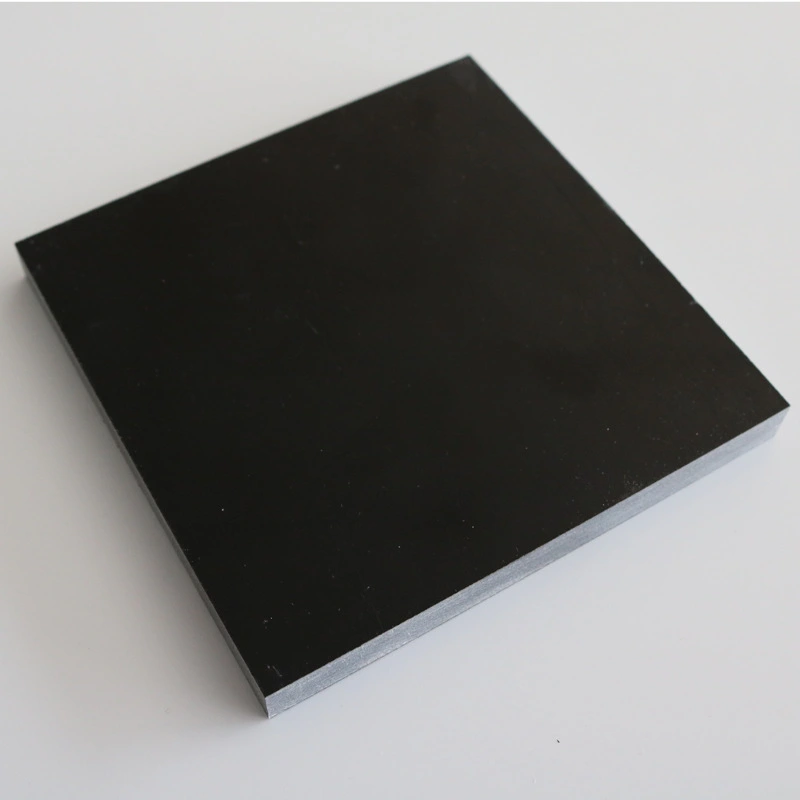
Understanding G10 Epoxy Sheet and Its Core Properties
Material Composition and Manufacturing Process
G10 epoxy sheet starts out as layers of knitted fibreglass cloth that are fully mixed with epoxy resin. Manufacturers put a lot of pressure and heat on these stacked layers to make a laminate with a very high density and strong structure. This method was first used in the 1950s for printed circuit boards, but the material's many uses quickly made it popular across many industries. The end result is a mixture that is not conductive and stays stable at high and low temperatures while also being resistant to chemical breakdown and water entry.
Mechanical and Electrical Performance Characteristics
Engineers like G10 epoxy sheet because it has a great strength-to-weight ratio. The material has a tensile strength of about 40,000 psi, a compression strength of about 65,000 psi, and a bending strength of up to 75,000 psi. These qualities don't change much at different temperatures. Standard grades can work continuously at 130°C. In addition to its mechanical properties, the material has great dielectric strength and low dissipation factors, which make it essential for electrical insulation tasks where leakage of current could harm safety or performance.
Why Surface Quality Matters in CNC Applications
When electrical parts need precise insulation barriers or tight tolerances for mechanical assemblies, the quality of the surface finish has a direct effect on how reliable the product is. Rough surfaces create stress points that can lead to cracks when they are loaded. In electrical uses, rough surfaces can trap wetness or dirt, which over time makes insulation less effective. PCB support structures, switchgear housings, and motor component insulation all need smooth, uniform surfaces to work as they should and not break too soon.
Challenges in CNC Milling of G10 Epoxy Sheets
Common Surface Defects and Their Origins
G10 epoxy sheets can be hard to CNC mill. Milling glass-epoxy laminates has its own problems that make it different from working with metal. Fibreglass is rough, so cutting edges get dull quickly. Also, the resin matrix reacts strangely to heat buildup during grinding. When these things come together, they cause a number of common defects. When cutting forces are higher than the material's ability to stick together at the edges, burrs form. When layers separate because of poor tool support, this is called delamination. Inconsistencies in surface roughness happen when old tools or the wrong speeds cause chatter patterns or tear fibres instead of cutting them neatly.
Material-Specific Machining Complexities
This laminate's hybrid structure makes it behave differently when machined than uniform materials. Unlike aluminium, which bends easily when cut, fiberglass-epoxy materials break. To keep this from happening, you need to use sharp cutting edges and exact tool paths to keep the material from chipping and tearing. Standard high-speed steel tools are worn down in minutes by the glass fibres themselves, which cause a lot of wear and tear. At the same time, heat can soften the epoxy glue, which could gum up tools or spread on finished surfaces if thermal control isn't done well.
Impact of Improper Parameters on Production Efficiency
Picking the wrong spindle speeds or feed rates not only lowers the quality of the surface, but it also makes the cost of production go up. When speeds are too high, heat builds up and damages both the tooling and the workpiece. Too-slow feeds make cycle times longer and may cause tools to rub against each other instead of cutting, which speeds up tool wear. If the amount of cut isn't right, it can cause vibration and movement, which can lead to errors in measurements that mean the parts can't be used. To meet output goals without losing the surface integrity needed by processes further down the line, engineering managers must carefully balance these factors.
Best Practices to Improve Surface Finish Quality in G10 Epoxy Sheet CNC Milling
Optimizing Cutting Parameters and Tool Selection
To start machining successfully, you need to choose carbide or diamond-tipped tools that are made for composite materials. Even though they are made of rough glass, these tools still have sharp cutting edges. Spindle speeds between 15,000 and 25,000 RPM usually work well, but the best settings depend on the size of the tool and the thickness of the material. Feed rates need to be carefully calibrated—if they are too high, the layers will separate, and if they are too low, heat will build up. A balanced technique uses modest feeds and several shallow passes instead of one forceful cut, which lets the heat escape between tool contacts.
Using these methods leads to changes that can be seen in key metrics, such as:
- Tool Life Extension: Bits made of carbide that are made for composites last five to ten times longer than normal bits, which cuts down on the cost of replacements and downtime for the machine.
- Dimensional Consistency: Controlled depth of cut reduces deflection and vibration, keeping tolerances within 0.1 mm from one production run to the next.
- Edge Quality: When you use the right feeds and sharp geometry, you get clean edges with few burrs, which means you don't have to do as much secondary finishing.
- Surface Smoothness: When the settings are optimised, the surface roughness drops below 3.2µm, making it ideal for uses that need both good looks and good functionality when CNC milling G10 epoxy sheet.
With these changes, the number of rejections goes down, and customer happiness goes up. Purchasing managers like quality that stays the same because it makes their own assembly processes easier and cuts down on costly rework cycles.
Thermal Management and Cooling Strategies
The heat that is made during grinding is very bad for the quality of the surface. When the temperature goes up, the epoxy matrix softens, which makes the finish look smeared instead of crisp and clean, which is what electrical uses need. Cooling tools properly stops this decline and makes them last longer. Air blast cooling is good for shallow cuts and thin materials because it sends pressurised air at the cutting area to get rid of both heat and debris. Mist cooling systems are better at controlling temperature without flooding the workpiece, which is useful for deeper cuts or long production runs. Some places of business use hoover extraction systems that get rid of rough dust and cool things down by moving air around.
Post-Milling Finishing Techniques
Post-processing often improves the quality of the final surface, even if the milling parameters are perfect. Deburring gets rid of the small whiskers that form along the edges of cuts, which keeps the assembly from getting messed up and makes the piece look better. For low-volume production, deburring can be done by hand. For higher numbers, automatic tumbling or brush finishing works best. Light sanding with fine-grit abrasives can smooth out the surface even more, but be careful not to make designs that could put stress in one place. Surface sealing or coating processes that fill in tiny holes are useful for some uses because they make the surface look better and keep out moisture and other contaminants.
Comparative Analysis: G10 Epoxy Sheet vs Alternative Materials in CNC Milling
Performance Against FR4 and Standard Fiberglass
G10 epoxy sheet and FR4 have similar mechanical properties, but because FR4 has flame-retardant additives, it cuts and shapes differently. FR4's ability to put itself out on its own is due to bromine chemicals that also make it a little softer when cutting, which can lead to cleaner original surfaces. G10 epoxy sheet, on the other hand, is better at resisting water because it absorbs less than 0.1%, while FR4 absorbs a little more. Because of this, it is better for precision parts that are exposed to moisture. Both materials need similar tools and settings, but G10 epoxy sheet is better at keeping its shape in a wide range of environmental conditions, which makes it better for tasks where tight tolerances must be maintained.
Advantages Over Phenolic and Metallic Alternatives
It's easier to make phenolic laminates like Bakelite than glass-epoxy composites, but they don't work as well. Phenolic materials soak up up to 2% of their weight in water, which is a lot more than other materials. This changes their size, which makes it harder to make precise parts. They are also not as strong mechanically and are not as stable at high temperatures. On the other hand, aluminium works great with normal tools and has great surface finishes, but it conducts electricity and heat, so it can't be used as insulation. Teflon doesn't react with chemicals and doesn't stick to things easily, but it's not strong enough or rigid enough for mechanical parts. G10 epoxy sheet is one of a kind because it is electrically insulating, strong mechanically, and resistant to chemicals all in one material.
Cost-Benefit Analysis for B2B Buying
In the end, decisions about what materials to use have to balance performance needs with budget limits. G10 epoxy sheet costs more than phenolic materials, but it has much better qualities that save money in the long run by making things more reliable and lasting longer. Specialised high-temperature laminates are more expensive than normal G10 epoxy sheet, which works well enough for most uses. Understanding application-specific needs is the most important thing for buying teams to keep in mind. If they overspecify materials, they lose money, and if they underspecify, they end up with warranty claims and unhappy customers. Suppliers with a lot of experience can help you figure out these trade-offs by suggesting products that have the lowest total cost of ownership instead of just the lowest buy price.
Procurement and Supplier Selection for G10 Epoxy Sheets
Evaluating Supplier Capabilities and Certifications
Getting G10 epoxy sheets and choosing a supplier begins with a thorough evaluation of the partner. A dedication to uniform manufacturing standards is shown by quality certifications. Look for providers that have quality systems that are in line with ISO 9001 and products that meet UL and RoHS standards, if necessary. Technical skills are also important. Suppliers should offer custom sizing services, provide detailed material data sheets, and show that they know how to handle CNC machining issues. Customers in the same industry as you can give you references that will show you if a supplier really understands your needs and can provide the right solutions.
Understanding Pricing Structures and Lead Times
Transparent pricing helps procurement workers correctly predict costs and get the best time for orders. Suppliers you can trust will give you clear quotes that include the grade of the material, its thickness, its measurements, and breaks in the amount. When sellers know the minimum order amounts, they can weigh the benefits of lower unit prices against the costs of keeping inventory. Clear information about lead times lets you plan production so that you don't have to pay extra for rush fees and faster shipping. Suppliers with well-established transportation networks and inventory management systems usually provide more reliable schedules, which lowers the chance that production will be interrupted by a lack of materials.
The Value of Customization and Technical Support
Standard sheet stock can be used for many things, but customising it can make it more useful. When you buy from a supplier that offers precision cutting to final dimensions, you don't have to do any processing steps or pay workers to do them. The material supplier's CNC cutting services make sure that the best settings are used, which results in parts with better surface finishes and accurate measurements. Having technical support during the planning part helps engineers choose the right materials and thicknesses for each job, which saves them the cost of having to redo the whole thing after the first production runs poorly. With these value-added services, suppliers are no longer just people who fill orders; they are partners who help make products successful.
Conclusion
To get a great surface finish when CNC milling G10 epoxy sheet, you need to know how the material works, figure out how to make the best machining settings, and choose sources you can trust. This high-performance laminate has the best electrical protection, mechanical strength, and chemical resistance available, but it needs to be handled in a certain way because it is made of several different materials. With the right post-processing techniques, controlled speeds and feeds, sharp carbide tools, and good thermal management, surfaces can be made that meet strict quality standards. Partnering with experienced sellers who offer certified materials, technical know-how, and customisation options that speed up production and improve the reliability of the end product gives procurement workers a competitive edge.
FAQ
What distinguishes G10 from FR4 in practical applications?
In real-world situations, what makes G10 epoxy sheet different from FR4? The main difference in terms of technology is how well it resists flames. UL 94 V-0-rated FR4 has bromine added to it, which makes it self-extinguishing. Standard G10 epoxy sheet does not have these compounds. This makes the material a little stronger mechanically and less likely to absorb water. A lot of suppliers now offer material that is dual-rated and meets both requirements. Which one you choose depends on whether your application needs proven flame protection or focuses on getting the best mechanical performance.
Does CNC milling G10 require specialized equipment?
Standard tools wear out quickly because of the sharp glass content, and breathing in the dust is dangerous. For professional drilling, you need cutting tools with carbide or diamond tips that are made for composites. Fibreglass particles can be irritating, but good dust extraction systems keep both the equipment and the people using it safe. Even though regular CNC machines can handle the material just fine, these add-ons turn tricky jobs into safe, efficient production processes.
How does temperature affect machining and performance?
Standard G10 epoxy sheet can work continuously at temperatures up to 130°C without breaking down. When cutting, the pressure can cause heat to build up, which can soften the epoxy matrix and make it harder to make clean cuts. This problem doesn't happen when air blast or mist devices cool the area well. Applications that need higher temperature resistance should ask for upgraded grades that keep their properties at 155°C or higher, but they cost more.
Partner with J&Q for Premium G10 Epoxy Sheet Solutions
J&Q brings to every partnership more than 20 years of experience in production and 10 years of experience in foreign trade. Our in-house transportation department handles the whole supply chain, from finding materials to delivering them. This is true whether your facility needs normal sheets or precision-machined parts. Our expert team can help you get the best surface finish quality for your needs. We have strict quality systems that make sure every G10 epoxy sheet meets international standards. For bulk orders, we also offer competitive pricing structures. As a well-known company that makes G10 epoxy sheets, we help engineering teams solve difficult design problems by providing fast and helpful customer service. Email info@jhd-material.com to talk about your needs and find out how our customisation options can help you speed up the production process.
References
1. Smith, J. & Williams, R. (2021). Advanced Composite Machining: Techniques for Fiberglass-Epoxy Laminates. Industrial Press.
2. National Electrical Manufacturers Association. (2020). NEMA Standards Publication LI 1-2020: Industrial Laminating Thermosetting Products.
3. Chen, M., Liu, H., & Zhang, Y. (2022). Surface Quality Optimization in CNC Milling of Fiber-Reinforced Composites. Journal of Manufacturing Processes, 78, 245-261.
4. Anderson, P. (2019). CNC Machining Handbook: Strategies for Non-Metallic Materials. McGraw-Hill Education.
5. Thompson, K. & Davis, L. (2023). Thermal Management in Composite Material Machining: Best Practices for Industrial Applications. International Journal of Advanced Manufacturing Technology, 126, 1823-1840.
6. Roberts, E. (2020). Electrical Insulation Materials: Properties, Applications, and Processing Techniques. Wiley-IEEE Press.

Get a complete product list and quotation

J&Q New Composite Materials Company



