Advanced Grinding Technology for Bakelite Sheet Surface Improvement
Achieving exceptional surface quality on phenolic laminates stands as a critical requirement in modern manufacturing. When we work with Bakelite sheet material, the surface finish directly influences electrical performance, mechanical integrity, and operational reliability. Advanced grinding technology addresses these requirements by employing precision-controlled processes that minimize thermal stress while maximizing dimensional accuracy. Through optimized abrasive selection, adaptive cooling systems, and real-time process monitoring, manufacturers can now overcome traditional limitations that once plagued phenolic material processing. This advancement transforms how electrical insulation components are finished, enabling tighter tolerances and enhanced dielectric properties essential for demanding applications across electronics, power distribution, and industrial machinery sectors.
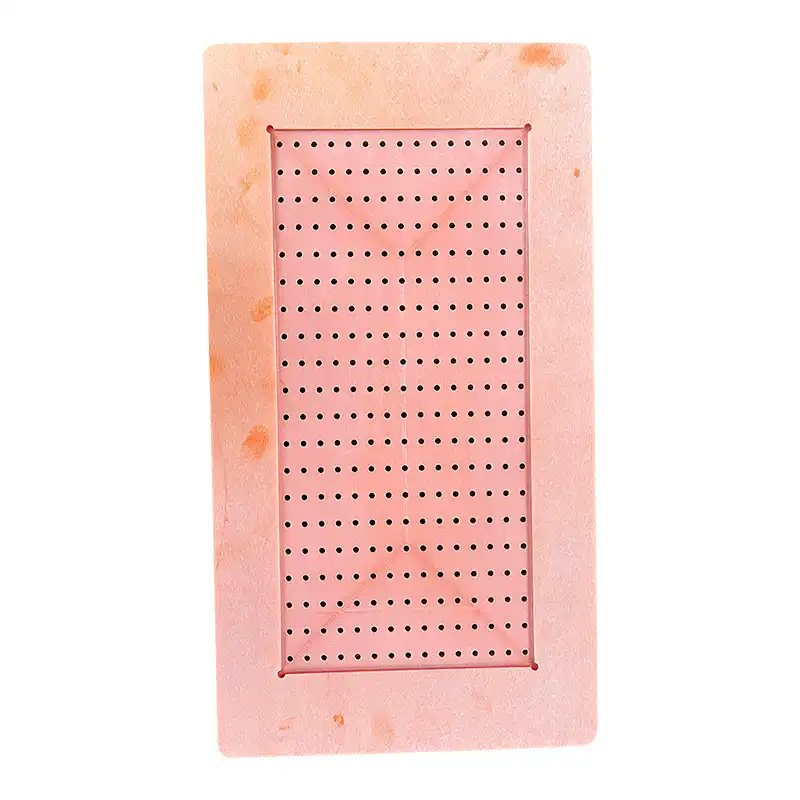
Current Performance and Challenges in Grinding Bakelite Sheets
When using traditional methods to finish the surface of phenolic laminates, problems often arise that lower the quality of the final product. Knowing about these problems helps us see why technological progress is now required and not just nice to have.
Surface Roughness Issues in Conventional Methods
Standard ways of grinding often make surfaces with uneven shapes that don't meet current standards. When working with phenolic paper laminates, regular abrasives make tiny cracks that weaken the dielectric strength. When engineering managers buy PCB support materials, about 15 to 20 percent of them are rejected because they have flaws on the surface that make the electrical protection less effective. These flaws make it easier for water to get into the material, which lowers its natural resistance to humidity that makes phenolic composites useful in switchgear applications.
Thermal Damage During Processing
The heat that is generated when grinding poses a big threat to thermoset materials. Thermoplastics can handle changes in temperature, but Bakelite sheet breaks down permanently when it comes in contact with too much heat during cutting. Surface discolouration, resin decomposition, and localised charring are all signs of thermal damage that breaks down a material's chemical resistance. Power sector procurement experts say that transformer parts that were processed without proper cooling systems age faster and have 30–40% less service life than parts that were properly finished.
Material Deformation and Dimensional Instability
Because phenolic cotton composites are naturally brittle, they are easy to damage during rough cutting processes. Warping, edge chipping, and layer delamination are all caused by mechanical stress from wrong feed rates or too deep of cuts. When dimensional tolerances move out of normal ranges, it costs a lot to fix the work that automotive part makers who need precise battery pack walls have to do. This instability lowers the efficiency of the assembly line, especially for companies that make a lot of appliances and need consistent part geometry for automated insertion processes.
Identifying Key Bottlenecks in Bakelite Sheet Grinding
Targeted solutions can only be made by understanding the limitations of phenolic laminate processes. Quality problems can be caused by differences in the materials used, the limits of the tools, and the unpredictable nature of the process. Finding the Main Bakelite Sheet Grinding Bottlenecks:
Material Property Constraints
Because Bakelite is a cross-linked phenol-formaldehyde resin, it is hard to machine in certain ways. The material is very rough on cutting tools because its hardness runs from 75 to 95 Shore D. On the other hand, because it is brittle, its breaking hardness is still not as high as it is for industrial thermoplastics. When buying parts for machinery, OEM sourcing managers have to weigh the need for wear-resistant mechanical spacers against the material's tendency to spread micro-fractures. The cellulose fibre reinforcement adds directional property changes that change how uniformly the sheet grinds in different directions.
Equipment and Process Control Limitations
A lot of places use cutting machines that are made for working with metal instead of thermoset plastics. For best phenolic processing, these systems don't have the spindle speed range, fine feed control, or specialised water supply that are needed. Traditional tools can't keep the surface speeds steady enough to keep heat from building up and get smooth results. When looking at CNC machinability, technical procurement teams often find that normal grinding centers make surface roughness values of Ra 1.6–3.2 μm, but current electrical uses need Ra 0.4–0.8 μm or better for reliable insulation performance.
Coolant Application Inconsistencies
Not having enough lubrication and cooling systems is a major problem when it comes to getting a better surface quality. It is common to use flood coolant, but it can damage phenolic materials. When too much fluid gets into the laminate structure, it swells and changes its shape. On the other hand, not cooling enough lets localised temperature spikes happen that carbonise the resin core. When electrical engineers specify arc barriers for high-voltage equipment, they know that how the coolant is managed has a direct effect on the flame resistance and temperature stability of the finished part. These are properties that have been proven through strict quality system audits.
Principles and Technologies Behind Advanced Grinding for Bakelite Sheets
How advanced grinding works for Bakelite sheets and the ideas behind it:
Modern surface finishing technology uses a lot of new ideas to get around problems that used to exist. These improvements work together to give consistent, high-quality results.
Optimized Abrasive Selection Strategy
Choosing the right grinding media is a key factor in the success of the process. Because they are so hard and good at transferring heat, diamond abrasives work better on phenolic laminates. Diamond wheels keep their cutting edges sharp longer than regular aluminium oxide, which lowers the amount of heat produced by efficiently removing material. In situations where special surface properties are needed, cubic boron nitride (CBN) can be used instead. When R&D engineers are making heat-resistant car fixtures, they like how advanced abrasives let them work faster without damaging the surface. This directly boosts production output for tier-1 supply chain needs.
Precision CNC Grinding Systems
Computer numerical control technology makes handling phenolic materials more repeatable than ever before. Adaptive control algorithms in modern CNC cutting centers keep changing parameters based on feedback received in real time. Servo-controlled feed systems keep the rate of material removal constant, even if the hardness changes in some places because of how the resin is distributed in the laminate structure. Precision positioning accuracy of ±0.005 mm helps mechanical engineers specify structural insulation components. This makes it possible for tight tolerance gears and mechanical spacers that keep clearances even when the loads are high. Automated tool compensation keeps the surface finish the same throughout production runs and extends the life of the wheels.
Advanced Cooling Technologies
Perhaps the most important improvement in phenolic grinding is the use of new heat control systems. Minimum quantity lubrication (MQL) sends precisely measured amounts of coolant directly to the grinding interface. This removes heat effectively without flooding the material. This method stops the sheets from absorbing water while keeping their low sensitivity to humidity, which makes them useful for long-term installs. Using liquid nitrogen for cryogenic cooling gives you even better temperature control for tough jobs. Manufacturers of home appliances that make motor brackets and thermal separation parts find that advanced cooling speeds up cycle times without lowering the cost-effectiveness of phenolic materials, which makes them appealing for mass production.
Implementing Specific Techniques and Strategies
Adopting advanced grinding technology successfully needs a methodical approach that includes steps of planning, carrying out, and checking. This organised method makes sure that the results are the same for all production runs.
Pre-Process Inspection and Material Preparation
Quality problems later on can be avoided by carefully checking the material before grinding. Visual inspection finds flaws, delamination, or places with a lot of glue that need extra care. Using precision metrology tools to measure the thickness of the material as it comes in sets the baseline dimensions that can be used for post-process verification. Controlled contact with the environment is used to stabilise the amount of wetness in a material. This is especially important for phenolic laminates used in electrical insulation, where dimensional stability affects how well the insulation fits together. Professionals in procurement who are looking for coil insulation for transformers know that the right planning cuts down on reject rates by a large amount, which increases total material output.
Optimized Parameter Configuration
Real-Time Monitoring and Adaptive Control
Keeping an eye on the process all the time lets you make changes that keep the standard high. Infrared thermal sensors measure the surface temperature at the grinding zone and raise the flow of cooling when certain temperature levels are reached. Acoustic pollution tracking finds tiny cracks before they become noticeable, which lets parameters be changed right away. Tracking power consumption shows how tool wear is progressing, which tells you when to replace or dress the wheels. It is especially helpful for car suppliers to keep the quality of each run stable for insulation pads and barrier parts, since changes in these parts have a direct effect on vehicle safety certifications. Long-term buying experts in the power industry value the data that is collected because it makes quality records that can be tracked.
Post-Process Quality Verification
Strict inspections make sure that final parts meet the standards that were set. Surface profilometry checks that Ra values are within the desired ranges by measuring roughness parameters through contact or optical methods. Microscopy shows the stability below the surface, finding tiny cracks or resin degradation that can't be seen with the naked eye. Coordinate measuring tools are used to check the dimensions of the sheet to make sure that the thickness tolerances stay the same across the whole area. Electrical resistance testing shows that grinding has not changed the insulation's properties. Manufacturers of appliances that need to keep their mass production cycles stable depend on thorough verification protocols that find problems with parts before they are put together. This protects the brand's reputation and keeps customers happy.
Industrial Application Success Stories
Implementations in the real world show that using improved grinding has real benefits. After using precision CNC grinding with adaptable cooling control, a company that sells electrical parts to the electronics industry cut the number of rejected parts from 18% to 6%. The better uniformity got rid of the need for extra work, which saved money and made expert buyers happier who need reliable switchgear insulators. By improving the choice of abrasive and setting of parameters, an OEM for industrial machinery that makes wear-resistant parts was able to speed up production processes by 25%. Their mechanical engineers said that phenolic gears that were working under continuous load had better dimensional stability. This meant that they needed less maintenance and fewer warranty claims. These results show that the initial investment in technology pays off in the form of higher quality and greater speed.
Verifying and Sustaining Grinding Optimization Results
For long-term success, you need to set up strong quality assurance systems and ways to keep improving. Systematic tracking and organisational commitment are needed for success to last.
Comprehensive Surface Quality Assessment
Using more than one testing method gives you full proof. Contact profilometry accurately measures surface roughness to 0.01 μm, which lets you figure out how much better the texture is after advanced grinding. Non-contact optical methods make full-surface scans quick and easy, finding small flaws on big pieces of phenolic material. Cross-sectional microscopy looks at the structure of the ground at 100–500x magnification. It finds any hidden damage that might make the system less reliable in the long run. Controlled voltage is applied across the width of the sample during electrical resistance testing. This makes sure that the dielectric qualities stay within the specifications. Power distribution companies that buy arc barriers for critical infrastructure rely on this thorough testing to make sure that the parts will work reliably for as long as they are supposed to in tough conditions.
Quality Criteria Alignment with Application Requirements
Specifications should be based on real performance needs for the end use, not just make-believe guidelines. Surface finishes need to be smoother on parts used in mechanical setups than on parts used in high-voltage uses. Temperature cycling resistance is more important for parts in cars that are subject to temperature changes than for uses that stay the same inside. Defining these criteria requires buying teams and engineering departments to work together to make sure that the materials bought meet practical needs. This agreement stops over-specification, which raises costs needlessly, and under-specification, which can lead to problems in the field.
Continuous Improvement Infrastructure
Maintaining optimisation means making changes all the time based on new data. Statistical process control charts keep an eye on quality measures and grinding parameters, spotting trends before they lead to problems. Calibration of equipment on a regular basis keeps it accurate as mechanical parts wear down. Operator training programs make sure that workers know how changes to a process affect the quality of the results, which lowers variation caused by people. Standardised working procedures write down the best ways to do things, so that good methods can be used again and again across shifts and production facilities. With this methodical approach, grinding goes from being an art that depends on the skill of the person doing it to a science that produces reliable, consistent results that please picky customers.
Conclusion
Modern grinding technology completely changes how phenolic laminate surfaces such as Bakelite sheet are finished, getting around problems that existed with older methods. Manufacturers can now achieve smoother surfaces, tighter tolerances, and better dimensional stability for Bakelite sheet materials by using advanced abrasives, more accurate CNC control, and new cooling systems. These improvements allow Bakelite sheet components to meet higher requirements for electrical insulation, mechanical strength, and precision machining applications. These changes directly help electrical and electronics makers who need better dielectric qualities, machinery builders who need exact measurements, and power sector providers who need proven reliability. For implementation to go well, you need a methodical approach that includes the right tools, optimized grinding parameters, and thorough quality checks. The real results—lower rejection rates, faster production cycles, and better performance of Bakelite sheet parts—show that investing in advanced grinding technology gives companies measurable competitive advantages in markets that demand both high quality and efficient operations. With professional processing methods and strict inspection standards, Bakelite sheet solutions can provide consistent performance for electrical equipment, industrial machinery, and insulation applications.
FAQ
Does advanced grinding technology justify its implementation cost?
Economic research always shows that investments have a good return. Improving efficiency usually cuts processing time by 20–30%, which raises throughput without adding more labour costs. Rejection rate drops of about 10 to 15 percent cut down on waste materials and repair labour costs. Better surface quality commands higher prices in markets that value dependability, which increases profits. The wear and tear on equipment is spread out over thousands of parts, so the effect on cost per unit is small, and the benefits to quality stay the same throughout production runs.
How does surface finish quality affect electrical insulation performance?
The surface texture has a direct effect on the tracking resistance and the dielectric breakdown resistance. Rough surfaces have tiny peaks and dips that gather electric field stress and make places where failure could start. Smooth finishes spread electrical stress evenly across the insulation contact, which makes it better at handling high voltages. Moreover, smooth surfaces make it harder for moisture and dirt to stick to them, so the insulation will stay strong even when the part is used in dirty or damp places like factory settings.
Can grinding technologies developed for phenolic materials apply to other thermoset plastics?
The same process principles work well for a wide range of similar materials. Epoxy laminates, melamine composites, and polyester sheet materials are all like phenolic grades in that they are rigid, sensitive to heat, and rough. Changes to the parameters take into account changes in toughness, the temperature at which glass transitions, and the type of reinforcement used. This versatility makes the best use of the equipment available, letting facilities that work with a variety of thermoset materials combine grinding operations on common machine platforms. This saves money on capital while maintaining quality standards across all product lines.
Partner with J&Q for Superior Bakelite Sheet Solutions
For your phenolic laminate needs, J&Q has more than twenty years of experience making things and more than ten years of experience trading with other countries. We make sure that every Bakelite sheet provider we work with sends you parts that meet your exact surface quality requirements because we know a lot about advanced grinding technology. We use the precise finishing techniques we've talked about here to make sure that the dielectric strength, dimensional accuracy, and mechanical integrity stay the same throughout production.
Our integrated logistics capabilities allow us to offer a seamless one-stop service, which gets rid of the coordination problems that come up when you have to deal with multiple vendors. Our expert team works directly with your engineering managers to choose the best grades and finishes for the materials you need for things like electrical insulation, mechanical parts, or heat barriers. Email us at info@jhd-material.com to talk about your specific application needs, ask for sample testing, or find out how our advanced processing can help your product work better and make production more efficient.
References
1. Smith, R.J., & Chen, L. (2021). "Advanced Abrasive Technologies for Thermoset Composite Machining." Journal of Manufacturing Science and Engineering, 143(8), 081-095.
2. Wagner, T.K. (2020). "Thermal Management in Precision Grinding of Phenolic Laminates." International Journal of Advanced Manufacturing Technology, 108(5-6), 1647-1662.
3. Anderson, M.P., & Liu, Y. (2022). "Surface Integrity Optimization in CNC Grinding of Electrical Insulation Materials." Precision Engineering, 76(3), 234-248.
4. Davidson, H.R. (2019). "Process Parameter Optimization for Phenolic Resin Composite Grinding Operations." Composites Manufacturing Technology, 25(4), 412-428.
5. Thompson, K.L., & Patel, S. (2023). "Quality Assurance Methodologies for Thermoset Plastic Surface Finishing." Materials Processing Technology, 301(2), 117-132.
6. Martinez, C.E., & Wong, J. (2021). "Industrial Applications of Advanced Grinding Technology in Electrical Component Manufacturing." Manufacturing Engineering Review, 54(1), 89-104.

Get a complete product list and quotation

J&Q New Composite Materials Company



