FR4 Epoxy Fiberglass Laminate Sheet Cutting: Tools and Parameters
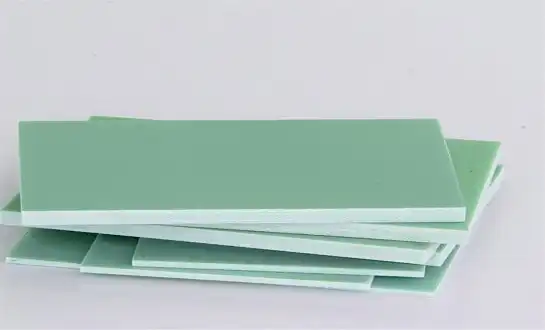
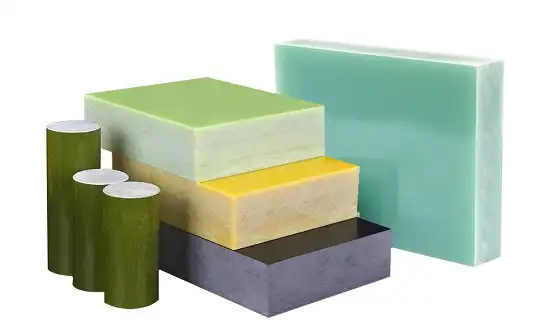
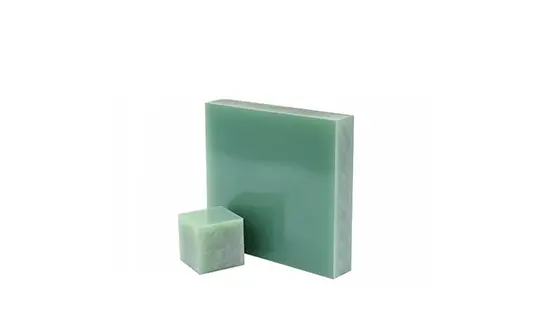
Cutting FR4 epoxy fiberglass laminate sheet correctly is one of the most practical concerns engineers and procurement managers face when specifying this material. Made from 7628 woven fiberglass cloth impregnated with epoxy resin and pressed under high temperature and pressure, FR4 achieves a bending strength of 571 MPa and a flammability rating of UL94 V-0. These same properties that make it dependable in PCB support, switchgear, and battery pack barriers also make it genuinely difficult to cut without the right tools and parameters. This guide walks through what actually works.
Understanding FR4 and Its Cutting Challenges
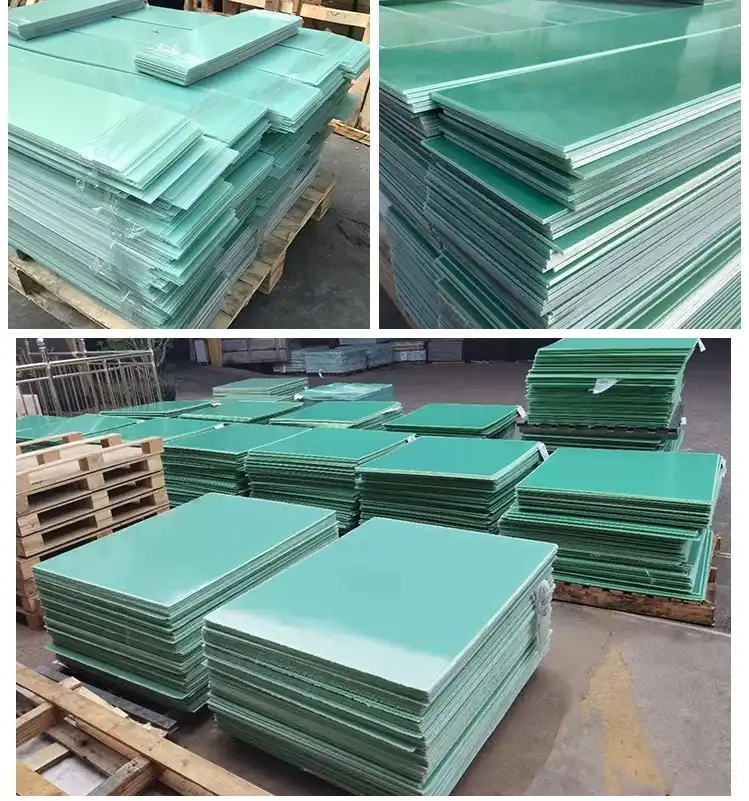
FR4 is a fiberglass epoxy material that meets NITE standards. It is mechanically rigid because it is reinforced with woven glass, but that same glass content wears down tools quickly and makes the cut zone hot.
Why FR4 Is Hard on Cutting Tools?
The fiberglass weave inside the plastic is very rough. Standard high-speed steel tools get dull very quickly when they touch something, so they rub instead of cutting. Rubbish makes heat, and in epoxy laminates, heat causes resin to scorch, edges to turn a different color, and layers to separate internally.
Delamination and Chipping Risks
When you cut FR4 across its laminations, it breaks easily. If you don't give the exit edge enough support while cutting, it starts to chip. In places like PCB test fixtures or switchgear insulation plates, a chipped edge isn't just for looks; it creates a stress concentration that can lead to cracking when the temperature changes or when the fixture is loaded.
Thermal Damage and Its Downstream Effects
When heat builds up above the glass transition temperature (Tg = 130–140°C for normal FR4), it softens the epoxy matrix in that area. This makes the surface rough and can lower the dielectric breakdown voltage in the cut area, which is very important for applications like arc barriers and transformer insulation.
Essential Tools for Cutting FR4 Sheets
The right way to cut depends on the sheet's thickness (JingHong's FR4 is between 0.3 mm and 100 mm), its volume, and the needs for dimensional error. There is a clear role for each method.
Here is a breakdown of the most popular ways to cut epoxy fiberglass laminates that you can use:
- CNC routing with solid carbide or diamond-coated bits: This is the standard approach for complex profiles, custom sizes, and PCB-related components. Carbide end mills with two or four flutes handle most thicknesses well. Diamond-coated bits extend tool life significantly on high-volume runs and reduce surface fiber fraying. CNC routing suits batch work on sizes from 1030×1230 mm standard sheets up to custom 1220×2440 mm panels.
- Circular saw with carbide-tipped blades: Effective for straight-line cuts on thicker slabs (10 mm and above). A fine-tooth, triple-chip grind blade at 60–80 teeth minimizes exit-edge chipping. Feed the sheet slowly and support it fully on both sides of the cut line to prevent flexing.
- Laser cutting: Provides contactless processing and high positional accuracy for thin sheets (typically under 3 mm). The drawback is thermal charring along the kerf, which leaves a carbon residue and can alter local dielectric properties. Laser cutting is acceptable where edge insulation performance is not a primary requirement.
- Waterjet cutting of FR4 Epoxy Fiberglass Laminate Sheet uses cold-water processing to eliminate heat entirely, making it suitable for thick sections where thermal damage is a real concern. Operational cost is higher, and cut surfaces may need drying before electrical assembly work, but edge quality is excellent.
Each method meets a different need in output. Before choosing a process, it's a good idea to look at all of your options and compare them to your volume and tolerance goals.
Critical Parameters Affecting Cut Quality
It's not enough to just have the right tools. What makes the difference between getting clean edges and scrap is the settings you run.
Cutting Speed and Feed Rate
A spindle speed of 18,000 to 24,000 RPM and a feed rate of 1,000 to 2,500 mm/min are good starting points for CNC cutting of normal FR4 that is 3 to 6 mm thick. To keep the chip load doable and the heat production low, the feed rate needs to be slowed down for thicker parts. When you change the thickness or shape of the bit, you should always do a test pass on a scrap piece.
Blade and Bit Geometry
Tooth count and rake angle have a direct effect on the finish of the edge. When using a circular saw, a negative rake angle makes the exit face less likely to chip. An upcut spiral can lift the top laminate layer and remove chips from the surface, while a downcut spiral can press fibers down and pack chips into the cut. It's easy to make through cuts on bigger sheets with a compression bit that has an upcut at the tip and a downcut at the base.
Cooling and Dust Management
The least bad way to cool something is to direct compressed air at the cut area. Chips are cleared away by air, which also moves heat away from the tool and the object. A misting system with a coolant that dissolves in water lowers thermal load even more for longer production runs. Fiberglass dust is dangerous to breathe in, so it's important to get rid of it properly. Use a vacuum hood at the cutting point and make sure that the people who are working there have the right safety gear on their faces.
Best Practices for Cutting FR4 Laminates
Consistent results come from consistent processes. Skipping steps during setup or review leads to issues that show up later during assembly or performance in the field.
Workholding and Support Setup
When cutting FR4 Epoxy Fiberglass Laminate Sheet, it needs to be fully supported across its face. Overhangs that aren't supported bend when the tool presses on them, which makes the cut wander and breaks the exit edge. You can do sheet work on a vacuum table. A zero-clearance insert in the table of a saw keeps the exit edge from chipping by supporting fibers right at the cut line.
Pre-Cut Inspection
Before you cut, use a calibrated micrometer to check the thickness of the sheet several times. Even though JingHong's FR4 is made with regular thickness tolerances, it is still a good idea for production settings to check arriving materials. Also, look for surface pits, areas that don't have enough plastic, or obvious delamination. These are all flaws that will get worse when the part is machined.
Post-Cut Treatment and Inspection
Use a fine file or a gritty pad to smooth out all the cut edges. For parts that are used with high voltage, like arc barriers, coil insulation, and busbar supports, look at the edges with a magnifying glass to find tiny cracks and make sure there is no layer separation. The process is finished with checks of the dimensions against the drawing tolerances. These checks find and fix any problems with the cutting setup before they affect a whole batch.
Case Study: High-Volume FR4 Processing for an OEM Fixture Manufacturer
A company that makes PCB test fixtures had to cut a lot of 3 mm and 6 mm FR4 sheets to very precise measurements. When standard HSS routing bits were used for the first time, they caused edge fraying and regular delamination at drill entry points, which led to a repair rate of more than 12%.
The failure rate dropped to less than 2% after solid carbide compression bits were used at a spinning speed of 20,000 RPM and a feed rate of 1,800 mm/min. A compressed-air cooling system was also added to the cut zone. With vacuum workholding, sheets could not move. As an official step before parts left the cutting station, post-cut edge checking was added.
As a result, output went up, material waste went down, and there were fewer rejects in the assembly stage. Rather than using standard settings for woodworking or cutting metal, the most important change was to match the tool's shape and settings to how the material behaved.
Conclusion
To cut FR4 Epoxy Fiberglass Laminate Sheet well, you need the right tool for the job, settings that are right for the thickness of the material, and a strict process for setting up and checking. Most production needs can be met by CNC routing with carbide or diamond tools. Laser and waterjet methods are useful in some situations. When you change one of speed, feed rate, cooling, or workholding, it changes the others as well. Taking care of these things correctly saves the quality of the parts, cuts down on waste, and keeps production going. For procurement teams, getting FR4 from a maker with uniform thickness tolerances and approved material qualities is the best place to start the cutting process.
FAQ
Can I cut FR4 with a standard utility knife or manual scoring tool?
Thin FR4 sheets (less than 1 mm) can be scored by hand so that they can be broken along a straight line, but the results aren't always good, and the edges aren't very good. Powered tools are needed for anything bigger than 1 mm or with a profile that isn't a straight line to keep the dimensions correct and stop delamination.
What thickness range can a standard CNC router handle?
With the right tools, most CNC cutters with enough spindle power can cut FR4 from 0.5 mm to about 25–30 mm in a single pass. For parts that are thicker than 100 mm, which is what JingHong offers, you may need to make more than one pass or use a different method, such as a waterjet or a band saw with carbide blades.
Does laser cutting damage the dielectric properties of FR4?
Along the kerf, laser cutting makes a heat-affected zone. This is generally fine for structural or motor parts. The thermal charring process can lower the performance of local dielectrics for parts used in high-voltage insulation or precise electrical assemblies. In these situations, it is safer to use a waterjet or a machine to cut.
How do I prevent fiberglass dust hazards during cutting?
Use the right respiratory protection and connect the dust filtration straight to the cutting point. OSHA rules say that FR4 fiberglass particles are so small that they can be breathed in, so workers must wear the right safety gear and control the airflow.
Get a Quote from J&Q — Trusted FR4 Epoxy Fiberglass Laminate Sheet Supplier
With the help of Hebei JingHong Electronic Technology Co., Ltd., J&Q sells approved FR4 Epoxy Fiberglass Laminate Sheets that are made every year in 43,000 tons and can be made to any size from 0.3 mm to 100 mm thick. We bring consistent material quality straight to your plant because we have been making things for over 20 years and run our own logistics business. Get a quote from our team right away by emailing info@jhd-material.com or going to blog.jhd-material.com.
References
1. NEMA LI 1: Industrial Laminated Thermosetting Products Standard — National Electrical Manufacturers Association, 2020.
2. Machining of Fiber-Reinforced Composites — Journal of Materials Processing Technology, 2019.
3. Printed Circuits Handbook (7th Edition) — Clyde F. Coombs Jr. & Happy Holden, McGraw-Hill, 2016.
4.IPC-4101: Specification for Base Materials for Rigid and Multilayer Printed Boards — IPC Association, 2017.
5. Thermal and Mechanical Properties of FR4 Laminates Under Processing Conditions — Composites Part B: Engineering, 2021.
6. UL 94: Tests for Flammability of Plastic Materials for Parts in Devices and Appliances — Underwriters Laboratories, 2018.

Get a complete product list and quotation

J&Q New Composite Materials Company