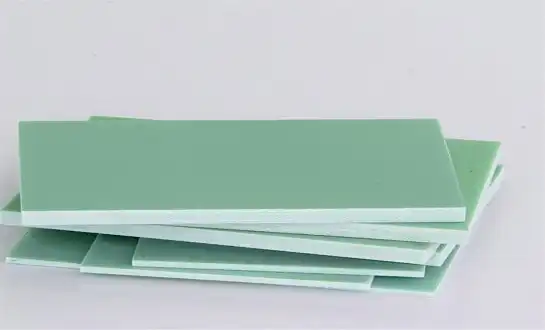
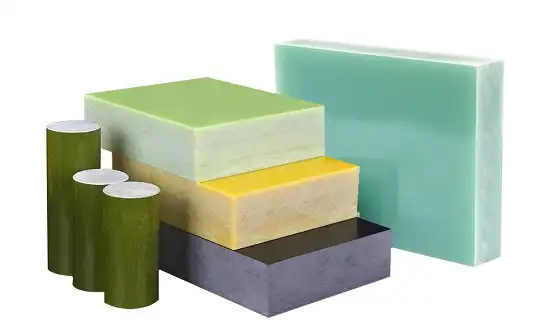
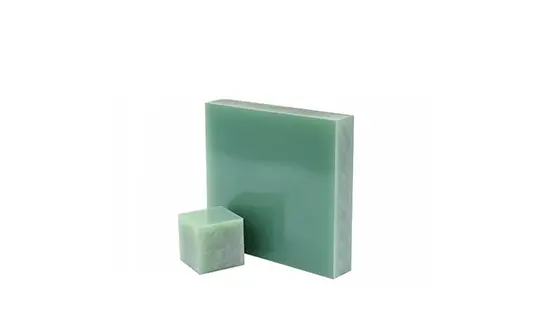
CNC Machining FR4 94V0 Epoxy Board for Precision Insulation Parts
FR4 94V0 epoxy board is always at the top of the list of materials that engineering teams choose when they need solid electrical protection that can stand up to heat, voltage, and mechanical stress. I've been sending insulation sheets to factories around the world for more than twenty years, and I've seen this glass-epoxy laminate become the standard for precision-machined insulation parts in fields like power distribution and auto assembly. This guide tells you why FR4 94V0 material is worth buying, how it can be turned into useful parts using CNC machines, and what to look for when buying in bulk.

Understanding FR4 94V0 Epoxy Board: Properties and Specifications
What the Material Actually Is?
FR4 94V0 epoxy board is a thermosetting composite laminate made of woven glass cloth that is continuous in length and joined together with an epoxy glue system. The "FR" designation means the material is flame retardant, and the "94V0" designation means it passed the UL 94 vertical burn test. This is the highest self-extinguishing rating possible, which means the material stops burning within 10 seconds of taking away the source of ignition and doesn't drip any particles. Because of this, it has to be used in consumer electronics, switchgear, and power equipment that has to meet fire safety standards.
Key Technical Specifications
FR4 94V0 laminate is controlled by NEMA LI 1-1998 rules and proven to be safe by ASTM D test methods. For engineering buyers, these are the most important core property rules:
- Standard grades hit 130°C–140°C for glass transition temperature (Tg), while high-Tg versions go over 170°C and keep their structure intact during reflow soldering and constant heat cycles.
- The dielectric breakdown voltage is higher than 40 kV, which ensures reliable isolation in high-voltage switchgear and transformer coil assemblies.
- Flexural Strength: More than 400 MPa (lengthwise), which means the board can work as an insulator that supports weight instead of just a spacer.
- Moisture Absorption: Usually less than 0.10%, which keeps the dielectric performance stable in wet working conditions.
These numbers show why the material works better in tough situations than lower-grade phenolics and CEM-series laminates.
Manufacturing Quality Controls
Multiple layers of glass cloth are impregnated, bonding is managed under heat and pressure, and drying steps are done in stages. At every stage, reputable makers use IPC-4101 standard checks that look at the surface finish, thickness limit, and glue content. Stability from batch to batch is directly affected by how consistently raw materials are sourced. This is a very important factor for OEM buyers who need the same performance across large production runs.
CNC Machining for Precision Insulation Parts Using FR4 94V0
Why CNC Is the Right Process for This Material?
Fr4 94v0 Epoxy Board is a rough glass-reinforced epoxy laminate, and cutting it by hand isn't enough to get it to tight dimensions on complicated shapes. For features like mounting holes, slots, and curved shapes, CNC cutting can hold tolerances within ±0.05 mm, which is something that human methods can't do. When making a lot of PCB support frames, insulation bushings, or arc barriers, this consistency means less waste and a more reliable fit when put together.
Tooling and Cutting Parameters
For FR4 machining, it is common to use tools that are coated in either carbide or diamond. Because the woven glass makes tool wear happen faster, the choice of spindle speed and feed rate has a direct effect on the quality of the surface and the life of the tool. Cutting speeds should be between 150 and 250 m/min, but this depends on the thickness of the board and how complicated the features are. It's also important to keep heat from building up, since temperature spikes above Tg can cause delamination at cut edges. Most of the time, dry machining or compressed air is better than flood coolant, which can cause cut surfaces to absorb water.
Real-World Applications Across Industries
CNC-machined FR4 94V0 parts are used in a lot of different industries. Electronics companies make PCB support frames and solder boxes that don't bend when heated and cooled many times. Tier-1 sellers to the automotive industry use precisely cut insulation pads and battery barrier plates when a tight fit is needed. Power distribution builders use machined busbar supports and phase barriers because the material has a high Comparative Tracking Index (CTI), which means it doesn't let conductive paths form when the voltage and humidity are high. Each of these uses benefits from CNC-machined FR4 94V0 boards because they are flame retardant and have accurate dimensions.
Comparing FR4 94V0 with Alternative Epoxy Boards for Precision Applications
FR4 94V0 vs. Standard FR4 and FR5
FR4 that doesn't have the V0 grade might be good enough for basic electrical needs, but it doesn't meet the standards for flame resistance that are needed for UL-certified systems. The Tg of FR5 is higher, but it costs a lot more to make and is only used in places where the temperature is always above 155°C. FR4 94V0 is the best choice for many uses in switchgear, motor parts, and PCB substrates because it is both high-performing and low-cost.
FR4 94V0 vs. Polyimide and Rogers Materials
Polyimide laminates are better for military-grade and aerospace flex circuits because they can handle higher temperatures over time and are more flexible. However, they cost three to five times as much. Rogers' high-frequency laminates are made for RF and microwave systems that need low dielectric loss more than strength. Since it is easy to make, flame-tested, and can hold a lot of weight, FR4 94v0 Epoxy Board is still the best and most affordable choice for structural insulation parts.
Environmental and Compliance Considerations
FR4 versions that don't contain halogens are becoming more popular as RoHS and REACH rules get stricter around the world. Instead of the more common brominated compounds, these types use phosphorus-nitrogen systems to keep the fire from spreading. They still have the V0 rating, but they have fewer halogens in them. There should be no halogens in the parts that manufacturing teams buy for goods that will be sold in Europe or California.
Procurement Guide for FR4 94V0 Epoxy Boards: Sourcing and Supply Chain Insights
Evaluating Supplier Qualifications
One way to make sure that a source of Fr4 94v0 Epoxy Board is reliable is to check that it has been approved. Make sure you have the UL recognition certificates for the FR4 94V0 grade, the ISO 9001 quality management paperwork, and the RoHS compliance statements before you place your order. When a supplier can give you both their own datasheets and test reports from a third party, it means that their quality system is ready to go. Before placing a big order, you should be able to get samples. This is how the business world works, and any FR4 94V0 provider you can trust should be able to do it.
Pricing Variables and Lead Times
Material prices change based on the board's thickness, the sheets' size, the Tg grade, and the number of items that are bought. Most of the time, the price per sheet is 15–30% less when you buy in bulk than when you buy in small amounts. Most of the time, lead times from certified makers are between 7 and 21 business days. However, depending on what you need, they can be longer or shorter. Certain panel sizes, thickness tolerances, or pre-machined blanks take longer to process, but they save the buyer time by skipping steps in the next steps of fabrication.
Building a Dependable Supply Chain
It's helpful for procurement teams in charge of ongoing production projects to have blanket order agreements with both a major supplier and an approved backup source. If you write down the exact specs of the approved materials, like their Tg grade, the thickness tolerance for the laminate, the copper coverage (if needed), and the surface state, you can avoid making mistakes when sources are cut off. Suppliers who handle their own logistics can combine shipments, say when they will arrive more accurately, and lower the risk of damage during transport.
Advantages and Applications of CNC Machined FR4 94V0 Epoxy Boards
Core Performance Advantages
that FR4 94V0 parts made by CNC have a mix of qualities that are hard to find in other materials at the same price. Because of how well they work, they are useful in many fields:
- Flame retardancy to UL 94 V-0: Self-extinguishing behavior within 10 seconds protects assemblies in enclosed housings where fire propagation would be catastrophic.
- High dielectric strength exceeding 40 kV: Supports reliable electrical isolation in high-voltage switchgear, transformer barriers, and motor insulation systems.
- Flexural strength above 400 MPa: Allows machined parts to carry structural loads without deflection, useful in test jigs and mechanical spacer applications.
- Dimensional stability through thermal cycling: Low coefficient of thermal expansion reduces warping risk in solder pallets and fixture plates subjected to repeated heating.
A high dielectric strength (above 40 kV) helps keep electricity from moving in motor insulation systems, high-voltage switches, and transformer barriers.More than 400 MPa of flexural strength means that parts made from it can hold structural loads without deforming. This is helpful for test tools and mechanical spacers.
With a low rate of thermal expansion, solder boxes and fixture plates that are heated and cooled many times are less likely to warp when they are heated again and again.
Sector-Specific Applications
There is a lot of high-stakes production around the content. It is the base for multilayer PCBs in servers and telecom hardware. Products that are made with it last longer because they don't delaminate when they are heated and cooled. People who work in the power industry use its tracking resistance to make carved arc chutes and busbar supports. Companies that make home products use it for motor clamps and thermal separation frames because it works well and doesn't cost too much per part.
Conclusion
In every industry, Fr4 94v0 Epoxy Board has been shown to be the best material for evenly blocking electricity. It has been certified as flame retardant, works well as a dielectric, and can be machined with CNC tools. These qualities make it a good choice for engineering teams working in electronics, power, cars, and factories. The buying team will always be able to find this material if they check the certifications of the suppliers, make sure the grade requirements are met, and plan for backups in the supply chain.
FAQ
What is the difference between FR4 94V0 and standard FR4?
All the time, normal FR4 doesn't catch fire, but it might not meet the UL 94 V-0 burn rating. It has been shown that FR4 94V0 can put out a fire on its own in 10 seconds without creating any flammable droplets. V0 is the right number for systems that need to be UL-certified or that will be put in high-risk, tight areas.
How do I prevent delamination during CNC machining?
Delamination at cut edges is usually caused by too much heat buildup. If you keep the spindle speed at 150–250 m/min, use carbide or diamond-coated tools, and cool with compressed air instead of flood coolant, you can lower the thermal stress at the cut interface. When you use sharp tools and steady feed rates, you also avoid edge tearing as much as possible.
What certifications should I request from an FR4 94V0 supplier?
Check that the grade and thickness are UL-approved and that the factory has an ISO 9001 certification. You should also ask for RoHS compliance statements and dielectric strength test reports from a third party. You should also ask for proof of the halogen amount if the application has to follow REACH rules.
Can FR4 94V0 be used in high-frequency circuit applications?
That is, up to about 1 to 2 GHz, FR4 94V0 works well. Because it loses signal above a certain range (4.4–4.8), it's better to use special low-loss laminates. If you only use it for normal PCB and insulation tasks below this frequency level, it is still a good deal.
Get Precision FR4 94V0 Epoxy Board Solutions from J&Q
J&Q has been making insulation products for more than 20 years, and they promise to help with procedures for every sale. You can get standard Fr4 94v0 Epoxy Board seller prices from our team. You can also get panels of any thickness or CNC-machined insulation parts from us. We promise quality and reliable lead times. Email us at info@jhd-material.com or visit blog.jhd-material.com right away to get examples or a price quote that fits your needs.
References
1. NEMA LI 1-1998 — Industrial Laminated Thermosetting Products, National Electrical Manufacturers Association, 1998.
2. UL 94 — Tests for Flammability of Plastic Materials for Parts in Devices and Appliances, Underwriters Laboratories, 2013.
3. IPC-4101D — Specification for Base Materials for Rigid and Multilayer Printed Boards, IPC, 2017.
4. ASTM D149 — Standard Test Method for Dielectric Breakdown Voltage and Dielectric Strength of Solid Electrical Insulating Materials, ASTM International, 2020.
5. Coombs, C.F. & Holden, H.T. — Printed Circuits Handbook, 7th Edition, McGraw-Hill Education, 2016.
6. Jawitz, M.W. — Printed Circuit Board Materials Handbook, McGraw-Hill, 1997.

Get a complete product list and quotation
J&Q New Composite Materials Company