Epoxy Sheet for Lithium Battery Pack Insulation and Cell Separation
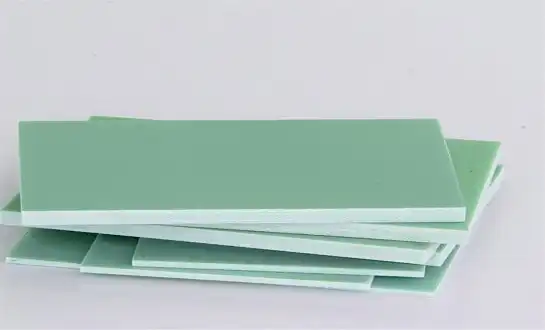
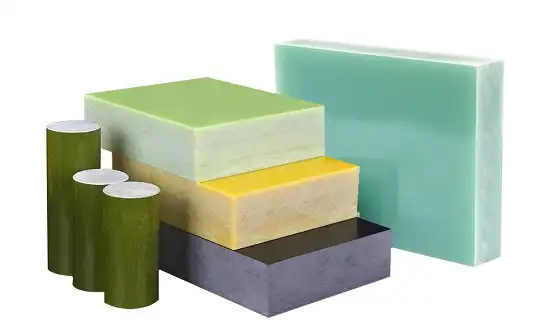
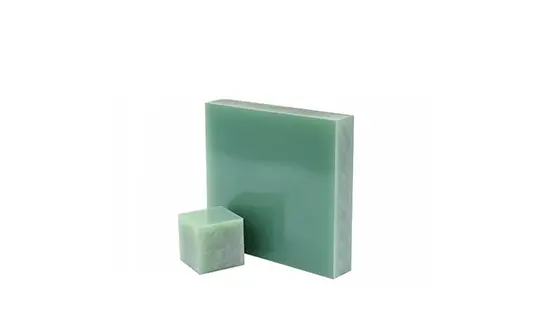
With Epoxy Sheet For Lithium Battery Pack designs, engineers can make a hard, flame-resistant wall that keeps cells, busbars, and metal housings from touching each other. Glass cloth and epoxy glue are used to make the sheet. The space between cells stays the same; it doesn't get hot, and it doesn't fall apart when it shakes. J&Q has yellow epoxy sheets from the JingHong brand that are 0.5 mm thick up to 100 mm thick. How does it compare to other insulators? This article tells you everything you need to know about the material, including what it does and why its properties are important.

Introduction: Why Epoxy Sheet Is Used in Lithium Battery Packs
Rigid Insulation Between Live Parts
In a lithium battery pack, the cells, busbars, metal frames, and steel housings are all very close to each other. An electric short can happen with just one bad contact. They are kept apart by two pieces of hard resin glass. When it's being built, it doesn't fold or move around as much as thin films do. You can't wear it down with vibrations, heat, water, or the stress that comes from module frames binding. When it comes to battery packs for electric cars, energy storage, and plants, this sheet is used as end plates, cell separation plates, connector covers, and busbar barriers.
G10, FR4, and How They Differ from Thin Films
Most of the time, people who want to buy see the names G10 and FR4. Both talk about how heat and pressure can be used to stick glass cloth to epoxy glue. NAEM LI 1 says that G10 does catch fire but FR4 does not. Fish paper, PET, PVC, and rubber films all behave in various ways. They aren't very supportive, even though they are cheap, light, and bendy. Mesa isn't broken by heat, but it is harder to work with. When you need a strong barrier for your design, JingHong sheet uses alkali-free or medium-alkali glass cloth and epoxy glue to make a part that is stiff and stays in place.
One Part of a Larger Safety System
To be clear, an epoxy sheet does not protect a pack by itself. For pack safety, it's also important to have the right amount of space between cells, monitor cells, manage heat, and keep heat from running away. For example, IEC 62619 for business lithium batteries and UL 9540A say that you should check the whole energy storage system, not just one part, to see how a fire spreads. This sheet is one way to protect yourself. Choose the right one, test it in a real pack, and then add the other safety features your design needs.
Key Properties of Epoxy Sheet for Battery Pack Insulation
Electrical Performance to Check
A common way to check dielectric strength is with ASTM D149. This shows how much power a sheet can handle before it breaks. Insulation resistance and resistivity show how well something stops leaking current. The FR4 test report from JingHong said that the vertical breakdown voltage was 16.7 kV/mm and the parallel breakdown voltage was more than 100 kV. The test was done in transformer oil at 90°C. It has a resistance of 2.2×10^13 © after being soaked. It dissipates 7.2×10^-3 watts per unit area at 50 Hz and has a relative permittivity of 5.40. Compare any of those numbers to your own thickness, humidity, and way of testing.
Thermal, Flame, and Chemical Behavior
It says in the product information that our yellow epoxy sheet can be used in hot weather up to 130℃. The FR4 report shows a V-0 flammability grade, which is what GB/T 2408-2008 says. The UL 94 vertical-burn class V-0 is the strictest of the three. Make sure you get the UL 94 record that fits your exact thickness because ratings can be different for each gauge. It can also handle water and a lot of chemicals, which is helpful if electrolyte leaks out of a pack. Test the electrolytes to see if they work with your cell chemistry. If your market needs them, ask for RoHS or REACH statements.
Mechanical Strength and Dimensional Stability
You can always shake, clamp, heat, and cool battery packs. The FR4 report says the piece can bend 571 MPa across the laminations, be squished 548 MPa, and be pulled apart 282 MPa. It also says that it has a Barcol hardness of 76. It has a density of 2.01 g/cm³ and took in 5.3 mg of water. This laminate is stiff and dense, so it will hold its shape if you put weight on it. Being stiff is important for separating cells because a flat plate keeps the space you make. You can find out what sample numbers were used by reading the whole study.
Epoxy Sheet vs. Other Lithium Battery Insulation Materials
Fish Paper, PET, and PVC
Some people like to buy fish paper, PET film, and PVC sheet in rolls for an Epoxy Sheet For Lithium Battery Pack. It's easy to put them under busbars or wrap them around cells because they are thin and bendy. There is only so much they can bend. The cells can't stay split up, and the module ends can't be pushed together. Aside from glass-epoxy laminate, some films also soften or shrink when the temperature drops. A film might work if all you need is a thin band or wrap to keep things warm. If it needs a stiff plate, bracket, or end plate, the best choice is a rigid epoxy laminate.
Mica and Other High-Temperature Options
Mica sheet is often used to keep fires from spreading because it can handle very high temperatures. It can be flimsy, thick, and hard to cut into exact shapes, though. When epoxy glass laminate is used, it is easier to work with spaces for busbars, mounting holes, and cell pockets because it cuts more cleanly and holds its shape better. Because it doesn't get as hot as mica, use mica when you really need to protect a design from flames. In the hot spot, not all packs use just mica. Some people use epoxy sheets to build things and keep cells apart. The right mix will depend on how you plan to handle thermal runaway.
FR4 or G10: Which Grade Fits?
FR4 is often used for battery packs since it doesn't easily catch fire. It's also made of glass and resin, but G10 doesn't have any ingredients that stop fires, so it can be used in places where fire safety isn't a concern. The sheet has A, B+, SR, and B grades, and our FR4 test report shows a V-0 grade. Once you tell us about your application, we'll talk about which grade fits. Combining film for wrapping and plastic sheet for support is often the best way to go when it comes to price, weight, and safety.
How to Choose and Use Epoxy Sheet in a Lithium Battery Pack?
A Five-Step Method for Integration
Follow these five steps. First, make a mark on the walls of the housing, the spaces between cells, and any other areas where electrical parts might touch. Second, choose the grade. For example, if you need flame resistance, choose FR4. Third, choose the thickness by taking into account the voltage, the mechanical load, the amount of movement and room, and the voltage. That's how IEC 60664-1 describes those lengths. Four, when you're making the part, remember how flat it can be, how big the edges can be, where the fixing holes are, and where the cell pockets are. Fifth, look over the sheets that are coming in and test the whole pack for vibration, heat, fit, and compatibility with BMS and cooling parts.
Matching the Sheet to Your Pack Format
Thin sheet 18650 and 21700 packs that are shaped as cylinders should start between 0.5 mm and 1 mm thick. End plates and spacers for prismatic modules and EV systems may need to be thicker. The back of the busbar in energy storage racks may need to be made of thick sheet. JingHong sheet comes in thicknesses ranging from 0.5 mm to 100 mm for the normal 1020 mm × 2020 mm size. This means it can be used for both thin divides and heavy structure plates. Check the insulation, temperature, flame performance, strength, maximum thickness, smoothness, cutting accuracy, paperwork, and ability to be tracked against how things really are on the job.
Look at Total Cost, Not Only Unit Price
A low sheet price can hide costs. Costs include tools, scrap from not being flat, extra checks, rework, goods, long lead times, and the chance that something will go wrong in the field. Getting a sheet that ships on time, arrives flat, and is the right thickness might cost less in the long run than getting the cheapest quote. We can take T/T as payment, and every order we get is at least 500 kg. We can ship by air, sea, or land. Normal packing is done, and the pallets are kept safe. Please get in touch with us for the most up-to-date lead times so that you can plan your inventory.
Custom Epoxy Sheet Solutions for Battery Pack Manufacturing
Parts Made from Epoxy Sheet
Converters take flat sheets of resin for an Epoxy Sheet For Lithium Battery Pack and turn them into things like module end plates, busbar barriers, cell division plates, and insulation for housings. All of these things can use these parts: 18650 and 21700 packs, industrial batteries, batteries for electric vehicles, and more. JingHong sheet stays in good shape while it is being cut, which is helpful when a part has a lot of small holes or tight pockets. For making plates, thick sheet works well, while thin sheet works well for walls and spacers. It saves time and keeps you from having to order extra material if you match the thickness of the sheet to each part early on in the planning process.
Laser Cutting, CNC Machining, and Die Cutting
Each way of cutting has a best time to use it. CNC cutting is good for trials and small runs because it doesn't need any tools and can cut bigger sheets and complicated shapes. There may be heat marks on the sides, but laser cutting works best on thin sheets with clear lines. When you cut a lot of thin sheets at once, the cost per part is low. However, die cutting costs more at first. It is important to compare methods based on the cost of the tools, the volume, the difficulty of the shape, the width, the quality of the edges, and the tolerances. Sharp burrs can damage cell covers and wires, so make sure the sides are smooth.
Engineering Collaboration from Sample to Mass Production
The first thing you need to do to make good parts is to look over the drawing very carefully. We'll talk about sheet yield on our 1020 mm × 2020 mm boards, how to treat the edges, and how to package them after you send us your CAD files or samples. We mostly sell sheets that come in different sizes and thicknesses. When you choose a cut part, we make sure it fits with your drawing. Make a small test batch first to make sure the parts fit and are put together correctly. After that, move on to steady orders for production. Every year, we can handle 30,000 tonnes, which helps programs grow. Also, protecting the pallets makes sure that the sheets arrive flat.
Quality, Testing, and Supplier Evaluation
Documents and Inspection Checks to Request
You should ask a seller for a technical document, details on how the material was made, dielectric and mechanical test results, heat data, UL 94 records, RoHS and REACH statements (if needed), certificates of analysis, and a change-control process before you grant the supplier your business. Then, agree on what needs to be checked: the raw material, the thickness, the smoothness, the numbers, the burrs, the state of the sides, the packaging, and the ability to find the batch. Before a J&Q product moves, our quality control team checks its surface quality, electrical features, and how well the measurements are made. You should ask for a sample so that your own lab can check the numbers.
Common Design and Procurement Mistakes to Avoid
A lot of the same mistakes keep happening in different projects. Power, space, stress, and heat are not taken into account when teams choose width. Some people think that all epoxy laminates are the same, even though the resin system, how the flame acts, and the dielectric strength are all different. It doesn't bother them if the edges are rough and damage the insulation, cell bands, or lines that are close by. For some, the sheet is only used as a safety measure against heat. If they choose the cheapest quote, their batches will be inconsistent, paperwork will go missing, deliveries will be late, and scrap will be made. If you give clear instructions, try samples, and talk to your provider early on, you can avoid most of these problems.
Recommended Procurement Process
Goods and approval stay on track when there is a clear process. It is important to be clear about the type of cell, the voltage, the current, the temperature, the insulator sites, the compliance needs, and the annual demand. When you send models or samples, be sure to ask for options that are FR4, G10, or flame-resistant. Check the prototype for any electrical, thermal, or vibration tests you need. You should also check it for fit, clearance, compression, edge quality, how fast it can be put together, and how well it fits together. You need to decide on the minimum order quantity (MOQ), packaging, lead time, inspection rules, traceability, change notices, delivery schedule, and safety stock before you start making a lot of them. We have our own transportation company that ships things by air, sea, and land. Everything stays in one place.
Conclusion
An Epoxy Sheet for Lithium Battery Pack can be used to make a hard, flame-resistant wall between the cells, busbars, and housings of lithium battery packs. But this only works as part of a full safety scheme. It is important to compare the test results for dielectric strength, insulation resistance, heat and flame performance, mechanical strength, and dimensional stability to the actual thickness. The glass-epoxy laminate is stiffer than fish paper, films, and mica, and it's also easier to work with. Most of the time, FR4 is used as the flame retardant. When comparing total costs, choosing a cutting method that works for the part, and making sure tests are good before mass production, all of these things lead to good results.
FAQ
What is Epoxy Sheet for Lithium Battery Pack used for?
The pack is kept warmer and more stable by the busbars, end plates, housings, and cells.
When is FR4 the right choice?
FR4 works with most packs because it doesn't catch fire. Our FR4 report has the right V-0 grade, but please check the number for your width.
What thickness works best?
We can't make every pack the same thickness. A lot of people start with sheets that are between 0.5 mm and 1 mm thick. It depends on the power, the room, the load, and the distance.
Can you supply sizes for 18650 or 21700 designs?
From 0.5 mm to 100 mm thick, sheets can be made to order in any size. Send us your picture, and we'll let you know what parts can be cut out.
Which documents should I request?
You should ask for test results, datasheets, UL 94 records, RoHS and REACH declarations, certificates of analysis, and rules for keeping changes under control.
Request a Custom Epoxy Sheet For Lithium Battery Pack Solution from J&Q
Looking for an Epoxy Sheet For Lithium Battery Pack supplier with more than 20 years of insulating sheet experience? J&Q has served overseas buyers for over 10 years and runs its own logistics company for one-stop service. Send your cell format, voltage, temperature, drawings, or samples to info@jhd-material.com, and our team will reply with grade and thickness suggestions. Read more guides at blog.jhd-material.com.
References
1. UL 94: Tests for Flammability of Plastic Materials for Parts in Devices and Appliances, UL Standards, 2013
2. NEMA LI 1: Industrial Laminated Thermosetting Products, National Electrical Manufacturers Association, 1998
3. IEC 62619: Safety Requirements for Secondary Lithium Cells and Batteries for Industrial Applications, International Electrotechnical Commission, 2022
4. UL 9540A: Test Method for Evaluating Thermal Runaway Fire Propagation in Battery Energy Storage Systems, UL Standards, 2019
5. IEC 60664-1: Insulation Coordination for Equipment Within Low-Voltage Supply Systems, International Electrotechnical Commission, 2020
6. ASTM D149: Dielectric Breakdown Voltage and Dielectric Strength of Solid Electrical Insulating Materials, ASTM International, 2020

Get a complete product list and quotation

J&Q New Composite Materials Company