How Does Epgc308 Epoxy Sheet Support High-Voltage Electrical Insulation?
Woven glass cloth and a high-temperature epoxy glue system are what make up Epgc308 Epoxy Sheet. It helps keep you safe from high-voltage electricity. The structure of the sheet makes it a good insulator that can handle temperatures up to 180°C in Class H. It is also strong enough to hold its own weight. All of these features work together to stop current from leaking, keep supports and shields in place during shaking or short-circuit forces, and keep the insulation's shape safe as temperatures change. A single number on a document doesn't decide success, though. An engineer should check the material's thickness, humidity, creepage, clearance, and test conditions before letting it be used in a motor, circuit system, or transformer. This book tells you everything you need to know.
Introduction: Why Material Selection Matters in High-Voltage Insulation
High-Voltage Insulation Faces More Than Electrical Stress
Insulation for high voltage does more than just stop the flow of electricity. Partial discharge, heat, shaking, wetness, pollution, and small changes in size that change the distance between live parts are some of the things it has to deal with. If a sheet is stored in wet places for months or goes through short electrical tests, it may still fail after months. While it's being used, a barrier that bends can make it harder to get around and let things slide across its surface. There are different kinds of this problem for companies that make electrical equipment, tools, and cars. Because of this, I believe engineers should look at a laminate as a whole, not just a line on a datasheet.
Why Dielectric, Thermal, Mechanical, and Environmental Data Belong Together
When something is hot or wet, its dielectric strength changes, which tells you how much power it can take. Powerful short-circuit forces put real weight on supports and barriers, so they need to be strong. All three of these qualities can change over time if they are in hot generator oil or damp air. This view helps procurement teams because a low price per sheet doesn't mean much if a part breaks while being used. Engineers and buyers can decide to approve something faster and safer if they both look at the same data. I think it would be useful to have a single sheet with lists of electrical, temperature, mechanical, and moisture numbers beside each other.
What You Will Learn in This Guide
What is the material, how does it work with high-voltage systems, and what features should you look for? This guide shows you. Choose the right thickness, how it works, how it compares to FR4 and G10, common uses, cutting, and the most common mistakes people make when they shop. Near the end, I talk about an easy way to check things and the papers that US buyers usually ask for, such as datasheets and certificates of conformity. What you say is true whether you work with motors, switches, transformers, or car parts. You'll also see what J&Q has to offer, like different sheet sizes, thicknesses, and OEM service. This will help you decide if our goods are right for your job.
What Is Epgc308 Epoxy Sheet and How Does It Support High-Voltage Insulation?
What Is Epgc308 Epoxy Sheet?
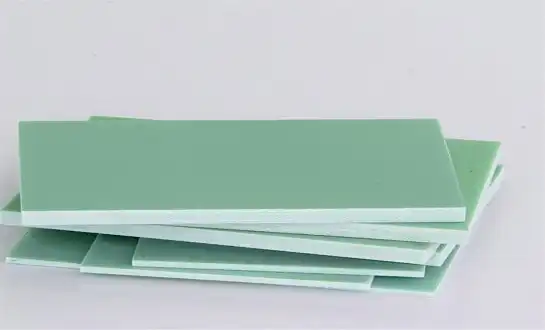
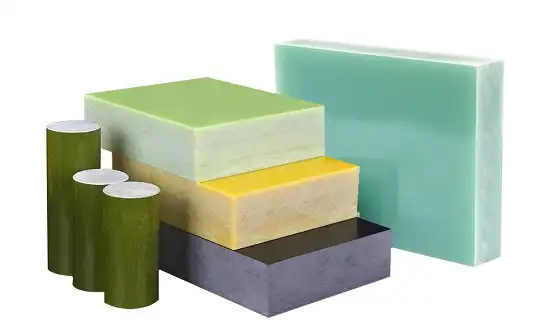
Based on IEC 60893-3-2, Epgc308 Epoxy Sheet is a tough building material. It is made by gluing glass fibers together at a high temperature and sewing them together. The fibers are then pressed together with heat and force. It is strong, stiff, and stable in its shape because of the glass fabric. The epoxy matrix provides electrical insulation, bonding, and resistance to environmental stress. The one we have from JingHong is made of epoxy resin and is a lovely light green color. It aims for Class H heat protection at 180°C, which is different from regular FR4 or G10 sheets. I tell buyers to ask the supplier about the resin system and standard because grade names don't always mean the same thing.
How the Laminate Limits Leakage and Holds Insulation Geometry
This epoxy glass cloth laminate helps high-voltage systems work in more than one way. Based on the data we have access to, the oil across the laminations has a dielectric strength of at least 10 kV/mm. To keep the power from going out, do this. The glass reinforcement keeps the barriers flat and also helps them stand up when they shake or short-circuit. That is, the distance between the wires stays the same. As long as the sheet's glass transition temperature is above 170°C, it doesn't soften in hot motors and transformers. It's also important to keep water from absorbing too much because water can cause leaks. The resin keeps the heat in, and the glass stays in shape. The heat rating keeps both of them safe.
Why One Specification Never Tells the Whole Story
Along with the material data, you need to read the thickness, humidity, surface condition, edge design, creepage, clearance, and protection needs. From the dielectric value of a thin plate in oil, you can't tell how a thick plate will act in wet air. Where, when, and how the test was done can also change the results. Which is why I believe the whole safety system should be tested in real-life working and weather conditions. ASTM D149 talks about how to test solid insulating materials for dielectric breakdown, and IEC 60243-1 tells engineers how to measure electric strength. When they gave you different prices, it's important to make sure that both shops used the same method.
Epgc308 Epoxy Sheet Properties, Thickness, and Material Comparison
Technical Properties to Verify Before You Buy
Our sample has a temperature index of 180°C (Class H), a bending strength of at least 340 MPa at room temperature, and a Comparative Tracking Index that can reach 600V based on the resin mixture. Also, at 150°C, the grade should still have more than half of its bending strength. This helps keep things stable in hot machines. Oil-filled units are safer because they can handle solvents and transformer oils. Ask for a current blueprint, an inspection report, proof that the work has been approved, and a way to keep track of each batch. Take a look at the width and smoothness limits as well. These two things change how well the parts fit together when they are put together. Ask for flame-proof papers that are right for the people you want to sell to.
How to Choose the Correct Thickness
When picking a thickness, you should think about more than just system voltage. You should also consider electrical withstand and mechanical load. The working and transient voltage, pollution level, installation height, creepage distance, and clearance should all be documented first. Check the span length, bolt spacing, tightening force, vibration, and short-circuit loads. For applications requiring reliable electrical insulation and mechanical support, Epgc308 Epoxy Sheet can be selected according to the specific operating conditions and structural requirements. Thicker plates generally provide greater rigidity, but they also add weight and increase machining costs. Insufficient edge distance around drilled holes can cause the material to crack or split during machining. We offer thicknesses ranging from 0.3 mm to 100 mm, covering both thin spacers and heavy-duty support plates. According to IEC 60893-3-2, a 10 mm sheet can have a thickness tolerance of up to ±0.50 mm. Surface grinding may be necessary when tighter tolerances are required. Samples of critical components should be tested and verified before mass production.
Comparing Epgc308 With FR4, G10, and G11
Printed circuit boards and other electrical structures often use FR4, while G10 can be used in places that don't need to be flame-retardant. A lot of people say that EPG C308 and G11 are the same, but IEC 60893 has stricter rules than G11 for keeping its strength at 150°C. The fact that it meets the same standards as DIN 7735 HGW 2372.4 and ASTM D709 G11 is also helpful for OEMs who work in different places. It is helpful to have a comparison table that shows the dielectric strength, temperature class, flame behavior, mechanical loads, moisture exposure, certification, and cost of service. After a technical and safety study, any changes should only be made.
Applications, Machining, and Procurement of Epgc308 Epoxy Sheet
Applications in High-Voltage Equipment
For slot wedges and packing blocks in power generators, the sheet is used. It needs to be able to withstand shocks, heat from winding, and force from spinning. That is why it can be used in high-voltage switches and transformers as phase barriers, arc chutes, and structural supports. No matter how hot the oil is, it doesn't change how well it blocks heat. In rail traction motors, the insulation is made of machined parts that don't come apart when the temperature changes quickly. The glass-reinforced structure can hold structural supports, spacers, gears, and circuit boards all at the same time. You should check that transformers are compatible with oil, that machines that spin should be able to handle changes in temperature, and that switchgear should be able to handle creepage, tracking, and flame behavior.
Cutting and CNC Machining Guidelines
The quality of the work that was done directly impacts how well the insulation performs. Epgc308 Epoxy Sheet has a rough, glass-reinforced surface, so shops that work with this material use solid carbide or diamond-tipped tools for machining. Plain HSS tools get dull very quickly, which is why they are generally unsuitable. By keeping tools sharp, controlling the feed rate, and monitoring heat, manufacturers can avoid delamination, burrs, and protruding threads. CNC machining works well for producing prototypes, complicated shapes, and repeatable hole patterns. Before approving the drawings, make sure you understand the permitted tolerances and that there is enough clearance around the edges for tooling and clamping. Once the part has been manufactured, check that its dimensions, flatness, and hole positions meet the specifications and that its surface is clean and free of defects. If required by the specifications, electrical performance testing should also be carried out on the finished parts.
How to Procure From an International Supplier
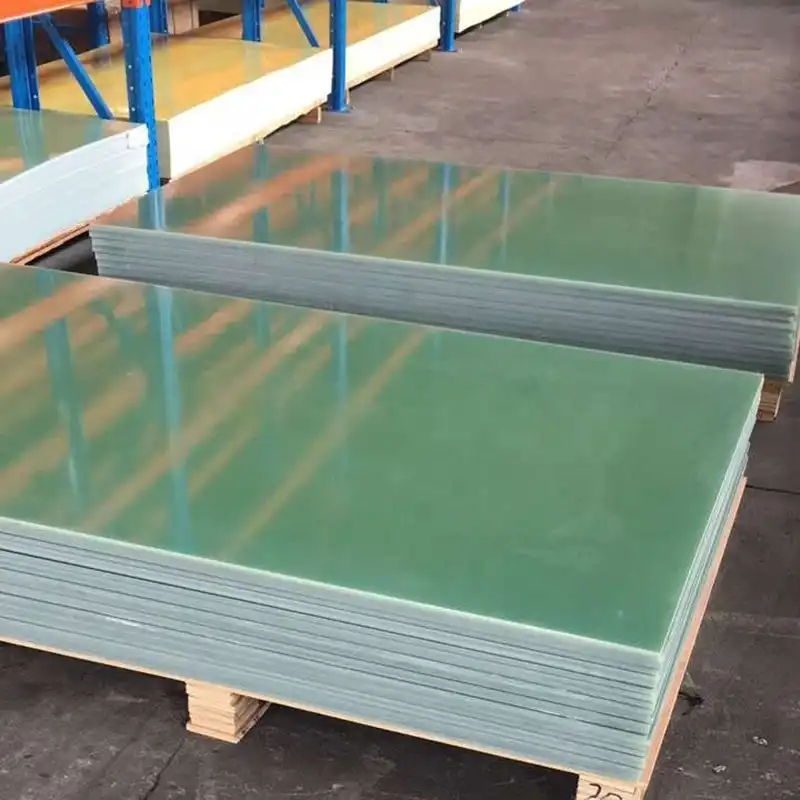
When you ask for a quote, be clear about the thickness, sheet or cut-part sizes, number, color, standards, certificates, packaging, location, Incoterms, and payment terms. We have special sizes like 1030mm x 2030mm, 1220mm x 2440mm, 1030mm x 1030mm, and 1030mm x 2070mm. It's always 1030mm x 1230mm for us. The MOQ is 500KG, and we ship them by sea, land, or air on pallets to keep them safe. T/T is used to pay. We can handle 43,000 tons per year. For more than 20 years, we've been making insulation sheets. For more than 10 years, we've been dealing with other countries. And now we run our own transportation company. You should look at more than just the price per kilogram. You should also compare the costs of shipping, certification, packing, and delivery.
Common Selection Mistakes and a Practical Verification Workflow
Mistakes That Raise Total Cost
This is what most people do wrong: they choose by grade name without first reading the current specification. Buyers can also look at electrical values that were recorded at various humidity and temperature levels, or they can choose the thickness based only on voltage. Not paying attention to mechanical stress, damage from cutting, flame classification, and being able to find the source are some of the other risks. Sometimes a low unit price can turn into a high one because of things like scrap, late deliveries, failures in the field, and extra testing. I believe you should use a single, standardized comparison table, request documents that are unique to each batch, and figure out the total cost of ownership. After that, test the information in ways that are like how the tools will be used in real life.
A Five-Step Selection and Verification Workflow
When the workflow is short, there is less technical and buying risk. Write down the voltage, temperature, humidity, contamination, load, shaking, and how long you think the part will last. Second, decide what levels of durability, electrical resistance, size tolerance, strength, heat resistance, and certification are acceptable. The third step is to make a short list of materials and dealers. The next step is to look at test reports, samples, datasheets, and certificates. Fourth, put the finished part through real-life cases of heat, electricity, mechanics, and weather. Fifth, before you give the go-ahead for production, make sure you know about the lead time, packaging, first-article inspection, and being able to track each batch. This order makes sure that both the buying team and the tech team know what's going on and avoids any surprises at the last minute.
Quality Control Checks That Support Approval
To check the quality of Epgc308 Epoxy Sheet, you should use IEC 60893 rules. For ASTM 178 high-temperature flexural tests, samples must be heated to 150°C for one hour. The test says that the sheet retains at least half of its bending strength when it is at room temperature. In an IEC 60243-1 test, oil's dielectric strength is checked at 90°C to see if it breaks down in a straight line. A water absorption test done 24 hours after immersion shows that there are curing voids or poor impregnation. When looking at something, cracks, blisters, foreign objects, and edge delamination are all things that are looked for. You can ask for the test results to be sent with your order at J&Q. Each batch is checked for strength and protection.
Conclusion
Epgc308 Epoxy Sheet protects against high voltage thanks to its glass-reinforced epoxy structure. It is mechanically stable, has Class H temperature endurance, and is strong as a dielectric. The material keeps the shape of the barrier and support and lowers the chance of leakage. You can't choose based on a single number from the manual, though, because how well it works varies on things like thickness, humidity, creepage, clearance, and test conditions. Safer designs have properties that have been checked and are the same as FR4, G10, and G11 materials. They are also thick enough to handle both mechanical and electrical loads. There are checks that need to be done on parts that are used in generators, switches, transformers, and traction motors. Careful cleaning of finished parts keeps them safe. Less waste and fewer field failures happen when conditions are set, samples are tested, and batch documents are checked as part of a workflow. The best choice takes into account the whole power system and the area around the business.
FAQ
What is Epgc308 Epoxy Sheet used for?
It keeps cool and stable things like generator slot wedges, circuit barriers, transformer supports, and motor parts. Still, suitability depends on the data that was looked at and how you work.
Is it strong enough for hot weather?
Our reference data tells us that the temperature rating for Class H is 180°C. Take a look at the application's instructions to find out what the age and working limits are.
How do I choose the right thickness?
The span length, load, and fixing should all be matched with the electrical withstand. Stronger plates, on the other hand, make things more rigid. You can pick from 0.3mm to 100mm, and samples will help you be sure of your choice before it's made.
Can I buy a certain size?
Yes. The standard size is 1030mm x 1230mm, but we also have a number of other sizes. Our OEM service can also change the colors and sizes. The minimum amount that can be ordered is 500KG.
What kinds of papers should I ask for?
You should ask for a blueprint, an inspection report, records that show how the goods were made, a certificate of compatibility, and any other documents that are specific to the project. They test each batch to see how strong it is and how well it keeps heat in.
Request Epgc308 Epoxy Sheet Technical Support or a Quotation from J&Q
J&Q is an Epgc308 Epoxy Sheet manufacturer with more than 20 years of insulating sheet experience, over 10 years of foreign trade experience, and our own logistics company for one-stop service. Our annual capacity of 43,000 tons supports steady supply. Send your thickness, sheet size, voltage, temperature, and quantity to info@jhd-material.com, and our team will reply with technical guidance and a quotation. For details, please refer to blog.jhd-material.com.
References
1. IEC 60893-3-2: Insulating Materials – Industrial Rigid Laminated Sheets Based on Thermosetting Resins for Electrical Purposes – Specifications for Individual Materials – Requirements for Rigid Laminated Sheets Based on Epoxy Resins, 2011
2. ASTM D709: Standard Specification for Laminated Thermosetting Materials, 2017
3. IEC 60243-1: Electric Strength of Insulating Materials – Test Methods – Tests at Power Frequencies, 2013
4. ASTM D149: Standard Test Method for Dielectric Breakdown Voltage and Dielectric Strength of Solid Electrical Insulating Materials at Commercial Power Frequencies, 2020
5. IEC 60664-1: Insulation Coordination for Equipment Within Low-Voltage Supply Systems – Principles, Requirements and Tests, 2020
6. ISO 178: Plastics – Determination of Flexural Properties, 2019

Get a complete product list and quotation

J&Q New Composite Materials Company