Epoxy Fiberglass Tube for Lightweight and Durable Insulation Solutions
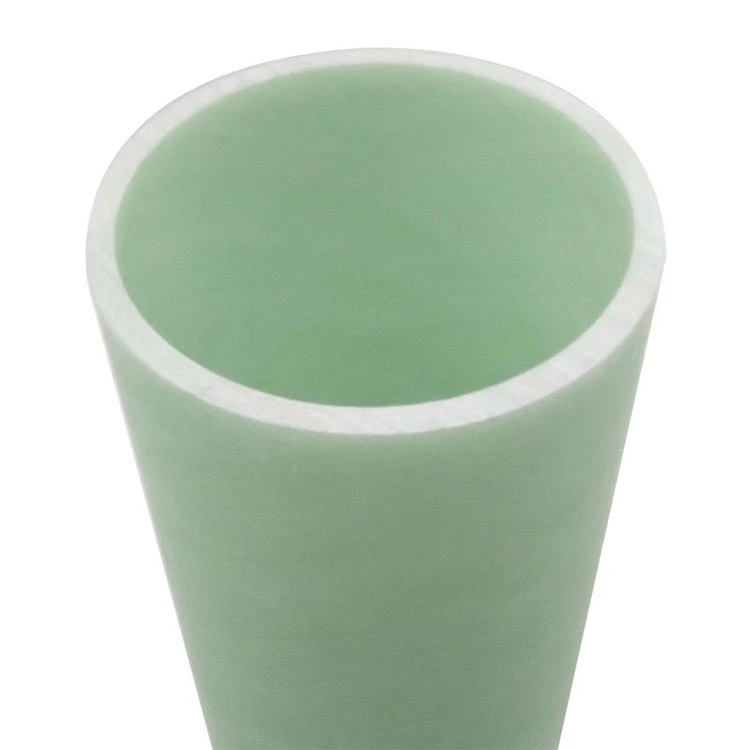
When engineering teams and procurement managers search for a reliable insulation material that holds up under electrical stress, mechanical load, and harsh environments, the epoxy fiberglass tube consistently rises to the top of the shortlist. Made from alkali-free glass cloth saturated with epoxy phenolic resin and formed through hot rolling and baking, this composite tube delivers high mechanical strength, strong dielectric performance, and excellent thermal stability — all in a lightweight profile. Whether the application involves transformer insulation, motor components, or structural spacers in industrial machinery, this material offers a technically sound and cost-effective solution that scales across industries.
Understanding Epoxy Fiberglass Tubes and Their Core Properties
What Makes This Composite Material Distinctive?
The Epoxy Fiberglass Tube is not a normal metal or plastic replacement. It is a specially engineered laminate made to fix certain problems in the industrial world. Alkali-free glass cloth acts as a backbone for the structure, and epoxy phenolic glue attaches it all together with strong polar hydroxyl and ether bonds in its chemical chain. The end result is a tube that has a density of about 1.70 g/cm³, a volume resistivity of 2.4×10²³ Ω·m, and an insulation resistance of up to 5.5×10²² Ω when everything is normal. When tested for thermal stability at 150°C for 24 hours, there are no cracks or bulges, which is a very important standard for high-temperature uses.
Dimensional Range and Surface Quality
The product line has inner diameters ranging from φ8mm to φ550mm, so it can be used for a wide range of assembly needs. The surface is smooth and free of blisters. Within the tolerances for wall thickness, only small wrinkles and machining marks are allowed. This level of accuracy is very important for CNC-machined parts, where tight tolerances directly affect how well the parts fit together and how much electrical clearance there is.
The finished epoxy system doesn't shrink much when it's being made because the cross-linking process just adds two molecules together instead of releasing volatile by-products. This feature helps this tube keep its shape very well even when the temperature changes, which is something that makes it different from other thermoplastic options.
Comparing Epoxy Fiberglass Tubes with Alternative Materials
Performance Against Competing Tube Materials
When making choices about procurement, trade-offs are common, and Epoxy Fiberglass Tube often presents a compelling case. Knowing when Epoxy Fiberglass Tubing works better than other options helps engineering teams and buying managers explain their choice of material.
Here is a useful breakdown of how epoxy fiberglass tubing measures up in terms of important performance factors:
- vs. Carbon Fiber Tubes: Carbon fiber is stiffer for its weight, but it costs a lot more and doesn't do much to keep electricity from flowing. Epoxy fiberglass tubing has the same level of structural rigidity as steel tubing but costs a lot less. This makes it the best choice for buying in bulk.
- vs. Metal Tubing (Steel/Aluminum): Metal tubing conducts electricity and rusts in wet or chemically harsh conditions. Fiberglass epoxy tubing is about 75% lighter than steel and doesn't have any risk of galvanic corrosion, which is a big plus for outdoor switchgear and transformer housings.
- vs. Standard Plastic Tubes: Thermoplastics break down in long-term heat and lose their shape above 100°C. The epoxy composite system stays strong at temperatures above 150°C, which means it can be used for motor insulation and coil support tasks where regular plastics wouldn't work.
These studies make it clear that the material fills a specific performance gap—it balances cost, weight, insulation, and longevity in a way that no other material can. The benefit is even clearer for procurement teams that look at total lifecycle cost instead of just unit price.
Procurement Insights: How to Buy Epoxy Fiberglass Tubes Efficiently
Key Factors That Influence Your Sourcing Decision
There's more to finding composite insulation tubes than just negotiating prices. The result of a buying cycle depends on checking the quality, the capacity of suppliers, and the organization of transportation.
When looking for an Epoxy Fiberglass Tube provider, buyers should look at the following dimensions:
- Certifications and Quality Systems for Epoxy Fiberglass Tube: Make sure the seller has a quality assurance system that is written down and follows UL, ROHS, or similar standards. If asked, you should be able to get verified electrical strength numbers, like an 8 MV/m vertical layer electrical strength at 90°C in oil.
- Production Capacity: A supplier's annual output capacity shows how many large orders they can handle without affecting lead times. Facilities that make 43,000 tons of goods a year have the tools to prioritize large-batch orders while keeping quality stable through automated production workflows.
- Customization Capability: You can change the inner diameter range, wall thickness, length, and phenolic resin mixture. Check with the provider to see if they can work with custom sizes before signing a long-term contract.
- Logistics Infrastructure: Suppliers who have their own logistics operations can send goods faster and more reliably across ocean, land, and air freight routes. This makes transport less uncertain for projects that need to be done on time.
Lead times and minimum order numbers depend on how complicated the customization is. Working directly with the manufacturer instead of going through middlemen can often speed up both the accuracy of quotes and the schedule for production.
Why Epoxy Fiberglass Tubes Are the Preferred Solution in B2B Applications?
Epoxy Fiberglass Tubing's structural and electrical qualities directly lead to real business value in a number of different areas. In electrical infrastructure, these tubes are used to put out arcs in circuit breakers and as supports for tap changers. They are used in places where dielectric breakdown is not a problem but a safety event. The material can't be replaced in these jobs because it doesn't track or carbonize when exposed to high-energy arcing.
In industrial machines, Epoxy Fiberglass Tube's ability to keep its shape even when temperatures change keeps high-speed spinning parts from warping. It is used in idler rollers and cylinder sleeves by paper mills and hydraulic system builders because it has uniform tolerances that cut down on repair times and increase machine uptime.
The flame resistance and chemical stability of the material make it useful for automotive and transportation suppliers who use it as battery pack barriers or heat-resistant insulation fixtures. Low weight and high load tolerance work well together to meet the strict needs of tier-1 automotive component sourcing.
As more industrial sectors use composite materials, this tubing helps meet sustainability goals by making parts last longer and reducing the number of times they need to be replaced. This cuts down on trash and costs over time.
Technical Considerations and Best Practices for Using Epoxy Fiberglass Tubes
Handling, Installation, and Maintenance
When Epoxy Fiberglass Tubing is shipped and put together, it's important to handle it properly so that the surface stays intact and the measurements stay accurate. To keep tubes from getting oval, store them horizontally on padded supports and don't point-load the ends while transporting them.
To keep cut edges from delaminating, use carbide-tipped tools and moderate feed rates while machining. When cutting speeds are right for laminate composites and tools are kept sharp, CNC drilling and turning work well with the material.
In places where tubes are used that are wet or chemically exposed, check the surfaces of the tubes on a regular basis for early signs of resin breakdown or mechanical wear. The finished epoxy system is naturally resistant to alkalis, acids, and most industrial solvents. However, the materials should be checked for compatibility with strong agents before they are put into use.
This tube has been tried and found to work well in settings with transformer oil. This means it can be used directly for coil insulation and arc barrier purposes in power distribution equipment.
Conclusion
When it comes to a wide range of industry uses, Epoxy Fiberglass Tube is one of the best materials because it has dielectric strength, mechanical durability, thermal stability, and resistance to corrosion. It meets important performance needs in a wide range of applications, such as transformer insulation, machinery spacers, and automotive barriers, while also staying cost-effective over its useful life. When purchasing teams look at this material's total lifecycle cost instead of its original unit price, they always see its strategic value.
FAQ
What temperature range can epoxy fiberglass tubing reliably withstand?
As long as the temperature stays between -150°C and well below 0°C, the cured epoxy resin system keeps its structural and electrical integrity. After 24 hours at 150°C, tests show that there are no cracks or bulges. Hardening can happen anywhere from 0°C to 180°C, depending on the hardening agent. This helps the Epoxy Fiberglass Tube be used in a wide range of temperatures.
Is this material suitable for use in transformer oil or wet environments?
Yes, the material is designed to work in wet places and with transformer oil immersion. Insulation resistance can still be measured at 1.9×10⁴ Ω after two hours of soaking, proving that the dielectric function is maintained even after prolonged contact with water.
What customization options are available for bulk orders?
You can choose an inner width between φ8mm and φ550mm. Depending on the application, changes can be made to the wall thickness, tube length, and resin formulation. Working directly with the maker speeds up the process of confirming the design and planning production compared to going through trade middlemen.
How do I evaluate an epoxy fiberglass tube supplier's quality reliability?
Ask for test results that are written down, such as the density, dielectric loss factor, volume resistance, and temperature stability results. Check the supplier's annual output capacity, amount of automation, and quality certifications to see if they meet the standards for your business.
Partner with J&Q for Certified Epoxy Fiberglass Tube Supply
J&Q has been making soundproofing products for more than 20 years and has been trading internationally for more than 10 years. With an annual output of 43,000 tons, we are one of the biggest Epoxy Fiberglass Tube manufacturers in China. We offer stable batch quality, flexible customization, and in-house logistics for shipping by sea, land, and air. To get a quote or a sample order, email our technical team at info@jhd-material.com or go to blog.jhd-material.com right now.
References
1. Harper, C. A. (Ed.). Handbook of Plastics Technologies. McGraw-Hill, 2006.
2. Mazumdar, S. K. Composites Manufacturing: Materials, Product, and Process Engineering. CRC Press, 2002.
3. Strong, A. B. Fundamentals of Composites Manufacturing: Materials, Methods and Applications. Society of Manufacturing Engineers, 2008.
4. IEC 60893-3. Specification for Industrial Rigid Laminated Tubes and Rods Based on Thermosetting Resins for Electrical Purposes. International Electrotechnical Commission, 2003.
5. Hollaway, L. C. Polymer Composites for Civil and Structural Engineering. Springer, 1993.
6. Rosato, D. V., & Rosato, M. G. Reinforced Plastics Handbook. Elsevier, 2004.

Get a complete product list and quotation
J&Q New Composite Materials Company