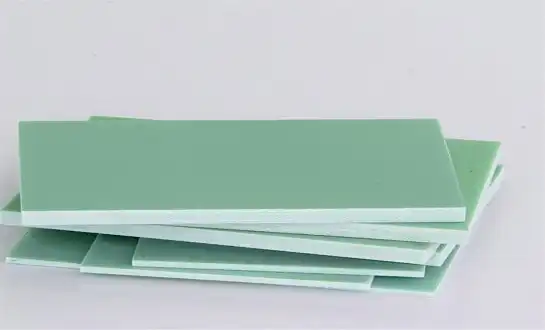
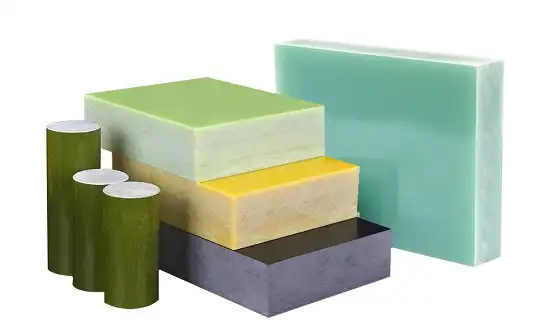
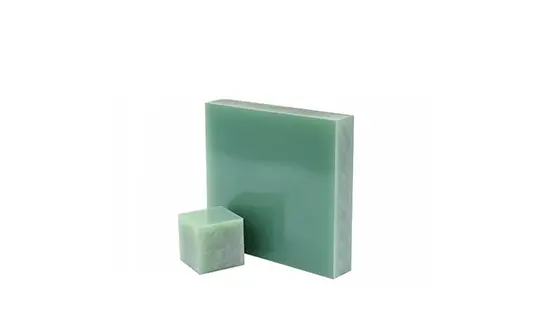
CNC Processing Commercial Phenolic Laminates for Industrial Components
CNC processing has changed how manufacturers approach phenolic laminate fabrication. When engineers need precision-cut insulation parts, gear blanks, or structural spacers, commercial phenolic laminates machined by CNC deliver the dimensional accuracy that hand-cut or stamped parts simply cannot match. These cotton fabric-reinforced thermosetting sheets, produced under high pressure using phenolic resin binder systems, offer a rare combination of electrical insulation, mechanical toughness, and machinability that makes them a go-to choice across electrical, power, automotive, and machinery sectors in the United States and beyond.

Understanding Commercial Phenolic Laminates for Industrial Use
What They Are Made Of?
To make phenolic cotton laminate sheets, you have to stack layers of woven cotton fabric that are all saturated with phenolic resin. After that, it is cured at temperatures and pressures above 1,000 PSI. JingHong's Grades 3025 and 3026 use the test methods in GB/T5130 to create a dense, thermoset composite with a specific gravity of 1.30 to 1.40 g/cm³. This grade, 3026, is much stronger than regular paper-based phenolic grades. It can bend at least 140 MPa and pull apart at least 98 MPa.
Key Material Properties
These sheets are strong because they are made with a fiber of cotton. The impact strength of Grade 3025's parallel-layer cut is at least 8.8 kJ/m², so it can be used for parts that absorb shock. Electricity-wise, it has a parallel-layer insulation resistance of ≥1.0×10⁶ Ω after being buried in water and a breakdown voltage of ≥10 kV in transformer oil at 90°C. The electrical strength of sheets that are 0.8 mm thin is ≥0.89 kV/mm, and it steadily drops as they get thicker. You can use this information to pick out terminal boards and insulating washers.
Why Industrial Buyers Prefer Them?
Phenolic cotton sheets don't change form when they're loaded like PVC laminates or normal melamine boards do. They also don't react with oils, organic solvents, or weak acids. Working temperatures never went below 125°C, which is what is required for Class E insulation. There is a lot of mass to weight ratio in them, so they are lighter than metal and better at stopping creep than most thermoplastics. This is a very important trait for OEM sourcing managers who want to find mechanical spacers or switchgear parts that will last a long time.
CNC Processing: Optimizing Phenolic Laminates for Industrial Components
Choosing the Right Tooling
Polyphenyl cotton strips come out clean when you use high-speed steel or carbide-tipped tools on them. The cutting surface is rough because of the woven cotton reinforcement, so the tool you use directly affects the quality of the edge. Cutting tools with a sharp, positive rake shape cause less interlaminar strain at the cut face. With slow feed rates and high spindle speeds, heat doesn't build up, which is what usually makes the resin burn along the edges of the routed pieces. With brad-point or split-point bits, the exit face doesn't break off when you drill.
Tolerances and Surface Finish
Engineers often choose CNC for Commercial Phenolic Laminates parts because they can be used over and over again. With multi-axis CNC routing, profiled parts can be kept to within ±0.1 mm of their specifications, which is fine for most gear blank and insulation panel needs. The normal sizes for JingHong sheets are 1020 mm × 2020 mm and 1220 mm × 2440 mm, and the widths run from 2 mm to 100 mm. This gives CNC coders a lot of different materials to pick from, which helps them group parts together more efficiently and waste less material on the edges. The width of the sheet must be the same all the way across the panel. JingHong can make 30,000 tons of goods every year, which is enough to meet this need, batch after batch.
Avoiding Common Machining Defects
Delamination and chipping are the two types of failure that most machine shops are most worried about. When you firmly hold the piece of work, the vibrations that tear plies apart at the edges of cuts stop. When climb milling is used instead of normal milling, surface fiber loss is less likely to happen. Step-down passes spread the heat out so that the plastic doesn't turn black when cutting parts that are more than 50 mm thick. Make sure the raw material has a uniform density of 1.30–1.40 g/cm³ and use these machining techniques. This will help you get parts that look good and fit right the first time.
Comparing Phenolic Laminates with Alternative Insulating Materials
Phenolic vs. Epoxy Laminates
As a general rule, PCB substrates are made of epoxy glass laminates like FR4, which are better at blocking high frequencies. But phenolic cotton sheets are better at not breaking when they are hit, and they cost less for thick structural parts like bearing housings, mechanical gears, and fixtures for insulation. When the constant service temperature is higher than 130°C, engineers may choose epoxy systems. However, phenolic grades are cheaper and meet the needs of most switchgear and generator parts.
Phenolic vs. Thermoplastics
Not only that, but nylon and PEEK are also often used to make self-lubricating mechanical parts. Both can soak up water better than phenolics, but neither is as strong as Grade 3026 (layers of more than 245 MPa). Thermoplastics break when they are loaded over and over again while they are hot, but cotton phenolic laminates don't fail in this way. This difference in creep resistance means that gears and pulleys used to drive steel mill or textile tools don't need to be repaired as often.
When to Choose Phenolic Cotton Grades
As things stand, the choice is based on the budget, the type of load, and the temperature range. Phenolic cotton types are the best when the part needs to hold up the structure, take pressure, and stop electricity from moving through it. They need fewer extra steps than ceramic or composite options because they are easy to machine. These sheets help buying teams balance performance against total cost of ownership. They are a tried-and-true, technically-documented answer that has been used in industry for decades.
Procurement Guide: Sourcing CNC-Ready Phenolic Laminate Sheets
Evaluating Supplier Credentials
Manufacturers test each batch of Commercial Phenolic Laminates to make sure they meet GB/T5130 standards. They also keep records of the tests for density, water absorption, and bent strength. Each sheet at JingHong is checked by a quality control system before it is put on a crate and wrapped up to keep it safe while it's being shipped by sea, land, or air. Ask for batch test results from each seller you look at, and make sure that the thickness tolerances across the width of the sheet are within the limits of what your CNC machine can handle. It costs more to machine when the thickness isn't all the same because you have to re-calibrate the tool height a lot.
Customization and Order Planning
To send something to JingHong, you need to weight at least 500 kg. The finish on grades 3025 and 3026 can be black or brown. Sheet sizes that aren't standard and thicknesses that are between 2 and 100 mm can be worked out with standard lead times. You can pay with T/T, and the business has its own transportation network that helps them plan door-to-door delivery. People who buy a lot can be sure they will always have enough by planning ahead for an annual production of 30,000 tons. This is true even when demand is high. For tier-1 car suppliers and gadget makers with high-volume production lines, this is very important.
Quality Checkpoints Before Machining
Before putting sheets on a CNC cutter, it's important to make sure they are flat (this is important for vacuum-table fixturing), that the surface is smooth (no cracks or other problems), and that there is enough moisture on the sheets. According to ASTM D570, the amount of water that is okay depends on how thick it is. Something like a 10 mm sheet shouldn't take in more than 319 mg. If there is too much absorption, the resin hasn't fully set, so it will swell up when it's machined. You can avoid scrap parts and production delays further down the line if you catch this at goods-in.
Maintenance and Sustainability of Phenolic Laminate Components
Routine Care in Service
Parts of machinery or equipment that use phenolic cotton lamination should be checked often for surface tracking, edge chipping, and water getting into the cut faces. A dry or slightly wet cloth can be used to wipe away surface dirt. Cleaners with a lot of strong acids hurt the plastic base, so don't use them. When there is oil around, the material's natural ability to soak it up acts as a way for bearings and gears to keep themselves smooth. In fact, this property makes wear better over time.
Waste Reduction Through Precision Machining
CNC processing directly makes things work better. Cutting off pieces of paper is less likely to happen with accurate stacking software, and material loss per part is less likely with multi-part programs that work on standard JingHong sheet sizes. When phenolic laminates are machined at normal cutting temperatures, they don't give off any harmful volatiles because they are thermosetting. These changes help groups follow the rules better. Fine phenolic particles still need to be removed from the air through dust extraction, but the general processing profile can be done safely in a machine shop.
Sourcing Responsibly
People who buy things want proof of responsible sourcing more and more. JingHong backs this up with quality records that always follow GB/T5130 and other buying rules from other countries. For more than 20 years, we've been making insulating sheets and trading with other countries. During that time, we've built strong supply chain relationships that give procurement experts in controlled industries the audit record and trustworthiness they need when they need to find a new material provider.
Conclusion
Cutting Commercial Phenolic Laminates sheets on a CNC machine is still one of the best ways to insulate buildings in the business world. It is made of a single material that is known to be strong mechanically, have stable electrical qualities, and be easy to machine. For JingHong's Grades 3025 and 3026, there is GB/T5130 test data to back them up. They are made in large quantities and sent out through a logistics network made for international business-to-business delivery. How well your finished part works from the start depends on the right raw sheet. It should be flat, have the same density, and be within a certain width range. This is true whether you need a transformer insulation panel, a gear blank, or a battery pack barrier.
FAQ
What is the difference between Grade 3025 and Grade 3026?
Grade 3025 offers a bending strength of ≥100 MPa and is suited for general electrical insulation and mechanical components. Grade 3026 carries a higher bending strength of ≥140 MPa and tensile strength of ≥98 MPa, making it the better option when higher structural load or impact resistance is required.
Can these sheets be machined in-house by a standard CNC router?
Yes. Phenolic cotton laminates machine cleanly with carbide-tipped tooling. Use high spindle speeds, moderate feed rates, and firm workholding to prevent edge delamination. Standard CNC routers and milling centers used for wood or plastics handle these sheets well with appropriate tool selection.
What is the maximum continuous service temperature?
JingHong's phenolic cotton grades maintain structural stability up to approximately 125°C under continuous load, meeting Class E electrical insulation requirements. Exceeding this temperature causes gradual resin hardening and reduced dielectric performance.
What is the MOQ and available thickness range?
The minimum order quantity is 500 kg. Sheets are available in thicknesses from 2 mm to 100 mm in standard sizes of 1020 mm × 2020 mm and 1220 mm × 2440 mm.
Are custom dimensions available?
Yes. JingHong accepts custom size and thickness requests within standard lead times. Contact the technical team with your specifications for a tailored quote.
Request a Quote from J&Q — Your Trusted Commercial Phenolic Laminates Supplier
Through J&Q, you can get checked Commercial Phenolic Laminates sheets that are ready to be processed by CNC. This puts you in touch with JingHong's production team directly. We've been making things for over 20 years and have our own transportation system, so we can ship anything from 500 kg test orders to full container loads with the same high quality. Feel free to email info@jhd-material.com or visit blog.jhd-material.com with your needs to learn more and get a price quote right away.
References
1.NEMA Standards Publication LI 1 — Industrial Laminated Thermosetting Products, National Electrical Manufacturers Association, 2020.
2.ASTM D709 — Standard Specification for Laminated Thermosetting Materials, ASTM International, 2021.
3.ASTM D570 — Standard Test Method for Water Absorption of Plastics, ASTM International, 2022.
4.GB/T 5130 — Test Methods for Laminated Sheets, Standardization Administration of China, 2017.
5.Harper, C.A. — Handbook of Plastics Technologies, McGraw-Hill, 2006.
6.Brydson, J.A. — Plastics Materials, Butterworth-Heinemann, 1999.

Get a complete product list and quotation
J&Q New Composite Materials Company