CNC Machining Bakelite Sheet: Tolerance Control and Surface Finishing
CNC machining of Bakelite sheet demands precision engineering strategies to address tolerance control and surface finishing challenges. As a thermoset phenolic laminate composite, Bakelite sheet exhibits excellent dielectric strength and thermal stability, making it indispensable across electrical, industrial, and power sectors. However, its inherent brittleness and abrasive nature require specialized tooling, controlled feed rates, and finishing protocols to deliver components meeting ±0.05mm tolerances and smooth, defect-free surfaces. Understanding these machining parameters enables procurement teams and engineering managers to specify reliable, high-performance insulation components for critical applications.
Understanding Bakelite Sheet Material Properties and Machining Challenges
The Composition and Thermoset Nature of Bakelite Sheet
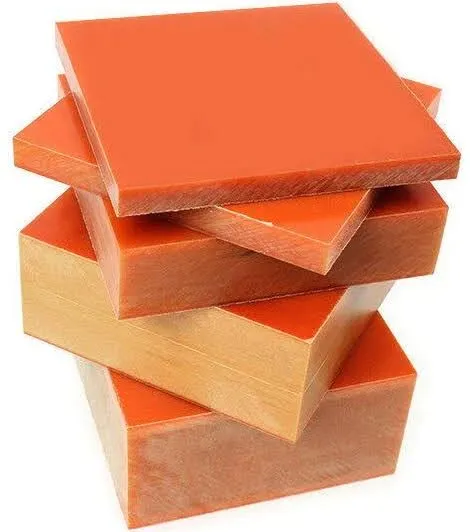
Layers of cellulose paper or cloth are saturated with phenolic resin, which is made when phenol and formaldehyde react to form Bakelite sheet. With controlled heat and pressure in hydraulic presses, this composite hardens into a rigid material that doesn't change shape. This thermoset structure can't be remelted, unlike thermoplastics, which soften when heated. It has great chemical resistance and mechanical strength even at high temperatures up to 120°C. The ratio of resin to fibre sets the grade of the material. Grade X has higher mechanical strength for building uses, while Grade XXX is better at resisting wetness and providing electrical insulation in places with a lot of humidity.
Inherent Material Challenges During CNC Machining
When working with phenolic laminates, machinists have special problems. If the wrong cutting settings are used, the brittleness of the material can cause edge chipping and microcracking. The rough phenolic resin in it speeds up tool wear, so carbide or diamond-tipped cuts are needed for long production runs. Problems with dimensional stability happen when internal stresses are released during machining and cause thin-walled parts to warp slightly. Another problem is the dust that is made; phenolic grains are irritating to the lungs, so active extraction systems are needed during milling and drilling. Because of these factors, customised solutions are needed instead of normal plastic cutting methods.
Impact on Precision Component Manufacturing
Understanding how these materials behave has a direct effect on how things are made. Manufacturers of electrical equipment that use Bakelite sheet for switchgear insulation can't stand surface cracks that weaken the dielectric. For arc barriers to fit between coil windings, transformer makers need to make sure they are the right thickness. To keep short circuits from happening, automotive suppliers that make battery pack barriers need edges that don't have any burrs. To meet these needs, the right CNC methods must be chosen from the very beginning, all the way through the final finishing steps. This is to make sure that the parts meet the UL and ROHS safety standards that are expected in North American markets.
Precision Tolerance Control in CNC Machining of Bakelite Sheets
Critical Parameters Affecting Dimensional Accuracy
To get phenolic laminates to within ±0.05mm of tolerance, you have to control a lot of different machining variables at the same time. It is very important to choose the right tools. Solid carbide end mills with sharp cutting edges reduce the cutting forces that cause distortion. Spindle speeds between 8000 and 12,000 RPM and feed rates between 100 and 300 mm/min keep clean cuts and keep heat from building up. To keep the material from breaking, the depth of cut steps should stay small, usually between 0.5 and 1 mm per pass. When you use climb milling instead of regular milling, the edge quality is better because the material fibres are supported during cutting instead of being torn while CNC cutting Bakelite sheets.
Thermal Management and Fixture Design
As the part is being machined, heat builds up and causes localised expansion. This causes measurement mistakes that show up when the part cools to room temperature. Cutting and stopping at regular intervals lets the heat escape, and directing cool air at the cutting area stops thermal deformation without adding moisture. Fixture design also has an effect on accuracy. For example, rigid clamping across multiple contact points stops chatter marks caused by shaking and keeps pressure from being too high, which could crack weak surfaces. Holding forces are spread out evenly across bigger panels by hoover fixtures, which keeps them flat during complex shaping operations.
Real-Time Monitoring and Quality Verification
In-process measurement tools are used in advanced manufacturing facilities to check measures while machines are working. Touch probes built into CNC machines check important parts between roughing and finishing passes. This lets mistakes be fixed before the job is finished. Coordinate measuring machines (CMM) are used for post-machining checking to check that tolerances match up with engineering plans. Statistical process control charts find patterns in tool wear before they hurt the quality of the parts by following changes in dimensions across production runs. This method is based on data and makes sure that the output is always consistent and meets the requirements for power distribution components and motor insulation frames.
Surface Finishing Techniques for Bakelite Sheets Post-CNC Machining
Common Surface Defects and Root Causes
When Bakelite sheets are machined, the surfaces often have flaws that make them less useful. When exit cuts don't have enough support, burrs form along the sides of the cuts. This makes ways for electricity to track in high-voltage situations. Fuzzing happens when exposed cellulose fibres stick out from layers of resinless surface, lowering the electrical resistance between the two and trapping contaminants. When finishing passes use worn cutters or too fast of feed rates, tool marks and feed lines show up in regular patterns. When cutting forces are higher than the material's breaking strength, especially at sharp interior corners or thin cross-sections, microcracking happens.
Mechanical Finishing Methods
Several mechanical methods can effectively improve the quality of the surface after CNC work. Fine sanding with gradually finer abrasive grits, from 220 grit to 600 grit, gets rid of raised fibres and smooths out tool lines. When ceramic media are mixed with rotary rolling, the edges are broken evenly across batches. This gets rid of sharp points that can be dangerous during assembly. A mirror-like finish is achieved by mechanically polishing with cotton buffing wheels that have been charged with fine polishing compounds. This is needed for aesthetic purposes in the appliance manufacturing industry. Each method has to find a balance between removing material and keeping the exact measurements that are made during precise cutting.
Chemical and Ultrasonic Treatments
Chemical smoothing uses low-level liquid contact to break down some of the surface resin. This makes finishes that are equally smooth without using mechanical abrasion. This method works especially well for complicated internal paths that can't be reached with mechanical tools. Ultrasonic cleaning in hot detergent baths gets rid of machine waste, oils, and small particles that are buried in the surface roughness. The cavitation action cleans up blind holes and threaded parts, which is important for places where electrical parts are put together. Surface roughness is measured with profilometers as part of quality control processes. Ra values must be below certain limits before parts can be put together.
Comparison of Bakelite with Other Plastic Materials in CNC Machining
Bakelite Versus Modern Engineering Polymers
Modern materials like polyetherimide (PEI) or polyetheretherketone (PEEK) are not as good as Bakelite sheet when it comes to cost-effective uses that need proven electrical shielding. It is possible for advanced polymers to work continuously at temperatures above 200°C, but phenolic laminates can handle temperatures up to 120°C and cost a lot less. When being machined, Bakelite keeps its shape better than semi-crystalline thermoplastics, which tend to bend from leftover stresses. Modern plastics, on the other hand, are better at resisting impacts, which makes them better for parts of cars that are exposed to mechanical shock.
Phenolic Grades and Melamine Comparisons
Melamine laminates and other phenolic formulas are direct competitors of Bakelite sheet in the thermoset family. While melamine has a harder surface and is less likely to scratch, it is not as good at conducting electricity as phenolic cotton cloth grades like Grade XXX. Glass-filled phenolic sheets are stronger mechanically, but they are harder to machine because the glass fibres wear down cutting tools quickly. Paper-based phenolic laminates are still the best choice for electrical insulation jobs where dielectric strength and punchability are more important than ultimate tensile strength.
Strategic Material Selection Guidance
When purchasing managers look at materials for CNC made parts, they should think about both the total cost of ownership and the needs of the individual application. Bakelite sheet works great for large-scale production that needs stable electrical insulation qualities, moderate mechanical loads, and low cost. Its stable batch quality and fast cutting processes are good for industries like making appliances. Its flame protection meets V-0 standards and is used in the power industry without any halogenated additives. Engineers in the automotive industry like how it can be customised to make battery shields and heat-resistant fixings. Supply chains in North American markets are reliable because goods are available through well-known channels of distribution.
Procurement and Custom Manufacturing of CNC Machined Bakelite Sheets
Supplier Evaluation and Quality Certifications
In order to choose reliable Bakelite sheet suppliers, you need to check more than just the basic product specifications. With ISO 9001 approval, you can be sure that quality control is being used throughout the whole manufacturing process. This makes sure that the properties of the materials are the same across all production lots. UL approval for certain grade names proves that electrical safety standards for switchgear and motor parts are met. Material test results that show dielectric strength, flexural strength, and moisture absorption are useful for engineering proof because they give reliable data. Full tracking through batch coding from suppliers lets OEMs find the root cause of problems in the field, which protects their names.
Custom CNC Machining Capabilities
When you work with providers who offer combined CNC machining services, you save a lot of money compared to buying raw sheets separately. Custom specs that are made to fit the needs of the setup get rid of the need for extra work and the costs that come with it. Specialised surface finishes, like machined, polished, or chemically treated, come already installed, which cuts down on the amount of goods that needs to be moved. Single-source responsibility makes it easier to keep an eye on quality as complex geometries like precise holes, slots, and curved profiles are made. Prototyping services let you test your design before making the actual tools for production. This lowers the risks of making new electrical equipment or industrial machinery.
Pricing Dynamics and Logistics Considerations
Volume-based pricing systems credit smart planning for buying things by lowering prices a lot when you buy a lot of them. Sheet thicknesses range from thin 1 mm seal material to heavy 50 mm structure plates. The prices of these sheets depend on the amount of raw materials used and the time it takes to run the press. Lead times change with the seasons and depend on how well the plastic supply chain and production capacity are being used. When it comes to just-in-time manufacturing, suppliers with North American store stocks offer faster delivery than direct imports. Distributors who serve customers in various places can get the most out of their supply chains by using integrated logistics services like custom packing, consolidated shipments, and delivery schedules.
Conclusion
For CNC cutting of Bakelite sheet to go well, you need to know how its thermoset properties work and follow the right procedures for controlling tolerances and finishing the surface. Material properties must be weighed against the needs of the application by engineering managers and procurement experts, who must also choose the best grades and work with qualified sources who offer combined machining capabilities. Precision manufacturing techniques, such as choosing the right tools and managing heat, along with mechanical and chemical finishing methods, make sure that parts meet strict standards for electrical insulation and mechanical performance. Businesses can provide reliable, low-cost solutions in the electrical, industrial, power, automotive, and appliance sectors in North America's competitive markets by strategically sourcing materials that take into account certifications, customisation options, and logistics support.
FAQ
What tolerances are achievable when CNC machining Bakelite sheet?
Standard CNC machining of phenolic laminates can reliably get most geometric features to within 0.05 mm of their true size. This level of accuracy can be reached for linear measurements, hole locations, and flatness requirements if the right cutting settings and tools are used. Precision grinding processes make it possible for smaller features to have margins closer to ±0.02mm, but they are very expensive. Tolerances for thickness depend on how consistent the source material is; they are usually ±0.1mm as supplied, but they can be made better by grinding the surface for Bakelite sheet.
How does Bakelite compare to epoxy resin sheets for electrical insulation?
Both materials have a high dielectric strength and can be used in high-voltage situations. Because they can handle higher temperatures and less wetness than other laminates, epoxy laminates like FR4 are better for PCB boards. For switches, motor housings, and terminal blocks, Bakelite sheet offers improved machinability, lower cost, and adequate performance. The choice of material depends on the specifics of the job. Phenolic grades work best in moderate-temperature, cost-conscious settings below 120°C.
Can Bakelite machining waste be recycled?
Because phenolic thermoset materials can't be remelted and reshaped like thermoplastics, they can't be recycled in the usual ways. According to local environmental laws, machining dust and small scrap pieces usually need to be thrown away as industry trash. Some companies burn phenolic waste in controlled buildings to get energy back. Larger pieces that were cut off are sometimes used as filler in less important projects. By optimising stacking patterns and material use during CNC processing, waste is kept to a minimum at the source.
Partner with J&Q for Precision Bakelite Sheet Solutions
J&Q has been making things for over twenty years and trading with other countries for ten years. This makes us your reliable source for Bakelite sheets for difficult CNC machining jobs. Our vertically integrated operations, which include finding materials, precise machining, and shipping, make sure that the quality we give is always up to UL and ROHS standards. Engineering teams can help you figure out what unique standards, surface finishes, and material grades will work best for your electrical insulation or mechanical part needs. With quality systems that are ISO-certified and logistics services that are run by us, we can guarantee solid arrival dates that help you plan your production. Get in touch with our technical experts at info@jhd-material.com to talk about your project requirements and find out how our precision-machined phenolic components can help your product work better and make production more efficient.
References
1. Richardson, T. (2019). Industrial Laminates: Materials Science and Processing Technologies. Cambridge Industrial Press.
2. Chen, M. & Williams, R. (2020). "Precision Machining of Thermoset Composites: Tool Wear and Surface Quality Analysis." Journal of Manufacturing Processes, 58, 432-447.
3. American Society for Testing and Materials. (2021). ASTM D709-20: Standard Specification for Laminated Thermosetting Materials. ASTM International.
4. Hughes, P.D. (2018). Electrical Insulation Materials: Properties, Applications, and Industrial Standards. McGraw-Hill Technical Publishing.
5. Kumar, S. & Patel, V. (2022). "Surface Finishing Techniques for Phenolic Composites in Electrical Applications." International Journal of Advanced Manufacturing Technology, 119, 2847-2863.
6. National Electrical Manufacturers Association. (2020). NEMA LI 1-2020: Industrial Laminated Thermosetting Products. NEMA Standards Publication.

Get a complete product list and quotation
J&Q New Composite Materials Company