Can Flame Resistance FR4 Fiber Glass Laminate Sheet Improve Reliability in Power Control Systems?
Yes — flame resistance FR4 fiber glass laminate sheet can meaningfully improve reliability in power control systems. This epoxy resin-based material, rated UL94 V-0, resists ignition and self-extinguishes when exposed to an open flame. Its high dielectric breakdown voltage (>100 kV parallel layer), low moisture absorption, and bending strength of 571 MPa make it a dependable choice for switchgear, control panels, and transformer insulation. For engineering managers and procurement teams sourcing insulation materials, FR4 laminate offers a technically sound and cost-effective path to safer, longer-lasting power control equipment.
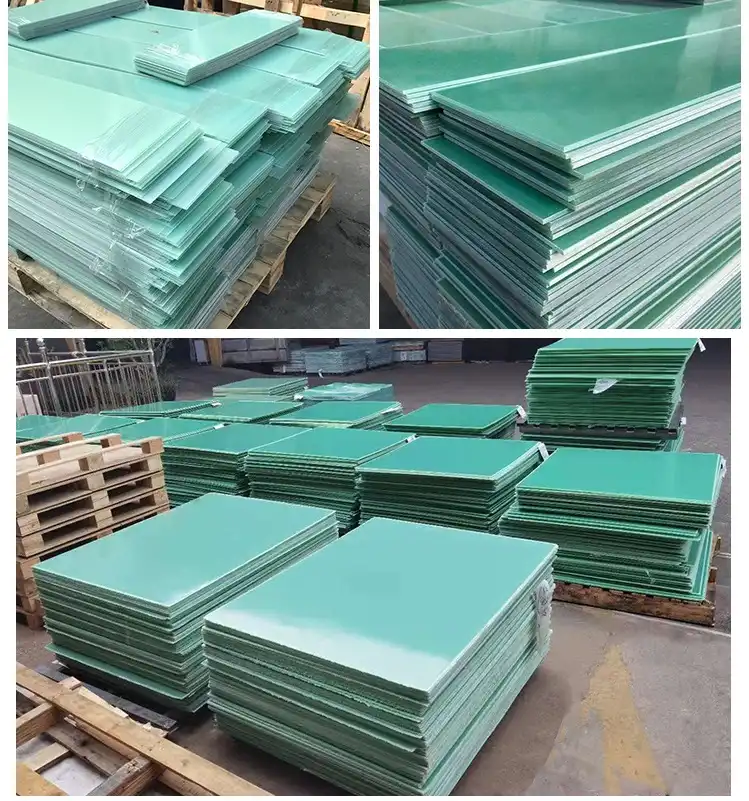
Understanding Flame Resistance in FR4 Fiber Glass Laminate Sheets
FR4 laminates are more resistant to flames than just slowing them down. The temperature, electrical, and chemical qualities work together to protect both people and equipment in high-demand areas.
What the UL94 V-0 Rating Actually Means
The UL94 V-0 rating, which was checked against GB/T 2408-2008 in Hongda's FR4 technical data, means that the material goes out on its own within 10 seconds of being taken away from a flame source. Also not allowed are drips that burn and light the cotton below the sample. This classification means that the material is the most flame-resistant when tested vertically, which is needed for switchgear, power distribution boards, and arc barrier parts.
How Epoxy Resin Contributes to Thermal Stability
When you heat up FR4 laminates, the epoxy resin matrix joins the fiberglass cloth under a lot of pressure, making a thermoset structure that doesn't weaken. This cross-linked chemistry keeps the dimensions stable even when the temperature is high. Standard FR4 glass transition temperatures (Tg) are between 130°C and 140°C. This means they can be used in most power control situations where temperatures change frequently.
Chemical and Moisture Resistance Under Electrical Stress
Hongda's confirmed technical data indicates that the flame resistance FR4 fiber glass laminate sheet can maintain high insulation resistance after soaking, reaching 2.2 × 10³³ under the specified test conditions. This performance helps the flame resistance FR4 fiber glass laminate sheet maintain its dielectric barrier in environments where moisture and chemical exposure may affect electrical insulation, such as industrial control rooms. Its low water absorption, measured at 5.3 mg under the specified test method, can also help reduce moisture-related dielectric degradation over time. Compared with lower-grade laminate materials such as FR1 or CEM-3, the flame resistance FR4 fiber glass laminate sheet can provide more stable insulation performance for demanding electrical applications. For engineers selecting insulation materials, the flame resistance FR4 fiber glass laminate sheet offers a practical combination of electrical insulation, moisture resistance, and flame-retardant performance. By reviewing the relevant test data and application requirements, procurement teams can determine whether the flame resistance FR4 fiber glass laminate sheet is suitable for their specific operating environment.
Comparing FR4 Flame Resistant Laminates to Other Materials
There's more to picking the right laminate for a power control job than just looking at its flame rating. During its service life, the material must also work properly mechanically, electrically, and in terms of its dimensions.
FR4 vs. FR1 and CEM-3 Laminates
FR1's dynamic strength and resistance to water are limited by the fact that its foundation is made of paper. The CEM-3 has average performance because it has both woven glass cloth and non-woven glass mats. FR4, on the other hand, is made of continuous fiberglass cloth. It has a tensile strength of 282 MPa and a compressive strength of 548 MPa, which means it can be used as both an electrical insulation and a structural component in tough situations.
FR4 vs. G-10 Glass Epoxy
The National Electrical Manufacturers Association (NEMA) says that FR4 will replace G-10 as the fire-resistant standard. Both are made of glass-epoxy, but FR4 has flame-retardant additives added to the resin system, which lets it get a V-0 classification while G-10 does not. For uses in enclosed switchgear or battery pack barriers, this difference isn't just for looks; it's required by NEC and UL safety standards that are widely used in U.S. factories.
Certifications That Matter in the U.S. Market
In the United States, procurement teams always need products that meet the standards of UL, RoHS, and ISO. These requirements are met by FR4 laminates made by approved companies. Hongda brand FR4 has a Barcol Hardness of 76 and a flammability Grade V-0 according to GB/T 2408-2008. It comes with test results that can be tracked and meets the requirements of engineering reviews and compliance audits that are common in buying power equipment OEMs.
How Flame Resistant FR4 Laminates Improve System Reliability in Power Control
It is possible to measure the performance gains that come from using certified FR4 laminate in power control systems. Three places get the most out of it.
Here are the main reasons why FR4 laminate is more reliable in power control settings:
- Reduced fire propagation risk: With a vertical breakdown voltage of 16.7 kV/mm and a V-0 flammability rating, FR4 insulation maintains its barrier function even when adjacent components overheat, containing faults rather than spreading them through a control panel assembly.
- Long-term dielectric stability: The relative permittivity at 50 Hz measures 5.40, and the dielectric dissipation factor is 7.2×10⁻³. These values remain consistent across thermal cycles, which means insulation performance does not degrade predictably over time the way paper-phenolic laminates do under the same load conditions.
- Mechanical load tolerance: With parallel layer impact strength of 57.3 KJ/m² and density of 2.01 g/cm³, FR4 can support physical mounting loads, vibration exposure, and CNC-machined tolerances required for precision insulation plates and bus bar supports in switchgear assemblies.
These performance characteristics work together to make the flame resistance FR4 fiber glass laminate sheet a practical insulation material for demanding electrical applications. When the flame resistance FR4 fiber glass laminate sheet resists ignition, maintains stable dielectric properties, and withstands mechanical stress, system engineers can design electrical assemblies with greater confidence in long-term insulation performance. The combination of flame resistance, electrical insulation, and mechanical durability provided by the flame resistance FR4 fiber glass laminate sheet can also help reduce unnecessary inspection and maintenance requirements when the material is correctly specified for the application. In power control enclosures, the flame resistance FR4 fiber glass laminate sheet can support compact component layouts while maintaining the required physical and electrical separation between conductive parts. For engineers and procurement teams, selecting the flame resistance FR4 fiber glass laminate sheet according to the system's thermal, dielectric, and mechanical requirements can contribute to reliable enclosure design and consistent operating performance.
Procurement Considerations for Flame Resistant FR4 Fiber Glass Laminate Sheets
When looking for FR4 laminate for power control uses, it's important to pay attention to specification details that are easy to miss when evaluating vendors at first.
Key Specifications to Confirm Before Ordering
The range of thicknesses is very important. There are different thicknesses of Hongda FR4 (0.3 mm to 100 mm), so it can be used for everything from thin insulation pads to thick bus bar spacers and whole insulation blocks. The standard sheet size is 1030 mm × 1230 mm, but custom forms are also available at 1220 mm × 2440 mm and 1030 mm × 2070 mm. This lets buying teams cut down on waste when making a lot of things.
Minimum Order Quantities and Logistics
When an OEM wants to buy Hongda FR4, the MOQ is 500 kg, which is a reasonable amount. You can ship by sea, land, or air freight, and standard packaging includes pallet protection. T/T can be used to pay. With a combined factory output of 43,000 tons per year and a production capacity of 13,000 tons per year for this product line, lead times are always predictable, even during times of high demand.
Evaluating Supplier Reliability
J&Q has been making and selling insulation sheets for more than 20 years, and they have worked with foreign customers for more than 10 years. Direct orders get priority in production, and J&Q's own logistics company handles delivery from the factory to the port of destination. This cuts down on the planning problems that happen when there are a lot of middlemen involved, which often cause materials to be delivered late.
Future Trends and Innovations in Flame Resistant FR4 Laminates for Power Control
The FR4 material standard continues to evolve as regulatory requirements and application demands change. The development of the flame resistance FR4 fiber glass laminate sheet reflects this ongoing shift toward more reliable flame resistance, electrical insulation, and mechanical performance. As industries place greater emphasis on safety and long-term reliability, the flame resistance FR4 fiber glass laminate sheet is increasingly evaluated according to specific thermal, dielectric, and environmental requirements rather than a single material specification. Future improvements in the flame resistance FR4 fiber glass laminate sheet are likely to focus on more consistent flame-retardant performance, better dimensional stability, and suitability for increasingly demanding electrical systems. For engineers and procurement teams, understanding how the flame resistance FR4 fiber glass laminate sheet aligns with current regulations and application requirements can help support more appropriate material selection. As standards and end-use requirements continue to develop, the flame resistance FR4 fiber glass laminate sheet will remain an important option for electrical insulation and protective applications where flame resistance is a key consideration.
High-Tg Variants for Elevated Temperature Applications
In power electronics, where thermal density is rising, high-Tg FR4 formulations are becoming more popular. These have glass transition temperatures above 170°C. It is possible for these versions to keep their shape at temperatures that regular FR4 can't handle without delaminating or bending.
RoHS-Compliant Halogen-Free Flame Retardants
To get V-0 ratings, traditional FR4 uses epoxy systems that are brominated. More rules about the environment in the U.S. and around the world are making people want halogen-free alternatives that are just as flame retardant thanks to phosphorus-nitrogen chemistry. When looking for long-term programs, procurement professionals should check to see if their present FR4 supplier can give halogen-free choices as needs change.
Material Traceability and Digital Quality Systems
As buying things in factories moves toward supply chains that can be checked, FR4 suppliers who offer test batch traceability, such as a certificate of conformance per lot, give engineering managers a real edge during facility audits and customer qualification reviews.
Conclusion
A flame resistance FR4 fiber glass laminate sheet is not simply a standard insulation material; it is selected for applications where reliable flame performance, electrical insulation, mechanical durability, and moisture resistance are important. With V-0 flame-retardant performance, high dielectric strength, long-term mechanical stability, and low water absorption, the flame resistance FR4 fiber glass laminate sheet can meet the demanding insulation requirements of modern power control systems. For sourcing teams and engineers, purchasing a verified flame resistance FR4 fiber glass laminate sheet from a supplier with documented test data, stable production capacity, and reliable shipping support can help reduce technical risks and supply-chain uncertainty. Before placing an order, buyers should confirm that the flame resistance FR4 fiber glass laminate sheet meets the required electrical, mechanical, thermal, and flame-retardant specifications for the intended application. It is also important to communicate with the current supplier to verify whether the flame resistance FR4 fiber glass laminate sheet is available with the required certifications, test reports, dimensions, and delivery support. With the right specification and a qualified supplier, the flame resistance FR4 fiber glass laminate sheet can provide a practical insulation solution for demanding electrical and power-control applications.
FAQ
How is flame resistance tested in FR4 laminates?
Standards like UL94 and GB/T 2408-2008 use vertical burn tests to check for flame protection. A sample is put in a defined flame at regular times, and the burn time, drip behavior, and ability to put out itself are all recorded.
What temperature range can FR4 laminate withstand in power control applications?
Up to a glass transition temperature of about 130°C to 140°C, standard FR4 keeps its structural and electrical integrity. For versions with a high Tg, this goes up to 170°C or higher. Standard FR4 is fine for most industrial power control situations, but high-Tg grades may be better for situations with a lot of people or a sealed case.
Can FR4 laminate be custom cut for specific control panel components?
Yes, Hongda FR4 can be made in a wide range of custom sheet sizes and thicknesses, from 0.3 mm to 100 mm. This material can be machined with CNC tools, which lets you make insulation plates, spacers, and arc barriers with very accurate tolerances.
What is the minimum order quantity for Hongda FR4?
The minimum order quantity is 500 kg. You can choose to ship by ocean, land, or air, and orders are sent on pallets to protect them during transit.
Partner with J&Q for Certified FR4 Laminate Supply
J&Q sells Hongda Flame Resistance FR4 Fiber Glass Laminate Sheet with test results that can be verified, unique sizes that can be made, and prices that come straight from the plant. As a seller of FR4 fiber glass laminate sheets with over 20 years of experience in production and our own logistics, we help sourcing teams from the specification stage all the way through delivery. You can email us at info@jhd-material.com or go to blog.jhd-material.com to get samples, look at technical data sheets, or talk about pricing for large orders for your next project.
References
1. National Electrical Manufacturers Association (NEMA). NEMA LI 1: Industrial Laminated Thermosetting Products. NEMA, 2020.
2. Underwriters Laboratories. UL 94: Tests for Flammability of Plastic Materials for Parts in Devices and Appliances. UL Standards, 2018.
3. Shenoy, A. V. Rheology of Filled Polymer Systems. Springer, 1999.
4. Licari, J. J., & Enlow, L. R. Hybrid Microcircuit Technology Handbook. Noyes Publications, 1998.
5. IPC Association Connecting Electronics Industries. IPC-4101: Specification for Base Materials for Rigid and Multilayer Printed Boards. IPC, 2017.
6. Harper, C. A. (Ed.). Electronic Materials and Processes Handbook, 3rd ed. McGraw-Hill, 2004.

Get a complete product list and quotation

J&Q New Composite Materials Company



