Antistatic Durostone Sheet for PCB Assembly Fixtures in High-Volume Electronics Production
If you run a high-volume PCB assembly line, static electricity is one of the quietest threats to your yield rate. An antistatic Durostone sheet is a glass-fiber-reinforced epoxy composite engineered to dissipate electrostatic charge gradually and safely, protecting ESD-sensitive components during wave soldering, reflow, and automated handling. Unlike general-purpose plastics, this material holds its shape under thermal cycling above 260°C while resisting aggressive solder fluxes. For electronics manufacturers who need tight dimensional tolerances and long fixture service life, it is a dependable material choice that directly reduces defect rates on the production floor.

Understanding Antistatic Durostone Sheets and Their Role in Electronics Production
Static electricity is always being generated in PCB assembly areas by moving conveyor belts, handling boards, and using soldering tools. Those charges can hurt ICs and fine-pitch parts without being noticed if they don't get rid of themselves. Because of this, ESD-safe fastening materials are a must for production and not an extra that can be added.
What Makes Durostone Different from Standard Composites?
To make Durostone, you use a thermoset composite that is made of an epoxy resin base strengthened with glass fibers. Its antistatic form has conductive additives all over the material, which gives it a surface resistance of 10⁶–10⁈ Ω/sq. This range puts it in the ESD dissipative zone, where the charge slowly leaks away instead of sparking, which is exactly what is needed when handling sensitive parts.
Thermal Stability Under Process Conditions
In wave soldering, fixture boards are frequently exposed to hot solder at temperatures between 260°C and 280°C. JingHong Antistatic Durostone Sheets keep their shape at temperatures above 200°C for long periods of time and up to 300°C for short periods of time. Over 2000 thermal cycles, the material doesn't twist, split, or delaminate because the temperature at which it bends is higher than 200°C and the amount of water it absorbs stays below 0.1%.
Mechanical Properties That Support Precision Fixtures
Because it can hold more than 300 MPa of tension and more than 400 MPa of bending, this material doesn't crack when machinists cut it into thin pallet walls and tight-tolerance pockets. When tungsten carbide or PCD tooling is used in CNC routers, the edges are clean. As a result, supports are made that keep PCBs in exact alignment while they are being handled automatically. This cuts down on alignment problems during the soldering process.
Comparative Analysis: Antistatic Durostone vs Other ESD Sheet Materials
Before deciding on a standard, procurement teams often look at a number of different antistatic sheet materials. The choice affects how long the device lasts, how often it needs to be maintained, and the total cost per production cycle.
How It Compares to PVC and Melamine Antistatic Sheets
Standard antistatic PVC softens above 60°C–80°C, so it can't be used near soldering equipment. Antistatic melamine sheets are stiffer, but they soak up more water and become less flat over time. Antistatic Durostone Sheet uses a thermoset epoxy matrix that doesn't get soft when heated during the manufacturing process, and it doesn't absorb more than 0.1% of water, which keeps smoothness standards stable. This means that fixtures will need to be replaced less often than every three months on high-volume lines that work multiple shifts.
Comparing Longevity with Phenolic and Epoxy Laminates
Phenolic cotton laminates are strong mechanically, but they don't have enough temperature range for lead-free soldering. Standard FR4 resin sheets keep electricity from leaking, but they don't control how much static electricity is released. Antistatic Durostone meets both needs: it can be used as a structural material that is safe for ESD and can also handle the chemicals and heat that are used in current PCBA production lines. According to data from the industry, good solder boards made from this composite can handle 10,000 to 20,000 process rounds in normal circumstances.
Cost Efficiency Over the Production Lifecycle
Durostone, which is antistatic, costs more to buy than PVC or phenolic alternatives. On a high-throughput line, however, the price difference is usually canceled out over the course of a year by fewer replacements and less scrap due to ESD damage. When engineering managers look at cost-per-cycle instead of unit price, they always see that thermoset ESD composites are cheaper when they buy in bulk.
Practical Applications and Maintenance of ESD-Safe Durostone Fixtures
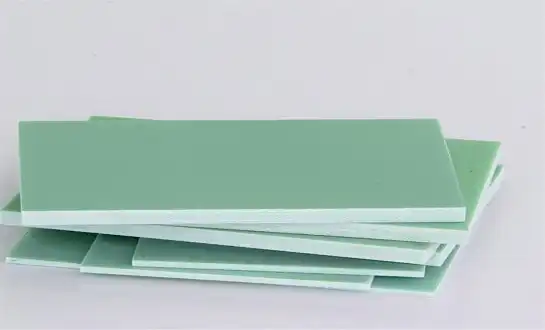
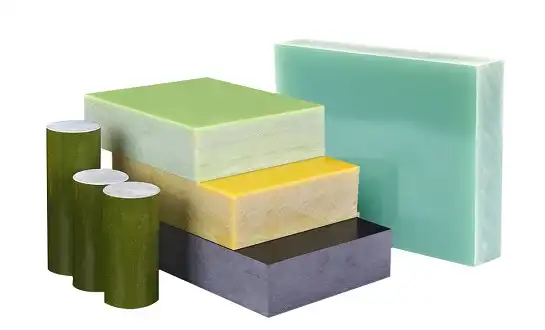
JingHong Antistatic Durostone Sheets come in black, gray, and blue and range in thickness from 3 mm to 50 mm. They can be used for a lot of different fixture and tooling tasks in the electronics manufacturing industry.
Here are the main business uses for this material that you can count on:
- SMT wave soldering pallets: The sheet is CNC-machined into pallets that support PCBs over the solder wave, masking areas that should not be soldered. The material resists thousands of dips in molten solder without delamination.
- Reflow oven carriers: Used to support flexible or irregular-shaped PCBs during reflow. Their low thermal mass allows the board to reach target temperatures efficiently without the fixture absorbing excess heat.
- AOI and conformal coating trays: Flat, rigid sheets maintain precise PCB positioning in automated optical inspection lines and coating conveyors where repeatability is non-negotiable.
These uses meet most of the needs for ESD-sensitive fixtures in a current SMT line. If you keep up with upkeep, the light will keep working well for its whole life.
Cleaning Protocols That Protect the Antistatic Layer
Flux dust needs to be cleaned up regularly. Use neutral saponifiers or cleaning products made just for flux. Do not use harsh cleaners or scrubbing pads that are very alkaline because they wear away the ESD surface layer and make it less effective at dissipating electricity. If the surface layer is damaged, it can leave behind insulating dead zones that don't pass ESD tests.
Inspection Checkpoints for Long-Term Performance
A standard mega-ohmmeter can be used to measure surface resistance at several places. As a general rule, readings should stay between 10⁁ and 10. Check the flatness deviation. If the warp factor is more than 0.5% over the diagonal length, it can cause conveyor systems to get stuck with pallets. If the sheet's surface has a whitish, grainy texture, it means the resin has burned out, and the product has reached the end of its useful life.
Procurement Guide for Antistatic Durostone Sheets in B2B Electronics Manufacturing
It takes more than picking a resistivity number to find the right Antistatic Durostone Sheet ESD combination. Before placing large orders, the engineering and procurement teams need to agree on the specifications, the reliability of the supply chain, and the quality checks.
Specifications and Customization Options
JingHong Antistatic Durostone Sheets come in sizes ranging from 3 mm to 50 mm thick. Standard colors like black, gray, and blue make it easy to see where on the production floor ESD zones are. For OEM fixture projects, you can get sheets in custom shapes and pallets that are cut on a CNC machine. Tight machining tolerances are used during batch production to make sure that the sizes are the same from one order to the next.
Supplier Qualification Criteria
When looking for a provider of Antistatic Durostone Sheet, make sure that the company gives you traceable surface resistivity test data for each batch, as well as quality control documentation and certificates of conformance. Check to see if they can answer scientific questions and give you information about material safety. Over the past 20 years, J&Q has worked with insulating composite materials and has been trading internationally for over 10 years, working with well-known trading partners all over North America. The business also handles its own shipping and delivery, so customers only need to talk to one person from the time they place their order until it arrives.
Lead Times and Supply Chain Considerations
Standard sheet stock ships within a safe window for most widths most of the time. Custom-machined pallets need more lead time, which depends on how complicated they are. People who want to buy something in the US should plan for ocean freight transport and customs clearance. Delays can be avoided by sharing fitting plans and tolerance standards early on in the order process.
Future Directions in ESD Composite Materials for Electronics Production
The ESD materials industry is going toward materials that are better for the climate without lowering their electrical performance. There are people working on resin systems that keep the temperature and mechanical qualities that production lines need while lowering volatile fumes during processing.
Integration with Automated Assembly Systems
Vision systems, robotic board workers, and inline inspection are being added to SMT lines, which means that mounting materials need to meet stricter standards for smoothness and dimensions. To meet these stricter automation needs, the next generation of Durostone formulations is being made with better consistency from batch to batch.
Broader Application Scope Beyond PCB Assembly
Composite sheets that are safe from ESD are being used more and more in automatic end-effectors, tools for handling semiconductors, and cleanroom partition systems. This growth shows that people are becoming more aware of the ESD risk throughout the electronics supply chain, from storing the parts to putting them together for the first time.
Conclusion
Antistatic Durostone Sheets have a proven mix of ESD absorption, thermal stability, mechanical strength, and chemical resistance that other materials can't match in environments with a lot of PCB assembly. The JingHong product line has sizes ranging from 3 mm to 50 mm and comes in black, gray, and blue. It meets the needs of wave soldering pallets, reflow carriers, and automated handling trays. If engineers and procurement teams want to cut down on defects and the cost of replacing fixtures, this material gives them measurable output value and reliable quality control.
FAQ
How long does an antistatic Durostone solder pallet last?
Under normal operating conditions with proper cleaning, high-quality pallets typically withstand 10,000 to 20,000 process cycles. Exposure to aggressive fluxes without regular cleaning reduces this significantly.
What tools should I use for CNC machining?
Glass-fiber reinforcement makes the material abrasive. Tungsten carbide or polycrystalline diamond (PCD) tools are required. High-speed steel tooling wears out too quickly to produce acceptable results.
Why is the surface resistivity range set between 10⁶ and 10⁹ Ω/sq?
This range defines the ESD dissipative zone. Charge bleeds away at a controlled rate — fast enough to prevent accumulation, slow enough to avoid discharge spikes that could damage components.
Can the sheets be ordered in custom thickness?
Yes. JingHong supplies antistatic Durostone sheets from 3 mm to 50 mm, with custom sizes and CNC-machined formats available for fixture programs.
What causes surface discoloration after extended use?
Slight darkening from flux oxidation is normal. A whitish, fibrous surface texture, however, indicates resin burnout and means the fixture has reached the end of its useful service life.
Request a Quote from J&Q — Your Trusted Antistatic Durostone Sheet Manufacturer
Every order from J&Q New Composite Materials Company is backed by over 20 years of experience with insulating materials and dedicated logistics support. Our expert team is ready to meet your Antistatic Durostone Sheet fixture needs, whether you need normal stock sheets or ESD boxes that have been carefully machined. Please email us at info@jhd-material.com or visit our blog at blog.jhd-material.com to talk about your needs and get a competitive quote.
References
1. Keeping, J. — IPC-A-610 Acceptability of Electronic Assemblies, IPC Standards, 2020.
2. Greason, W. D. — Electrostatic Discharge in Electronics, Research Studies Press, 1992.
3. ESD Association Standard ANSI/ESD S20.20: Protection of Electrical and Electronic Parts, Assemblies and Equipment, ESD Association, 2021.
4. Harper, C. A. — Electronic Packaging and Interconnection Handbook, McGraw-Hill, 2004.
5. IPC-7711/7721 Rework, Modification and Repair of Electronic Assemblies, IPC Standards, 2017.
6. Manzione, L. T. — Plastic Packaging of Microelectronic Devices, Van Nostrand Reinhold, 1990.

Get a complete product list and quotation

J&Q New Composite Materials Company