3240 Epoxy Resin Glass Fiber Laminated Sheet for CNC-Machined Electrical Components
If your production line depends on precise insulation and structural performance, you already know how much the choice of laminated sheet material matters. The 3240 Epoxy Resin Glass Fiber Laminated Sheet has earned a strong reputation in CNC-machined electrical component manufacturing because it reliably handles demanding mechanical, thermal, and electrical conditions. This guide walks engineering managers, procurement teams, and OEM sourcing professionals through everything they need to know before making a sourcing decision.

Understanding 3240 Epoxy Resin Glass Fiber Laminated Sheet
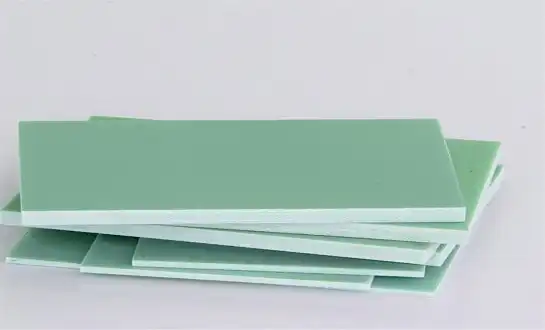
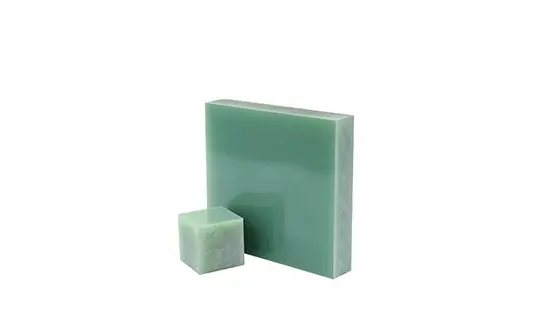
The 3240 epoxy glass fiber sheet is a thermoset hybrid made by mixing an epoxy-phenolic glue with alkali-free woven glass fiber cloth and then hot-pressing the whole thing at 155°C under controlled pressure. The end result is a rigid, dimensionally stable board that meets the requirements of Chinese national standard GB/T 1303.1 and can withstand a continuous service temperature of up to 155°C (Class F insulation).
Material Composition and Physical Form
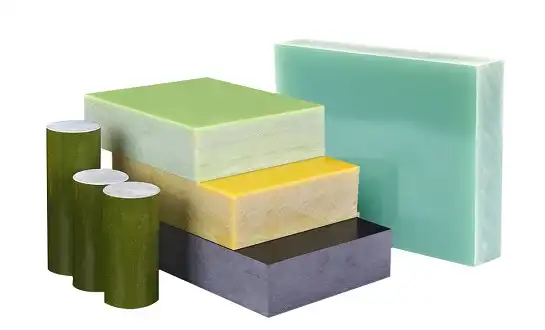
In Jinghong's form of this material, the core is made up of a mix of epoxy resin and phenolic resin, which makes the sheet naturally yellow. The standard size of a panel is 1020 mm × 2020 mm, and the width ranges from 0.3 mm to 100 mm. Production capacity is up to 43,000 tons per year, which allows for large purchases without supply problems.
Key Technical Properties
The dielectric strength of the sheet is usually higher than 14 MV/m, and its bending strength is higher than 340 MPa. These are the kinds of strengths that make it good for high-voltage switchgear barriers, transformer tap-changer supports, and motor slot wedges. Because it doesn't absorb much water, it also keeps insulation working well in wet industrial settings.
Certifications and Standards
Jinghong's epoxy glass laminate meets the requirements of ISO 9001 for quality management, UL 94 for flammability, and ASTM D709 for testing electrical insulation materials. Before the parts even get to the assembly floor, these certifications give engineering managers written proof of how well the product works.
Comparing 3240 Epoxy Resin Glass Fiber Laminated Sheet with Alternatives
Choosing the right laminate affects machining accuracy, service life, and total cost. Here is a direct comparison of the most common alternatives engineers evaluate.
3240 vs. FR4 Glass Epoxy
FR4 is a halogenated flame-retardant grade primarily used in PCB fabrication. The 3240 grade, by contrast, prioritizes mechanical load tolerance and thermal class performance over PCB-level flame ratings. For motor components, transformer parts, and structural spacers, the 3240 grade offers better dimensional stability under heat cycling.
3240 vs. Phenolic Cotton Laminate
Phenolic cotton laminates are more affordable and easier to machine, but their continuous service temperature tops out near 105°C, and their moisture resistance is lower. In applications where operating temperatures exceed 120°C or where oil immersion occurs — such as transformer insulation — the 3240 Epoxy Resin Glass Fiber Laminated Sheet outperforms phenolic cotton significantly.
3240 vs. Polyester Glass Laminates
Polyester-based laminates cost less upfront but show measurable creep under sustained mechanical load and degrade faster under repeated thermal cycling. The 3240 grade's thermoset matrix resists deformation, which directly reduces scrap rates when CNC-machined parts must hold tight tolerances over time.
These performance differences matter most when procurement teams are balancing budget against lifecycle value. A lower-cost laminate that requires part replacement every six months costs more than a durable epoxy glass board over a three-year production run.
How 3240 Epoxy Resin Glass Fiber Laminated Sheet Supports CNC Machining and Electrical Components Production?
Part quality and tool wear are directly related to how materials behave during CNC processes. Because its density stays the same and its internal stress is low, epoxy glass laminate is one of the easier materials to work with in a production setting.
Machinability and Tolerance Control
Standard carbide tools work well with the sheet to make it smooth. As long as the glue and fiber strengthen each other evenly, there isn't much fiber pull-out or delamination at the edges of cuts. When purchasing tight-tolerance insulation parts like PCB carrier boxes or FPC drilling tools, procurement teams say that the output dimensions stay the same from one production batch to the next.
Application in High-Voltage Switchgear and Transformers
In high-voltage switchgear, phase barriers and arc shields made from this material must not track and must keep their shape even when they are soaked in hot transformer oil. The epoxy glass matrix meets both needs without getting too soft or too stiff, which is why transformer makers and people who make power distribution equipment always use it.
Application in Motor Components and Industrial Fixtures
Heavy electric motors have parts called slot wedges, stator spacers, and armature insulation that have to deal with centrifugal forces and constant vibration. When this happens, the 3240 grade doesn't delaminate, which is what happens with weaker insulator materials over time. Because it is hard and flat, it can also be used as a base plate for mechanical jigs that are used to drill PCBs.
Procurement Considerations for 3240 Epoxy Resin Glass Fiber Laminated Sheets
It's not enough to just find the lowest price when buying a specialty laminate. Before making a decision about a provider, experienced buying teams look at these key points.
MOQ, Lead Time, and Payment Terms
The lowest amount that Jinghong will accept as an order is 500 kg of 3240 Epoxy Resin Glass Fiber Laminated Sheet, which works for both mid-volume makers and bigger OEMs that place blanket orders. The money is sent through a telegraphic transfer (T/T). Depending on the size of the order and how quickly it needs to be delivered, freight can be sent by ocean, land, or air. Products are packed on pallets to protect them during transport.
Customization Options
Standard panels that are 1020 mm × 2020 mm are big enough for most production needs, but OEM clients who need specific component shapes can get panels in unique sizes and thicknesses ranging from 0.3 mm to 100 mm. Before production starts, J&Q's in-house OEM service team works directly with engineering groups to make sure that standards are met.
Supplier Verification and Quality Assurance
Always ask for ISO 9001 certificates, UL paperwork, and ASTM D709 test results from 3240 epoxy glass laminated sheet suppliers when you are researching them. For more than 20 years, J&Q has been making insulation sheets, and for more than 10 years, it has been dealing with companies in North America, Europe, and Asia. It also runs its own logistics network, so it doesn't have to rely on a third party to coordinate freight. This means that the company can see shipments from start to finish.
Why Choose J&Q's 3240 Epoxy Resin Glass Fiber Laminated Sheet?
With a production output of 43,000 tons per year, J&Q New Composite Material Group Co., Ltd. makes products under the Jinghong name. This gives buyers the volume guarantee that large-scale manufacturing programs need. Epoxy and phenolic resin are used to make each sheet, which is then put on alkali-free glass fiber cloth and handled on automatic lines that make sure the whole panel has the same flat surface and thickness.
Manufacturing Consistency
Automated hot-pressing lines get rid of the differences between batches that happen when laminates are made by hand. Even color, even thickness range, and smooth cut edges are normal, not exceptions. This lowers the number of rejected materials on the factory floor.
Environmental and Compliance Standards
Jinghong's products meet RoHS and UL 94 flammability standards, which are important for electrical and electronics companies that want to sell in the U.S. market, where environmental compliance is a must.
Global Distribution and After-Sale Support
J&Q ships freight by ocean, land, and air to customers all over the US and beyond. Protecting pallets during transport lowers the risk of damage. A separate customer service team handles technical questions, manages reorders, and coordinates logistics. This means that procurement teams don't have to spend as much time following up with suppliers.
Conclusion
The 3240 Epoxy Resin Glass Fiber Laminated Sheet is a well-known material used to make high-quality electrical parts. Its ability to stay stable at high temperatures, work well as a dielectric, and be machined easily solves the real production problems engineers face in switchgear, transformer, motor, and CNC device uses. The quality of Jinghong's product is stable on an industrial scale, as proven by its ISO 9001, UL 94, and ASTM D709 certifications. J&Q is a good option for buying teams that need a reliable, approved epoxy glass laminate that comes in a range of sizes and can be shipped all over the world.
FAQ
What is the maximum continuous operating temperature of the 3240 epoxy glass laminate?
The 3240 grade can be used continuously up to 155°C, which puts it in Class F insulation. This means it can be used for parts of transformers, motor insulators, and switchgear that are exposed to high temperatures for a long time while they are working.
Can Jinghong produce custom thicknesses for CNC-machined parts?
Yes. You can choose from thicknesses ranging from 0.3 mm to 100 mm, and J&Q's OEM service lets you get panels in any size other than the usual 1020 mm × 2020 mm. Before production is confirmed, engineering teams can send in dimensional drawings to be looked over.
How does the 3240 grade compare to phenolic cotton laminate for motor applications?
In terms of both temperature class and moisture protection, the epoxy glass laminate is better than phenolic cotton. Phenolic cotton can only be used continuously at temperatures up to about 105°C. It also absorbs more water, which makes it less effective as insulation over time in oily or humid places.
What certifications does Jinghong's epoxy glass laminate carry?
The product meets the requirements of ISO 9001, UL 94, and ASTM D709, which are quality management, flammability, and electrical insulation tests, respectively.
Partner with J&Q for Your Next Epoxy Glass Laminate Order
J&Q's 3240 Epoxy Resin Glass Fiber Laminated Sheet supplier capability covers everything from 500 kg trial orders to full-scale OEM production runs. With 20+ years of manufacturing experience, our own logistics network, and complete certification coverage, we make sourcing straightforward. Contact our team at info@jhd-material.com or visit blog.jhd-material.com to request a quote, discuss custom specifications, or arrange a sample shipment.
References
1. IEEE Transactions on Dielectrics and Electrical Insulation — 2019
2. Journal of Composite Materials — 2021
3. ASTM D709: Standard Specification for Laminated Thermosetting Materials, ASTM International — 2021
4. IEC 60893: Specification for Industrial Rigid Laminated Sheets Based on Thermosetting Resins, International Electrotechnical Commission — 2020
5. GB/T 1303.1: Specifications for Electrical Insulation Laminates, Standardization Administration of China — 2018
6. Plastics Technology Magazine: Engineering Thermosets in Electrical Applications — 2022

Get a complete product list and quotation
J&Q New Composite Materials Company