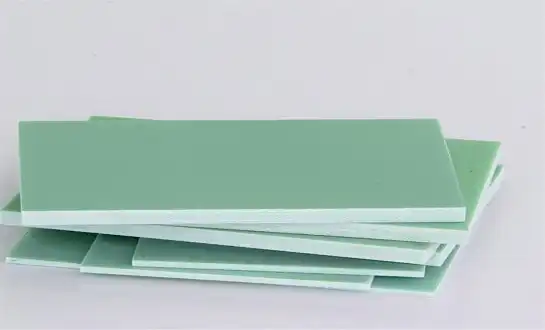
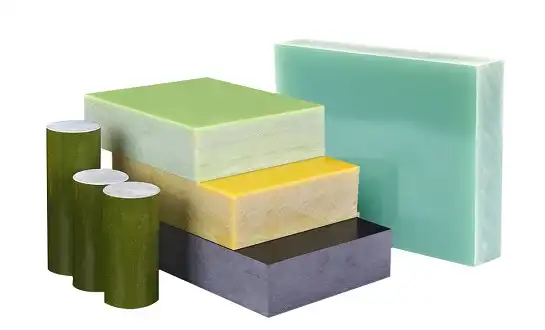
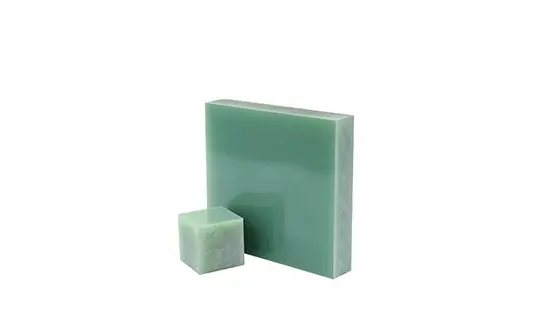
G11 Sheet for High-Temperature Electrical Insulation in Motors and Generators
When motors and generators run hard, the insulation inside them faces serious punishment. Temperatures climb, voltages spike, and mechanical stress never lets up. That's exactly where G11 sheet earns its reputation. This glass-epoxy laminate, rated for Class F insulation at 155°C, is built to hold its structure and dielectric integrity where standard materials simply give out. Whether you're sourcing for industrial motors, power transformers, or high-voltage switchgear, understanding what G11 brings to the table can make a real difference in equipment longevity and operational safety.

Understanding G11 Sheet and Its Role in High-Temperature Electrical Insulation
What Is G11 Sheet Made Of?
When a high-temperature epoxy resin binder is mixed with a continuous filament-woven glass cloth layer and then cured under high pressure, you get G11 Sheet. It meets the requirements of NEMA LI 1 and is recognized as MIL-I-24768/3 Type GEB. Its Glass Transition Temperature (Tg) is between 155°C and 180°C. It has a density of about 1.85 g/cm³ and absorbs less than 0.15% water, so its size stays the same even in humid plant environments.
How Does It Perform Inside Motors and Generators?
In machines that spin, the insulation around the coils and the slot wedges in the stator have to deal with temperature cycles, vibration, and voltage stress all at the same time. G11 has a tensile strength of over 65,000 psi along its length, and its dielectric breakdown voltage is usually above 50 kV when measured perpendicular to the laminate. Based on those numbers, it can resist both mechanical wear and electrical arcing in the most expensive places for failures to happen.
Where It Gets Applied?
G11 is used for more than just motors and generators. It is also used for rotor insulation in heavy-duty transformers, arc chutes and phase barriers in high-voltage switchgear, and structural supports in aircraft cold systems. It works well in wave soldering devices too, since it doesn't bend when heated and cooled many times. The material's ability to fight chemicals makes its useful life even longer in harsh industrial settings.
Key Performance Criteria for Selecting G11 Sheets in B2B Procurement
Thermal and Electrical Properties to Check
The first thing an engineering manager should check is the Tg and the rating for constant working temperature. At 155°C, G11 keeps its mechanical integrity, which puts it firmly in IEC Class F. It can be used in places where G10/FR4, which is rated at Class B (130°C), would start to lose its strength. The dielectric breakdown voltage and insulation resistance under temperature stress need to match the voltage class of the motor or generator that is being insulated.
Mechanical Strength Under Load
When buying industrial gear, teams often look at how well the tensile and bending strengths hold up at the right temperature. The NEMA G-11 standards say that G11 Sheet must retain at least half of its structural qualities at high temperatures. For precise parts like slot liners and spacers, thickness tolerances should stay within ±0.05 mm. This is because measurement drift leads to fit failures during assembly.
Standards and Certification Compliance
Any reliable G11 supplier should show proof that they meet the requirements of IEC 60893-3-2 Type EP GC 203 or MIL-I-24768/3. For clients who sell UL-listed equipment, it is necessary to confirm that the material can be traced back to recognized quality systems. Asking for test reports on ASTM D790 flexural retention at 150°C and ASTM D149 dielectric breakdown gives procurement teams real information instead of promises from spec sheets.
Comparing G11 Sheet with Alternatives for Electrical Insulation Solutions
Using different kinds of soundproofing will help with various issues. Look at how the different laminates compare to each other before making a choice.
This is a simple list of the most common alternatives, followed by a comparison:
- G10 / FR4: Chemically similar to G11 but uses a standard epoxy resin with lower Tg (around 130°C). Easier to machine and less expensive, but mechanical strength drops notably above 130°C. FR4 adds UL94 V-0 flame retardancy, which G11 does not carry natively. Suitable for PCB support and low-heat switchgear but not recommended for Class F motor applications.
- G7 Silicone Laminate: Rated for continuous service up to 180°C and carries excellent arc resistance. However, G7 is significantly more expensive and has lower mechanical strength than G11 at room temperature. It suits specialized high-temperature transformer applications but may be overspecified for most industrial motors.
- Nomex Aramid Paper: Flexible and lightweight, Nomex handles 220°C and above. It works well for slot liners in traction motors but lacks the rigid structural strength needed for wedges, spacers, or bearing insulators where G11 excels.
Each of the materials used for soundproofing has a proper place in the toolbox. G11 is better because it is more balanced: it is stronger than Nomex under mechanical load, it can handle heat better than G10, and it costs less than G7 for mass production of motors.
After switching the stator slot wedges from G10 to G11 in motors that are always running above 140°C, OEMs in the power generation sector have seen a measurable drop in the frequency of coil re-insulation. The longer service interval of the material directly lowers the costs of downtime.
Procurement Best Practices: How to Choose and Source the Best G11 Sheet?
Define Your Technical Requirements First
Write down the motor or generator's constant working temperature, peak voltage class, necessary sheet measurements, and any specific tolerance windows before you talk to any suppliers. Precision slot wedges in traction motors might need G11 Sheet to be flatter than transformer coil separators. A well-written standard cuts down on back-and-forth and makes sure that quotes are truly similar.
Evaluate Suppliers by Certification and Process
Not just a product data sheet, but also proof of material compliance should be asked for. ASTM standards say that suppliers should give test reports for each batch that cover thermal stress resistance and dielectric breakdown. Good manufacturers will also check that the surface finish meets standards, making sure there are no blisters, wrinkles, or surface cracks that could spread when heated.
Test Before You Commit to Volume
Before placing a bulk order, you should always ask for sample sheets. Do your own checks on the sizes and, if you can, do a shortened temperature cycle test. This step is very important for companies that make cars and appliances that need stability from batch to batch. Before buy orders are sent out, lead times, minimum order quantities, and terms for after-sales help should all be agreed upon in writing.
Maintenance, Handling, and Future Trends in G11 Electrical Insulation
Proper Storage and Handling
G11 Sheets should be kept flat in a dry, room-temperature place out of direct sunlight and chemical fumes. As a fully formed thermoset composite, the material can be stored for an infinite amount of time in these conditions. This is different from pre-preg materials, which need to be kept cool. When you're cutting or grinding, make sure you use tungsten carbide or diamond-coated tools and get rid of the dust properly to keep the fiberglass from delaminating and protect your workers.
Recognizing Wear and Degradation
During routine maintenance, check the insulation for surface tracking, discoloration from too much heat, or tiny cracks at the edges. When checking electrical insulation, drops in resistance that can be measured are often the first sign that something is wrong. It is much cheaper to replace broken parts as soon as they start to wear out than to rewind the motor without planning to.
Where the Material Is Heading
As scientists work on making better epoxy resin systems, they are slowly raising the Tg values and lowering the halogen content to meet tighter environmental rules. For people who work in purchasing in the power and energy sector, this means that G11-class performance will probably be available with better sustainability ratings in the next product cycle. This is something that should be taken into account when making long-term deals with suppliers.
Conclusion
G11 Sheet has a special and well-deserved place in the order of insulation materials. Standard glass-epoxy laminates can't handle the temperatures and mechanical loads that this one can. That's why it's always found in motors, generators, transformers, and switchgear where failure is not an option. For procurement teams, the next step is easy: match your operating conditions to the certified properties of the material, check the supplier's paperwork, and test before going big. Choosing the right grade of insulation will save you money in the long run because it will last longer and require less maintenance.
FAQ
What is the maximum operating temperature of G11 sheet?
G11 sheet is rated for continuous service at 155°C, placing it in IEC Class F. Its Glass Transition Temperature typically falls between 155°C and 180°C, which means it retains structural and electrical properties at temperatures where standard G10 laminates begin to degrade.
Does G11 sheet have flame retardancy?
Standard NEMA G-11 is not inherently flame retardant. If UL94 V-0 flame retardancy is required alongside high thermal performance, the correct specification is FR-5, which is the flame-retardant equivalent of G11. Always clarify this with your supplier during the quoting stage.
Can G11 be customized to specific dimensions?
Yes. G11 sheets can be CNC-routed or precision-cut to specific dimensions, including slot wedges, spacers, and arc barriers. Thickness tolerances can typically be held within ±0.05 mm for precision applications. Discuss your drawing requirements with your supplier before ordering.
How does G11 compare to FR4 for motor insulation?
FR4 offers UL94 V-0 flame retardancy and costs less, but its mechanical strength drops significantly above 130°C. G11 retains at least 50% of its structural integrity at 155°C, making it the correct choice for Class F motor and generator applications.
Get Your G11 Sheet Quote from J&Q Today
For more than 20 years, J&Q has sold high-performance insulation laminates to businesses all over the United States. We offer a complete service from production to delivery as a direct manufacturer of G11 Sheets. This includes consistent quality, solid lead times, and expert support. Please email our team at info@jhd-material.com to get free samples or talk about your needs. For more scientific information, go to blog.jhd-material.com.
References
1. NEMA Standards Publication LI 1 — Industrial Laminated Thermosetting Products, National Electrical Manufacturers Association, 2020.
2. IEC 60893-3-2 — Insulating Materials: Industrial Rigid Laminated Sheets Based on Thermosetting Resins, International Electrotechnical Commission, 2003.
3. ASTM D790 — Standard Test Methods for Flexural Properties of Unreinforced and Reinforced Plastics, ASTM International, 2017.
4. ASTM D149 — Standard Test Method for Dielectric Breakdown Voltage and Dielectric Strength of Solid Electrical Insulating Materials, ASTM International, 2020.
5. MIL-I-24768/3 — Plastic Sheet, Laminated, Thermosetting, Glass Cloth, Epoxy Resin (GEE, GEB), U.S. Department of Defense, 1992.
6. Hammons, T.J. — Electrical Insulation in Power Systems, CRC Press, 1998.

Get a complete product list and quotation
J&Q New Composite Materials Company