3021 Phenolic Paper Sheet for Electrical Insulation Components
When engineers and procurement teams search for a dependable phenolic paper laminate for electrical insulation, the 3021 grade consistently appears at the top of the shortlist. This laminated sheet — manufactured by impregnating insulating kraft paper with phenolic resin and then consolidating it under heat and pressure — delivers a well-balanced combination of dielectric performance, mechanical rigidity, and cost efficiency. Whether the end use is a switchgear panel, transformer bushing, or motor spacer, the 3021 phenolic paper sheet meets Class E (120°C) thermal requirements while remaining one of the most machinable and cost-accessible phenolic laminates available.
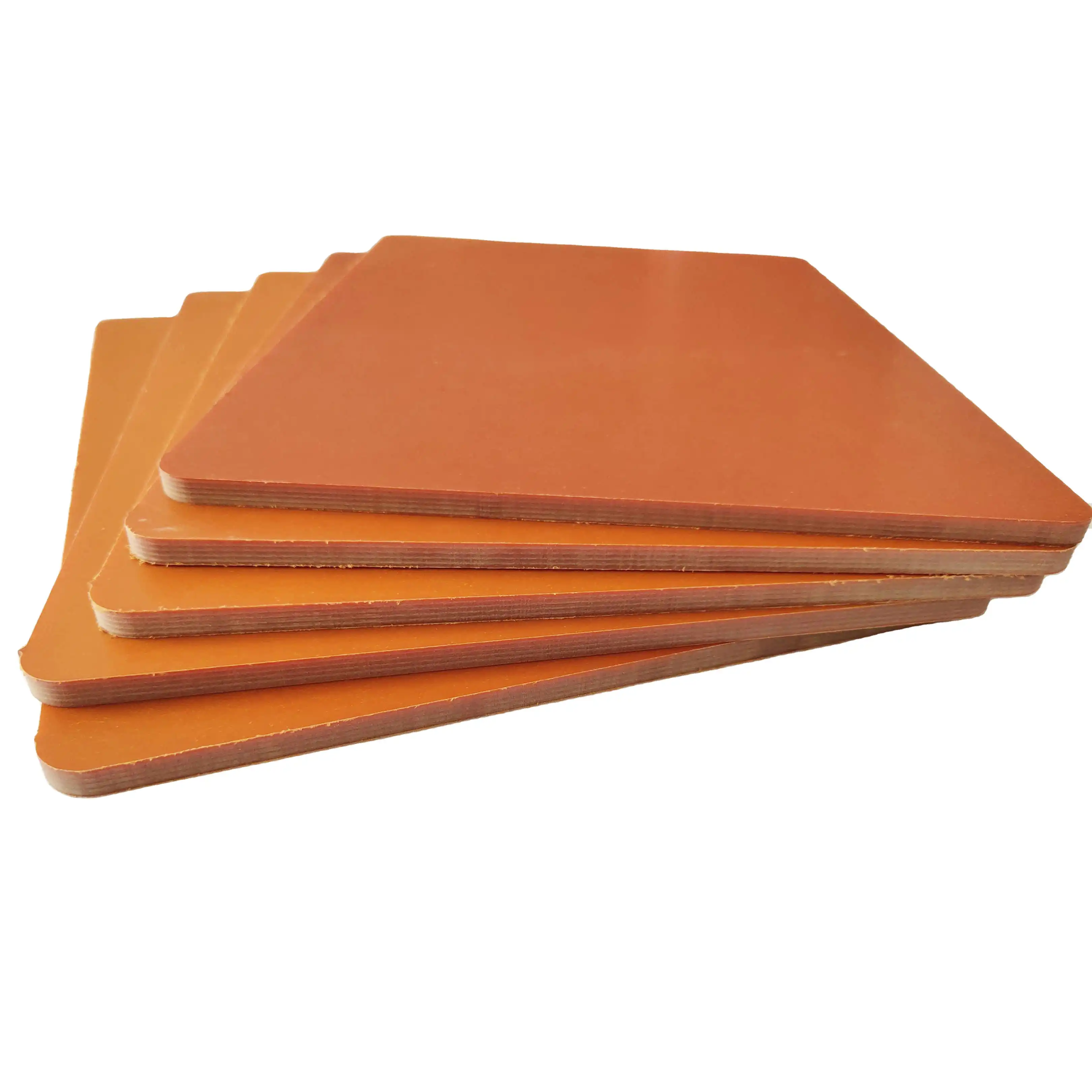
What Is 3021 Phenolic Paper Sheet? Properties and Manufacturing Process?
Material Composition and Structure
The sheet starts out as several layers of phenolic resin-soaked insulation paper. After being stacked, these plies are baked to get rid of the solvents, and then they are hot-pressed together to make a thick, hard laminate. The end result is a flat board with a density of about 1.33 g/cm³, which is stable enough for precise CNC cutting but light enough to lower the mass of the parts. This material is made by JingHong and comes in natural black and orange colors. Its thicknesses range from 2 mm to 100 mm, so it can be used for a wide range of industrial component shapes.
Key Physical and Electrical Parameters
The following technical information is based on test results that were certified under GB/T 1303.2-2009 and GB/T 1303.6-2009:
- Tensile Strength: 119 MPa — sufficient for structural insulation brackets and mechanical spacers operating under moderate load.
- Bending Strength Perpendicular to Laminations: 168 MPa — indicating strong resistance to flexural failure in mounted assemblies.
- Insulation Resistance after Soaking: 2.1 × 10⁸ Ω — confirming reliable dielectric integrity even after moisture exposure.
- Vertical Layer Breakdown Voltage (in 25# transformer oil, 90°C): 2.7 kV/mm — appropriate for low-to-medium voltage insulation applications.
- Parallel Layer Breakdown Voltage: 11.8 kV — meeting the demands of switchboard and panel insulation.
- Adhesive Strength: 3,438 N — demonstrating excellent inter-laminar bonding integrity.
- Water Absorption: 115 mg — low enough to protect dielectric properties in humid or oil-immersed environments.
Based on these measurements, 3021 Phenolic Paper Sheet clearly meets the performance standards for Class E insulation systems as outlined in IEC 60893-3-4 (equal grade PFCP201).
Performance and Benefits of 3021 Phenolic Paper Sheet in Electrical Insulation
A lot of the time, procurement engineers wonder if a cheaper phenolic laminate can really be used instead of more expensive options without lowering the quality. The answer relies on the voltage, temperature, and mechanical load of the device. This grade works very well in a lot of real-world electrical insulation situations.
Because of these main benefits, this laminate is often chosen in many different fields:
- Excellent dielectric properties: With an insulation resistance exceeding 2.1 × 10⁸ Ω after soaking and a stable breakdown voltage in transformer oil, the material guards against leakage current even in sealed, oil-immersed enclosures.
- Superior machinability: The laminate cuts, drills, and mills cleanly without delamination. Engineering teams can achieve tight dimensional tolerances with standard CNC equipment, reducing secondary processing time and scrap rates.
- Chemical resistance: The cured phenolic matrix resists transformer oil, common acid solutions, and organic solvents, making it stable in environments where other cellulose-based insulators degrade prematurely.
- Low moisture absorption: A water absorption value of 115 mg helps preserve dielectric strength in high-humidity operating conditions — a practical advantage in switchgear cabinets and outdoor transformer enclosures.
- Cost efficiency: Among phenolic laminates, this paper-based grade carries the lowest raw material cost. For high-volume applications such as insulating washers, bushings, and panel boards, this translates into measurable savings across production runs.
– Great dielectric properties of 3021 Phenolic Paper Sheet: The material stops current even in oil-filled, sealed spaces because it has an insulation resistance greater than 2.1 × 10⁸ Ω after being soaked and a stable breakdown voltage in transformer oil.Better ability to be machined: The plastic doesn't come apart when it's cut, drilled, or milled. With standard CNC equipment, engineering teams can get close tolerances on dimensions, which cuts down on secondary processing time and scrap rates.
Comparing 3021 Phenolic Paper Sheet to Other Common Insulation Materials
Procurement teams can avoid over- or under-specifying parts by knowing where this material fits in comparison to other laminates.
The 3025 cotton fabric phenolic sheet is better for gear blanks and high-vibration mounts because it is more resistant to impact and works better when mechanical shock is present. It costs more per kilogram, though, and has lower electrical insulation values in general. For situations where dielectric stability is more important than impact toughness, the paper-based 3021 grade is the better choice.
Fiberglass-reinforced epoxy laminates, like FR4, have better temperature class ratings (usually up to 130°C or higher) and stronger bond strengths between layers. In high-frequency applications and PCB substrates, they are the only choice. But for low-voltage switchgear parts, transformer insulation parts, and general-purpose electrical structure panels, the difference in performance rarely makes up for the price difference. The phenolic paper coating meets Class E standards for a lot less money.
The 3010 grade is also a phenolic paper laminate, but it has slightly lower mechanical and insulating values because it is made with lower-quality paper. The 3021 specification's tighter tolerances are usually preferred by engineering teams that work on parts that need to keep their shape and dielectric strength across batches.
Procurement Guide for 3021 Phenolic Paper Sheet: How to Buy and What to Consider?
It's not just a matter of price when looking for 3021 Phenolic Paper Sheet layered insulation sheets for commercial use. The real cost of ownership is affected by things like batch consistency, certified test data, lead time dependability, and the ability to handle logistics.
With an annual production capacity of 13,000 tons, JingHong makes this material, so it is always available, even when demand runs high. Standard sheet sizes are 1,040 mm × 2,080 mm, but custom sizes up to 1,220 mm × 2,440 mm are possible, which allows for big panel cutouts and high-yield nesting plans. From 2 mm to 100 mm thick, it can be used for everything from thin insulation washers to thick building blocks.
Depending on how quickly and where they need to go, shipments can be sent by ocean freight, land transport, or air cargo. They are packed on pallets to keep them safe. You can pay with T/T, and the minimum amount you can buy is 500 kg. JingHong has been making things for more than 20 years and trading with other countries for more than ten. It runs its own logistics infrastructure, which lets it coordinate shipments from start to finish without using third-party freight middlemen.
Application-Specific Insights: Using This Laminate in Electrical Insulation Components
This phenolic paper laminate is used in a consistent set of high-demand roles across all industries:
The material is used as coil insulation, arc barriers, and insulating washers in oil-filled settings in power distribution and transformer production. Its stable breakdown voltage in transformer oil and low moisture absorption directly support loads.
Engineers cut the sheet into switchboards, panel liners, and busbar supports when they make switchgear and panel boards. Strong bending resistance and reliable insulation resistance work together to keep parts safe in both regular and fault situations.
The laminate is cut into spacers, insulated brackets, and wear-resistant pads that are used in industrial machines. Because it can be bent easily and is easy to machine, it can be used to make OEM parts where tight tolerances are necessary.
The material is used to make motor brackets, thermal separation frames, and insulation plates for home appliances. In this industry, cost-per-unit is just as important as performance, and stable batch quality is needed for automated assembly lines.
Conclusion
The 3021 Phenolic Paper Sheet is still one of the most reliable and cost-effective insulation materials that industrial and electrical buying teams can choose from. Its tested mechanical and dielectric qualities, wide range of thicknesses, ability to be machined on a CNC, and chemical resistance to transformer oil make it useful in the power, switchgear, machinery, and device industries.
FAQ
What thickness options are available for this phenolic paper laminate?
From 2 mm to 100 mm thick, JingHong sells this laminate in standard sheet sizes of 1,040 mm x 2,080 mm. You can ask for custom sizes up to 1,220 mm × 2,440 mm, which can fit both small precision parts and large panel applications.
Is this material suitable for use in transformer oil environments?
The breakdown voltage of the vertical layer in 25# transformer oil at 90°C is 2.7 kV/mm, and the insulation resistance after soaking is 2.1 × 10⁸ ©. These numbers show that the dielectric performance stays stable in oil-filled parts like transformer coil supports and insulating bushings.
Can samples be requested before placing a full production order?
Before committing to a production order, you are welcome to ask for samples. The fastest way to start a sample evaluation is to email the team at info@jhd-material.com with the sheet size and thickness you need.
What certifications does JingHong's production process comply with?
The standards used for testing are GB/T 1303.2-2009 and GB/T 1303.6-2009. The material is rated for Class E (120°C) temperatures and is the same as IEC 60893-3-4 grade PFCP201, so it is compatible with foreign standards for electrical parts.
What is the minimum order quantity?
The minimum order quantity is 500 kg. Because JingHong makes 13,000 tons of goods every year and can handle all of its own logistics, its lead times are competitive for both standard and custom orders.
Partner with J&Q for Reliable 3021 Phenolic Paper Sheet Supply
J&Q connects buyers from around the world with JingHong's certified ability to make phenolic paper laminate sheets. As a verified 3021 Phenolic Paper Sheet provider, the team is ready to give you full specifications, affordable quotes, and sample arrangements, whether you need standard sizes, custom-cut panels, or large amounts. To start your question right away, email info@jhd-material.com or go to blog.jhd-material.com.
References
1. IEC 60893-3-4: Insulating Materials — Industrial Rigid Laminated Sheets Based on Thermosetting Resins for Electrical Purposes — Specification for Sheets Based on Phenolic Resin (Cellulose Paper). International Electrotechnical Commission, 2003.
2. GB/T 1303.2-2009: Thermosetting Resin Industrial Laminated Sheets — Test Methods. Standardization Administration of China, 2009.
3. GB/T 1303.6-2009: Thermosetting Resin Industrial Laminated Sheets — Adhesive Strength Testing. Standardization Administration of China, 2009.
4. Harper, C. A. Handbook of Plastics Technologies. McGraw-Hill, 2006.
5. Brydson, J. A. Plastics Materials, 7th ed. Butterworth-Heinemann, 1999.
6. NEMA LI 1-1998: Industrial Laminating Thermosetting Products. National Electrical Manufacturers Association, 1998.

Get a complete product list and quotation

J&Q New Composite Materials Company



