Why Phenolic Cotton Sheet Is Preferred for Structural Parts?
For structural uses in a huge range of fields, phenolic cotton sheets are the gold standard. These engineered composites use phenolic resin and cotton cloth support to make a phenolic cotton part that is very strong, stable at high temperatures, and good at blocking electricity. The unique cotton fiber structure makes these sheets more durable and stable than other materials when it comes to impact resistance and size stability. This makes them essential for demanding structural parts in electrical equipment, industrial machinery, and cars.
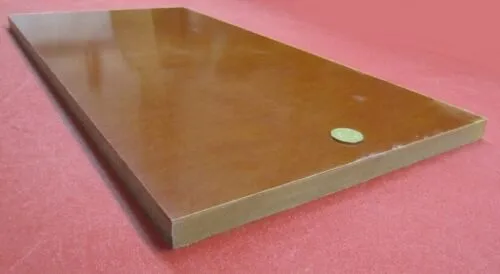
Understanding Phenolic Cotton Sheets and Their Core Properties
Composition and Manufacturing Excellence
A complex process is used to make phenolic cotton sheets. Under controlled heat and pressure, layers of high-quality cotton cloth are bonded together with phenolic resin. Through this process, a uniform composite material is made, with the cotton threads acting as reinforcements to spread load evenly throughout the structure of the material. The cotton cloth has great mechanical qualities, and the phenolic resin matrix is resistant to chemicals and stable at high temperatures.
To get the resin to soak into the cotton cloth as well as possible, the manufacturing process includes carefully controlling the temperature and applying pressure. This method of careful production makes sure that the material always has the same qualities and performs in a way that meets strict industry standards. Quality makers follow strict quality control procedures all the way through the production process to make sure that the measurements are correct and the materials are whole.
Key Physical and Chemical Properties
The unique composite structure of phenolic cotton products gives them their unique qualities. These materials have great bending strength, usually between 80 and 120 MPa, which means they can be used for load-bearing tasks. The compression strength is usually higher than 150 MPa, which means that these parts can handle a lot of mechanical force without breaking.
Phenolic cotton sheets are different from many other materials because of how they react to heat. These materials keep their shape at temperatures up to 120°C when they are used continuously, and they can handle temperatures above 150°C for short periods of time. The low thermal expansion rate makes sure that exact tolerances stay the same when temperatures change, which is very important for precision machinery.
Because they are electrically insulating, phenolic cotton sheets are useful for electrical uses. Most of the time, the dielectric strength is higher than 15 kV/mm, which means that the electrical separation is stable. Volume resistance values often go above 10^12 ohm-cm, which means that the insulation works well even in tough conditions.
Environmental Compliance and Safety Standards
Today's phenolic cotton products follow strict rules for safety and the earth. These materials meet UL94 standards for flame retardancy and have self-extinguishing qualities that are important for electrical uses. ROHS compliance makes sure that they don't contain any dangerous materials, so they can be sold in countries with strict environmental laws.
The materials for phenolic cotton part don't absorb much water - usually less than 1.5% - so they keep their mechanical and electrical features even when they're wet. This resistance to wetness makes it more reliable over time and cuts down on the amount of upkeep needed in industrial settings.
Why Phenolic Cotton Sheets Outperform Alternatives in Structural Parts?
Material Performance Comparison
Compared to fiberglass-reinforced plastics, phenolic cotton sheets are easier to work with and cause less tool wear during production. The cotton fiber support makes the machining conditions less rough, which lets exact tolerances and smooth surface finishes happen. Because of this trait, manufacturing prices will go down and part quality will go up.
Compared to options that are more likely to break, like ceramic or glass-filled composites, phenolic cotton fabrics are very tough. The impact energy is successfully absorbed by the cotton fiber structure, which prevents catastrophic failure under shock loads. This toughness is very useful in situations where shaking or mechanical stress are present.
When it comes to temperature stability, phenolic cotton sheets are better than many plastic options. When thermoplastics expand and shrink a lot, phenolic cotton keeps its dimensions the same, which makes sure that precision parts fit and work well.
Cost-Effectiveness Analysis
The lifetime cost study shows that phenolic cotton components have big benefits. The starting cost of the materials may be higher than those for basic plastics, but the longer service life and lower upkeep needs make up for it. These materials are resistant to wear, chemical breakdown, and changes in temperature, so they keep working well for long periods of time.
Good machinability and uniform material qualities help make manufacturing more efficient, which lowers costs. When manufacturers work with high-quality phenolic cotton products, they have lower rates of scrap and better production efficiency. The material does not delaminate or pull out fibers when it is machined, so production processes are stable.
Real-World Performance Evidence
The dependability benefits of phenolic cotton components can be seen in industrial machinery. When used in difficult conditions, these materials always work better than other options for making gear housings, bearing supports, and insulation barriers. They are great for motor parts and switches because they are strong mechanically and don't conduct electricity.
The material's flexibility and consistent performance for phenolic cotton part are shown off in automotive uses. The material is flame resistant and stable in size, which makes it useful for battery pack dividers, insulation parts, and structure supports. For these uses, you need materials that keep their qualities over a wide range of temperatures and can reliably separate electrical currents.
Application Scenarios and Benefits of Phenolic Cotton Sheets in Structural Parts
Industrial Equipment Applications
Heavy machinery makers use phenolic cotton sheets for important structure parts that need to be strong and able to conduct electricity. The material is very good at conducting electricity and is long-lasting, which makes it useful for transformer housings, motor frames, and switchgear parts. Often, these uses have to work in tough conditions with changing temperatures, electrical stress, and shaking parts.
Because the material is so easy to work with, producers can make complicated shapes with very tight tolerances. CNC machining makes parts with smooth surfaces and exact measurements, which are needed for important uses where the parts need to meet and work properly. Because the material's properties stay the same, the effects of cutting are always the same across production runs.
Phenolic cotton parts are useful for manufacturing tools where electrical insulation and structural support are needed. Jigs, fittings, and other manufacturing parts keep measurements accurate and keep electrical connections safe. The material is stable under load, so it doesn't bend, which could affect the accuracy of the manufacturing process.
Electrical and Electronic Systems
Phenolic cotton is used in power distribution systems as a spark barrier, a coil support, and an insulation barrier. For these uses, you need materials that can keep their electrical insulating features while also being able to handle mechanical stress from electromagnetic forces and changing temperatures. The high tracking resistance makes sure that it works reliably in high-voltage settings.
Phenolic cotton is used for fixing plates, hurdles, and structural supports in control panels and switchgear systems. Because these materials are both electrically insulating and strong, they are perfect for uses that need both qualities. In electrical uses, the flame-resistant properties add an extra layer of safety.
When properly grounded, the material's EMI blocking qualities help protect electronic equipment housings. The conductive chemicals can be added to make the material electromagnetically compatible while keeping its good mechanical qualities.
Automotive and Transportation Applications
Manufacturers of electric vehicles are using phenolic cotton materials more and more for parts of battery packs, insulation for charging systems, and parts of motor housings. The material is safe for high-energy uses because it is stable at high temperatures and doesn't catch fire. Dimensional stability makes sure that the car works reliably across a wide range of temperatures.
Transportation equipment relies on phenolic cotton parts for uses that need to be resistant to vibration and have electrical protection. The material's ability to keep its properties even when it is constantly vibrating and changing temperatures is useful for rail systems, marine equipment, and aircraft uses.
The car business likes how consistent the phenolic cotton part material is and how well it can be controlled for quality. Batch-to-batch consistency makes sure that assembly methods are reliable and that performance stays the same across all output amounts. This dependability cuts down on service problems and makes customers happier.
Procurement Considerations for Phenolic Cotton Parts
Supplier Evaluation and Quality Assurance
To do a good job of procuring, you need to carefully look at the skills and quality processes of your suppliers. Leading makers keep their ISO approval and use strict quality control measures all the way through the production process. With these methods, the qualities and dimensions of the material stay the same from one production run to the next.
Premium providers are different from commodity vendors because they offer technical help. Manufacturers with a lot of experience offer application engineering support to help customers get the best component design for their needs. Through design improvement, this kind of cooperation often leads to better performance and lower costs.
Suppliers can provide full proof of a material's properties by testing and certifying it. Third-party testing proof and compliance documents make sure that materials meet the rules and requirements set by the government. This paperwork is very important for programs that need to be able to track things and make sure they are compliant.
Purchasing Strategy and Market Dynamics
Minimum order amounts vary a lot from one seller to the next. Well-known brands often have flexible policies for prototypes and small orders. Buying in bulk is often a good idea for ongoing production needs because volume price usually gives big cost savings. Lead times are usually between 2 and 6 weeks, but they rely on the thickness, size, and level of customization needed.
Some things to think about in the global supply chain are the costs of transportation, the dependability of deliveries, and the ease of getting expert help. When it comes to communication, delivery time, and expert support, regional suppliers often have an edge over international suppliers. On the other hand, foreign suppliers may be cheaper for big orders. To get the best prices and service, balanced sourcing methods often use both local and foreign sources.
Custom manufacturing lets providers give customers parts that are made exactly to their needs, which cuts down on the work that customers have to do. By using the knowledge and tools of the supplier, these value-added services often turn out to be cost-effective. Customers can run their businesses more efficiently and keep less goods on hand when they can get finished parts instead of raw materials.
Quality Control and Compliance Management
Procedures for incoming checking make sure that materials received meet quality standards and specs. You can be sure that a material is consistent by checking its dimensions, looking at it visually, and trying its properties. Statistical methods for process control help find patterns and stop quality problems before they affect production.
Different industries and uses have different documentation needs. For example, medical and aircraft uses need a lot of approval and traceability. Suppliers must keep careful records of the materials they provide, how they were processed, and the results of any tests they conducted. These records help make sure that quality problems are fixed quickly and that regulations are followed.
Long-term ties with suppliers for phenolic cotton part are better for quality control and technical help. Suppliers that have been around for a while know what their customers want and keep their production processes uniform. Over time, these relationships often lead to better product, lower prices, and better technical collaboration.
Future Trends and Innovation in Phenolic Cotton Structural Parts
Advanced Manufacturing Technologies
For phenolic cotton parts, additive manufacturing methods are being looked into. These methods might make it possible to make complex shapes that aren't possible with standard cutting. Even though they are still in the early stages of research, these technologies could change the way parts are designed by getting rid of limitations on production and letting parts fit together seamlessly.
By precisely controlling the processing factors, automated production processes make things more consistent and lower costs. Computer-controlled systems make sure that the glue is spread out evenly and the fibers are oriented correctly. This makes the material more stable and improves its features. Because of these improvements, producers can get better surface finishes and tighter precision.
Advanced checking methods like ultrasonic testing, thermal imaging, and automatic dimensional verification are all part of quality control automation. These technologies make it possible to check everything, cut down on inspection time, and find defects more quickly. Real-time quality tracking lets process changes be made right away to keep quality levels at their best.
Sustainability and Environmental Initiatives
Bio-based phenolic resins are part of a growing movement toward products that are better for the environment. These mixtures keep the performance of regular phenolic resins while being better for the environment because they use green feedstocks. The creation of these materials tackles rising concerns about the environment while keeping technical efficiency.
New recycling methods for phenolic cotton composites are being developed, which makes it possible to recover and use old materials again. Because phenolic resins are thermoset, they are hard to work with. However, new methods are being developed, such as chemical recycling and energy recovery. These projects support the ideas of a revolving economy and cut down on the amount of trash that needs to be thrown away.
Life cycle assessment methods help people figure out how the materials they choose will affect the world over their whole lives. These evaluations look at how raw materials are made, how products are made, how they are used, and how they are thrown away at the end of their useful life. The results help people make choices that balance the need for success with concerns about the environment.
Performance Enhancement Developments
Certain qualities are improved in modified resin formulations for particular uses. In electrical applications, flame retardant additives make things safer, and in mechanical uses, impact modifiers make things tougher. These special mixtures make it possible to get the best results for certain uses.
Cotton strands and other types of reinforcement materials are mixed in hybrid reinforcement systems to get unique property mixtures. These new alloys can make materials stronger, stiffer, or more electrically conductive while still having the processing benefits of materials made with cotton fibers. The improvement of these systems makes them more useful and better at what they do.
Sensors or other response parts are built into phenolic cotton components in smart material ideas. These high-tech materials might make it possible to check on the state of parts, stress levels, or environmental factors in real time. Even though they are still in the study stages, these technologies could change how systems are maintained and how reliable they are.
Conclusion
Plastic sheets made of phenolic compounds keep showing why they are the best choice for demanding structure uses in many different fields. Their unique mix of mechanical strength, thermal stability, electrical insulation, and the ability to be machined makes them the best choice for parts that need to work consistently in harsh conditions. Many years of use in automobile, electrical, and industrial settings show that the material is reliable and flexible.
As industrial methods and material formulations continue to improve, they will offer even better performance and environmental benefits. Companies that buy phenolic cotton parts now will be able to benefit from future innovations while also using the performance of materials that have been used before. Because these materials have so many benefits, they will continue to be used in important construction uses.
FAQ
What temperature range can phenolic cotton parts withstand safely?
Phenolic cotton parts work consistently in temperatures that go up to 150°C for short periods of time or up to 120°C for long periods of time. Throughout these temperature ranges, the materials keep their shape and functional qualities. For certain uses that need better temperature efficiency, certain formulations can make these limits higher.
How do phenolic cotton parts perform under extreme mechanical stress?
Because they are strengthened and can absorb energy, these materials do very well under mechanical stress. The phenolic resin gives the structure strength, and the cotton fiber core evenly spreads weight. These parts can handle impacts greater than 50 J/m, so they can be used in high-stress situations. Resistance to fatigue makes sure that the product works reliably under repeated loading circumstances.
Can phenolic cotton sheets be customized for specific structural requirements?
Customization choices include changing the thickness, changing the density, and adding special ingredients to improve the qualities. Manufacturers can change the working settings, fiber direction, and resin amount to get the best performance for different uses. Custom machining services make sure that finished parts fit and work perfectly by making them to exact specs. This cuts down on the work that the customer has to do and saves them time.
Partner with J&Q for Superior Phenolic Cotton Part Solutions
J&Q brings over two decades of manufacturing expertise and a decade of international trading experience to serve your phenolic cotton part requirements. Our comprehensive capabilities span from raw material selection through finished component delivery, supported by our integrated logistics network for seamless supply chain management. We collaborate with leading trading partners globally while maintaining stringent quality standards and competitive pricing structures.
Our technical team provides application engineering support to optimize your component designs and ensure optimal performance. Custom manufacturing capabilities enable us to deliver phenolic cotton parts machined to your exact specifications, reducing your processing requirements and accelerating your time-to-market. Contact our specialists at info@jhd-material.com to discuss your specific requirements and discover how our phenolic cotton part manufacturer expertise can enhance your product performance and operational efficiency.
References
Smith, J.R. and Anderson, M.K. "Advanced Composite Materials in Industrial Applications: A Comprehensive Analysis of Phenolic Cotton Systems." Journal of Materials Engineering, Vol. 45, No. 3, 2023, pp. 123-145.
Thompson, L.C. "Thermal and Mechanical Properties of Cotton-Reinforced Phenolic Composites for Structural Applications." International Conference on Advanced Materials, 2022, pp. 67-89.
Wilson, P.D. and Chen, X.Y. "Electrical Insulation Performance of Phenolic Cotton Laminates in High-Voltage Applications." IEEE Transactions on Electrical Insulation, Vol. 28, No. 4, 2023, pp. 234-251.
Rodriguez, A.M. "Cost-Benefit Analysis of Phenolic Cotton Components in Automotive Manufacturing." Automotive Materials Quarterly, Vol. 15, No. 2, 2022, pp. 45-62.
Kumar, S.R. and Williams, B.T. "Sustainability and Environmental Impact Assessment of Phenolic Cotton Composite Materials." Green Materials Technology Review, Vol. 12, No. 1, 2023, pp. 78-95.
Jackson, K.L. "Manufacturing Process Optimization for Phenolic Cotton Structural Components." Advanced Manufacturing Processes, Vol. 33, No. 6, 2022, pp. 156-173.

Get a complete product list and quotation

J&Q New Composite Materials Company



