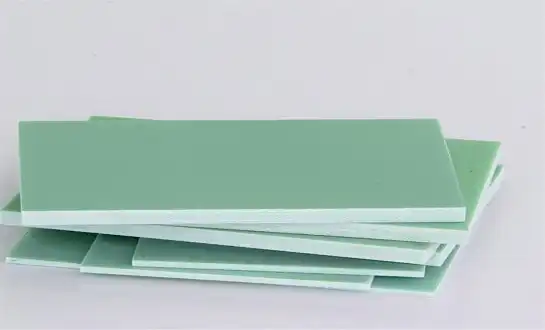
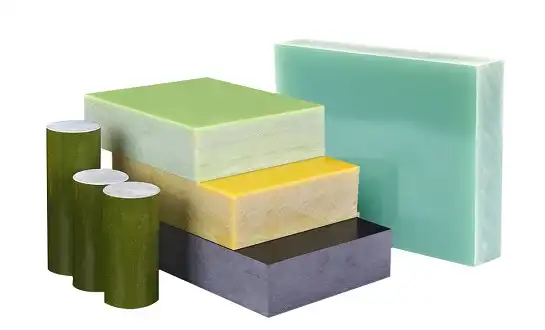
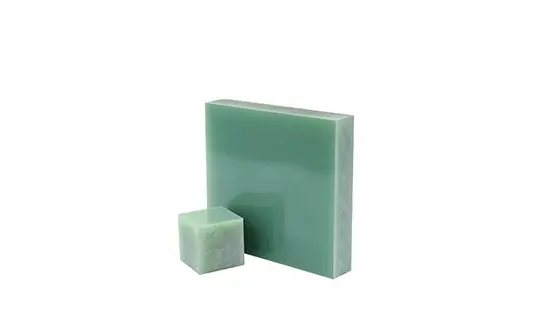
Why Halogen-Free FR4 is Becoming the New Industry Standard?
The move toward halogen-free FR4 sheet materials isn't just a passing fad; it's a sign of a fundamental change in how the electronics industry handles environmental responsibility and following the rules. Halogen-free versions get rid of bromine and chlorine from the resin system. This makes fires much less dangerous while keeping the mechanical strength and electrical performance that made traditional FR4 the main material used to make PCBs. Tougher global rules, corporate sustainability requirements, and growing demand from end users for safer, cleaner electronics in the automotive, power distribution, and consumer appliance sectors are all driving this change.
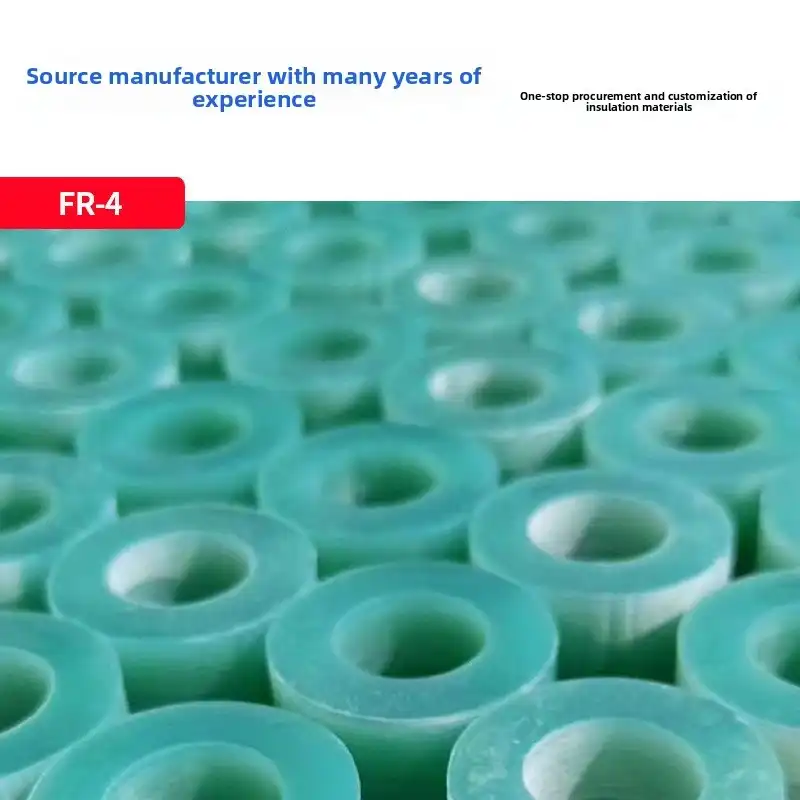
Understanding Halogen-Free FR4 and Its Core Properties
Chemical Composition Differences
The flame-retardant properties of traditional FR4 sheet come from halogenated compounds, mostly bromine-based additives. Alternatives without halogens use flame retardants based on phosphorus or nitrogen, which work in different ways to stop combustion. When these non-halogenated systems are put on fire, they don't give off harmful halogen gases, but instead form protective char layers. This new chemical design addresses long-standing worries about the release of dioxins and acidic gases during thermal decomposition. This makes the material much safer for everyone involved in making it and using it.
Electrical and Thermal Performance Characteristics
Modern formulations that don't contain halogens have dielectric constants that are about the same as standard epoxy laminates, which are usually between 4.2 and 4.6 at 1 MHz. The dissipation factor stays below 0.02, which means that there is almost no signal loss in high-frequency settings. Temperature resistance meets tough operational requirements, with glass transition temperatures above 130°C and continuous operating temperatures of up to 155°C. These standards are useful for a wide range of uses, from home electronics to industrial control systems that need to be able to handle changes in temperature and power.
Environmental Certifications and Fire Ratings
Compliance certifications accelerate adoption by a large amount. RoHS compliance gets rid of restricted substances from production processes, and REACH registration makes sure that all European supply chains have chemical safety documentation. The UL94 V-0 flammability rating confirms that the fire will go out on its own within ten seconds of the spark being extinguished. This is a very important specification for safety engineers who are designing power distribution equipment and battery management systems. These certifications make the process of getting regulatory approvals easier and lower the risk of noncompliance for multinational manufacturers.
Comparing Halogen-Free FR4 with Other PCB Materials
Performance Against Traditional FR4
The difference in performance between halogen-free and regular versions has shrunk a lot. In earlier generations, mechanical strength and moisture resistance were given up, which made procurement teams hesitant. The flexural strength of new formulations is the same as or higher than that of traditional epoxy laminates. Values above 415 MPa are maintained even after thermal aging. The amount of water absorbed stays below 0.15%, which keeps the dimensions stable in damp working conditions. This equalization gets rid of the performance penalty that made it harder to choose materials before.
Trade-offs with Advanced Laminates
Compared to polyimide or ceramic-filled composites, halogen-free FR4 sheet are much cheaper without sacrificing their usefulness for everyday tasks. Polyimide substrates are better at withstanding temperatures above 200°C, but they cost three to five times as much as regular epoxy materials. Rogers laminates work very well for RF applications at high frequencies, but they are hard to find around the world and take a long time to get. The best compromise is halogen-free FR4 sheet, which works well enough for 85% of electronic applications and doesn't cost too much to support mass production.
When compliance costs are taken into account, the cost-benefit equation becomes even more favorable. Manufacturers who use halogen-free materials don't have to do extra tests, get regulatory approvals faster, and may be less vulnerable to liability. Procurement strategists know that the cost of the materials is only one part of the total costs of ownership. They also know that reducing regulatory risk is a big hidden value.
Market and Technical Drivers Accelerating Adoption
Regulatory Pressures Across Global Markets
The first rules were set by directives from the European Union, but now rules must be followed all over the world. North American standards are affected by California's Proposition 65 listings, while Chinese GB standards are referring to halogen content limits more and more. These overlapping regulatory frameworks put pressure on manufacturers who sell their goods in international markets, who find it easier to deal with uniform material specifications than with variations that happen in different regions. Instead of keeping track of multiple versions of the bill of materials, engineering teams would rather have a single source for solutions that meet the strictest global standards.
Fire Safety and Toxicity Concerns
Electrical fires show the real-world effects of the choices we make about things. When halogenated materials catch fire, they release hydrochloric and hydrobromic acids that damage nearby equipment and make it dangerous to evacuate. Power distribution facilities and data centers choose insulation materials that don't contain halogens so that fires cause less damage to other areas. The lower toxicity profile helps with both worker safety and business continuity goals, which are very important for facility managers and risk assessment teams to think about.
Long-Term Cost Advantages and ESG Positioning
Material specifications go above and beyond what is required by law because of environmental commitments made by businesses. Major electronics brands put out guidelines for their suppliers that say all of their supply chains must use materials that don't contain halogens. This makes tier-two and tier-three manufacturers follow the same rules. For businesses that want to improve their ESG profiles, switching to halogen-free products is a clear way to make progress toward their sustainability goals. There is a business case for environmental leadership that goes beyond compliance. Brand differentiation and customer preference are becoming more and more important.
Adoption patterns are also affected by insurance issues. Risk underwriters know that less fire toxicity is a big risk factor that could change the terms of coverage for places that handle a lot of electronic parts. This aspect of money makes the total cost calculation more complicated, which is better for materials without halogens.
Procurement Insights: Sourcing Halogen-Free FR4 for Global B2B Clients
Supplier Evaluation and Certification Verification
To choose qualified suppliers for FR4 sheet, you need to check more than just what the marketing says. Managers in charge of buying things should ask for full material safety data sheets, test reports from a third party that confirm UL94 ratings, and proof that the process is being watched all the time. Established suppliers use ISO 9001 quality systems and batch coding systems to make it easy to track materials. When dealing with problems in the field or answering questions from regulators, being able to trace the history of a piece of material becomes essential.
In the past few years, major laminate manufacturers have added a lot more halogen-free products to their lines. This has made materials easier to find and reduced the variability of lead times. This improvement in the supply chain lowers the risk of buying things that came with earlier stages of adoption.
Logistics Considerations and Order Flexibility
Minimum order quantities vary a lot from one supplier to the next, ranging from full shipping container loads to smaller lots that can be used for prototype development or other unique uses. Custom sizing and CNC machining services are useful for buyers who need exact measurements or tight control over tolerances. We have seen a rise in demand for just-in-time delivery plans that keep production going while lowering the costs of keeping inventory on hand. Strategies for buying things should weigh the costs of combining orders against the risk of having too much inventory.
Managing lead times requires clear communication about when to make things and how to ship them. Suppliers who handle their own transportation can more reliably coordinate delivery times than those who use third-party freight forwarders. Because we handle our own logistics, we can clearly track shipments and make changes to schedules quickly when production needs change without warning.
Implementation Strategies and Best Practices for Procurement Managers and Engineers
Evaluating Current PCB Requirements
The first step in switching to materials without halogens is to carefully go over the specifications. Teams of engineers should look at the current needs for electrical performance, thermal operating profiles, and mechanical stress conditions. Standard FR4 sheet specifications say that halogen-free versions can be used in most applications that work below 150°C without any changes to the design. If the environment is very hot or uses a lot of power, you might need to do more thermal modeling to make sure the performance margins are correct.
The thickness of the material and the weight of the copper are the same for both standard and halogen-free versions, which makes the qualification process easier. Existing PCB fabrication tools and processing parameters usually only need to be slightly changed, which lowers the cost and risk of implementation.
Collaboration with PCB Manufacturers
To make material transitions go smoothly, you need to work closely with people who make circuit boards. PCB manufacturers who know how to process without halogens can spot problems before they happen. To get the best results, you may need to make small changes to the drilling parameters, the lamination cycle profiles, and the surface preparation techniques. Setting up these details of the processing during the prototype stages keeps production from having to stop for expensive reasons.
Quality assurance protocols should include electrical testing confirming dielectric performance, thermal stress testing validating solder joint reliability, and environmental exposure testing showing that the product is resistant to moisture. Before committing to mass production, these steps of validation give you more confidence.
Partnership with Reliable Material Suppliers
Long-term relationships with suppliers have benefits that go beyond just buying things once. Experienced suppliers offer technical support during the qualification of materials, help with failure analysis when problems arise, and let you know ahead of time about changes in the supply chain. We keep detailed technical documentation to help customer engineering teams during the phases of developing specifications and proving production.
We can meet the specific needs of companies that make electrical equipment, industrial machinery, and auto parts because we have been in business for 20 years and have done business internationally for 10 years. Because we've developed integrated logistics capabilities, procurement teams only need to talk to one person from the time they make their first inquiry until the final delivery.
Conclusion
Halogen-free FR4 sheet materials have gone from being niche products to standard specifications thanks to a mix of business, technical, and regulatory factors. Since they perform the same as traditional materials, there are no longer any reasons not to use them. Plus, they are better for the environment and follow the rules, which makes them a strong business case. If procurement professionals are aware of this change in the industry, they can get their companies ahead of changes that are required by law, giving them a competitive edge through early adoption. The supplier landscape has grown up a lot, making it easier to get qualified materials and making it easier to set up flexible ordering plans that meet a wide range of production needs.
FAQ
Does halogen-free FR4 provide equivalent fire safety compared to traditional flame-retardant materials?
UL94 V-0 ratings for halogen-free formulations are the same as those for conventional brominated systems, proving that they have the same self-extinguishing performance. The main difference can be seen in the byproducts of combustion: halogen-free materials make less corrosive smoke and don't create dioxins. This decrease in toxicity is especially helpful in enclosed spaces where smoke damage and safety during evacuation are major concerns. The fire safety performance meets all standard requirements and provides better health and environmental safety.
Can existing PCB fabrication processes accommodate halogen-free FR4 without equipment modifications?
Halogen-free laminates can be made with standard PCB manufacturing equipment with only minor process changes. The drilling speeds, lamination temperatures, and chemical processing parameters all stay in the normal ranges. Some fabricators make small changes to the drilling parameters to work with a certain type of resin, but these changes are normal and can be made through process control. The ability to work with existing fabrication infrastructure makes it much easier to adopt and lowers the costs of implementation.
How do costs compare between halogen-free FR4 and premium materials like Rogers laminates or polyimide substrates?
Halogen-free epoxy laminates keep their prices about the same as regular FR4, usually 5–15% more expensive. This puts them a lot lower than polyimide materials, which cost 300–400% more, and Rogers high-frequency laminates, which cost about the same amount more. The cost advantage is especially important when a lot of products need to be made because the costs of materials have a direct effect on how competitive the products are. Halogen-free options meet regulatory requirements and are better for the environment, but they are more expensive than exotic substrate materials.
Ready to Upgrade Your Insulation Materials?
In addition to making high-performance insulation sheets for more than twenty years, J&Q has also been trading internationally for more than ten years, working with companies that make electrical equipment, build industrial machinery, and sell auto parts. Our halogen-free FR4 sheet supplier can make custom sizes, use precise CNC machining, and provide full material traceability documentation to help you meet regulatory requirements. We offer single-source convenience from spec consultation to final delivery through our integrated logistics operations. Get in touch with our technical team at info@jhd-material.com to talk about your specific application needs and ask for material samples that show the quality benefit of working with an experienced partner who wants you to succeed.
References
National Electrical Manufacturers Association. (2023). "NEMA LI 1-2023: Industrial Laminating Thermosetting Products Standards." NEMA Standards Publication.
International Electrotechnical Commission. (2022). "IEC 61249-2-21: Materials for Printed Boards and Other Interconnecting Structures—Halogen-Free Materials." IEC Technical Committee 91.
Underwriters Laboratories. (2023). "UL 94: Standard for Safety of Flammability of Plastic Materials for Parts in Devices and Appliances." UL Standards & Engagement.
European Chemicals Agency. (2023). "REACH Regulation (EC) No 1907/2006: Guidance on Requirements for Substances in Articles." ECHA Publication.
Institute for Printed Circuits. (2022). "Environmental Considerations in PCB Material Selection: A Technical Whitepaper on Halogen-Free Laminates." IPC Emerging Technology Series.
Society of Automotive Engineers. (2023). "SAE J3092: Environmental Requirements for Automotive Electronics Materials." SAE International Standards.

Get a complete product list and quotation
J&Q New Composite Materials Company