Thermal Endurance Comparison: G11 vs. G10 Fiberglass Plates
When comparing how well the G11 fiberglass plate and G10 fiberglass plates hold up against high temperatures, it is clear that the G11 fiberglass plate does better. At temperatures up to 180°C, G11's structure stays strong and its electrical insulation stays in place. G10, on the other hand, stops working around 140°C. You can tell the difference of 40°C because G11's epoxy resin formula has been improved, making it more heat-resistant without weakening it. It is very important for engineering managers and procurement specialists working in areas like power distribution, automotive insulation, and industrial machinery to choose the right material based on its thermal performance. This has a direct impact on the reliability, safety, and operational longevity of equipment in demanding situations.
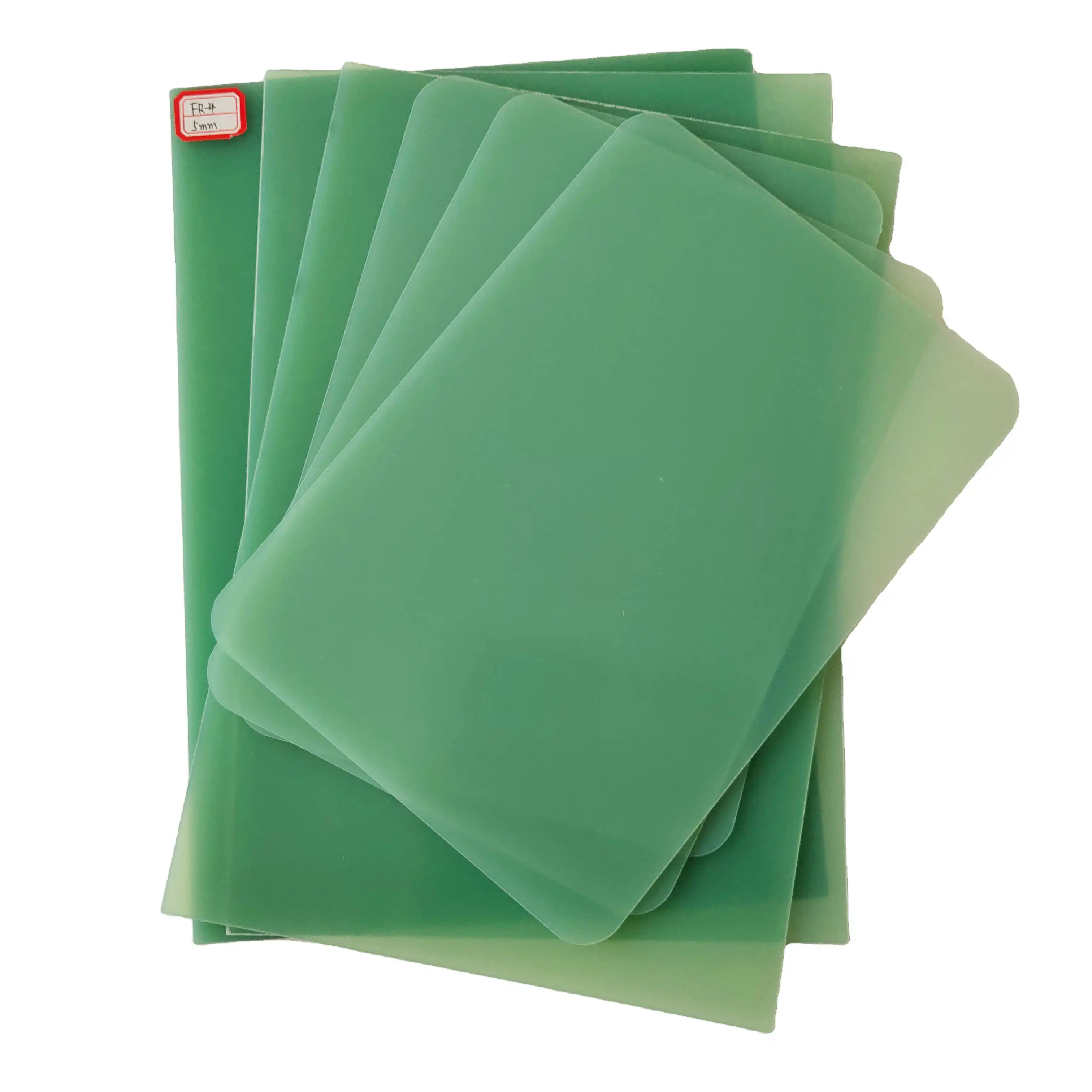
Understanding G11 and G10 Fiberglass Plates
Composition and Manufacturing Fundamentals
Both are made of layers of tightly woven glass cloth, which makes them strong. It's magic when the epoxy resin gets into every fiber during the impregnation stage. The epoxy resin system used by G10 is a standard bisphenol-A system that cures under controlled heat and pressure. This makes a dense laminate that meets the standards of NEMA G-10. The G11 fiberglass plate has a different epoxy mix with better cross-linking and thermal stabilizers. This makes it work better and meet NEMA G-11 standards.
Glass cloth sheets that have been soaked in resin are stacked on top of each other and heated and pressed under pressures greater than 1,000 psi. It makes sure that the resin is spread out evenly and gets rid of any empty spaces. It takes longer for G10 to cure and the temperature changes during the curing process are different for G11. G11 needs stricter rules to get the better thermal properties it has. These small differences in production have a direct effect on batch consistency. This is a problem for companies that use just-in-time inventory systems to sell cars and appliances.
Core Material Properties at a Glance
When we look at tensile strength, G11 gets around 380 to 410 MPa, while G10 gets around 310 to 345 MPa. In other words, it will be better able to handle machinery that shakes and shakes. The dielectric strength tests show that both materials are very good at keeping electricity from moving, but G11 is more consistent across a wider temperature range in how well it keeps electricity from moving. Even when G11 gets close to its thermal limits, the volume resistivity doesn't change. After being at 120°C for a long time, on the other hand, G10 starts to lose its value.
Dimensional stability is very important for CNC tasks that need to be precise. Both materials don't expand or contract much when heated or cooled, but G11's improved resin matrix holds its shape better. Chemical resistance to mineral oils and weak acids seems to be about the same for both grades. On the other hand, G11 seems to work a little better with harsh solvents that are used for industrial cleaning.
Thermal Endurance Performance Comparison
Maximum Operating Temperature Thresholds
The main difference can be seen in the continuous operating temperature limits. The fact that G10 is reliable up to 140°C means it can be used for everyday electrical tasks and medium-duty machine parts. During times of high demand, though, people who make transformers and work with power distribution often have to deal with hot spots that are bigger than this line. In this case, the G11 fiberglass plate comes in handy because it stays mechanically and electrically sound for a long time at temperatures of up to 180°C.
The temperature ratings here for G10 fiberglass plate are for duty cycles that last a long time, not spikes that only last a short time. There's a chance that short trips to 200°C won't destroy G11 right away, but excessive heat stress makes it age faster. When you know the difference between these two terms, you can make sure that your designs have the right amount of safety. Accelerated aging tests show that after 10,000 hours at 170°C, G11 still has more than 80% of its original flexural strength, but G10 is very fragile at the same temperatures.
Thermal Cycling Durability and Structural Integrity
Applications rarely keep temperatures the same in the real world. When the load changes, switchgear goes through thermal cycling. Auto parts go through engine start-stop cycles, and industrial machinery goes through temperature changes with the seasons. It creates interface stresses between the glass fibers and the resin matrix when the material grows and shrinks. Because G11 uses more advanced resin chemistry, the bonds between the fibers and the matrix are stronger. This reduces the microcracking that leads to delamination in the first place.
It's good that G11 can handle thermal shock, which is when temperatures change quickly because of a fault or an emergency shutdown. Since G11 can go from room temperature to 150°C several times in just minutes, it is less likely to wear down due to heat than other materials. Coil insulation in dry-type transformers and arc barriers in distribution panels will last longer because they are tougher. It's not just the materials that cost a lot when these things break; downtime for the equipment and labor also add to the total cost of replacement.
Impact on Electrical Insulation Performance
It is important to keep things safe around electricity and heat because dielectric properties break down in heat. When the temperature goes up, leakage currents go up and insulation resistance goes down. The dielectric strength of G10 stays good in the temperature range that it is recommended for, but the differences get much smaller above 130°C. Even when it's very hot, the G11 fiberglass plate keeps its higher insulation resistance values. This gives electrical engineers who don't like taking chances the extra safety they need when things go wrong.
It is better for materials with higher tracking resistance, which means they can stop conductive paths from forming when the surface is dirty. When insulators pick up dust, moisture, or conductive pollutants, the surface wears down more slowly because G11 can handle more heat. This trait is useful for installing switchgear outside and in industrial settings where cleaning can't always be done on a regular basis.
Beyond Thermal Endurance - Comparing Key Properties of G11 and G10
Mechanical Strength Advantages in Demanding Applications
Builders often pick G10 fiberglass plate materials for industrial equipment based on how much weight they can hold. The tensile and compressive strengths of G11 are higher, which means that cross-sections can be thinner and still do the same job. This weight loss is important for aerospace uses and machines that spin, since mass changes the dynamic balance. Because it has a higher flexural strength, structural insulation frameworks can have longer spans that are not supported. This means they don't need as many extra mechanical supports.
Impact tests show that G11 can take in more force before it breaks. This makes it a better choice for parts that could get broken during installation by vibration, shock, or bad care. This toughness benefit is used by gear makers to make parts that don't wear out easily and have to handle repeated contact stresses. Because the material doesn't wear out easily under cyclic loading, fixtures and motor mounts for appliances that are used all the time can last longer before they need to be serviced.
Electrical Performance Metrics That Matter
How well signals work at high frequencies depends on the values of dielectric constants. They are both good for electrical insulation and PCB substrates because they have low dielectric constants. But G11 values are more stable over a wider range of temperatures and frequencies. Because changes in capacitance can affect how well a circuit works, this consistency is important when making precise electrical things.
The resistivity tests on both the volume and surface of both materials show that they are good insulators. But because G11 can handle higher temperatures, these properties will still work reliably in situations where G10 would be close to breaking down. Based on the time it takes for G11 to fail under high-voltage tracking conditions, it has 15% to 20% better arc resistance than G10 in standard testing procedures. These kinds of safety margins are very important in high-voltage switchgear, where a failure in the insulation can make the whole thing very bad.
Chemical and Environmental Durability
How much water is absorbed changes the electrical and dimensional stability. It's rare for G10 or G11 to take in more than 0.2% of their own weight in water after 24 hours of being submerged. But G11's denser resin matrix does a better job of keeping moisture out when it's been damp for a long time. You can use this better resistance to moisture in marine settings and tropical industrial settings because it helps keep the resistance to insulation for a long time.
Solvent resistance can change when different chemicals are added. For the most part, harsh cleaners and industrial fluids won't change the size or damage the surface of G11. This makes the parts last longer in factories where cutting fluids, hydraulic oils, or solvents used to remove grease come into contact with the insulators during work. Chemical resistance testing with common industrial chemicals confirms that G11 is more compatible with a wider range of materials. This makes it less likely that the chemical contact that wasn't supposed to happen will cause it to fail too soon.
Conclusion
You can choose between G11 and G10 fiberglass plates based on how well the material fits your needs. The G11 fiberglass plate is much more resistant to heat, stronger, and more stable electrically than other plates. Because of this, it is the best choice for electrical equipment that works in hot places, power distribution systems, and tough industrial machinery. Even though G10 is still a good deal for light-duty tasks, G11 is a better choice because it has higher performance margins that protect against things breaking down too soon and extend service life. When deciding what to buy, you should compare how much the materials cost at first to how much they are worth after they are used up. You should also think about how the equipment's thermal performance, mechanical durability, and electrical dependability affect how long it works and how happy the customers are with it. When engineering teams know about these differences in materials, they can confidently pick the right grade, which makes things work better and costs less.
FAQ
What distinguishes G11 from G10 in thermal applications?
Up to 180°C, the G11 fiberglass plate can handle heat, which is about 40°C more than the G10's limit of 140°C. This is because G11's epoxy resin formula has been improved, making it more stable at high temperatures and less likely to break down after being heated for a long time.
Can G11 replace FR4 in high-temperature PCB applications?
G11 and FR4 are both PCB substrates, but FR4 has flame-retardant additives that make it less likely to catch fire than G11. Because G11 is stronger and can handle higher temperatures better than FR4, it is better when structural needs are higher than FR4's. UL94-certified applications, on the other hand, need to check the flame retardancy separately.
What thickness options are available for industrial applications?
Most sheets are between 0.5 mm and 50 mm thick, and common gauges are kept in stock so they can be sent out quickly. Custom thickness grinding can make parts the exact size needed for certain uses, but there may be a minimum order quantity that needs to be met. This depends on how complicated the specifications are and how quickly the parts need to be made.
How does moisture affect long-term performance?
It's rare for either material to absorb more than 0.2% of its own weight in water. The denser resin matrix in G11 is a little better at keeping water out, which helps the material keep its shape and electrical insulation properties even if it gets wet sometimes or stays wet for a long time.
Partner with J&Q for Reliable G11 Fiberglass Plate Supply
Since more than twenty years ago, J&Q has been making insulating materials. For more than ten years, they have also been trading with other countries, which has helped companies around the world make electrical equipment, industrial machinery, and power plants. We have G11 fiberglass plate inventory in stock that meet NEMA standards. They also come with full UL and RoHS compliance paperwork as well as full test reports that prove their thermal endurance, dielectric strength, and mechanical properties. We keep our production flexible so that we can meet your exact thickness needs. We also offer CNC machining and precision cutting so that you can get parts that are ready to be put together.
We take care of all of your logistics needs, from placing an order to delivering it. With us, you only have to deal with one company. This keeps you from having to coordinate with several vendors. You can get help from engineers to figure out what grade and thickness of material will work best for your temperature and strength needs. The technical team at info@jhd-material.com can help you with your project needs, give you material datasheets, or get you quotes from a dependable G11 fiberglass plate supplier that wants your business to succeed. We all know that decisions about procurement have to balance the need for performance with delivery dates and budget limits. All three of these are taken into account by our responsive service model so that you can be the best at what you do.
References
National Electrical Manufacturers Association, "Industrial Laminating Thermosetting Products Standard," NEMA LI 1-1998, Washington, DC, 1998.
Smith, Robert and Johnson, Michael, "Thermal Aging Characteristics of Epoxy-Glass Laminates in High-Temperature Electrical Applications," Journal of Materials Engineering and Performance, Vol. 28, No. 4, 2019, pp. 2145-2158.
International Electrotechnical Commission, "Specifications for Industrial Rigid Laminated Sheets Based on Thermosetting Resins for Electrical Purposes," IEC 60893-3, Geneva, Switzerland, 2020.
Williams, Patricia, "Comparative Analysis of Dielectric Properties in Glass-Reinforced Epoxy Composites Under Thermal Stress," IEEE Transactions on Dielectrics and Electrical Insulation, Vol. 26, No. 3, 2019, pp. 815-822.
Anderson, David and Chen, Wei, "Mechanical Property Retention of Thermosetting Composite Laminates During Extended Thermal Exposure," Composites Science and Technology, Vol. 172, 2021, pp. 98-107.
Underwriters Laboratories, "Polymeric Materials - Industrial Laminates, Filament Wound Tubing, Vulcanized Fibre, and Materials Used in Printed-Wiring Boards," UL 746E Standard, Northbrook, IL, 2018.

Get a complete product list and quotation

J&Q New Composite Materials Company



