Why G10 is the Industry Standard for CNC-Machined Cryogenic Support Structures?
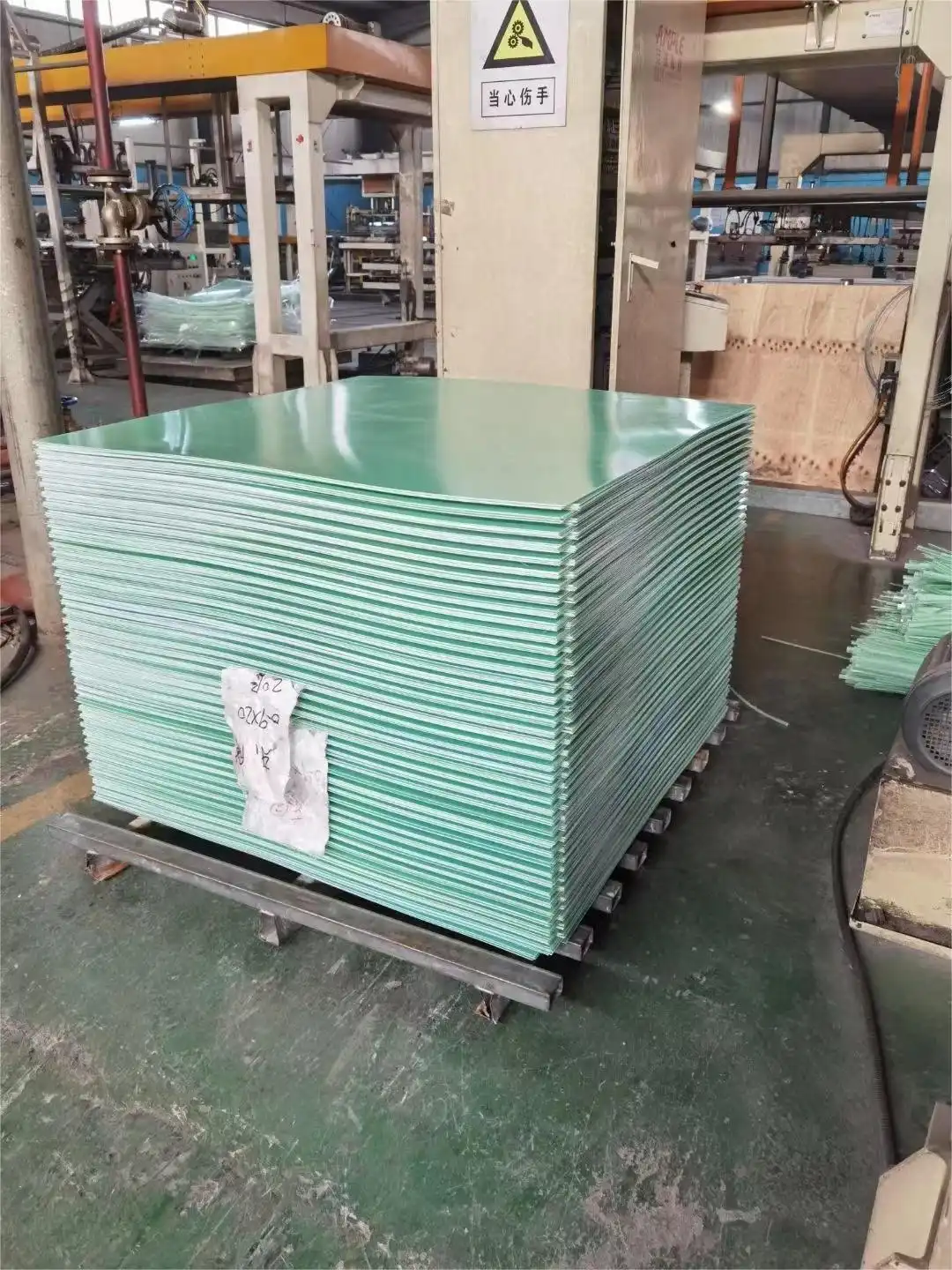
The G10 sheet is now the standard for CNC-machined cryogenic support structures because it keeps its mechanical strength at very low temperatures, expands and contracts very little, is very good at insulating electricity, and is easy to machine. When exposed to liquid nitrogen or helium, this glass-epoxy laminate keeps its structural integrity without becoming weak. Its low coefficient of thermal expansion also stops changes in size that could damage delicate cryogenic systems. Because the material can be used with precise CNC production, engineers can make complicated shapes with very tight tolerances that are needed for current cryogenic uses in research facilities, power plants, and advanced manufacturing.
Understanding the Challenges of Cryogenic Support Structures
Extreme Thermal Insulation Requirements
Support frames for cryogenic systems need to keep heat flow to a minimum while also carrying heavy loads. The difference in temperature between the outside world and cryogenic fluids puts steady heat stress on parts of the structure. High thermal conductivity materials let more heat into cold tanks, which raises the rate of boil-off and the cost of running the business. As a result, most metals and high-conductivity materials can't be used as cryogenic supports because they can't keep heat out without losing their ability to hold weight.
Mechanical Strength at Ultra-Low Temperatures
When cooled to cryogenic temperatures, many industrial materials lose or gain important properties. Metals break easily, plastics stop being flexible, and composites can separate. In cryogenic uses, the supports for structures must keep their tensile strength, resistance to compression, and hardness when hit from above 200°C. These problems are made worse by thermal switching between room temperature and cryogenic conditions, which can lead to fatigue breakdowns in materials that don't work well at low temperatures.
Electrical Insulation and Safety Concerns
For electrical equipment to work in cryogenic settings, it needs strong shielding that keeps its dielectric strength at all temperatures. To keep equipment from breaking down or leaking current, cold pumps, superconducting magnets, and monitoring systems all need to be electrically isolated. Moisture absorption is a major cause of failure because even a small amount of water can freeze and make electrical paths. When you add up the needs for electrical insulation, mechanical strength, and temperature resistance, you get a small range of materials that can be used for cryogenic structure uses.
Core Properties of G10 that Make It Ideal for Cryogenic Supports
Fiberglass Epoxy Laminate Composition
G10 sheet is made of continuous fiber glass cloth that has been mixed with epoxy resin and then pushed together with heat and pressure until the thermosetting resin hardens completely. The production process makes a composite material with glass threads that give it tensile strength and dimensional stability and an epoxy matrix that spreads out the loads and holds the structure together. Unlike phenolic laminates or thermoplastic composites, the epoxy resin system in G10 keeps its cross-linked molecular structure even when temperatures get close to zero degrees. This keeps many other materials from becoming weak.
The glass support gives the structure great mechanical qualities that don't change even when the temperature is very high or very low. Material testing shows that G10's compressive and tensile strengths go up as temps go down, which is the opposite of what most metals and unreinforced plastics do. Because of this temperature-strength link, fiberglass epoxy laminates are perfect for use in cold structures where other materials would fail horribly.
Dimensional Stability and Low Thermal Expansion
G10 has a coefficient of thermal expansion of about 14–16 × 10⁻⁶ per degree Celsius perpendicular to the laminations. This is much lower than most industrial plastics and about the same as some aluminum alloys. This small amount of stretching and shrinking during temperature cycle stops the size changes that could cause sensitive cryogenic parts to become out of alignment or stress concentrations to form in assemblies. Precision cryogenic systems depend on this ability to guess dimensions to keep alignment errors of a thousandth of an inch even when temperatures change by hundreds of degrees.
Because layered composites are not uniform, engineers can arrange the layers of material in a way that gives the best thermal expansion properties in key dimensions. CNC cutting makes it possible to precisely line the material while making a part, which makes sure that the expansion coefficients meet the needs of the system. This design freedom is a big plus over isotropic materials, where the expansion of heat affects all measurements the same.
Moisture Resistance and Chemical Compatibility
G10 absorbs less than 0.1% of its weight in water, so it doesn't fail in cold uses because of moisture. When the epoxy glue is fully cured, it forms a thick matrix that water can't get through. This means that the electrical and mechanical properties stay the same no matter how much humidity was present before cooling. This resistance to wetness makes sure that G10 parts keep their dielectric strength and mechanical integrity even when the temperature changes, without the risk of ice forming inside the material.
Chemical compatibility makes G10 last longer in cryogenic systems that are constantly exposed to cleaning agents, process gases, and cryogenic fluids. The substance is very strong and doesn't grow, soften, or lose its surface when exposed to liquid nitrogen, liquid helium, hydrogen, and common industrial chemicals. This chemical stability cuts down on upkeep needs and increases the time between replacements of parts.
CNC Machining Advantages for G10 Cryogenic Supports
Precision Fabrication of Complex Geometries
With computer numerical control cutting, G10 sheet raw materials can be turned into complex support systems with tolerances that can't be reached by hand. For cryogenic uses, mounting brackets need to have exact hole patterns, thermal separation standoffs need to have certain shapes, and structural parts need to have complicated three-dimensional features. These designs are made by CNC routers, mills, and lathes with consistency measured in ten-thousandths of an inch. This makes sure that every part meets strict size requirements that are necessary for the system to work.
Because glass-reinforced materials are rough, they need special cutting tools and rules. Carbide and diamond-coated cutting tools keep their sharp edges over long production runs, and preset tool tracks keep the edges from delaminating at the entry and exit places. When you use the right cutting speeds and feed rates, you can keep the resin from burning and get clean edges that don't need many extra steps to finish.
Enhanced Surface Finish and Structural Integrity
The surface finishes that come from CNC cutting processes make G10 cryogenic supports look better and work better. When surfaces are made to be smooth, they reduce stress concentrations that could start cracks that spread when temperatures change. The controlled cutting environment gets rid of the rough edges, torn fibers, and resin smearing that come with cutting by hand. This makes it possible to make parts that meet the high quality standards needed for crucial cold uses.
Optimized tool tracks spread cutting forces evenly across the structure of the material. This keeps the laminate's integrity without causing the resin layers to separate. This protection of structure makes sure that machined parts keep all of the mechanical qualities of the base material, so they work reliably for as long as they are used. In real life tests, precision-machined G10 supports always do better than options that were made by hand in both static load tests and thermal pedaling endurance trials.
Customization Flexibility and Production Efficiency
Modern CNC machines allow for quick prototypes and design improvement processes that speed up the creation of products for specific cold uses. Engineers can try out different support arrangements, improve load distribution, and make the heat separation work better without having to buy expensive tools or wait for long production lead times. This design freedom is very helpful when making custom solutions for one-of-a-kind cold systems where standard parts can't meet certain performance needs.
The efficiency of production goes up smoothly from small amounts for prototypes to large production runs. Once CNC programs are proven to work, companies can make many runs of the same parts and be sure that the quality and dimensions are always correct. This repeatability solves important buying problems related to differences between batches and reliable long-term supply for current projects and spare parts stocks.
Comparative Analysis: G10 vs. Alternative Materials for Cryogenic Supports
G10 vs. G11 High-Temperature Grade
When it comes to machinability, G10 sheet is better than G11. It has better edge quality after cutting and less tool wear during CNC processes. This processing benefit means lower prices and faster production cycles, which further solidifies the material's place as the most cost-effective material for cryogenic structural parts that don't need to work at high temperatures.
G11 has better performance at high temperatures than G10, with constant operating rates close to 180°C compared to 130°C for G10. However, this benefit doesn't matter in cryogenic uses. At very low temperatures, both materials have similar mechanical properties. However, G11 is much more expensive than the other material and doesn't offer any real performance gains for cold support structures. The higher price of G11 is usually not worth it unless certain high-temperature parts of a system need its higher thermal grade.
G10 vs. PTFE and Fluoropolymer Alternatives
Polytetrafluoroethylene and other fluoropolymers are very good at resisting chemicals and having low friction, but their mechanical qualities aren't good enough for solid cryogenic supports. At room temperature, PTFE shows cold flow under steady loads. This problem gets worse in cryogenic settings, where the material becomes more brittle. Although PTFE is more chemically neutral than G10, its compressive strength is only about a tenth of G10's. This means that it can't be used for load-bearing purposes.
Another important difference is dimensional stability. Because PTFE has a high rate of thermal expansion, its dimensions change a lot when the temperature changes, which could make it harder for precision cryogenic systems to keep things lined up. The material also needs special machining methods because it bends easily when cut. This makes it more expensive to make and limits the number of shapes that can be made, compared to simple CNC making of glass-epoxy laminates.
G10 vs. PEEK Engineering Thermoplastic
When it comes to industrial thermoplastics, polyetheretherketone has great mechanical qualities and temperature resistance, but the material costs tens or even hundreds of times more than G10. PEEK is more flexible at very low temperatures than many other polymers, but it is still weaker than fiberglass epoxy laminates in both tensile and compression strength. The cost problem with PEEK is especially noticeable in bigger structure parts, where the amount of material used determines the total cost.
The thermal conductivity of PEEK is higher than that of G10, which makes it less useful as a thermal separation material in cryogenic support uses. The substance also absorbs more water than epoxy laminates that have been properly sealed, which could cause problems in places with a lot of wetness before they are frozen. PEEK is not a general option for G10 in cryogenic structural systems because of its performance and cost. Instead, it is a specialized answer for narrow uses.
Best Practices for Specifying and Procuring G10 CNC-Machined Cryogenic Supports
Clear Specification Communication
For a purchase to go well, it needs detailed technical specs that spell out size requirements, tolerance bands, surface finish standards, and material certifications. Engineering models should clearly show which measurements are important and how tight tolerances affect system performance. This way, makers can make sure that quality control resources are used correctly. To make sure that the basic properties of materials from different suppliers and output lots are the same, specs should refer to NEMA LI 1-1998 standards for Grade G10 sheet.
Vendor Selection Criteria
Finding sources who have experience with both G10 machining and cryogenic uses makes the buying process much more successful. Suppliers should have special cutting tools for working with glass-reinforced composites. These should be carbide- or diamond-coated so that the dimensions stay accurate during production runs. Suppliers can give helpful engineering feedback during the design optimization stages if they have experience with thermal isolation components and know how to work in cold settings.
Quality control methods are very important for making sure that important cryogenic parts work properly. Suppliers that are approved to ISO 9001 or a similar quality standard have standardized ways of controlling the production process, inspecting the work, and keeping records that make sure the quality of the parts is always the same. Coordinate measuring tools, surface finish tests, and material certifications should all be normal services that certified vendors give to make sure that the dimensions are correct.
Lifecycle and Maintenance Considerations
When built and fitted correctly, G10 cryogenic supports usually have service lives measured in decades. The material doesn't break down easily when it comes to wear, chemical breakdown, and temperature cycling, which are some of the most common ways that other materials fail. When figuring out the total cost of ownership, procurement planning should take this longer service life into account. This is because the higher original material costs may be balanced out by the lower number of replacements and upkeep intervals.
As part of routine inspections, you should look for surface cracks, mechanical damage, or signs of electrical tracking across insulated surfaces. Even though G10 typically keeps its properties over its service life, mechanical impacts during maintenance tasks or unplanned working conditions can damage parts. Setting up inspection plans and replacement standards based on visual condition assessment helps make the system more reliable without replacing parts too soon.
Conclusion
To become the standard for CNC-machined cryogenic support structures, G10 sheet glass-epoxy laminate has to have both better material qualities and better production benefits. The material's ability to keep its strength at very low temperatures, its low thermal expansion, its excellent electrical insulation, and its resistance to moisture all make it a good choice for designing cryogenic systems. When G10 is combined with precise CNC machining, it can make complicated support geometries with tight tolerances and uniform quality, which is important for long-term performance. G10 has the best mix of technical performance, machinability, and cost-effectiveness for most cryogenic structural uses, as shown by comparisons with other materials. If purchasing managers know about these material benefits and follow best practices for specifying and choosing vendors, they can be sure that G10 parts will work reliably for decades in harsh cold settings.
FAQ
Can G10 withstand repeated thermal cycling between room temperature and cryogenic conditions?
Because it has a low coefficient of thermal expansion and a stable epoxy resin core, G10 sheet is very good at withstanding thermal cycles. When the temperature changes, the material's dimensions don't change much. This keeps thermal stresses from building up, which would cause less ideal materials to fail through wear. Testing shows that properly machined G10 parts can survive hundreds of thermal cycles without losing any of their mechanical or electrical qualities. This makes the material perfect for uses that need to warm up and cool down a lot.
How does moisture exposure before cryogenic cooling affect G10 performance?
Due to its very low moisture absorption rate (below 0.1%), G10 doesn't lose any performance when exposed to humidity. When the epoxy glue is fully hardened, it forms a thick barrier that keeps water from getting into the structure of the material. This resistance to moisture makes sure that the dielectric strength and mechanical qualities stay the same no matter how they were stored before they were installed. This is different from hygroscopic materials, which need to be handled in a certain way to avoid failures caused by moisture during cold operation.
What tolerances can be achieved when CNC machining G10 for cryogenic supports?
When G10 is machined with a precision CNC, tolerances of ±0.002 to ±0.005 inches are common, based on the shape of the part and the size needs. When you use the right cutting tools and special fixtures, you can get even tighter tolerances for important orientation features. G10's physical stability during machining operations and following temperature changes makes sure that parts stay within the required tolerances from the time they are made until they are used in cryogenic conditions.
Partner with J&Q for Premium G10 Sheet Cryogenic Solutions
J&Q has been making insulation materials for more than twenty years and also has advanced CNC cutting skills that allow them to make precision-engineered cold support structures that go above and beyond what the industry requires. Because we've been a trusted G10 sheet provider for a long time, we can give you expert advice during the planning phase to make sure you choose the best materials and methods for fabrication for your needs. To make sure that every part meets your needs, it goes through strict quality checks like measuring, analyzing the finish on the surface, and material approval. Our combined logistics skills make shipping plans easier to follow and simplify the supply chain, which is exactly what projects that need to be done quickly need. Get in touch with our scientific team at info@jhd-material.com to talk about your needs for a cryogenic support structure and get a full quote that fits your project.
References
National Electrical Manufacturers Association. (1998). Industrial Laminating Thermosetting Products (NEMA LI 1-1998). Rosslyn, Virginia: NEMA Standards Publication.
Hartwig, G. (1994). Polymer Properties at Room and Cryogenic Temperatures. New York: Plenum Press.
Ekin, J.W. (2006). Experimental Techniques for Low-Temperature Measurements: Cryostat Design, Material Properties, and Superconductor Critical-Current Testing. Oxford: Oxford University Press.
Reed, R.P., & Golda, M. (1994). Cryogenic Properties of Unidirectional Composites. Cryogenics, 34(11), 909-928.
Kasen, M.B. (1981). Mechanical, Electrical, and Thermal Characterization of G-10CR and G-11CR Glass-Cloth/Epoxy Laminates between Room Temperature and 4K. Boulder: National Bureau of Standards.
Schramm, R.E., Reed, R.P., & Kasen, M.B. (1975). Low Temperature Mechanical Properties of Glass-Reinforced Phenolic and Epoxy Composites. Journal of Composite Materials, 9(3), 277-293.

Get a complete product list and quotation

J&Q New Composite Materials Company



