Automated CNC Routing for Complex 3240 Epoxy Components
Automated CNC routing changes how makers make complicated parts from 3240 epoxy components, giving electrical insulation uses the highest level of accuracy possible. To get the most out of this hard glass cloth material that has been filled with epoxy phenolic resin and cured under high pressure, you need to use specific machining techniques. Modern CNC systems get around the material's natural brittleness by using smart toolpath code and adaptive cutting parameters. They also keep the material's great dielectric qualities. This makes uniform, high-quality insulation parts that meet the strict requirements of making transformers, power distribution equipment, and switchgear systems.
Understanding the 3240 Epoxy Component and Its Challenges in CNC Routing
Material Composition and Technical Specifications
The 3240 epoxy component is a high-tech industrial material made from woven glass cloth that doesn't contain any alkalis. It is saturated with a special mix of epoxy and phenolic resins. In manufacturing, exact curing processes take place at high temperatures, usually between 150°C and 160°C, and pressures ranging from 10 to 14 MPa. This method makes a hard composite that is very stable electrically and mechanically, and it fixes important failure places in high-voltage settings.
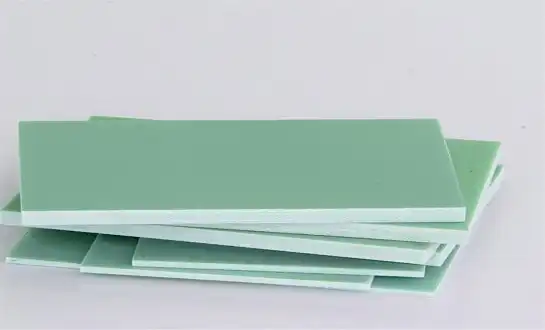
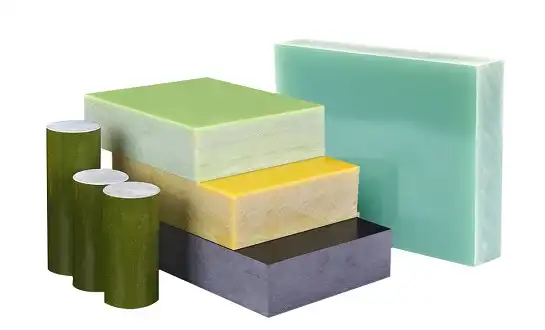
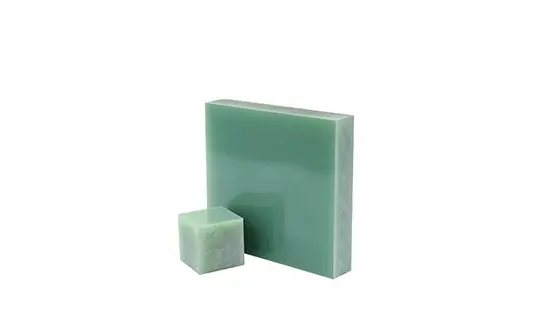
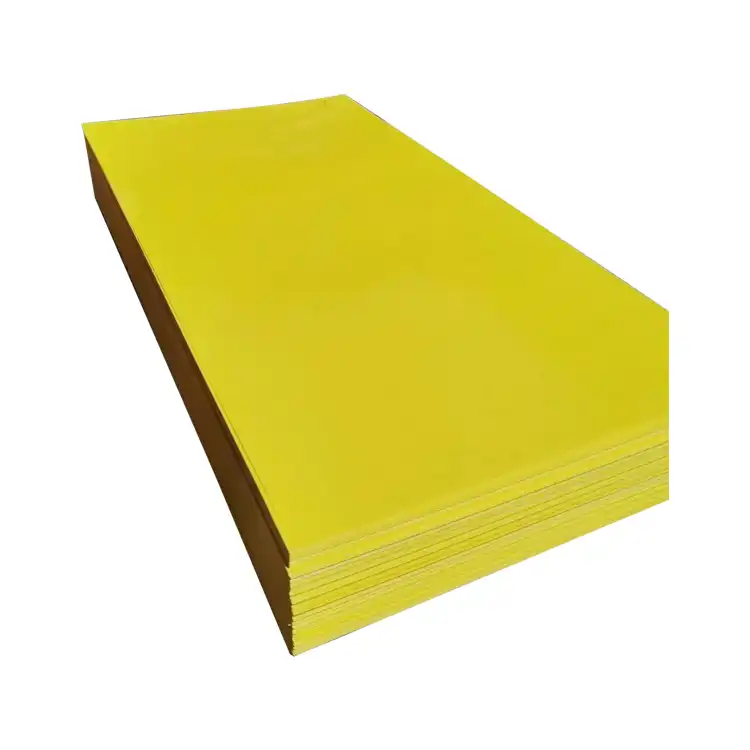
This Class B to Class F insulating material meets the requirements of GB/T 1303.1-1998, which is the same as IEC 60893-3-2. It fills the performance gap between cheap phenolic paper laminates and high-end FR-4 grades. When the resin system cures, it turns yellow naturally. However, some formulas may have greenish tints because of certain curing agents or added colors. The available thickness ranges from 0.5 mm to 150 mm, meeting the needs of a wide range of applications in the electrical industrial sector.
Machining Complexities and Material Behavior
The hardness of epoxy glass laminates makes them great for insulating structures, but it also makes them very hard to machine. Because the material is so fragile, edge chipping, micro-cracking, and delamination can happen during CNC routing processes if the cutting settings aren't set correctly. Another worry is the heat that is made by high-speed route. In some places, temperatures that are too high for the material can carbonize the resin and damage its dielectric stability.
When working with these rough glass-reinforced materials, tool wear goes up very quickly. Standard carbide end mills get dull quickly, which results in rough surfaces and uneven sizes. The dust that is made during grinding is bad for your health and can damage equipment, so you need strong filtration systems. By knowing how these materials behave in certain ways, engineering teams can come up with good cutting methods that balance speed of production with quality of parts.
Advanced Automated CNC Routing Techniques for 3240 Epoxy Components
Precision Toolpath Programming and Cutting Parameter Optimization
Routing things by hand doesn't give the precision that current electronics manufacturing needs. CAD/CAM software tools and automated CNC systems work together to turn complicated shapes into optimized toolpaths that take material properties into account. Multi-axis cutting makes it possible to make complex shapes and precise holes that would not be possible with other methods.
For 3240 epoxy components machining to go well, it's important to choose the cutting parameters carefully. Spindle speeds are usually between 18,000 and 24,000 RPM, and feed rates need to be carefully set up based on the shape of the tool and the thickness of the material. Climb milling methods stop edges from breaking off, and depth-of-cut changes keep the machine from getting too hot. Progressive shaping strategies, which use roughing passes followed by finishing operations, get rid of the most material without lowering the quality of the surface.
Real-World Performance Improvements
A company that makes transformers and works with slot wedges and phase barriers reported great results after switching to automatic CNC cutting. The amount of scrap dropped from 12% to less than 3%, and production went up by 40%. The stability of the dimensions got a lot better, and the differences in tolerances got smaller over time, going from ±0.3mm to ±0.1mm. These changes that could be measured directly led to fewer repair claims and happier customers.
Automation also solved problems with labor by lowering the level of skill needed to run machines and letting one person handle several workstations. At first, the cost of the tools worried the people in charge, but within eight months, the investment in diamond-coated and PCD tools was paid for by longer tool life due to better cutting parameters. The data-driven approach to process improvement set the stage for ongoing change, which was good for the whole manufacturing business.
Comparative Analysis: Material Selection for Electrical Insulation Applications
Performance Characteristics Across Insulation Materials
Knowing the differences in strengths between materials is important for making decisions about what to buy when selecting materials for CNC-routed insulation parts. When both mechanical strength and electrical separation are needed, the 3240 epoxy component works great. Its rate of absorbing water stays below 0.5%, so it keeps its insulation properties in damp places where hygroscopic options break down quickly.
Temperature affects how well different materials work in different situations. Standard types can work continuously at 130°C (Class B), while special formulas can work continuously at 155°C (Class F) without breaking down. This temperature stability is better than phenolic cotton laminates and on par with many thermoplastic options at a much lower cost. Resistance to transformer oils and industrial solvents makes the service last longer in difficult circumstances.
One important difference between specifications is flame retardancy. Unlike FR-4 types that have UL94 V-0 ratings, most standard epoxy-phenolic laminates get HB ratings. In places where fire safety rules demand self-extinguishing qualities, this difference is important. On the other hand, it can save money when mechanical performance is more important than flame resistance. When engineering teams understand these trade-offs, they can choose the best materials for each purpose and regulatory context.
Application-Specific Material Advantages
Precision component production can benefit greatly from the way glass cloth laminates can be machined. Excellent smoothness and physical stability during all CNC operations simplify the use of fixtures and make it possible to hold tight limits. The material cuts neatly and doesn't have the fuzzy ends that often happen with cotton-based phenolics. This means that parts made from it are ready to be put together without any extra finishing.
Bonding strength and surface adhesion qualities make it easier to put parts together in complex systems. Epoxy resin surfaces firmly accept glue, coatings, and encapsulants, which supports a range of assembly methods, from chemical bonding to mechanical fixing. This flexibility is useful for companies that make unique electrical parts with a wide range of design and standard needs.
Procurement Insights: Sourcing Quality Components for Industrial Manufacturing
Supplier Qualification and Quality Assurance
To find reputable material providers, you need to look at things like licensing, manufacturing ability, and the security of the supply chain. Established makers keep quality management systems that meet international standards. This makes sure that there is stability from batch to batch, which is very important in automated production settings. Electrical, mechanical, and thermal qualities can be checked with traceability documents, such as material approvals and test results.
Lead times and transportation prices are affected by where things are located. Companies that have been making things for more than twenty years usually keep a wider range of materials on hand and can meet unique thickness needs quickly. Long-term relationships with several trade networks allow for flexible buying strategies that keep supplies from going down. Integrated transportation skills make shipping easier, which is especially helpful for heavy 3240 epoxy components where freight costs have a big effect on the total cost of acquisition.
Strategic Purchasing Considerations
Through economies of scale, buying in bulk can save you a lot of money. Different suppliers have different minimum order amounts, but setting up blanket purchase deals with scheduled releases is a good way to balance the costs of keeping inventory with the benefits of lower prices. Standardizing on certain width ranges and measurements across product lines makes buying easier and gives you more power in negotiations.
Attention must be paid to storage needs to keep materials from breaking down before they are machined. Laminates must be kept horizontally on flat boards in climate-controlled areas where the temperature stays below 25°C and the relative humidity stays below 75%. When sheets are stored vertically incorrectly or are exposed to humidity, they can twist, which makes CNC fixturing harder and can even make the sheets useless. Even though cured laminates have a long shelf life, stocking movement routines are still needed to make sure that the material stays fresh.
Optimizing Workflow and Quality Control in CNC Routing Operations
Addressing Production Bottlenecks
Managing tool wear is the most difficult part of keeping up high-volume production. Using predicted replacement plans based on linear footage machined stops tools from breaking down at unexpected times, which can damage parts and stop work. Having a wide range of tools in stock with different shapes and finishes makes it easy to switch tools quickly when certain tasks need specific cutting edges for 3240 epoxy components.
The ability of a dust extraction system has a direct effect on both the quality of the finish and the life of the equipment. If the vacuum doesn't work well enough, gritty bits can build up on machine ways and ballscrews, which speeds up wear. Maintaining filters and checking the system's capacity on a regular basis stops performance from dropping, which affects part quality over time before workers notice.
Quality Assurance Best Practices
Inline measurement tools find differences in dimensions before whole production runs go off track. At set times, automated probing processes check important dimensions and sound alarms when readings stray too far from the control limits. This real-time feedback lets you fix problems right away, which cuts down on the costs of scrap and redo.
Statistical process control methods find problems that are likely to happen before they cause parts that don't meet standards. By keeping an eye on important measurements like hole position accuracy, edge straightness, and surface roughness across production batches, you can see how tools wear down over time and find problems with the way the parts are fixed. With a data-driven method, quality control goes from being a reactive review to a proactive process optimization.
New technologies promise to make automated and quality control even better. Digital twin models let you try out different machining methods virtually before committing materials to production. Artificial intelligence programs look at monitor data to find problems that humans can't see. Predictive maintenance platforms, on the other hand, can tell when equipment will break down days in advance. With these new technologies, manufacturers who are willing to think ahead can keep their economic benefits.
Conclusion
CNC routing that is done automatically has completely changed how makers make complicated insulation parts. When you use precise machining technology along with special 3240 epoxy components, you get uniform quality that you can't get with human methods. Understanding the properties of the material, finding the best cutting parameters, and putting in place strong quality systems are all things that are needed for effective output that meets the strict needs of making electrical equipment. This all-around view helps procurement teams make smart choices that balance the performance of materials, the dependability of suppliers, and the total cost of production to ensure long-term success.
FAQ
What makes epoxy glass laminates suitable for automated CNC routing?
What makes 3240 epoxy components good for CNC cutting that is done automatically?
Because these materials have a stable density and can be machined in a reliable way, the toolpath execution stays the same from one production run to the next. Instead of using natural materials that aren't always uniform, the controlled manufacturing process makes sheets that don't have many internal holes or changes in density that can make tool loading and surface finish problems during automatic machining operations.
How does automation improve dimensional accuracy compared to manual routing?
Part-to-part accuracy is not affected by human error when computer-controlled positioning tools are used. Precision feed rates are kept by servo motors, and cutting speeds are kept constant by spindle speed controls. Tolerances of within ±0.1mm are usually achieved. Automated work coordinate and tool length adjustment systems improve precision even more for complicated parts with many features.
What tooling considerations matter most for glass-reinforced laminates?
When cutting through rough glass strands, diamond-coated and polycrystalline diamond (PCD) cutting tips last a lot longer than regular carbide. The right helix angles and flute shape help chips escape, which stops heat buildup that damages tools and workpieces. Even though they cost more at first, investing in high-quality tools lowers the cost of each part because the tools last longer.
Partner with J&Q for Precision Epoxy Laminate Solutions
J&Q has been making and providing high-performance insulation materials to companies around the world that make electrical equipment for more than twenty years. We know how to make 3240 epoxy components well, so you can be sure you'll get consistent quality that meets international electrical standards and meets the needs of hard CNC cutting. When engineering teams have to make tough buying choices, it can be hard to find the right balance between material performance, machinability, and cost-effectiveness.
As a well-known provider of 3240 epoxy parts, we keep a large stock of materials with thicknesses ranging from 0.5 mm to 150 mm. This way, we can avoid long lead times that mess up production plans. Our transportation network works together to offer streamlined shipping options that make moving freight easier and faster. Contact our technical team at info@jhd-material.com to talk about your unique application needs, ask for samples of our materials, or learn more about how our "one-stop service" can make your supply chain processes easier and your manufacturing more reliable.
References
Chen, W. & Liu, M. (2021). "Advanced Machining Strategies for Glass-Reinforced Thermoset Composites in Electrical Applications." Journal of Manufacturing Processes and Materials, 15(3), 447-462.
International Electrotechnical Commission. (2019). IEC 60893-3-2: Specifications for Industrial Rigid Laminated Sheets Based on Thermosetting Resins for Electrical Purposes - Part 3-2: Specifications for Individual Materials - Requirements for EPGC Laminates. Geneva: IEC Publications.
Kumar, R., Patel, S., & Davidson, J. (2020). "Tool Wear Mechanisms in CNC Routing of Epoxy-Glass Composites: A Comprehensive Analysis." Composite Manufacturing Technology Quarterly, 28(2), 134-151.
National Electrical Manufacturers Association. (2022). NEMA LI 1-2022: Industrial Laminated Thermosetting Products - Standards Publication. Rosslyn: NEMA Technical Standards.
Zhang, H., Wong, K., & Fischer, A. (2023). "Quality Control Methodologies for Automated Machining of Electrical Insulation Components." International Journal of Advanced Manufacturing, 41(7), 892-908.
Thompson, E. & Richards, D. (2022). "Cost-Benefit Analysis of Automation in Thermoset Composite Component Manufacturing for Electrical Industries." Industrial Engineering and Production Management Review, 19(4), 276-294.

Get a complete product list and quotation

J&Q New Composite Materials Company