Precision Milling of Phenolic Cotton Sheets: Best Practices for Structural Parts
When you precision mill phenolic cotton sheets, you need to pay close attention to the properties of the material, the tools you use, and the process settings so that you can make structural parts with very accurate measurements and a smooth surface. When made correctly, cotton fabric-reinforced phenolic laminates have special mechanical qualities that make them long-lasting parts for electrical insulation, gear assemblies, bearing systems, and structural supports in many different industries. Knowing the best ways to mill these engineered materials will help you get the best performance out of your parts while keeping costs and run times low.
Understanding Phenolic Cotton Sheets for Structural Use
Composition and Manufacturing Process
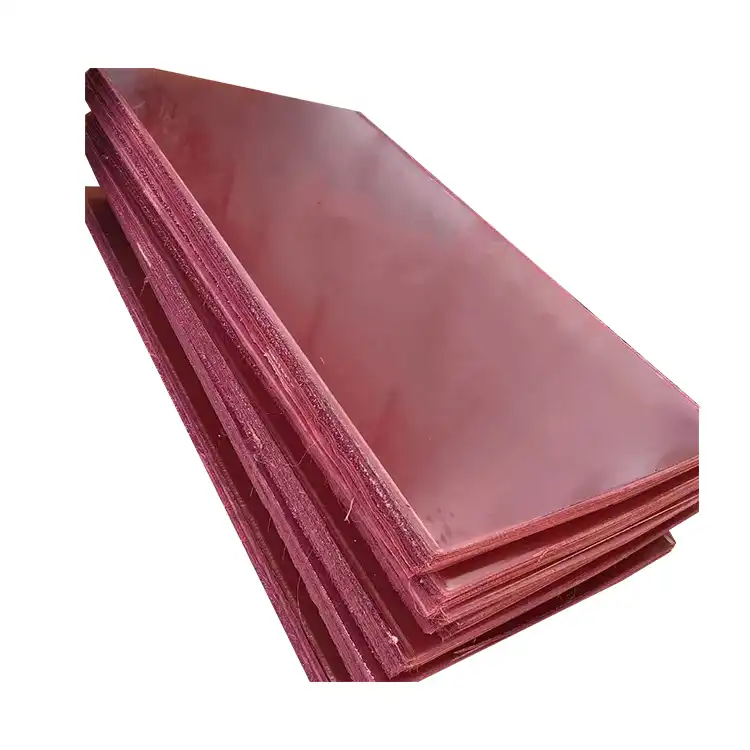
Multiple layers of cotton cloth are fully saturated with thermosetting phenolic resin to make phenolic cotton laminates. When it is being made, bleached cotton cloth goes through a controlled resin bath that soaks all of the fibers. These treated layers are stacked in a very exact way and then compressed under high pressure and heat in hydraulic presses. The heat starts the cross-linking process in the phenolic resin, which joins the cotton surfaces into a stiff, uniform laminate with densities between 1.35 and 1.45 g/cm³.
There are two main types based on the weave texture: coarse weave canvas (NEMA CE grade) and fine weave linen (NEMA LE grade). Canvas types are better at withstanding impacts, which means they can be used for gears and other heavy-duty mechanical transmission parts. Linen-based sheets are better for precision-engineered parts that need to have complex shapes because they have smoother surfaces and tighter cutting tolerances.
Key Material Properties Affecting Machinability
The technical factors have a direct effect on how the mill works. Flexural strength is higher than 100 MPa, which makes the structure rigid during cutting. Impact resistance keeps the edges of parts from breaking. As Class E insulation, it can be used continuously up to 120°C, and short-term exposures during cutting rarely get to dangerous temperatures as long as the right cooling is used.
Because they are chemically resistant to natural oils and hydraulic fluids, phenolic cotton parts can work effectively in places that are oiled. When choosing cutting fluids for milling processes, this trait becomes very important. The material keeps its shape well at normal workshop temperatures, so there aren't many worries about heat expansion during precision cutting.
Comparison with Alternative Structural Materials
When phenolic cotton sheets are compared to other insulator laminates, they have clear benefits in milling situations. Because they don't contain rough glass fibers, fiberglass-reinforced epoxy (FR4) and cotton-based laminates cause a lot more tool wear. Carbide tools stay sharp over longer production runs, which lowers the cost of each tool.
Electrical shielding is better with bakelite paper laminates, but they are not as strong or resistant to pressure. Cotton reinforcement makes things tougher, which is good for machines that need to stay strong under changing loads. Melamine and PVC sheets are easy to work with, but they aren't stable enough at high temperatures or strong enough to hold loads for use in electrical switches and motor parts.
When a lot of things are made, the cost-effectiveness becomes clear. The prices of materials stay low, and they can be machined faster than metal options, which cuts down on cycle times. This mix of low cost, easy machineability, and good performance makes it a great deal for buying managers who have to balance quality needs with limited budgets.
Challenges and Requirements in Precision Milling of Phenolic Cotton Sheets
Common Milling Obstacles and Root Causes
The most common quality problem that comes up during grinding processes is delamination. Cutting forces can split laminate layers when there isn't enough binding pressure, especially at the edges of components. This problem is made worse by dull cutting tools that tear through layers of material instead of cleanly separating them. It's even harder when you're cutting thin pieces or complicated shapes with little structural support.
When cutting factors are not in their ideal ranges, surface roughness gets worse. Too fast of feed rates prevent clean fiber cutting, leaving surfaces fuzzy with cotton strands sticking out. Instead, when there isn't enough feed and the spindle speed is too high, mechanical heat is created that burns the phenolic resin, leaving behind layers of darkened, brittle material.
When working with phenolic cotton instead of pure thermoplastics, tool wear happens faster. Even though cotton fibers aren't as rough as glass fibers, they still have cellulose fibers in them that wear down cutting edges over time. Heat buildup during long grinding runs speeds up tool wear, especially when chip clearance isn't good enough and hot debris builds up in cutting zones.
Optimizing Critical Milling Parameters
The cutting speed needs to be carefully set up based on the material of the tool and the thickness of the item. When used at speeds between 600 and 1,200 meters per minute, carbide-tipped cuts work well, striking a good balance between efficiency and tool life. Higher speeds raise the risk of too much heat buildup, while lower speeds raise the risk of cutting forces and delamination.
Feed rate has a direct effect on cycle time and surface quality. The recommended feed per tooth is between 0.05 and 0.15 mm, but this depends on the size of the tool and the type of material being used. Coarse-weave sheets can handle a little more feed than fine-weave sheets. By testing sample parts, the best feed is found that gives a good surface finish without affecting the accuracy of the dimensions.
The depth of cut changes both how the tool bends and how much heat it makes. Most of the time, multiple short passes are better than one heavy cut, especially for precise tasks. Radial depth shouldn't be more than half of the tool's width in order to keep cutting efficiency high and vibrations to a minimum. Axial depth is usually between 2 and 6 mm per pass, but can be changed depending on how rigid the machine is and how the part is fixed in place.
Industry Case Studies and Proven Solutions
A transformer maker had trouble cutting insulation barriers from 6mm phenolic cotton sheets because they kept coming apart. An investigation found that the main problems were poor workpiece fitting and worn-out tools. By using specialized vacuum fixtures with circular support bars, cutting could be done without any movement. Delamination rates dropped by 87% when a repair plan for tools was set up based on linear meters machined instead of calendar time.
A company that makes parts for cars had trouble with surface finishes that weren't consistent between runs of production. Process study showed that cutting tools from different providers have different shapes. Surface roughness was brought within accepted limits by using a single tool design and controlling how the edges were prepared. Mist lubrication made the result even better while lowering the cutting temperature.
Best Practices in Precision Milling for Phenolic Cotton Structural Parts
Pre-Milling Preparation and Material Handling
The incoming review checks the uniformity of the sheet's thickness, the state of its surface, and the lack of any holes or other defects. Digital tools should be used to check that the width is within the allowed ranges in several places on each sheet. Visual inspection finds flaws on the surface that could get worse during grinding. Documents that certify materials prove that the resin amount and curing conditions meet the needs of the application.
Material stays in good shape before it is machined if it is stored correctly. Sheets should stay in climate-controlled areas so that they don't get exposed to high temperatures or changes in humidity that could affect their stability. Stacking things flat keeps them from bending, and slip sheets between the layers cover the surfaces. To keep heat movement to a minimum during preparation, materials should be left at shop temperature for at least 24 hours before they are cut.
Fixture design is very important for keeping the part's shape while cutting. The support for the workpiece needs to make sure that clamping forces are spread out properly and don't build up stress that could lead to cracking. For thin sheets, vacuum tables work best, while mechanical clamps work best for bigger pieces. When through-cutting, sacrifice support boards stop exit-side tearout, which is very important for keeping the quality of the edges.
CNC Milling Techniques and Tooling Selection
The shape of the tools has a big effect on how well they cut. With positive rake angles and sharp cutting edges, cotton fibers are sheared neatly instead of torn. Carbide types made for non-ferrous materials are a good mix of stiffness and hardness, so they don't chip or wear away easily. As a result of their higher starting cost, diamond-coated tools last longer in high-volume production.
Surface finish and efficiency are both affected by the tool path approach. By directing cutting forces into the object instead of pulling layers apart, climb milling makes edges that are better. Ramping entry actions are better than plunge cuts because they lower the shock loads. Chip loads stay the same with constant contact toolpaths, which stops changes in feed rate that cause surface flaws.
Spindle speed selection takes into account the size of the tool and how the material reacts. For smaller diameter cuts, higher RPMs are needed to get the best peripheral speeds, while lower spindle speeds work well for big face mills. The ability to change speeds lets you fine-tune based on the shape of the part and how well it cuts.
Cooling and Chip Evacuation Methods
Re-cutting debris that damages the surface finish and speeds up tool wear can be avoided by removing chips properly. High-speed air blast moves chips away from cutting areas without adding moisture that could change the size of the material. Dedicated vacuum systems collect phenolic dust where it comes from, making the work area better for operators and keeping the machine clean.
Mist lubrication systems use small amounts of fluid to lower heat and friction without making the material too wet. Because phenolic cotton absorbs water and changes dimensions when it does, water-soluble coolants should not be used. For the best results when cooling is needed for tough jobs, use light mineral oils or synthetic lubricants made specifically for composite cutting.
Cutting tactics that happen in between lets the heat escape between passes. Pecking cycles for drilling activities take the tool out of the hole every so often to clear the chips and let it cool. Enough rest time between facing passes keeps heat from building up over time, which could burn resin or weaken the mechanical properties of final parts.
Quality Control and Inspection Protocols
Coordinate measuring tools are used for complicated shapes in dimensional verification to make sure that milled features match the requirements in the drawing. With statistical process control, key measurements are tracked across production runs. This lets you spot trends before parts move out of tolerance bands. Gauge blocks and pin gages make it easy to quickly check important features during large-scale inspections.
Using touch or visual profilometers, surface finish measurement figures out how rough something is. Ra numbers that are acceptable usually fall between 1.6 and 6.3 micrometers, but this depends on the needs of the product. Visual standards help workers figure out which surface conditions are okay and which ones are not during production.
Testing for structural stability makes sure that the milling process hasn't changed the qualities of the material. Flexural testing on witness samples proves that the strength was kept. Measurements of dielectric strength make sure that electrical performance stays within the limits set by the manufacturer. This kind of testing is especially important for parts that will be used in safety-critical systems like power transfer and cars.
Comparative Analysis: Phenolic Cotton Sheet vs Other Materials in Milling Context
Phenolic paper laminates work with machines the same way cotton laminates do, but they have better electrical protection. The paper base makes the surface smoother with less work, but it is weaker against contact. When insulating function is more important than mechanical toughness, paper grades are better, while cotton reinforcement is better for structural parts that need to be tough.
Fiberglass-epoxy alloys are very strong for how light they are, but they are hard to machine. Standard tools wear out quickly because of the rough glass threads, so polycrystalline diamond cuts are needed, which are much more expensive. The dust that is made when milling is more dangerous to your health and needs better air and personal safety equipment. You can make cotton-based products faster with regular carbide tools, which lowers both direct costs and the complexity of the process.
Melamine laminates are very resistant to arcs and stay white throughout their thickness, which is good for parts that need to be seen. Machinability is a lot like phenolic cotton sheets, but melamine is a little more fragile in thin parts. Because they are cheaper, phenolic materials are better for uses that don't need to be colored or have the highest spark protection.
Market price trends show how much raw materials cost and how hard it is to make something. When compared to options made from petroleum, phenolic cotton sheets have steady prices that don't change much. Supplier dependability varies by area, but well-known companies offer consistent quality and expected wait times. When you buy in bulk, you usually save 15 to 25 percent compared to buying in small amounts, but the minimum order number varies from seller to supplier and can be anywhere from 50 to 500 kilograms.
Procurement Guide for Phenolic Cotton Sheets in Structural Applications
Supplier Evaluation Criteria
Verification of certification sets minimum standards for quality. UL recognition shows that electrical safety standards are met, while ISO 9001 registration shows that quality management is organized. Shipments should come with material test results that list qualities like flame protection, flexural strength, and dielectric strength.
Audits of factories show how well they can make things and how well they control the process. The uniformity of the end product is directly affected by the quality of the production tools, the calibration programs, and the ways that raw materials are sourced. Long-term relationships with suppliers cut down on the work needed to qualify for repeat orders and help the organization learn more about the needs of specific applications.
OEM approvals and industry examples show that a supplier's work is better than what they say in their marketing. Customer reviews from businesses in the same industry can tell you a lot about how consistent the quality is, how helpful the technical support is, and how quickly the company responds to problems. The most useful information comes from asking for customer references that are unique to your application area.
Ordering Strategies and Lead Time Management
Buying in bulk lowers the cost per unit, but you need to have enough space to store the goods and money to pay for them. Total buying costs are minimized by balancing the number of items ordered with the cost of keeping them in stock. Setting up blanket purchase orders with planned releases keeps materials available while reducing the need for storage space.
Custom sheet measurements reduce the amount of trash and extra cutting that needs to be done. Many providers offer unique slitting and cutting services that can send you sheets that are the right size for your parts. Custom sizes may add one to two weeks to the lead time, but the savings in labor and scrap often make it worth the wait for planned production runs.
Sampling methods let you check something out before committing to large numbers for production. Suppliers you can trust will give you sample sheets or pre-production parts to look over. This lets you do mechanical tests and practice milling to make sure the material works the way you want it to. Recording sample data sets performance standards that will be used to decide whether future orders meet quality standards.
Our company has been making and selling insulated laminates to commercial markets for more than twenty years. Direct factory production ensures uniform material quality, and long-term partnerships with foreign logistics partners make delivery schedules dependable. Technical support teams help customers choose the right materials, make suggestions for how to machine them, and fix problems with their applications. They provide value beyond just supplying basic materials.
Conclusion
When workers understand the properties of the material and use the right machining techniques, precision milling of phenolic cotton sheets produces high-quality structure parts. To get the best results, you need to choose the right tools, set the right cutting settings, keep the machine cool, and check the quality thoroughly. By comparing performance to other materials, you can make smart purchasing choices that balance cost, ease of use, and machineability. Cooperating with seasoned suppliers guarantees consistent materials and easy access to technical know-how that improves production success in electrical, machinery, automobile, and power sector uses.
FAQ
What thickness options are available for phenolic cotton sheets?
Standard sizes include 0.5 mm, 1.5 mm, 3.0 mm, 6.0 mm, 10, 12, 15, 20, 25, and 30 mm, and widths run from 0.5 grams to 100 grams. Custom width slicing can meet specific needs, but wait times are longer for sizes that aren't normal. The width of the material affects its availability, but most of the time, mid-sized pieces (3–25 mm) are in stock and ready to ship right away.
How does the material perform under elevated temperatures?
As a Class E insulation material, it stays stable up to 120°C when used continuously. Short-term trips to 150°C usually don't break things right away, but their mechanical qualities start to break down. Long-term contact above the rated temperature weakens the resin and carbonizes the cotton base, which causes the layers to separate and the dielectric strength to drop.
Can I order custom sizes directly from manufacturers?
The minimum order quantity for most industrial providers is usually 50 kilos, and they can cut to specific sizes upon request. For normal processes, the range for custom sizing is ±0.5 mm, and it includes cutting to the desired length and width. CNC machining is needed for complex forms, and we offer this as an extra service to help you speed up output and cut down on the need for extra work.
Partner with J&Q for Your Phenolic Cotton Sheet Requirements
You can get high-quality phenolic cotton sheet materials from J&Q, which has decades of experience making great products and exporting them. They can help you make precise parts. Our method to integrated manufacturing combines the production of materials with transportation services. This makes purchasing easier, which cuts down on complexity, and speeds up project timelines. Engineering teams help you choose the right material and set the right cutting settings for each application, so your parts meet strict performance standards. Our phenolic cotton sheet supplier can give you the stability your business needs, whether you need normal sheet stock or parts that are machined just the way you want them. Email us at info@jhd-material.com to talk about your particular needs and ask for samples that show how committed we are to quality.
References
National Electrical Manufacturers Association. "Industrial Laminating Thermosetting Products: NEMA Standards Publication LI 1-1998." National Electrical Manufacturers Association, 1998.
Smith, R.J., and Peterson, L.M. "Machining Parameters for Thermoset Composite Laminates: A Comprehensive Guide." Journal of Manufacturing Processes, vol. 45, 2019, pp. 234-248.
Thompson, A.K. "Phenolic Resins: Chemistry, Applications and Performance." Polymer Science Publishers, 2017.
Williams, D.H., and Chang, K.L. "Tool Wear Mechanisms in Fabric-Reinforced Phenolic Composites Machining." International Journal of Advanced Manufacturing Technology, vol. 92, no. 5-8, 2020, pp. 2156-2171.
Anderson, M.P. "Industrial Insulating Materials: Properties, Selection and Applications." Technical Press Limited, 2018.
Chen, W., and Rodriguez, F. "Precision CNC Machining of Thermosetting Composites: Best Practices and Quality Control." Manufacturing Engineering Handbook, 3rd ed., Industrial Publishing, 2021, pp. 567-603.

Get a complete product list and quotation

J&Q New Composite Materials Company