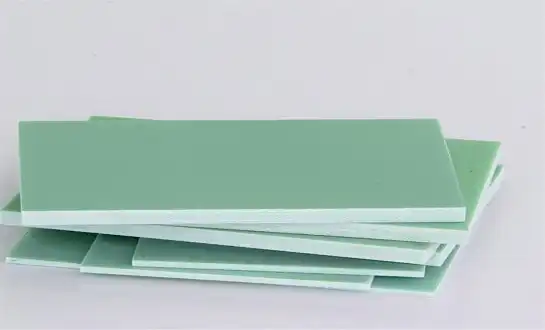
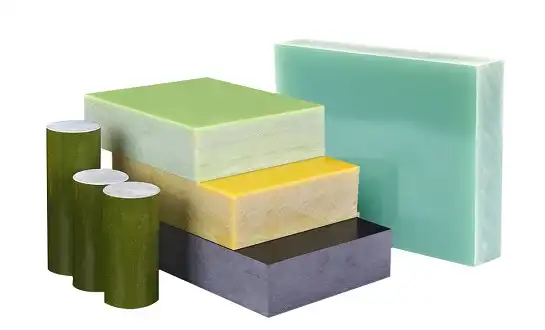
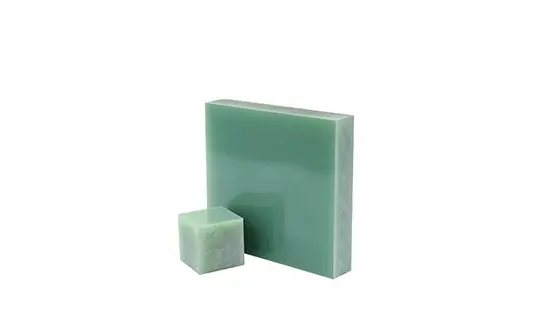
How Manufacturers Reduce Delamination During FR4 Sheet Machining?
Manufacturers greatly lower delamination when working with FR4 sheets by carefully choosing the right tools, using the best cutting settings, and keeping an eye on the temperature. Using tools with carbide or diamond tips keeps the layers of the glass-epoxy blend from being put under too much mechanical stress. Spindle speeds between 15,000 and 25,000 RPM are controlled, and feed rates are kept modest so that heat doesn't build up and break down the epoxy glue binder. Dimensional stability is ensured by good cooling systems and pre-machining material preparation. These combined methods keep the structure of the continuous filament glass cloth support strong, keep the dielectric strength, and stop layer separation, which can hurt PCB performance in tough electrical applications.
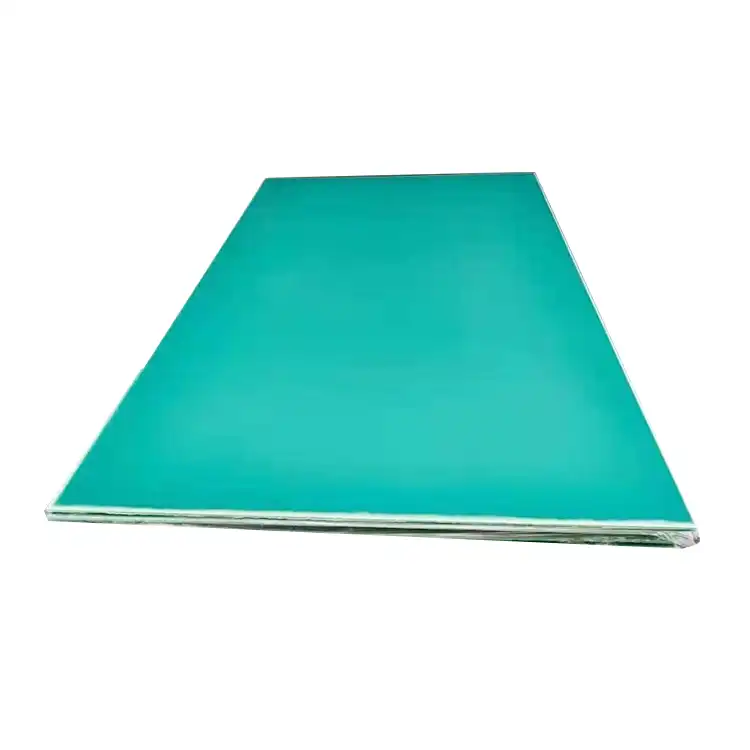
Understanding Delamination in FR4 Sheet Machining
When working with glass-reinforced epoxy laminates in cutting, delamination is one of the most dangerous ways for them to fail. When the bound layers in a composite structure separate, it weakens both the mechanical strength and the electrical insulation qualities that are needed for the part to work properly.
What Delamination Actually Means for Your Production?
Layer separation happens in flame-retardant epoxy laminates when the resin matrix can't keep the glass cloth layers stuck together. Cracks, edge lifting, or internal holes that can be found with an ultrasound probe are all signs of this structural failure. The effects go beyond just looking bad; delaminated parts have dielectric breakdown voltages that are hard to predict and can't hold as much weight. When engineering managers check the dependability of a part, they need to know that even very small delaminations can cause a catastrophic failure when exposed to high voltage or heat cycling, which happens a lot in motor and circuit applications.
Primary Symptoms Indicating Delamination Problems
Several clear signs of laminate splitting can be seen when the part is being machined or afterward. When internal moisture evaporates during high-speed cutting, causing pressure spots between layers, surface blistering shows up. Edge tearing and "white spots" show that the plastic is breaking down or that the base material hasn't fully cured. When parts that were made shift after cooling, it shows that the layers aren't sticking together properly, which is a sign of dimensional instability. Procurement professionals should set up processes for new inspections that look for these signs because they are directly linked to manufacturing yield losses and field failure rates further down the line.
How Thermal and Mechanical Stress Trigger Layer Separation?
During the cutting process, epoxy laminates are loaded mechanically and thermally at the same time, which makes it hard for the materials to stick together. Cutting tool friction causes temperatures to rise above 150°C where the tool meets the material. These temperatures are getting close to the glass transition temperature, which is where normal epoxy systems soften and lose their shape stability. Cutting edges cause shear stress that is opposite to the laminate plane. This is exactly where the bonding between resin and glass is most likely to break. This two-stress process explains why delamination starts quickly when the machining settings are wrong. Technical procurement teams need to know about this relationship so they can tell sellers what kinds of materials they need to make things and what performance standards they need to meet.
Core Causes of Delamination During FR4 Machining
Delamination susceptibility during machining processes is affected by a number of interdependent factors. The inherent qualities of the material combine with process factors to either keep the integrity of the laminate during fabrication or break it.
Material Properties That Influence Delamination Risk
The chemistry of the epoxy glue system decides how stable it is at high temperatures and how well the reinforcement layers stick together. Standard epoxy mixtures harden at lower temperatures and have glass transition points between 130°C and 140°C, which means they can be softened by rough cutting. The structure of high-Tg versions stays strong up to 170-180°C, but they cost more. The amount of resin in glass affects both its dielectric qualities and its mechanical cohesiveness. Too much resin makes planes that are easily broken, while not enough resin prevents layers from sticking together properly. The weight and weave design of the continuous filament glass cloth have a direct effect on how it drills and routes. Tighter weaves are better at keeping the material from delaminating than open ones.
Process Parameters That Accelerate Layer Separation
The shape and state of the cutting tool have a big effect on delamination caused by grinding. When cutting edges are dull, they cause too much friction and heat instead of clean slicing action. This makes the epoxy matrix soften and creates peel forces where layers meet. This problem is made worse by spindle speeds that are too high or too low. Too high of RPMs raises frictional heating, and too low of speeds causes tool chatter and vibration that physically breaks layers. Choosing the right feed rate requires a lot of careful balance. Fast progress lowers heat buildup but raises mechanical shock, while slow feeds extend thermal exposure. If there isn't enough chip clearance, abrasive glass particles can go back and forth, roughening up surfaces that have just been polished and creating tiny cracks that spread to delamination zones.
Supplier and Batch Variability Issues
The quality of laminate changes a lot between makers and production batches, even when the grade names are the same. The thoroughness of the resin cure depends on exact temperature-time profiles that are used during production. Material that isn't fully cured keeps volatiles that evaporate during machining, which causes internal pressure and delamination. Conditions of storage before delivery affect how much moisture is absorbed. For example, epoxy laminates that are exposed to high humidity soak up water that later evaporates when heated during cutting. Different thickness tolerances on different FR4 sheet surfaces make it hard for tools to contact properly, which leads to warming in thinner areas. Before committing to large orders, procurement professionals should set up seller qualification programs that include sample machining trials and thermal stress testing. This will protect the consistency of production and the trustworthiness of the parts.
Proven Manufacturing Techniques to Reduce Delamination
Using improved cutting techniques in a planned way cuts down on delamination rates by a huge amount, while also improving the quality of the parts and making production more efficient.
Optimal Tooling Selection and Maintenance Schedules
It is recommended to use at least carbide tools when cutting glass-reinforced laminates, but diamond-coated versions offer longer tool life and a better surface finish. It's important that the cutting edges are always sharp, because old tools create compression forces that push layers apart instead of shearing forces. Different shapes, like upcut vs. downcut spirals, can change the direction of chip drainage and the quality of the laminate edges. Between 118 and 130 degrees, the point of the drill bit should be angled so that drilling efficiency and exit-side delamination control are equal. Setting strict replacement plans for tools based on linear footage machined instead of subjective opinion keeps quality high. For each laminate thickness and material grade mix used in production, engineering teams should write down the best tool specifications and how often they should be replaced.
Precision Speed and Feed Rate Optimization
When picking a spindle speed, you have to find a mix between how well it cuts and how well it manages heat. Rotational speeds between 18,000 and 22,000 RPM are good for most standard thickness uses because they give the surface enough speed for clean cutting without heating it up too much from friction. Feed rates need to be changed based on the laminate's thickness. Thicker laminates need slower advances to keep the core from delaminating during breakthrough. The depth of cut per pass has a big effect on how much heat is produced; multiple short passes spread the thermal load better than a single strong pass. Because these factors affect how well a material conducts heat and how much heat it can hold, empirical optimization is needed for every production situation. Manufacturers whose delamination rates are always low keep thorough parameter files that are organized by material grade, thickness, and feature shape.
Advanced Thermal Management During Machining
Effective heat absorption stops the softening of the plastic and the thermal degradation that leads to delamination. Focused airflow from compressed air cooling systems is sent to the cutting zone to remove heat and gritty particles at the same time. Glass fiber flow speeds up tool wear and surface damage, but vacuum dust gathering stops it. Some very precise processes use mist cooler systems that do a better job of moving heat without worrying about absorbing wetness as long as they are made in a way that works with epoxy. Monitoring temperature with infrared sensors lets the process be changed in real time when temperature limits are getting close. When these cooling methods are combined with the right cutting settings, they create a stable thermal environment that keeps the laminate's integrity during machining processes.
Pre-Machining Material Conditioning Protocols
Preparing the material before cutting has a big effect on how stable the dimensions are and how resistant it is to delamination. Baking laminates at 100–120°C for two to four hours gets rid of the wetness they've taken, which would otherwise evaporate during cutting and cause pressure inside the laminate. Controlled cooling to the room temperature stops thermal shock and lets worry go away. When you store things flat on rigid supports, the measurements stay the same and the items don't bend, which can make setting up fixtures harder and cause cutting lengths to vary. Some makers let the material get used to the temperature and humidity of the production environment for 24 to 48 hours before they machine it. This is called an acclimatization time. These conditioning steps need careful planning in the production process, but they make a noticeable difference in the quality of the cutting and the regularity of the dimensions.
Selecting Quality FR4 Materials and Trusted Suppliers to Minimize Delamination
Strategic choices about where to get materials during buying have a direct effect on the success of machining further down the line and the trustworthiness of the end component.
Critical Testing Protocols for Material Verification
A strict check upon arrival makes sure that the laminates provided meet the requirements needed for delamination-free machining. Flammability testing proves that the product meets UL94 V-0 standards and that the flame-retardant chemicals are still working and are spread out correctly. Measuring the dielectric strength at certain voltages makes sure that the glue has fully cured and that the structure is free of holes. Flexural strength testing according to ASTM D790 measures how well the layers are bonded; low numbers show that the layers are likely to come apart. Thermal stress resistance tests with a solder float at 288°C for 10 seconds shows that the laminate is stable in harsh circumstances. By measuring thickness in several places across FR4 sheets, differences that lead to uneven cutting behavior can be found. Moisture content analysis finds problems with bad keeping or packing of materials before they are used in production.
Material Grade Comparison for Application Suitability
Standard flame-retardant epoxy laminates can be used in a lot of situations, but some places need different materials or better grades. High-Tg types keep their shape in high-temperature situations, like in parts under the hood of cars and power distribution equipment. Other materials, like polyimide-based laminates, have better thermal performance and can work continuously at temperatures above 200°C, but they are much more expensive and need to be machined by experts. For non-critical uses, CEM-1 composite materials are cheaper, but they don't resist water as well and don't have as good of mechanical qualities. Rogers' high-frequency laminates are used in specific RF uses, but they have different cutting properties that need to be adjusted. When procurement teams understand these important differences, they can find the best mix between cost and efficiency for each application.
Supplier Evaluation and Qualification Criteria
To find dependable laminate providers, you need to do more than just compare prices. Manufacturing standards, such as ISO 9001 quality systems and UL recognition, show that the process can be controlled and tracked. Having access to technical support helps solve problems that are unique to a program and questions about how to improve operations. Consistency in lead times and minimum order sizes affect how to plan output and how much it costs to keep supplies on hand. Samples are provided for pre-production trials so that compatibility with machining can be checked before a promise is made. Material consistency can be trusted when quality control methods are written down and test results are available. Long-term supply deals with reliable sellers keep prices stable and make sure supplies are always available, even when demand changes. At J&Q, we have strict source approval programs that were created over 20 years of experience working with insulation materials. These programs make sure that our clients always get laminates that can be machined and meet strict production needs.
Procurement Best Practices for FR4 PCBs to Avoid Delamination Issues
Delamination problems can be avoided more easily with proactive buying strategies put in place before production starts than with reactive fixing efforts.
Specification Development for Machining-Optimized Materials
Detailed material specs spell out the needs that have a direct effect on the success of the cutting process. Tighter thickness tolerances than normal commercial grades make sure that tools always connect properly and that cutting will behave as expected. Specifications for resin content that stay within small ranges achieve the best balance between mechanical strength and electrical qualities while lowering the risk of delamination. Surface roughness and cutting properties are controlled by the type and weight of the glass cloth weave. Specific glass transition temperatures are needed to make sure that the temperature stability is good enough for the planned cutting parameters. Specifications for flatness stop problems with fixing things and allow for different cutting levels. By referring to well-known standards like NEMA LI-1 or IPC-4101, you can set shared performance standards with your sources. These specifics make things clearer and make it easier for new inspection to accept them.
Strategic Bulk Ordering and Sample Testing Approaches
Buying in bulk can save you money, but you need to make sure you're not committing to problematic batches of materials. Asking for pre-production samples from planned supply lots lets you do cutting tests that find delamination problems before the bulk shipment. It is more accurate to look at source data sheets than to test samples under real production settings, such as planned speeds, feeds, and tooling. Checking for stability across the product range by looking at different thicknesses in the same order. When evaluating new sources or material grades, phasing buying strategies that start with smaller amounts and build up to larger commitments lower risk. Setting up lists of accepted vendors based on how well samples worked makes repeat orders easier while still keeping quality standards.
Proactive Communication and Defect Resolution Systems
Setting up clear lines of contact with material sources lets you act quickly when problems arise during machining. Giving suppliers detailed information about the application, such as machining settings and weather conditions, helps them suggest the best material grades. Using official deviation request methods for specification changes keeps track of changes and stops people from making changes without permission. Creating joint problem-solving methods speeds up the process of finding the cause of delamination. By making suppliers take part in machine trials, you can see how committed they are to the success of the application. Keeping detailed records of material lot numbers that are linked to machine performance makes it possible to track things down and helps with efforts to keep getting better. Because of these partnerships, suppliers are no longer just transactional providers, but also professional partners.
Conclusion
To get rid of delamination while cutting FR4 sheets, you need to pay attention to choosing the right materials, making sure the process is optimized, and working with the right suppliers. Carbide tools, controlled thermal management, and optimizing cutting settings help manufacturers make parts that are much more reliable and have much lower failure rates. Strategic purchasing methods, such as thorough testing of materials, clear specs, and vetting of suppliers, make sure that only regularly machinable laminates are put into production. Due to its technical difficulty, glass-reinforced epoxy machining requires knowledge that can only be gained through experience. Knowing how the properties of the material and the process factors affect each other is what separates good operations from those that have quality problems and yield losses.
FAQ
What FR4 thickness works best to prevent delamination during machining?
When the right conditions are used, materials with a thickness between 0.8 mm and 3.2 mm usually don't delaminate too much. Thinner sizes (less than 0.5 mm) need special fixtures and slower feed rates to keep them from bending while they're being cut. When the material is thicker than 5 mm, it needs to be drilled more than once and cooled down more quickly so that heat doesn't build up in the core. The best thickness relies on the needs of the product and how well the material can be machined.
How do thermal properties affect machining precision and board durability?
The thermal stability range during machining processes is directly related to the glass transition temperature. When cutting friction gets close to this level, standard epoxy systems with Tg around 130–140°C start to soften, making them more likely to delaminate. High-Tg materials that stay stiff above 170°C give you more process options and can handle rougher cutting conditions. This thermal stability means that the parts will be more accurate in their measurements and last longer in high-temperature work settings, like those found in cars and power distribution.
Can proper machining techniques completely eliminate delamination?
Delamination rates are greatly reduced by optimized methods, but they may not be completely eliminated depending on the quality of the base material and the harshness of the application. In controlled production settings, failure rates of less than 0.1% are common when premium-grade laminates are machined correctly. Even with perfect settings, though, errors may still happen because materials are naturally different and machining needs to be done very precisely. Realistic quality standards should be based on the statistical ability of the process rather than total perfection, with a focus on always getting better and getting rid of the root causes.
Partner with J&Q for Delamination-Free FR4 Sheet Solutions
J&Q has more than twenty years of experience making and selling high-quality insulation laminates that are designed to work well in tough machining situations. Our technical team knows how important it is for material composition to affect how well it machines, so we can suggest the best grades that will reduce the risk of delamination in your unique production setting. Every production batch goes through strict quality control steps, such as thermal stress testing and measurement verification. This makes sure that the FR4 sheet materials you receive always give you the same cutting results. Our integrated logistics skills make delivery easier and give you quick technical help throughout the whole buying process. Get in touch with our engineering team at info@jhd-material.com to talk about your needs and ask for sample materials for cutting tests. As an experienced FR4 sheet provider, we're dedicated to helping your company succeed by providing you with dependable, high-performance laminates that are backed by our decades of technical know-how.
References
Institute of Printed Circuits. (2021). Laminate Material Selection and Processing Guidelines for High-Reliability Applications. IPC Technical Standards Committee.
Morgan, P. (2019). Machining Composite Materials: Process Optimization and Defect Prevention in Glass-Reinforced Thermosets. Industrial Materials Press.
National Electrical Manufacturers Association. (2020). NEMA LI-1 Industrial Laminating Thermosetting Products Standard. NEMA Standards Publication.
Chen, W., & Liu, S. (2022). "Thermal Management Strategies in High-Speed Machining of Epoxy-Glass Laminates." Journal of Manufacturing Processes, 78, 234-247.
Electronics Manufacturing Association. (2023). Quality Control Protocols for Printed Circuit Board Base Materials. EMA Technical Guidance Document.
Reynolds, T. (2020). Supplier Quality Management in Electronics Manufacturing: Material Qualification and Performance Verification. Technical Publishing International.

Get a complete product list and quotation

J&Q New Composite Materials Company