Why G10 Epoxy Sheets Require Specialized CNC Processing
G10 epoxy sheet needs special CNC processing because its unique composite structure—woven fiberglass bound with hardened epoxy resin—makes it very hard and rough, and regular tools quickly wear down on it. This material can delaminate, chip, and become inaccurate in size if it is not machined with precision, carbide tools are not used, and dust is not properly removed. To get clean edges and reduce material waste, the glass fibers in the laminate need high-speed spindles and optimized feed rates. This means that specialized CNC equipment and knowledge are needed to keep quality, efficiency, and safety high in electrical, automotive, and industrial settings.
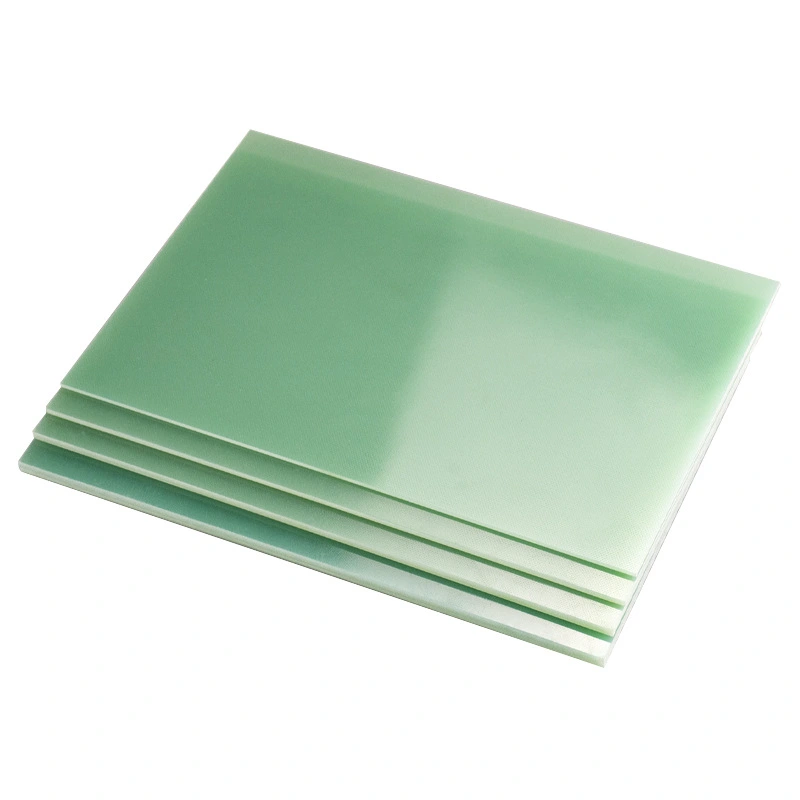
Understanding G10 Epoxy Sheets and Their Unique Properties
What Makes G10 a High-Performance Composite Material
G10 epoxy sheets are made of knitted fiberglass cloth that has been mixed with epoxy glue and then hardened under very high temperatures and pressure. This way of making things makes a hard laminate with great dielectric qualities. This makes it necessary for electrical insulation jobs where voltage breakdown resistance is very important. Tensile strength of the material is up to 40,000 psi, and compression strength is over 65,000 psi. This means that the material is mechanically reliable even when heavy loads are put on it.
In addition to being strong mechanically, G10 epoxy sheet is also very stable in terms of its dimensions when the temperature changes. Its low coefficient of thermal expansion keeps it from warping or distorting in places where precise tools and jigs need to stay within exact limits. The material can handle being exposed to chemicals, heat, and radiation, which makes it last longer in tough industrial settings where other plastics or composites would break down quickly.
Comparing G10 with FR4 and Standard Fiberglass
The main difference between G10 epoxy sheet and FR4 is that FR4 is not as flame retardant as G10 epoxy sheet. Standard G10 epoxy sheet doesn't have any bromine-based chemicals, but FR4 does have flame retardants in it to meet the UL94 V-0 standards for self-extinguishing. Many sources now offer dual-rated G10 epoxy sheet/FR4 materials, which are great for making electronics because they are both mechanically sound and fire safety-compliant.
Standard fiberglass laminates don't have the better electrical protection and uniformity that epoxy resin binding gives. The resin-to-glass ratio in G10 epoxy sheet is carefully managed to make sure that the electrical strength is the same throughout the thickness of the sheet. This gets rid of any weak spots that could damage the insulation's integrity. This uniformity is very important for electrically-sensitive parts like transformer barriers, switchgear components, and PCB supports, where failure can have serious safety and financial effects.
Challenges of Processing G10 Epoxy Sheets with Conventional Methods
Why Traditional Machining Techniques Fall Short
It's hard to work with G10 epoxy sheets using regular drill presses, band saws, or hand-held cutting tools right away. The glass fiber content makes tools wear out very quickly, so they need to be replaced more often, which raises the cost of doing business. When used on this rough material, standard high-speed steel gear loses its cutting edge in minutes, making cuts that are rough, burrs, and dimensional drift.
When the wrong machining settings are used, delamination is another major failure cause that shows up. Too fast of feed rates or dull cutting edges cause heat buildup and mechanical stress that breaks the laminate layers, making holes and weak spots that can't be seen at first glance. These flaws weaken both the material's mechanical strength and its ability to keep electricity from flowing. This means that they could fail in the field in important places, like motor parts or battery pack barriers.
Impact on Quality, Lead Time, and Production Costs
Edge chipping caused by bad tooling leads to repair cycles that make lead times longer and increase the amount of scrap. When sellers can't deliver dimensionally correct parts on time, it puts a lot of pressure on procurement teams because it slows down assembly lines and delays product launches. When you don't cut accurately, you lose material, which leads to higher unit costs and smaller profit margins in markets where price control is important.
When handling things by hand, variations in human error make it impossible to get regular batch quality. Because each operator uses a slightly different method, the parts they make have different tolerances, which makes them harder to put together and check for quality issues. The lack of repeatability is a big problem for OEM relationships, since tier-1 car or device makers want statistical process control and strict adherence to specifications across thousands of parts.
Why Specialized CNC Processing Is Essential for G10 Epoxy Sheets
Precision, Repeatability, and Advanced Tooling
Computer numerical control cutting changes the way G10 epoxy sheets are processed by getting rid of human error and allowing accuracy down to the micron level. CNC cutters and mills with high-speed wheels (18,000 to 24,000 RPM) and carbide or diamond-coated tools keep the cutting edges clean during production runs. This means that the holes are placed accurately and the edges are free of burrs. Electrical makers need exact mounting hole shapes for PCB systems, and this consistency is very important to them.
Optimized shaping techniques make the surface finish better and extend the life of the tools. By using opposite cutting forces at the same time, compression bits reduce top-surface tearout and bottom-layer delamination. Proper chip drainage stops heat buildup that could soften the epoxy matrix. This keeps the accuracy of the dimensions even when a lot of parts are being made. These improvements in technology directly deal with the problems that current ways can't solve.
Dust Control and Environmental Safety Measures
When you machine fiberglass composites, you make fine dust that contains glass fibers and finished resin particles. If these airborne toxins are allowed to move easily in work areas, they can hurt people's lungs and break down equipment. Industrial dust collection systems with HEPA filters are built into specialized CNC centers. These systems catch particles at their source, before they contaminate work areas or damage delicate machinery parts.
Negative air pressure inside enclosed machining rooms stops dust from moving to other work areas, keeping workers and final goods safe. This controlled setting is very important for companies that make medical devices or things for space travel, where strict cleanliness rules need proven contamination controls all along the supply chain.
Real-World Performance Improvements
For transformer coil barriers, a major company that makes power distribution equipment switched from making them by hand to using a CNC machine. The move cut the amount of scrap from 8% to less than 1%, and it also cut cycle times by 40%. All tolerance-critical features got better dimensional stability to ±0.003 inches, which got rid of field failures caused by bad fit. Within eight months, the supplier's investment in specialized CNC equipment paid off in the form of material saves and higher customer happiness.
How to Select the Right CNC Processing Partner for G10 Epoxy Sheets
Evaluating Technical Expertise and Equipment Capabilities
Managers in charge of buying things should make sure that possible sellers have CNC machines that are set up just for G10 epoxy sheet machining. Standard metalworking shops don't have the tools, computer know-how, or dust collection systems needed for reliable G10 epoxy sheet processing. Before committing to large orders, it's best to get example parts from a source that have complicated geometries, tight tolerances, and different thickness choices.
Certifications are an objective way to show that a quality system is mature. UL recognition shows that electricity safety standards are met, while ISO 9001 registration shows that process controls have been written down. Suppliers to the car industry should be IATF 16949 certified. This shows that they can meet strict quality and tracking standards all along the supply chain.
Customization Flexibility and Volume Scalability
The best CNC partner can handle both small batches for prototypes and large production runs without lowering quality or wait times. This adaptability helps with the development of products when design changes need quick models, and then it smoothly moves to mass production when the products are ready to sell. When demand goes up during regular peaks, suppliers with extra capacity can handle it without delaying supplies.
Value-added services like chamfering, countersinking, and etching can be done with custom cutting, which cuts down on assembly work that needs to be done later. When manufacturers can send parts that don't need much extra work, it makes shipping easier, cuts down on damage from handling, and speeds up time-to-market. Over the lifecycles of many products, these organizational savings add up.
Enhancing Procurement Outcomes Through Informed CNC Processing Strategies
Aligning Machining Quality with Performance Indicators
Cost-efficiency is more than just the unit price; it also includes the total cost of ownership. Working with CNC experts who guarantee quality for G10 epoxy sheets the first time around cuts down on costs like repairs, warranty claims, and unhappy customers, all of which eat away at profits. Statistical process control data from sources lets inspectors get sampling plans that cut down on the work needed to check the quality of parts while still being sure they meet standards.
Reliable delivery keeps production plans stable and cuts down on the need for safety stock. Suppliers who consistently deliver on time let companies keep less inventory, which frees up operating cash for strategic investments. This ability to predict the future is especially useful for just-in-time production, where stopping the line has high costs.
Collaborative Engineering and Design Optimization
When suppliers are involved early on in the planning process, it's easier to make the product, which lowers costs and improves performance. CNC partners with a lot of experience can suggest changes to designs—like minimum hole sizes, edge distance requirements, and corner radius specifications—that make machining more efficient without affecting the usefulness. When sellers work together, they go from being transactional vendors to strategic partners who care about each other's success.
When engineering teams share CAD models and performance standards with machining experts, they both find ways to replace expensive parts with similar ones that can be machined more quickly. By being proactive, this method stops quality problems caused by design from happening in production. This saves a lot of money on hardware changes and avoids launch delays that hurt customer relationships and the market's image.
Conclusion
For the highest level of accuracy needed in electrical, automotive, and industrial uses, specialized CNC processing is the only way to cut G10 epoxy sheets. The naturally rough and hard nature of the material makes it impossible to use normal methods. This leads to inconsistent quality and wasted money, which hurts the company's ability to compete. With today's CNC technology, composite-specific tools, and dust control systems, these problems can be turned into competitive benefits through better accuracy in measurements, consistency across batches, and operating efficiency. Procurement companies can lower their total cost of ownership and speed up the innovation cycle by building strategic relationships with suppliers based on technical knowledge and joint engineering. As products get more complicated across all industrial sectors, engaging in specialized machining becomes not only a good idea but also necessary to stay ahead of the competition.
FAQ
Can G10 withstand underwater environments without degrading?
Due to its low moisture absorption rate (below 0.1%), G10 epoxy sheet works very well in underwater situations. Even after being in water for a long time, the material keeps its dielectric strength and mechanical qualities. This makes it a good choice for naval electronics housings and submarine structural parts where resistance to water is very important.
How does operating temperature affect G10 performance?
Standard G10 epoxy sheet keeps its shape and electrical insulation qualities up to 130°C (266°F) of constant use. After this point, the material's mechanical strength slowly drops, but it doesn't melt or flow. Applications that need to be able to handle higher temperatures should look at new formulas that are made to work in high-temperature settings.
What safety precautions apply when machining G10 materials?
Fine fiberglass dust is made during machining and can hurt the skin and lungs. Industrial dust collection systems with HEPA filtration must be used by operators, who must also wear the right PPE, such as respirators and eye protection, and follow set ventilation standards. Taking the right safety precautions can help keep you from getting sick at work from being exposed to composite dust.
Partner with J&Q for Expert G10 Epoxy Sheet CNC Processing
Every time they work with a G10 epoxy sheet provider, J&Q brings more than 20 years of experience making high-quality products and ten years of experience in foreign trade. Our advanced dust collection systems, carbide tools, and precise controls make sure that our specialized CNC machining centers always deliver parts that are within range for use in electrical, automobile, and industrial settings. We are an integrated G10 epoxy sheet maker, which means we control the whole supply chain, from choosing the raw materials to doing the final check. This way, we can make sure that the quality is always the same and meets UL and ROHS compliance standards. Our in-house transportation services give you a real "one-stop" experience, which cuts down on coordination issues and speeds up delivery times. Whether you need a few prototypes or a lot of them, our engineering team works closely with your design specs to make sure they are easy to make and don't cost too much. Get in touch with our purchasing experts at info@jhd-material.com to talk about your G10 epoxy sheet processing needs and find out how our technology know-how can improve the performance of your supply chain.
References
NEMA Standards Publication LI 1-1998: Industrial Laminating Thermosetting Products, National Electrical Manufacturers Association, Rosslyn, 1998.
Harper, Charles A., Handbook of Plastics, Elastomers, and Composites, Fourth Edition, McGraw-Hill Professional, New York, 2002.
Lubin, George, Handbook of Composite Materials, Van Nostrand Reinhold Company, New York, 1982.
Mallick, P.K., Fiber-Reinforced Composites: Materials, Manufacturing, and Design, Third Edition, CRC Press, Boca Raton, 2007.
ASTM D709-19: Standard Specification for Laminated Thermosetting Materials, American Society for Testing and Materials, West Conshohocken, 2019.
Campbell, F.C., Manufacturing Processes for Advanced Composites, Elsevier Advanced Technology, Oxford, 2004.

Get a complete product list and quotation

J&Q New Composite Materials Company



