Precision CNC Drilling Techniques for Bakelite Sheets
Because Bakelite sheet is thermosetting, it needs to be precisely CNC drilled by someone with special skills. Unlike most plastics, phenolic laminates need to be machined with very specific parameters to keep them from breaking, cracking, and deforming. This guide shows tried-and-true ways to get close tolerances while keeping the structural stability and electrical insulation qualities of Bakelite sheet, which are important for use in electrical parts, switchgear systems, and industrial machinery.
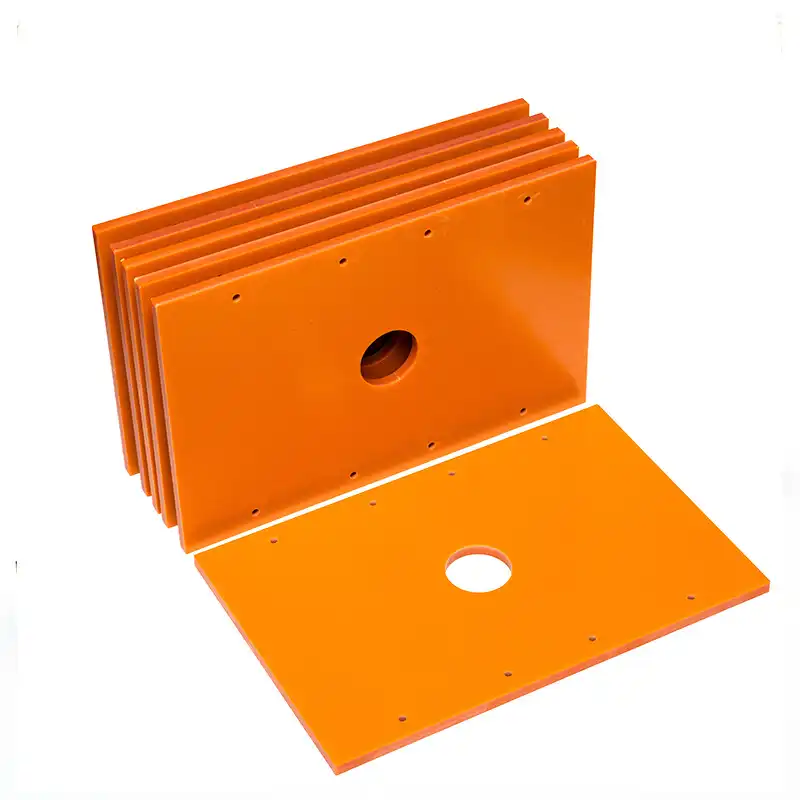
Understanding Bakelite Sheets and Their Properties
What Makes Bakelite a Preferred Industrial Material?
Bakelite sheet was the first man-made polymer. It was made when phenol and formaldehyde condensed together under controlled heat and pressure. This thermosetting phenolic glue is different from thermoplastic materials because it can't be melted down again once it's hardened. The cross-linking of molecules makes a stiff three-dimensional network that is very stable in all dimensions at temperatures up to 120°C.
To make something, support layers like paper, cotton fabric, or glass fiber are mixed with liquid phenolic glue and then pressed together using heat and pressure. The Bakelite sheets made by this lamination process have densities of about 1.45 g/cm³ and dielectric strengths of more than 10 MV/m, which makes them perfect for use as electrical shielding.
Common Grades and Their Industrial Applications
Different types of strengthening materials have different performance traits that are best suited to different industry needs:
Paper-Reinforced Grades: These affordable choices are great for electrical shielding because they don't absorb much water—less than 1%. When making electronics, engineering managers choose these types for PCB substrates, circuit board supports, and switchboard panels where dielectric strength is more important than mechanical stress.
Fabric-Reinforced Grades: Fabric reinforcement made of cotton or linen gives the product better mechanical strength and wear resistance. When it comes to gears, bearings, structural spacers, and motor parts that have to deal with friction and mechanical stress, mechanical engineers like these grades the best.
Glass-Reinforced Grades: Grades with glass fiber reinforcement are the most chemically and thermally stable. These grades are chosen by buying experts in the power sector for use as generator barriers, arc shields, and in high-temperature situations where regular grades would break down.
The material meets NEMA standards, which divide them into three groups: Grade X (highest mechanical strength), Grade XX (balanced properties), and Grade XXX (highest protection to water and electricity performance). Standardization helps procurement teams make sure that standards are clear across all global supply lines.
Advantages Over Alternative Insulation Materials
When you compare phenolic laminates to other materials, you can see that they are clearly better for CNC cutting. Melamine has a nicer look on the outside, but it can't handle temperatures above 100°C. Standard plastics like nylon can withstand impacts, but they can't handle electrical stress. Fiberglass alloys are strong, but they cost a lot more per kilogram and make dangerous dust when they are machined.
The economic feasibility, ease of machining, electrical qualities, and thermal durability of Bakelite sheet are all carefully balanced. The material is easy to work with because it doesn't melt, stays the same size through changes in temperature, and is much cheaper than clay or glass options. These features explain why companies that make electrical parts keep using phenolic laminates even though there are newer materials that are better.
Challenges in Drilling Bakelite Sheets and Their Causes
Common Drilling Defects and Quality Issues
When precision drilling Bakelite sheets, three major problems happen all the time. Chipping happens where the drill enters and exits the material, making rough edges that make it harder for electrical signals to flow through the completed parts. When internal pressures build up to a level that is higher than the material's breaking point, cracks appear all around the drill holes. Heat-induced bending leads to errors in measurements that build up over multiple drilling operations. This is especially a problem in applications with tight tolerances, like making PCBs.
These flaws happen because the material is naturally fragile—phenolic resin makes a stiff structure that can only take so much impact energy before it breaks. When local pressures are higher than the bonding strength between the resin and support, thermosetting plastics fail severely. This is not the case with ductile materials that bend plastically.
Root Causes of Machining Problems
Temperature sensitivity is the main reason why drilling mistakes happen. While the drill bit is still in place, friction heats up a small area and hardens the resin matrix. The difference in temperature causes the layers on the outside and inside to expand at different rates, which causes stress to build up and show up as cracks. If you keep drilling without letting the material cool down, the temperature can rise above 150°C, which speeds up the breakdown of resin and creates burned, weak spots around the holes.
Choice of tool has a direct effect on quality of result. Abrasive phenolic chemicals quickly dull high-speed steel drill bits, which causes too much friction and a bad surface finish. When cutting edges are dull, they push material instead of separating it cleanly, which makes more heat and increases the chance of breaking. When tools aren't hard enough, the abrasive support threads, especially glass, wear down cutting edges in minutes.
Impact of Machining Parameters on Drill Performance
Whether drilling works or not depends on the mix of feed rate and tool speed. Too fast of feed rates stress the cutting edge too much, breaking the material ahead of the drill bit. When spinning speeds are too slow, chips don't get moved away properly, and heat builds up in the cutting zone. Auto part makers learned these lessons the hard way, with lots of mistakes that cost a lot of money. In the end, they set up parameter settings that balance production speed with quality standards.
Machine problems are made worse by inconsistent Bakelite sheet quality. Changes in the amount of resin, insufficient curing, or contamination can make the drilling action unpredictable. Under the same conditions, some areas machine nicely while areas next to them chip badly. This variation makes it hard to plan output and raises the rate of scrap, which shows how important it is to buy from companies with strong quality systems.
Precision CNC Drilling Techniques for Optimal Results
Selecting Appropriate Tooling and Coatings
Bakelite sheet cutting requires carbide drill bits as the bare minimum because they are hard enough to prevent wear from abrasives. Diamond-coated tooling lasts ten times longer than carbide that isn't coated, which makes up for the higher original costs through fewer changes and more uniform hole quality. The low friction coefficient of the covering keeps the cutting edges sharp through thousands of cuts while reducing the amount of heat that is made.
The shape of the drill has just as much of an effect on the results as the choice of material. Point angles between 118° and 135° focus cutting forces well while still letting chips escape. Helix angles of about 30° match how well it cuts with how well it clears chips. Split-point shapes get rid of the knife edge that causes too much thrust forces, which lowers the problem of entry-side chipping that happens with regular drill designs.
Optimizing Spindle Speed and Feed Rate Parameters
When the spinning speed is between 3,000 and 8,000 RPM, shearing forces are created instead of pressing forces. This makes the cuts smoother and less likely to delamination. The exact speed relies on the diameter of the drill bit. Smaller bits can handle higher RPM, but larger sizes need slower speeds to keep the edge from moving too quickly. Standard machining formulae that balance cutting speed against tool life lead to this link.
Feed rates need to be carefully set, and they usually range from 0.05 mm to 0.15 mm per turn, based on the thickness of the sheet and the diameter of the drill. When output goals are close, it might not make sense to feed animals less, but active feeding makes heat faster than cooling systems can get rid of it. Manufacturers of electrical components found that cutting feed rates in half often doubled production flow by cutting down on downtime for repair and tool replacement.
Strategies for cutting depth are important, especially for thick laminates. Pecking cycles that retract every so often let the chip escape and let cool air into the hole. This method stops chip packing, which keeps the cutting zone warm and speeds up heat building. When providers in the power sector machine thick transformer barriers, they use peck depths of 3–5 mm and full withdrawal between cycles.
Cooling and Lubrication Methods
For phenolic drilling, air blast cooling is the best option. Compressed air streams are directed at the drill point to get rid of both heat and chips at the same time. This dry way keeps the hygroscopic material from absorbing liquid coolant, which would damage its electrical qualities. Between 60 and 90 PSI of air pressure is enough to cool things down without deflecting small-diameter drills.
Liquid coolants are used in specific situations where high precision calls for extra cooling steps after cutting. Water-soluble emulsions are better at removing heat than air, which lets more metal be removed. Manufacturers of automotive battery packs that need to drill precise alignment holes use flood cooling to keep errors below ±0.05mm and are willing to meet the drying requirements that follow.
Mist lubrication strikes a mix between how well it cools and how much it might contaminate the material. Fine oil drops in squished air act as lubrication, lowering friction while limiting liquid absorption. This mixed method works well in medium-production settings where setup difficulty is still manageable but dry cutting isn't enough.
Step-by-Step Drilling Procedure
Before cutting, the quality of the Bakelite sheet is checked, and any surface flaws that could get worse during the process are found. A visual inspection can find delamination, holes, or contamination that means the material needs to be thrown away before it can be machined. Multiple measurements of the sheet's thickness prove that it is the same thickness everywhere. This keeps tool breakthrough surprises from happening during planned drilling rounds.
Calibration of a CNC machine sets the stage for accurate results every time. Checking that the spindle runout is less than 0.01 mm makes sure that the tool rotates in a circle, which stops oval holes and early wear. By making sure the workholder is flat and using pressure or mechanical clamping, you can stop the sheet from moving, which can lead to position mistakes. These steps of tuning only take minutes, but they save hours of fixing later on.
When problems are caught in real time during production drills, they don't affect whole batches. Seeing the color and size of the chips gives you quick feedback—dark chips mean the tooling is too hot, and powdery chips mean the tooling is dull. By keeping an eye on thrust force through CNC controls, you can spot slow tool wear and change the tool before it fails completely and harms the workpiece.
Case Study: Electrical Component Manufacturing
A equipment maker had a hard time with 15% of their products being thrown away because of chipped holes in paper-reinforced phenolic insulators. The test showed that the high-speed steel drills were worn out and the feed rates were too high. Scrap fell below 2% when diamond-coated carbide tools were used and feed rates were slowed from 0.2 mm per revolution to 0.08 mm per revolution. The better quality made it possible for component standards to be tighter, which cut down on assembly rejection rates and made ties with customers stronger.
How to Source High-Quality Bakelite Sheets and Machining Services
Identifying Reputable Suppliers and Manufacturers
Quality licenses are the first thing that suppliers are checked for when they are evaluated for Bakelite sheet supply. UL recognition shows that electrical safety standards are met, which is important for insulation uses, and ISO 9001 approval shows that quality management systems are recorded. RoHS compliance is becoming more important as environmental rules get stricter around the world, especially in the technology and car industries.
To evaluate a manufacturing potential, you need to know how much can be made and what the technical limits are. When compared to old tools, suppliers who use current hydraulic presses with computerized controls offer more consistent work. In-house testing labs with dielectric strength analyzers, moisture absorption chambers, and mechanical test tools show a strong commitment to quality, which leads to reliable material features.
Geographic factors weigh the costs of logistics against the benefits of building relationships. Regional sellers make it easy to talk to them, get their products to you faster, and solve quality problems. But sometimes global sourcing offers better prices or special types that aren't available domestically. This needs a careful total cost analysis that takes into account freight, duties, and the costs of keeping goods.
Partnering With Specialized CNC Machining Providers
Custom cutting and precision drilling services are useful when internal machining isn't enough or when the complexity of a part needs specialized knowledge. Providers with a lot of experience keep the right tools on hand, follow set machining guidelines, and have quality control processes in place that take away the need for internal operations to learn new things.
Scalability is an important thing for OEM companies that want to grow. As product lines get better, having machining partners that can handle everything from small prototypes to large volumes of production gives you more options. This scalability means that as numbers rise, there is no need to switch providers. This keeps quality consistent and avoids delays in requalification.
As part of quality assurance protocols, the first item should be inspected, the process should be watched, and the end dimensions should be checked and written down in inspection reports. Manufacturers who are on the cutting edge use statistical process control to keep an eye on key measurements and trends before they make parts that don't meet standards. Premier service providers are different from commodity sellers because they offer after-sales help, such as technical advice and quick responses to quality concerns.
Conclusion
For precise CNC cutting of Bakelite sheet, you need to know how to use the right machining methods and understand the material's unique properties. By choosing the right tools, adjusting the settings, and keeping an eye on the process, you can avoid common flaws and get the tight tolerances that electrical and mechanical uses need. Even though there are younger options, the material's electrical insulation, thermal stability, and ability to be machined continue to make it the standard in many fields. When procurement professionals work with skilled suppliers and machinists, they gain a competitive edge through reliable part quality, lower scrap rates, and shorter wait times that help production processes be more flexible.
FAQ
Can Bakelite withstand automotive underhood temperatures?
Standard grades with paper reinforcements work effectively at temperatures up to 120°C, which is hot enough for many places under the hood. For use near exhaust systems or turbochargers, glass-reinforced Bakelite sheet types increase the temperature range up to 150°C. Insulation in battery packs usually works below 80°C, which is well within the range of all grades and makes use of their great dielectric qualities.
What causes white stress marks around drilled holes?
White halos show that there is a lot of stress in the area because the drill push force is too high or the cutting edges are dull. In the damaged areas, there is limited crushing that breaks up the resin matrix without removing all of it. These signs of stress that could affect the long-term dependability of the part can be removed by slowing down the feed rates, speeding up the spindle, and replacing old drill bits.
How does humidity affect machining quality?
Compared to nylon or other hygroscopic plastics, phenolic laminates don't take much water—usually less than 1% by weight. But absorbed wetness makes cutting easier by lubricating it. This slightly lowers the chance of chipping but could affect the stability of the dimensions after grinding. When stored under controlled conditions at 40 to 60 percent relative humidity, machinability and property stability are balanced.
Are there food-safe Bakelite grades available?
Standard phenolic laminates don't have food contact approvals because formaldehyde could move through them. When food safety is needed, different materials like polypropylene or FDA-compliant plastics must be used. Electrical protection and industrial uses are still the main areas where Bakelite sheet qualities make it the best choice.
Partner With J&Q for Reliable Bakelite Sheet Supply
J&Q has been making phenolic laminates and soundproofing materials for more than 20 years and has a lot of technical knowledge as well as full supply chain capabilities. Our factories follow strict quality control rules that are in line with international standards. This makes sure that every Bakelite sheet meets the exact requirements that companies that make electrical parts, machines, and industrial OEMs need. We know that the first step to successful precision CNC drilling is using approved, consistent materials. Before shipping, our in-house testing laboratory checks the dielectric strength, mechanical qualities, and dimensional tolerances.
As a well-known provider of Bakelite sheets, we can offer custom thickness choices, different grades of reinforcement, and expert advice to help you match materials to your particular needs. Our combined logistics operation offers a one-stop service from placing an order to delivering it, making it easier for foreign buyers to buy things. Whether you need a small sample or a lot of products, our experienced team can help. We communicate quickly and give accurate lead times, which keeps production plans on track. Email our technical sales team at info@jhd-material.com to talk about your Bakelite sheet needs and find out how our years of experience can help you succeed in your machining.
References
Richardson, M.J. (2019). Thermosetting Polymers: Processing and Applications in Modern Manufacturing. Industrial Materials Press.
Zhang, H. & Kumar, S. (2021). "CNC Machining Parameters for Phenolic Composites: An Experimental Analysis." Journal of Manufacturing Processes and Materials, 45(3), 287-301.
National Electrical Manufacturers Association (2020). NEMA Standards Publication LI 1-2020: Industrial Laminating Thermosetting Products.
Davidson, P.R. (2018). Precision Drilling Techniques for Composite and Laminate Materials. Manufacturing Technology Institute.
Chen, W., Liu, X. & Anderson, K.M. (2022). "Tool Wear Mechanisms in Drilling Reinforced Phenolic Laminates." International Journal of Advanced Manufacturing Technology, 118(7), 2245-2260.
Wilson, T.A. (2020). Material Selection for Electrical Insulation: Engineering Properties and Industrial Applications. Technical Publishing Group.

Get a complete product list and quotation

J&Q New Composite Materials Company