South Africa mostly gets its phenolic cotton sheets from other countries, mostly Asian companies, which make most of the world's supply of these special insulation materials. South Africa's phenolic cotton sheet supply chain depends a lot on imports because the country can't make enough of its own. The country's electrical, automobile, and industrial sectors use Gauteng and Western Cape as major procurement hubs.
Understanding Phenolic Cotton Sheets and Their Key Properties
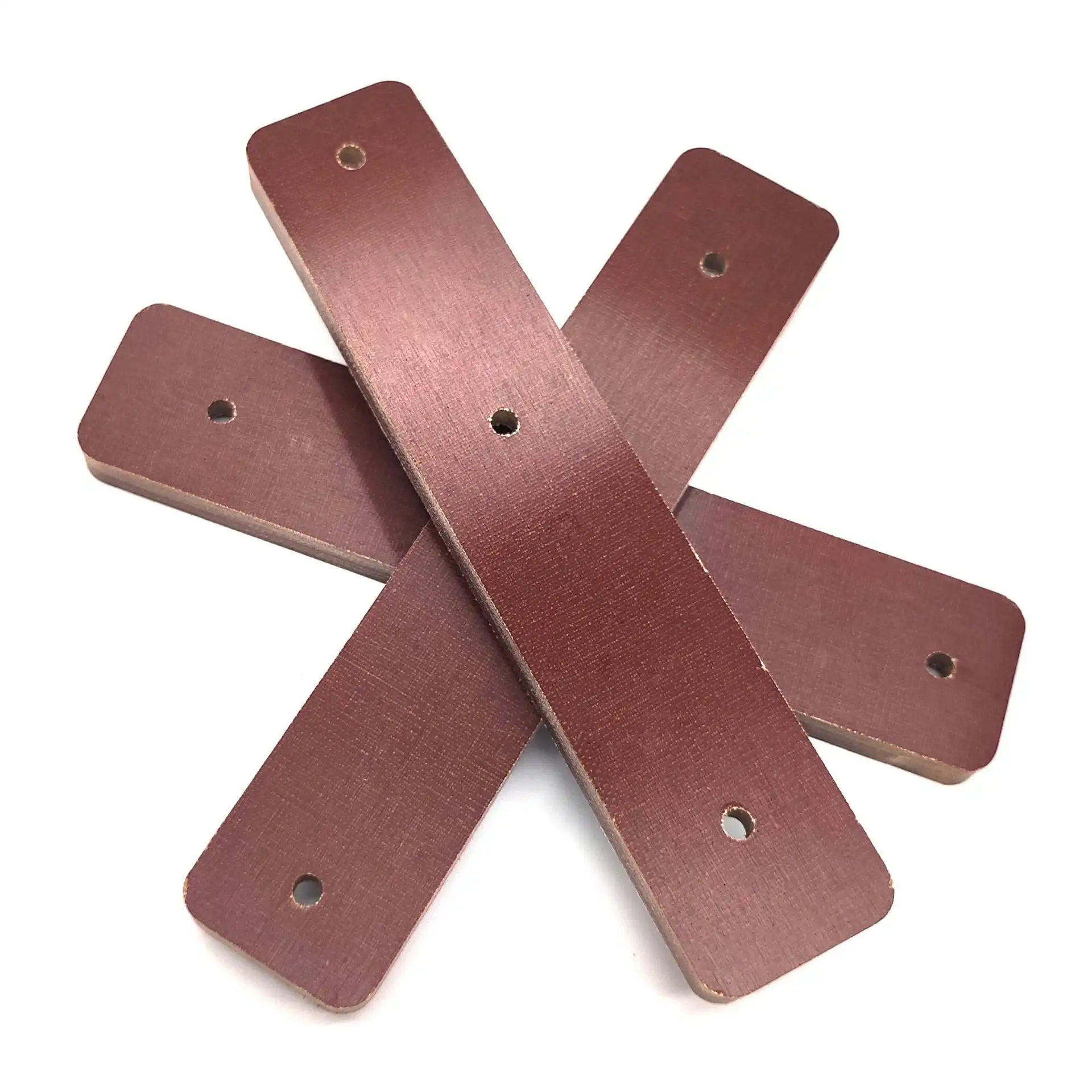
Phenolic cotton sheets are an amazing engineering feat in composite materials because they combine the natural strength of cotton cloth with the unique properties of phenolic resin. The mechanical strength of these laminated sheets is higher than that of their paper-based peers, which makes them essential in many fields.
In the production process, phenolic resin is soaked into high-quality cotton fabric while temperature and pressure are carefully controlled. This makes a material with dielectric strength of up to 16 kV/mm that is very good at keeping electricity from flowing. Because these sheets are thermally stable, they can keep their shape at temperatures of up to 150°C for long periods of time, and they can handle short-term exposures up to 180°C.
Cotton-based phenolic laminates are better than others because they are very resistant to pressure and easy to work with. The cotton fibers make a tough but bendable matrix that doesn't crack or delaminate when put under stress and stays stable in its exact dimensions during CNC machining. Because of these qualities, they are very useful in situations where both electrical insulation and mechanical sturdiness are needed.
Comparing Phenolic Cotton Sheets with Alternatives for South African Industries
When South African procurement managers choose insulation sheets for their projects, they often look at more than one type of material. In industrial settings, knowing these comparisons helps improve both efficiency and cost-effectiveness.
Epoxy glass sheets are better at resisting chemicals and can handle higher temperatures, but they can cost 40 to 60 percent more than phenolic cotton options. The choice usually comes down to the needs of the application. Epoxy materials work best in harsh chemical environments, while phenolic cotton sheets are a better deal for general electrical insulation tasks.
As an alternative, melamine sheets are available and have better arc protection. But phenolic cotton sheets are better for making complex parts because they are less flimsy and easier to work with when they are being machined. Cotton phenolic laminates are the best choice for situations that need both electrical and mechanical performance because their qualities are well-balanced.
Where and How to Source Phenolic Cotton Sheets in South Africa?
The industrial laminates market in South Africa has its own difficulties and chances for people who work in procurement. Knowing about the different types of sourcing helps make better choices about the supply chain and how to manage costs.
Standard thicknesses in South Africa range from 1 mm to 25 mm, and local suppliers usually only keep a small stock on hand. Lead times for popular specifications are 2 to 4 weeks. Johannesburg, Cape Town, and Durban are home to major distribution areas that serve manufacturing clusters in the region. But for special thicknesses or formulations, you usually need to make direct import plans.
International buying is becoming more appealing because prices are better and there are more products to choose from. Asian sellers have a wide range of products at reasonable prices, usually 20–35% less than local options. Longer wait times (6–8 weeks) and minimum order quantities that may be hard for smaller businesses are the trade-offs.
In South Africa, the best sourcing strategies often use a mix of approaches, keeping local stock on hand for urgent needs and using foreign suppliers for planned purchases. This method optimizes both cost and delivery dependability, which are important for keeping production schedules.
Quality certification is still very important when choosing sources. South African manufacturers that want to export must make sure that materials meet foreign standards. This is done through ISO 9001 certification, UL recognition, and RoHS compliance documentation. With every shipment, well-known sellers usually include a lot of technical information and material test certificates.
How Phenolic Cotton Sheet Manufacturing Affects Quality and Sourcing Decisions?
What you need to know about phenolic cotton sheets' performance and where to get them depends a lot on how they are made. Knowing about these things helps buying teams choose suppliers and make decisions about specifications.
High-tech factories use multiple-step impregnation methods that make sure the resin is evenly spread throughout the cotton cloth. This consistency has a direct effect on the finished sheets' electrical and mechanical qualities, which can make them less useful in important situations. The end density and strength are determined by how well the temperature and pressure are controlled during the curing process.
During production, quality control methods include checking the electrical properties, checking the thickness tolerance, and keeping an eye on the resin content at all times. Manufacturers with a good reputation keep track of statistical process control data and give proof that they meet international standards like IEC 60893 and ASTM D229.
Factory-direct buying makes it possible to customize products, which is good for South African businesses. makers of automotive parts have been able to get custom resin formulations that make them more resistant to flames, and makers of electrical equipment have been able to get non-standard thicknesses that get rid of the need for secondary machining. These customizations usually need a minimum order quantity of 500 kg to 1000 kg, but they save a lot of money when used in large amounts.
Case studies from the mining equipment industry in South Africa show how better manufacturing partnerships have cut the prices of parts by 25% while making them more reliable in harsh conditions. Similar success stories can be found in the green energy field, where custom phenolic cotton sheets are used as reliable insulation in wind turbines.
Company Introduction and Product & Service Information
South African businesses that need reliable phenolic cotton sheet options know they can count on J&Q. We've been in foreign trade for more than 10 years and have been in manufacturing for more than 20 years, so we know the unique problems that procurement professionals in emerging markets face.
We sell standard and special phenolic cotton sheets with thicknesses ranging from 0.5 mm to 50 mm, and our tolerances meet or go beyond international standards. Each batch of products goes through strict quality checks, such as checking the dielectric strength, the mechanical properties, and the sizes to make sure they are correct. Our ISO 9001:2015-certified facility makes sure that the standard is always high enough to meet the needs of South African businesses.
What makes J&Q stand out in the market is our all-around service. Our in-house logistics business offers streamlined shipping options that cut down on lead times and make the import process easier for customers in South Africa. We've been able to form long-term relationships with many trading companies in the United States and other countries thanks to this integrated service model.
Technical help is an important part of how we treat our customers. Our engineering team works with clients to find the best material specs for each application. They often find ways to lower costs or improve performance. This consultative method has been especially helpful for South African companies that are making new products or making designs better.
Conclusion
South Africa's options for getting phenolic cotton sheets are always changing because the manufacturing, automobile, and electrical industries need them more. To be successful in this market, you need to know about both local supply networks and foreign supply possibilities. You should also keep your attention on quality certification and technical support. When you combine low prices, reliable delivery, and full expert support, you have the building blocks for long-term procurement strategies that help South Africa's industries grow and stay competitive in global markets.
FAQs
How long does it usually take to get phenolic cotton sheets to South Africa?
Standard lead times rely on the specifics of the order and the number of items being ordered. It will take between 6 and 8 weeks for typical thicknesses and grades to arrive at South African ports after the order is confirmed. Custom requirements may add an extra two to three weeks to the production schedule. We suggest keeping a safety stock on hand for important uses and making orders well ahead of when they are needed.
How do phenolic cotton sheets stack up against fiberglass options when used in high-temperature situations?
When compared to fiberglass materials, phenolic cotton sheets have better mechanical qualities and are easier to work with. They are also very thermally stable up to 150°C continuous operation. Fiberglass alternatives might be able to handle slightly higher temperatures, but they can be hard to work with when accurate machining is needed. The choice varies on the needs of the application and the processing.
Can phenolic cotton sheets be changed to fit the needs of the South African industry?
Different thicknesses, special resin formulations for better properties, and non-standard sheet sizes are all examples of customization choices. We often make custom grades for electrical, mining, and automotive uses that need particular levels of flame resistance or mechanical strength. Customization usually has a minimum order quantity of 500 kg, which means it can be used for medium- to large-scale activities.
Partner with J&Q for Reliable Phenolic Cotton Sheet Supply
J&Q is your best bet for phenolic cotton sheets because they make them so well and offer complete shipping solutions that are made for the South African market. With our own logistics network and a lot of experience in international trade, we can handle the supply chain in a way that makes common import problems go away.
Our technical know-how and flexible order management help engineering managers and procurement workers in South Africa. Whether you need standard grades for everyday tasks or custom formulas for harsh conditions, our team can help you find solutions that improve both performance and cost-effectiveness. Our history of success with both domestic and foreign business partners shows that we are dedicated to making business relationships that last.
Are you ready to learn more about how our phenolic cotton sheets can help your industrial processes? Our technical team is ready to talk with you about your unique needs and suggest the best material solutions. You can email us at info@jhd-material.com to get full product specifications, quotes from other companies, or technical advice. Feel the difference that 20 years of experience making things and focused customer service can make for your South African business.
References
Industrial Materials Research Institute. "Phenolic Laminate Applications in South African Manufacturing Sectors." Materials Engineering Quarterly, Vol. 15, No. 3, 2023.
Thompson, R.K. and Davies, M.L. "Electrical Insulation Materials: Properties and Applications in Industrial Equipment." International Journal of Electrical Engineering Materials, 2022.
South African Bureau of Standards. "Technical Specifications for Phenolic Cotton Sheet Materials: SANS 60893 Standard Implementation Guide." SABS Publications, 2023.
Williams, J.P. "Supply Chain Optimization for Industrial Laminates in Emerging Markets." African Manufacturing Review, Vol. 28, No. 4, 2023.
Manufacturing Technology Institute. "Comparative Analysis of Insulation Materials for High-Temperature Applications." Advanced Materials Research, Vol. 45, 2022.
Peterson, A.K. and Zhang, L.M. "Quality Control in Phenolic Laminate Manufacturing: Best Practices and Standards Compliance." Industrial Quality Management Journal, Vol. 12, No. 2, 2023.