What Is Bakelite CNC Machining? Everything You Need to Know
Using computer numerical control technology to precisely cut, drill, and shape Bakelite sheet—a thermosetting phenolic resin laminate—is what Bakelite CNC machining is all about. This method changes stiff phenolic paper or fabric-based laminates into complicated electrical insulators, mechanical spacers, and heat-resistant parts that can be made to very precise sizes. CNC machining is different from traditional hand-made fabrication because it achieves repeatable precision while reducing material stress and waste. This makes it essential for industries that need reliable insulation performance and structure integrity in harsh thermal and electrical environments.
Understanding Bakelite and Its Industrial Significance
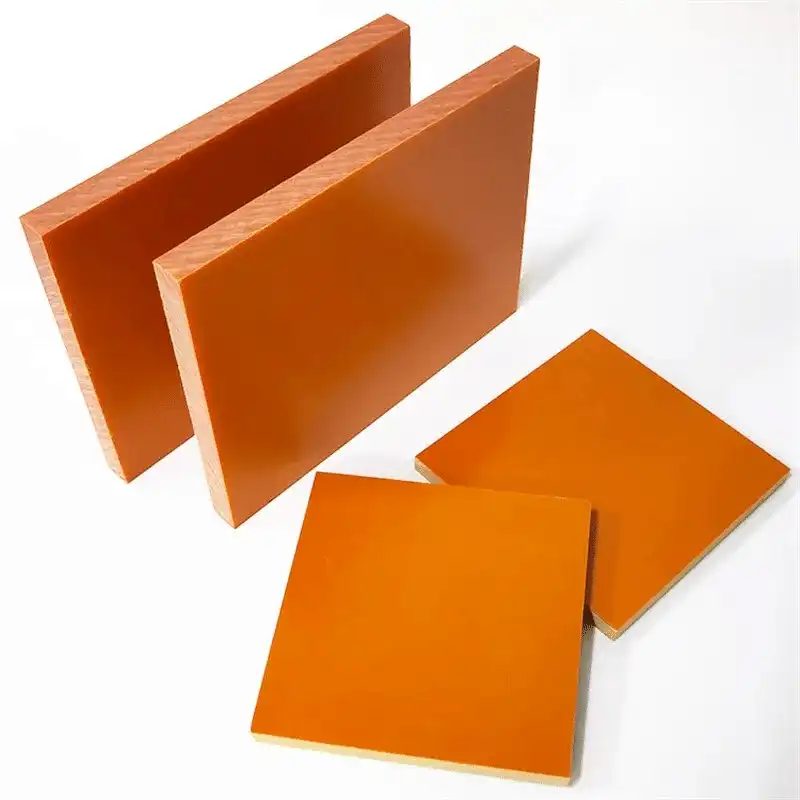
Bakelite was one of the first manufactured plastics to be sold commercially, and its usefulness in modern industry hasn't been questioned. Because Bakelite sheet is made of a thermosetting phenolic resin, it goes through an unreversible hardening process during production. This makes a cross-linked molecular structure that won't melt or change shape when heated. This is what makes it different from thermoplastics like ABS and PVC, which melt and lose their shape when they get hot.
What Makes Bakelite Sheet Unique in Industrial Applications
The material is the best choice for electrical protection systems because it has a high dielectric strength (often more than 12 kV/mm) and can handle heat up to 300°F. Power distribution companies use phenolic laminates for arc shields and generator coil barriers because the material stays the same size even when it goes through changes in temperature. Engineers who work on cars use it to insulate battery packs where lithium-ion cells make a lot of heat. Manufacturers of home appliances use Bakelite in motor housings and switch assemblies because they know it won't conduct electricity or bend after a long time of use.
Why B2B Buyers Prioritize Bakelite for Critical Components
There is always pressure on procurement managers and engineering teams to find a good mix between efficiency and cost. This balance is achieved by Bakelite sheet, which has the mechanical strength of some metals but the low weight and ease of machining of modern composites. The material is naturally flame resistant and meets UL94 V-0 standards without any extra coats. This cuts down on the number of steps needed for production and makes approval easier. Chemical resistance to oils, solvents, and weak acids makes parts last longer in tough industrial settings where other materials break down quickly.
Flexibility in manufacturing is also very important. There are different types of phenolic laminates, such as paper-based for electrical uses and fabric-reinforced for mechanical strength. This lets engineers fit the exact properties of the material to the needs of the application. You can choose from thicknesses ranging from 0.5mm to 50mm, so you can use them for anything from thin insulation washers to strong structure supports. Because it is so flexible, businesses from power production to transportation still use Bakelite even though newer materials are coming out.
The CNC Machining Process for Bakelite Sheets
Using traditional tools to cut and drill phenolic laminates by hand was very difficult. Operators had a hard time with chipping along the edges of cuts, stress cracks from bad clamps, and differences in the sizes of parts from one production batch to the next. CNC cutting completely changed this scene by adding computer-controlled accuracy that works around Bakelite's natural brittleness while increasing output.
How CNC Technology Handles Phenolic Laminate Properties
Modern CNC cutters and mills use carefully measured factors to work with Bakelite sheets. Spindle speeds are usually between 12,000 and 18,000 RPM, which is fast enough to make clean cuts without making too much friction heat that could hurt the resin matrix. Carbide or diamond-coated tools can handle the roughness of the paper and fabric fillers in the laminate, so the cutting edges stay sharp even after long production runs.
Feed rates need to be carefully balanced. If they are too slow, friction builds up, and if they are too fast, the brittle material breaks. Professional machine shops use adjustable toolpaths that lower cutting forces at corners and other difficult to cut areas. This stops the formation of micro-cracks that weaken electrical shielding. Using coolant does two things: it gets rid of dust that gets in the way of accuracy and stops localized heating that breaks down the phenolic resin bond.
Achieving Tight Tolerances for Industrial Components
Electrical companies often need fixing holes in control panels to have positional errors of less than 0.05 mm. This level of accuracy is made possible by digital work-holding fixtures and automatic tool measurement systems in CNC machining. In a single setup, multi-axis machines can drill holes that are perpendicular to each other, mill complex pockets, and make chamfered edges. This eliminates the mistakes that happen when parts are moved around.
Dimensional precision is only one part of quality control. Both electrical efficiency and mechanical assembly are affected by the finish on the surface. CNC methods consistently produce Ra values between 1.6 and 3.2 μm. These values are smooth enough to keep voltage from tracking across insulation surfaces but rough enough to keep mechanical joints frictional. Coordinate measuring tools are used for post-machining checking to make sure that finished parts meet the specifications sheets before they go into the assembly lines.
The ability to work with complicated shapes opens up design options that couldn't be reached by hand. Automotive engineers now ask for Bakelite mounts that have mounting bosses and wire routing tubes built in. In the past, these features had to be added by putting together multiple parts. Power equipment makers buy transformer spacers with curves and notches that are perfectly matched. This cuts down on building time and improves electrical clearances.
Buying and Procuring Bakelite Sheets for CNC Machining
Strategic buying of phenolic laminates has a direct effect on how well products are made and how reliable their parts are. When engineers look at possible sources, they have to make choices about more than just unit price. These choices affect things like the consistency of materials, the quality of professional help, and the resilience of the supply chain.
Evaluating Supplier Capabilities and Certifications
Quality management systems show how serious a company is about being consistent. While ISO 9001 approval shows that process controls have been written down, sellers who work with electrical markets should also show that their materials are UL recognized as insulating. Companies that sell goods in other countries need to make sure their products comply with ROHS and REACH. This is especially important in the car and consumer electronics industries, where fines for materials that don't follow the rules can stop production.
When parts break, being able to track down the materials used becomes very important. Reliable providers keep records of each batch that connect each sheet to a particular production date, resin lot number, and test result. This paperwork helps engineering teams quickly find problems with quality and keeps expensive recalls from happening. Manufacturers who are sure of their processes will be happy to share sample test results that show dielectric strength, flexural stiffness, and water absorption values.
Matching Material Grades to Application Requirements
Paper-based Bakelite sheets are a cheap way to get good electrical insulation, which makes them good for PCB supports and low-load structure parts. Fabric-reinforced grades, which are sometimes called cotton phenolic or linen phenolic, give gears, bearings, and high-stress insulators a lot more impact strength and mechanical longevity. By knowing these differences, you can avoid either over-specifying expensive materials when normal types will do, or, even worse, under-specifying materials and having them fail in the field.
The supply of thickness has a direct effect on how well machines work. Buying sheets that are a little bigger than the finished part's size cuts down on waste while still giving you enough binding space. If a supplier can custom-slit sheets to the sizes you specify, you may not have to do as much cutting yourself. However, this ease usually comes at a higher cost. When discussing an annual contract, bulk buyers can often get better prices by agreeing to standard sizes and longer lead times.
Logistics Considerations for Industrial Procurement
Phenolic laminates come in stiff pieces that need to be handled carefully to keep the edges from getting damaged or delaminating. Suppliers with well-established transportation networks know how to properly package items using edge guards, moisture-barrier wrapping, and palletization that keeps items from bending while they're being shipped. Lead times depend a lot on the grade that is available. For example, standard paper-based sheets can usually be shipped within days, but production runs for specialized cloth grades may take several weeks.
Terms of payment and minimum order amounts affect how cash flows are managed. Smaller machine shops may have trouble with suppliers that demand big minimum orders, but makers that make a lot of things benefit from bulk prices that lower the cost per unit. Having ties with several approved providers gives you options for when you need to place an urgent order or when your main sources are full.
Practical Tips for Working with CNC Machined Bakelite
To get the most out of phenolic laminate parts in terms of performance and lifespan, you need to pay attention to how they are handled in ways other than cutting. Expert makers come up with rules for how to store the material, get it ready for machining, and treat it after the process is done that keep the qualities that make Bakelite useful in the first place.
Pre-Machining Inspection and Preparation
Visual inspection finds flaws before costly machine time is lost. Look for delamination along the sides of the sheet, darkening that means it's absorbing water, or surface flaws that mean the curing wasn't done evenly during production. If you don't store things properly and subject them to high humidity or extreme temperatures, they may not be stable in their dimensions, which can cause them to twist after being machined to release internal stresses.
A lot of workers don't understand how important acclimation is. When phenolic sheets are brought from cold storage straight into a heated shop, they expand due to heat, which changes the measurements that were set. Unexpected changes in size can be avoided by letting the material rest at room temperature for 24 hours before cutting it. This patience is especially important for big screens, where even small changes in size can cause big problems with placing.
Tool Selection and Maintenance Strategies
When cutting phenolic materials, carbide endmills with smooth edges cut down on friction and make it easier for chips to escape. The shape of the tool has an effect on the outcome; positive rake angles cut through the laminate structure smoothly, while negative rake angles tend to break and crush the material. Checking for tool wear on a regular basis keeps the quality of the cuts from getting worse, which can show up as fuzzy edges or more burring that needs more deburring.
Systems that get rid of dust protect both the tools and the people who use it. Fine particles with phenol and formaldehyde leftovers are made during phenolic grinding. Effective vacuum collection at the cutting point keeps things visible, keeps dust from building up in the machine ways and bearings, and follows safety rules at work. Standard shop vacuums miss submicron particles, but high-efficiency particulate screens catch them.
Post-Machining Treatment and Storage
A thorough cleaning gets rid of any cutting dust that might get in the way of electrical work or assembly. Ultrasonic cleaning can get to parts inside things that are more complicated than compressed air can. Some makers use conformal coatings to close the porous edges that are left open during cutting. This keeps water from getting in and destroying the dielectric properties over time.
When parts are stored correctly, they keep their quality until they are installed. Parts made of Bakelite should be kept in dry places, out of direct sunlight, so that the top layers don't break down. Stacking parts with protected sheets between them keeps them from scratching and lets air flow. When sending to tropical climates or keeping for a long time before assembly, sealed packing with desiccant packs is helpful for parts that are going to be used in important electrical applications.
Comparing Bakelite with Other Materials in CNC Applications
The choice of materials affects how well a product works, how much it costs to make, and how reliable it is in the long run. When engineers compare Bakelite sheet to other insulating materials, they need to know the unique trade-offs that each one makes in terms of temperature, electrical, and mechanical performance.
Bakelite Versus Epoxy Resin Laminates
Compared to regular paper phenolic sheets, epoxy-based materials like FR4 are stronger and better at keeping water out. Because of this, epoxy laminates are the best choice for making PCBs where keeping the dimensions stable during wave soldering is important. Phenolic materials, on the other hand, have better arc protection and work well enough for many electrical uses while costing about 30–40% less. Often, the choice comes down to whether your application really needs the best features of FR4 or whether phenolic grades meet the requirements while making the price more competitive.
Comparing Thermosetting Versus Thermoplastic Options
Injection molding is easy for making a lot of things with modern industrial plastics like PVC, ABS, and nylon. These thermoplastics can be melted down and reshaped, which makes recycling possible and cuts down on waste. However, this same quality turns into a problem in places with high temperatures. When heat and mechanical force are applied for a long time, thermoplastic insulators soften and creep, losing their shape over time. Bakelite sheet keeps its shape and electrical qualities for a long time, which makes it impossible to replace in places where temperatures change quickly, like motor commutators and transformer spacers.
When Alternative Materials Outperform Phenolic Laminates
Ceramic shields work best in very high temperatures that are too high for Bakelite to handle. In furnaces and high-voltage transmission equipment, aluminum oxide and ceramic parts are often used at temperatures above 500°F. One trade-off is that ceramics are harder to work with because they need special diamond tools and cutting methods that are much more expensive than CNC shaping Bakelite. Also, the brittleness of the material goes up, which makes ceramic parts more likely to break when they are handled or installed.
Silicone rubber insulation are more flexible than phenolic sheets, which are hard. Elastomeric materials are useful for applications that need to reduce vibrations or fit into rough surfaces. But their electrical performance is very different. Silicone materials usually have lower dielectric strength and higher dissipation factors than Bakelite. This means they can't be used in high-frequency or high-voltage situations where shielding efficiency is important.
These similarities make it clear that Bakelite's balanced shape is what makes it so useful for a long time. The material works well enough in terms of electrical, thermal, and mechanical performance for most industrial insulation needs. It is also affordable and easy to work with standard tools. This is the reason why transformer makers, appliance names, and car sellers still use phenolic laminates even though new materials have been developed for decades.
Conclusion
Bakelite CNC machining combines old knowledge about materials with modern precise production to make parts that meet strict electrical and mechanical requirements in a wide range of industries. Because they are thermosetting, phenolic laminates offer better heat stability and insulation than thermoplastics. Additionally, CNC technology makes it possible to make complicated shapes that would not be possible with traditional methods of production. Consistent part quality is ensured by strategic buying that focuses on source quality systems, the right material grades, and reliable transportation. Understanding how to prepare for cutting, use the right tools, and handle parts properly after the process makes them last longer. For engineering teams and procurement managers looking for tried-and-true insulation options, Bakelite sheet is a cheap option that has been used in industry for more than one hundred years.
FAQ
What thickness options are available in Bakelite sheet for CNC machining?
Phenolic laminates usually come in thicknesses between 0.5 mm and 50 mm, with frequent increases of 1 mm, 1.5 mm, 3 mm, 6 mm, and more. For electrical insulation, busbar isolators and terminal boards use thinner sheets. Thickner materials, on the other hand, are used for gears, spacers, and mechanical supports because they are stronger. Some providers can slit to your specific thickness, but common measurements are cheaper and take less time to get.
Can CNC machined Bakelite components meet UL certification requirements?
UL has approved certain electrical ratings and flame classes for high-quality phenolic laminates from well-known makers. As long as machining doesn't damage the insulation integrity, the base material approval can be transferred to produced parts. The electrical properties that allow UL recognition can be kept by making sure that the edges are of good quality and that the material is not contaminated during production. Ask your provider for material certificates that list the UL file numbers that are needed.
How does moisture affect Bakelite sheet performance?
Compared to hygroscopic materials, phenolic laminates don't take much water—usually less than 1% by weight after 24 hours of soaking. In precision uses, this absorption can make the dielectric strength and size accuracy a little less good. Keeping materials in controlled humidity and covering machined edges with the right coats keeps dampness out as much as possible. Fabric-based grades are better at resisting wetness than paper phenolic grades, which makes them better for use outside or in places with a lot of humidity.
What distinguishes paper-based from fabric-based Bakelite grades?
Electrical protection and low cost are the most important things for paper phenolic laminates, which makes them perfect for circuit boards, switch components, and low-mechanical-load uses. Fabric phenolic grades, which are reinforced with cotton or linen, have much higher impact strength, bending stiffness, and wear resistance, making them ideal for use in gears, bearings, and structural insulators. The cloth reinforcement makes it less brittle, so smaller pieces can be made without the risk of breaking. Which material you choose should depend on whether the main goal of your application is electrical performance or mechanical stability.
Partner with J&Q for Your Bakelite Sheet Requirements
J&Q has been making phenolic laminates and insulation materials for more than 20 years and has a lot of technical knowledge as well as good customer service. Our factories use ISO 9001 quality systems and are recognized by UL. This makes sure that every Bakelite sheet meets strict electrical and mechanical standards. With more than ten years of experience as both a producer and an exporter, we know the paperwork, transportation, and communication needs that make cross-border buying easy. Our integrated logistics skills allow us to provide true one-stop service, from placing your order to clearing customs and arriving at your site. Our expert team can help you find the right material properties for your needs, whether you need standard paper phenolic sheets for switchgear parts or special fabric-reinforced grades for mechanical uses. Contact our purchasing experts at info@jhd-material.com to talk about your project's needs, ask for material certifications, or get reasonable prices from a reliable Bakelite sheet provider that cares about the success of your production.
References
Baekeland, L. H. (1909). "The Synthesis, Constitution, and Uses of Bakelite." Industrial & Engineering Chemistry, Vol. 1, No. 3, pp. 149-161.
Morgan, P. (1954). The Chemistry of Synthetic Resins and Plastics. Chapman & Hall Technical Publications, London.
Richardson, T. (1989). Industrial Plastics: Theory and Applications. Delmar Publishers, Albany, New York.
Chanda, M. & Roy, S. K. (2006). Plastics Technology Handbook, Fourth Edition. CRC Press, Boca Raton, Florida.
Harper, C. A. (2002). Handbook of Plastics, Elastomers, and Composites, Fourth Edition. McGraw-Hill Professional, New York.
Wypych, G. (2016). Self-Healing Materials: Principles and Technology. ChemTec Publishing, Toronto, Canada.

Get a complete product list and quotation
J&Q New Composite Materials Company