What Equipment Is Used for NEMA CE Sheet Fabrication?
If you're looking for tools to make NEMA CE sheets, you should look for specialized machines that can turn raw phenolic cotton laminates into precise electrical insulation parts. The main pieces of equipment are CNC machine centers with carbide tools, hydraulic cutting systems, punch presses for working with complicated shapes, and stations just for finishing the surface. It's important to know which tools can give you the tight tolerances and structural stability that your electrical applications need. Not knowing which tools can cause costly repair cycles instead of smooth production runs.
Understanding NEMA CE Sheet Fabrication: Key Concepts and Standards
What Defines NEMA CE Sheet Material
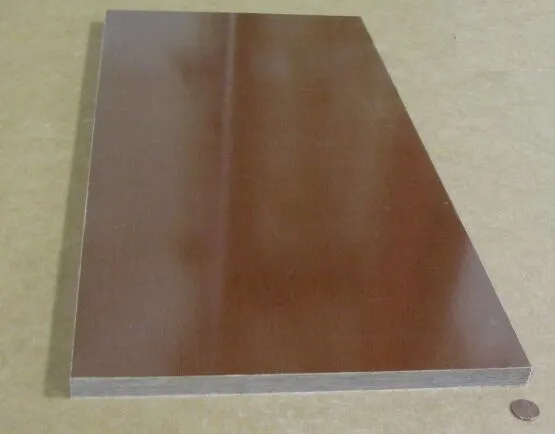
NEMA CE sheets are made from canvas-based phenolic laminates that are made according to the NEMA LI-1 standard. Cotton fabric layers are bound with phenolic resin to make a composite that can withstand constant operation at 130°C and offer Class B insulation. This substance solves a specific problem in industrial machines by offering both mechanical strength and electrical separation in places where metal parts could cause arc hazards. The "CE" label tells you that the canvas is electrical grade, which makes it different from canvas grades that aren't electrical or linen-based options.
Compliance Requirements That Shape Equipment Selection
Certification guidelines directly tell tools what it can do. NEMA LI-1 tells you what your manufacturing equipment must always do in terms of thickness fluctuation, bond strength, and dielectric breakdown voltage. If you look at NEMA CE standards next to IEC 60893 standards, which are popular in European markets, you'll see that NEMA puts more stress on tighter controls over dimensions and moisture absorption limits below 1.6% for 24-hour immersion tests. This difference is important because your testing equipment needs to be sensitive enough to find tiny delamination that could weaken the insulation during production runs, and your cutting tools need to stay accurate throughout production runs.
How Standards Influence Global Procurement Strategy
Dual certification standards can be hard for procurement teams that work with both North American and foreign markets. A manufacturing line that makes NEMA CE parts for transformer makers might need both UL approval for flame protection and ROHS approval for use in electronics at the same time. Because things are so complicated, you need to make sure that the equipment you buy is both flexible enough to handle a lot of different testing methods without slowing down production and accurate enough to meet the highest standard for all of your products.
Essential Equipment for NEMA CE Sheet Fabrication
Precision Cutting Systems
Cutting systems, joining equipment, and quality control tools make up the machinery environment for making NEMA CE sheets. Each group deals with a different problem that comes up when you try to make parts out of rigid sheet material that fit together within micron-level tolerances while still keeping the material's electrical and mechanical qualities. Glass-reinforced phenolic laminates are rough, but CNC cutters with carbide or diamond-tipped tools can work with them without breaking down too quickly. Standard steel bits get dull in hours on glass cloth made into electrical-grade sheets. Choosing the right tool material is a secret cost factor. Laser cutting systems provide an alternative route. They don't put mechanical stress on the material, but they do create heat-affected zones that can change the qualities of the plastic within 0.5 mm of the cut edge. When it comes to panel sizing, hydraulic shearing machines make straight cuts that are cheap, but they don't have the geometric freedom that CNC systems do for making complex motor bracket shapes or gear blanks.
Before you buy cutting technology, you should think about how dust filtration will work with your production floor. Glass fiber dust that is made during grinding is dangerous to breathe in and builds up on precise surfaces, making them less accurate over time. When working with materials that have woven supports, enclosed cutting rooms with negative pressure systems are required instead of just a choice.
CNC Punching and Forming Equipment
When setting up punch presses for phenolic materials, the tonnage figures are different from when making metal. Because finished phenolic resin is brittle, you have to deal with fracture mechanics instead of plastic deformation. Tighter punch and die gaps than usual in metal casting stop microcracking at the edges of holes, which spreads when temperatures change and lowers the dielectric strength. Servo-driven presses let you control the speed of the punch and the stay time, which lowers the shock loads that cause delamination below the surface that can't be seen.
When doing forming tasks, there are extra limits. Even though NEMA CE sheets are easier to work with than glass epoxy laminates, they can't be bent past small radiuses. When making dies are heated, they can become more flexible, but if the temperature gets too high, the resin could break down, which would show up months later as dimensional shift in service. Most fabricators only use NEMA CE for flat or slightly curved shapes, and thermoplastic is used for more complicated three-dimensional forms.
Surface Treatment and Finishing Stations
When finishing the surface of phenolic parts, the goal is to make sure the surface is flat all the way across and get rid of any cutting marks that get in the way of assembly standards. Belt sanders with progressively finer grits can make surfaces flat to a certain level, but rough sanding creates heat that can bend thin-section parts. Wet grinding devices let you set the temperature, but they need to be managed for the resin particles in the wastewater.
Coating systems aren't usually used on NEMA CE sheets that are going to be used as electrical shielding because adding more layers makes dielectric testing less accurate. On the other hand, parts that do mechanical work might be treated with dry film oils or corrosion-resistant coatings. Because phenolic surfaces are porous, application equipment needs to be able to handle them. They take coats differently than metals and need different cure times.
Quality Control Instrumentation
The NEMA CE inspection procedures focus on three areas of measurement: checking the dimensions, testing the dielectric, and checking the stability of the bond. Coordinate measuring machines (CMMs) with optical sensors pick up differences in thickness across the sides of sheets. They can find areas that are resin-rich or resin-starved, which are signs of problems with process control during laminate production. Even though these differences are only 0.002 inches, they make it hard for parts to fit together in automated assembly systems where electrical engineers planned the parts to be around nominal measurements.
High voltage gradients are used by dielectric breakdown tests to make sure that insulation resistance meets the standards of ASTM D149. Because this kind of destructive testing uses up material from every production batch, random sample plans are very important for keeping costs down while still making sure quality. Ultrasonic testing tools can find internal delamination without damaging the material, but they need trained users who know how to read the results and understand how phenolic composite structures react to sound waves differently than uniform materials.
Fabrication Process Workflow and Equipment Integration
From Raw Material to Certified Components
The process of making something starts with inspecting arriving NEMA CE sheets using thickness scales and moisture meters to make sure the material meets the requirements before it goes into production. If you don't store sheets properly, they can absorb moisture that makes them lose their shape when they are machined or put through service. Controlled-climate storage places keep the relative humidity below 50% to keep quality problems from happening because of wetness.
Moving sheets from material handling systems to cutting stations is done by nesting software, which arranges part shapes to maximize output while minimizing scrap. Automated loading systems cut down on the amount of human handling that can damage the surface. This is especially important for large-format sheets, where edge chipping during manual placement can cause yield losses. Vacuum hold-down systems keep things in place while they are being cut without using mechanical clamps, which can bend sheets when they are under pressure.
Automation and Industry 4.0 Integration
Modern production lines have sensors that keep track of each sheet as it goes through the different steps of processing. This creates data trails that connect the performance of finished parts to the lots of raw materials that were used to make them. This tracking is very important when transformer makers report failures in the field and need to figure out if the problems are caused by flaws in the material, problems with the way it was machined, or service conditions that are too harsh for the design.
Predictive maintenance algorithms look at how cutting tools wear and replace them before the quality starts to drop. Vibration sensors on CNC wheels pick up on the chattering that means carbide inserts are wearing down. This causes automatic tool changes that keep the dimensions the same from one production run to the next. Equipment integration changes a craft process that used to be batch-based into continuous flow production, where each machine tells workstations upstream and downstream about its state.
Case Study: Accelerating Compliance Through Equipment Optimization
When selling arc barriers to power delivery users, a Midwest company that made electrical tools had to deal with high rejection rates. An analysis showed that their old punch press caused microcracks at the edges of holes that spread and caused through-thickness failures during dielectric tests. When they switched to a servo-controlled system with adjustable punch velocity, defect rates dropped from 12% to less than 2%. This cut down on the costs of rework that were eating up engineering managers' budgets and holding up orders. The cost of the equipment was recouped in eight months thanks to higher first-pass yield and no longer having to pay extra for faster new packages.
How to Choose the Right Equipment for NEMA CE Sheet Fabrication
Performance Specifications That Matter
For NEMA CE sheet fabrication, how to pick the appropriate tools depends on more factors than just big numbers like cutting speed or press mass. When machine frames are thermally stable, they don't move around during long production runs that would cause placement mistakes to add up. Specifications for spindle runout have a direct effect on the circularity of holes in parts that will be used in precision bearings. To keep flying particles from sticking to precision surfaces, the ability to collect dust must match the rate at which it is removed.
Supplier Evaluation Framework
Check the machinery control tools to see if they work with the CAD/CAM software you already have. There are hidden costs and less flexibility when you need to move output between machines because of limited capacity when you use proprietary control languages that need custom post-processor development. Open-architecture controls give you more options, but they might not have the same level of efficient motion planning that makers build into their own systems.
Equipment providers who see machinery as a transaction are different from partners who care about the success of your business if they can provide after-sales service. When a broken wheel stops production and you have to meet a delivery deadline, the time it takes for technical help to respond is important. For CNC systems where custom parts have lead times measured in weeks, having spare parts on hand is very important. When compared to counting on factory technicians from far away, regional service networks cut down on trip costs and downtime.
Balancing Cost Against Lifecycle Value
The price of the tools at first is only a small part of its total cost of ownership. Especially for high-power laser systems or continuous-duty hydraulic units, the amount of energy used by rival machines changes a lot. Over a machine's 15-year life, the costs of repairs, maintenance, and replacement parts add up to more than the purchase price. Find the break-even points that take into account lower scrap rates, higher throughput, and the ability to bid on projects that need tighter standards than your present equipment can handle.
Structures for financing and wait times add more factors. While equipment made in the United States may be more expensive, it has shorter shipping times and easier service operations than equipment that is brought in from other countries. Global suppliers, on the other hand, sometimes offer full installation services that include training for operators and process approval, which are sometimes priced separately by domestic suppliers.
Benefits of Using Certified Equipment in NEMA CE Sheet Fabrication
Enhanced Production Consistency
Choosing the right equipment for making NEMA CE sheets is a strategic investment that affects the standard of the finished product. Certified equipment goes through validation procedures that make sure it works according to the manufacturer's stated specs after being used for a long time. This approval keeps companies from having to pay a lot of money to find out that a cheap cutting system can't keep tolerances when handling full production numbers. Since statistical process control charts show tighter distributions that need fewer sample tests, consistency directly leads to less inspection work.
Certified equipment's ability to keep dimensions stable is especially helpful for OEM sourcing managers who are in charge of organizing the production of subassemblies from different sources. When all of the fabricators in your supplier network use machines that are set to the same standards, you get rid of the tolerance stack-up problems that lead to interference in the assembly process and calls for field service.
Long-Term Cost Reduction
Preventing defects saves money that builds up over the span of a product. When parts are made to specifications, they don't need to be reworked, and there is no need to pay for scrap materials or keep track of non-conforming material through corrective action systems. Warranty claim decreases protect the brand's image and keep the customer relationships that power distribution companies value when they are looking for long-term insulation sheet providers.
Energy-efficient certified equipment lowers running costs and helps companies live up to their sustainability promises, which are becoming more and more important to companies that make home appliances and other large customers. Documented energy performance lets you make accurate total cost models that show how higher capital investments are worth it because they save money on operations.
Conclusion
Choosing the right equipment for making NEMA CE sheets is a strategic investment that affects the standard of the finished product, compliance with regulations, and the company's place in global B2B markets. To turn phenolic cotton laminates into parts that meet strict electrical and mechanical requirements, the machinery ecosystem includes precise cutting systems, making equipment, and quality verification tools that all need to work together. When procurement workers have to balance performance needs with price limits, they should look at suppliers based on their technical support, certification standards, and knowledge with electrical insulation uses. As automation technologies and the merging of Industry 4.0 change the way fabrication works, picking equipment partners that are committed to constant improvement will help your business meet changing customer needs while keeping costs low, which is what industrial buying requires.
FAQ
What are typical lead times for acquiring certified fabrication equipment?
Standard CNC machining centers have lead times of 8 to 16 weeks, while specialized testing equipment may have lead times of 12 to 20 weeks, based on how it needs to be customized. Most of the time, domestic equipment providers can deliver faster than international makers. However, global names do sometimes keep regional stock of popular configurations. To buy tools for NEMA CE sheet production, you need to work with suppliers early on in the project to make sure there aren't any delays that cause customers to break their promises.
Can existing machinery be retrofitted to meet NEMA CE compliance standards?
Retrofitting options rely on how old the equipment is and how well it was built in the first place. Adding more advanced dust collecting systems or updating the control software are changes that can be made. However, making fundamental changes to the stiffness of the frame or the accuracy of the spindle is often too expensive and would be better off replacing the machine. Qualified service techs do a full evaluation to see if retrofit investments improve performance enough or just put off replacing equipment that needs to be replaced anyway.
How does equipment certification impact overall fabrication costs?
Certified machinery usually costs 15–25% more than non-certified options, but this investment lowers overall production costs by lowering the number of defects, cutting down on inspections, and making the machinery use less energy. To figure out the real cost effect, you have to model over the whole life of the equipment and take into account the higher productivity that approved systems allow through faster cutting speeds and shorter setup times.
Partner with J&Q for Your NEMA CE Sheet Fabrication Needs
For your NEMA CE sheet provider needs, J&Q has more than 20 years of experience making insulation materials and 10 years of experience trading internationally. When electrical engineers request phenolic cotton laminates for power distribution, industrial machinery, and car uses, our engineering team knows what fabrication tools they need to think about. We keep up-to-date integrated logistics skills that make shipping planning easier and get rid of the scattered communications that make foreign buying harder.
Our technical experts can help you choose the right materials and follow the right steps for quality control, whether you're looking for Class B temperature ratings for transformer arc barriers or tight thickness standards for motor parts. Get in touch with our team at info@jhd-material.com to talk about how our production skills and supply chain infrastructure can help you meet the safety standards your customers expect while still keeping your project on schedule. We're ready to give you full specs and samples that show the quality that our long-term production partnerships always deliver.
References
National Electrical Manufacturers Association. (2019). NEMA Standards Publication LI 1-2019: Industrial Laminated Thermosetting Products. Rosslyn, VA: NEMA.
Zhang, W., & Mitchell, P. (2021). Precision Machining of Composite Insulation Materials: Equipment Selection and Process Optimization. Journal of Manufacturing Systems, 58(Part B), 412-428.
Chen, H., Rodriguez, M., & Nakamura, T. (2020). Quality Control Protocols for Electrical-Grade Phenolic Laminates in Industrial Applications. IEEE Transactions on Dielectrics and Electrical Insulation, 27(3), 856-863.
American Society for Testing and Materials. (2018). ASTM D709-18: Standard Specification for Laminated Thermosetting Materials. West Conshohocken, PA: ASTM International.
Williams, R., & Patel, S. (2022). Automation in Composite Material Fabrication: Integration Strategies for Industry 4.0. International Journal of Advanced Manufacturing Technology, 119(5-6), 3347-3362.
European Committee for Electrotechnical Standardization. (2020). IEC 60893-3-4:2020 Insulating Materials - Industrial Rigid Laminated Sheets Based on Thermosetting Resins for Electrical Purposes - Part 3-4: Specifications for Individual Materials. Geneva: IEC.

Get a complete product list and quotation

J&Q New Composite Materials Company



