Waterjet Cutting vs. CNC Routing: Which is Better for Thick Phenolic Cotton Sheets?
For making things out of thick phenolic cotton sheets, you can choose between waterjet cutting and CNC shaping based on your application needs. Waterjet cutting gives you better edges without warping them from heat, which makes it perfect for electrical parts that are sensitive to heat and need to stay the same size. For making a lot of structure parts, CNC cutting speeds up the production process and keeps costs down. Figuring out the diameter of the material, the level of accuracy needed, and the size of the production run can help you choose the right technology for your manufacturing needs.
Understanding Thick Phenolic Cotton Sheets and Their Cutting Challenges
Material Composition and Industrial Significance
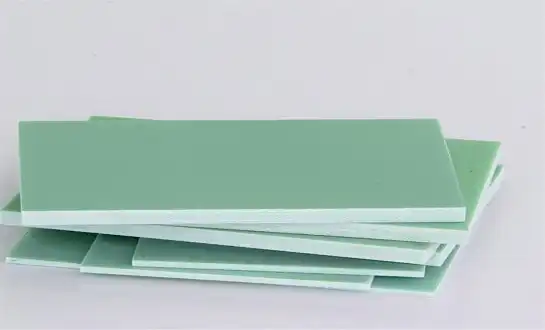
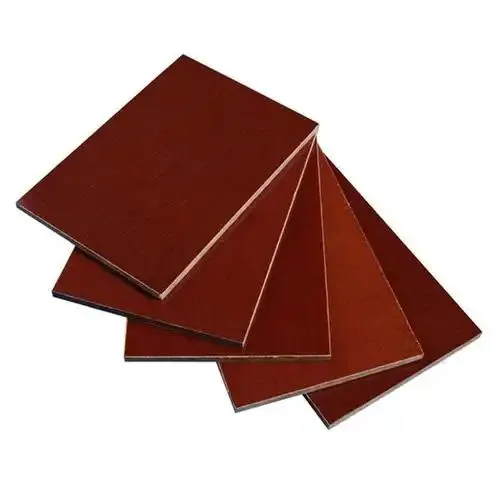
NEMA types C, CE, L, and LE phenolic cotton sheets are made of cotton canvas or linen cloth and phenolic resin binders that have been heated and pressed under high pressure. The finished substance has a density of about 1.35–1.45 g/cm³ and a tensile strength greater than 100 MPa. When compared to phenolics made from paper, the cotton reinforcement is more resistant to impact. This makes these sheets useful for many things, from quiet gears in textile machinery to busbar supports in switchgear systems.
The substance is used for many things, including wear-resistant parts in industrial equipment, structural insulation in transformers, and mechanical transmission parts in hydraulic systems. The thick weave (CE grade) is good for high-impact tasks like making gears, and the fine weave (LE grade) lets you make precise parts with smooth surfaces. This flexibility comes with manufacturing challenges that require careful choice of cutting method.
Why Thickness Creates Processing Complexity
There are some technical problems that come up when you try to work with thick phenolic cotton sheets, especially sheets that are between 10mm and 50mm thick. Because these materials are made up of layers, they can separate if there is too much heat or mechanical stress in certain areas. In electrical uses, edge quality is very important because rough surfaces can weaken the dielectric or cause stress to build up in mechanical systems.
Another problem is that cutting makes heat, which is not good. Phenolic cotton sheets are classified as Class E insulation products and can only be used continuously at 120°C. When this level of contact lasts for too long, the cotton base turns carbonized and the resin becomes less stable, which results in a huge loss of strength. Cutting methods that make a lot of friction heat could damage the material qualities next to the cut line, which could make the part less reliable in use.
The traits of machinability make processing even more difficult. These laminates are easier to machine than FR4 epoxy glass, but they make phenolic dust that needs to be properly ventilated and tools need to be thought out. Using carbide-tipped or diamond tools can help keep glue from burning during high-speed operations, but the right tools must be chosen so that cutting speed and heat buildup are balanced.
Overview of Cutting Technologies: Waterjet Cutting vs. CNC Routing
How Waterjet Cutting Operates
A high-pressure water stream (usually up to 60,000 psi) mixed with fine abrasive bits like garnet is pushed through a narrow nozzle by waterjet devices. Along predetermined lines, this directed jet wears away material without making a lot of heat. The cold cutting method keeps the material's qualities until the cut edge, so there are no hot spots like there are with thermal cutting.
This technology is great at making complicated shapes without putting stress on the machine. Because there are no cutting forces acting on the material, there isn't much chance that stacked composites will separate or crack. The grit stream cuts through different thicknesses evenly, so it can be used for projects that need parts of different sizes from a single sheet.
How CNC Routing Functions
CNC routers have wheels that are controlled by a computer and have carbide or diamond cutting bits that spin quickly along pre-programmed tool tracks. When the cutting edges touch the item, they split it mechanically, removing material. Today's commercial routers can reach spindle speeds of more than 24,000 RPM and have setting accuracy of less than 0.05 mm.
This method of mechanical cutting removes material quickly, which is especially helpful for large production runs. Tool paths can be made more efficient, and multiple cutting heads let multiple tasks run at the same time. The direct touch between the tool and the material gives you instant tactile input through spindle load monitoring, which lets you make changes to the process in real time.
But the mechanical action makes friction heat, which is strongest at high speeds or when cutting thick pieces. To keep cutting efficiently while controlling heat buildup, the shape of the tools, their feed rates, and the speeds of the spindle must all be carefully adjusted. For uniform edge quality across production runs, cooling devices and the right way to evacuate chips become necessary.
Comparing Waterjet Cutting and CNC Routing for Thick Phenolic Cotton Sheets
Edge Quality and Surface Finish Characteristics
When looking at the quality of the cut, waterjet cutting usually gives you better lines with less work to do afterward. The gritty stream leaves a finish that is slightly frosty and free of burrs and tool lines. Edge perpendicularity stays the same no matter how thick the material is, but very thick parts may taper if multi-pass methods are not used.
When done right, CNC routing can produce great surface finishes, but the quality of the edges relies a lot on the state of the tools, the feed rates, and how well the material is supported. In layered composites, climb milling usually makes lines that are smoother than regular milling. Tool wear lowers the quality of the edge over time, so they need to be replaced every so often to keep up with standards. When cutting brittle thermoset materials, edge breakout on exit cuts is typical. To avoid this, make sure the work is properly held.
Dimensional Precision and Tolerance Capability
Both methods can make tolerances that are fine enough for making precision parts. When waterjet systems are provided with dynamic tilt correction, the kerf width stays the same, which lets tolerances of within ±0.1mm be used for most tasks. Because the tools don't bend, it's easier to get accurate measurements across big size sheets.
Once the tool positions are set up correctly, CNC cutting is very repeatable. Tolerances are always within ±0.05mm thanks to rigid machine design and modern control systems. Because the wear patterns on tools are known, they can be compensated for by making offset changes. This keeps the accuracy high throughout production runs. In high-precision uses, you need to think about how the material and machine parts will expand or contract when heated or cooled.
Production Speed and Throughput Analysis
For simple shapes and large amounts of output, CNC routing usually has faster cycle times. Fast movement rates between cuts, quick tool changes, and good material removal all work together to get the most work done. If the internal features are complicated and need to be changed more than once, this advantage may be lessened.
When waterjet cutting, the turn speed is slower—usually 100 to 300 mm per minute, but this depends on the width of the material and the quality of the edge that is wanted. The technology makes up for it by cutting stacked parts quickly and easily without having to change tools or spend a lot of time setting up between jobs. When you use cold cutting, you don't have to do any deburring or secondary finishing steps, which take time after routing.
Cost Structure Considerations
The cost of buying equipment is lower for CNC routing, and industrial-grade cutters usually need less money to get started than similar waterjet systems. In this case, operating costs paint a more complex picture. As their main consumables, waterjet devices need abrasive media, new nozzles, and water. The price of an abrasive depends on how thick the material is and how fast it needs to be cut.
Tooling prices for CNC cutting go up as the amount of work done does. Phenolic cotton sheets still wear down tools, even though they are not as rough as glass-reinforced composites. Carbide casting is a constant cost that goes up with the amount of time spent cutting. When the material is thin, routing uses more energy than cutting, but as the width goes up and cutting times get longer, the energy use evens out.
Environmental and Safety Factors
Waterjet cutting doesn't release many particles into the air because most of the waste stays in the water-abrasive mix. The process needs tools for treating water and getting rid of sediment, but it doesn't make any toxic fumes or volatile organic chemicals. The noise level stays about the same, and the cold cutting gets rid of the fire risks that come with making heat.
CNC cutting creates phenolic dust, which needs to be collected well and there needs to be enough air flow. Even though the dust isn't considered highly poisonous, long-term contact should be avoided and the house should be cleaned properly. The mechanical cutting process makes some noise, and the spinning heat needs to be watched so that the material doesn't break down or the dust doesn't catch fire.
Selecting the Right Cutting Technology Based on Application Needs
Electrical and Electronics Applications
The thermal balance of waterjet cutting is very helpful for parts that will be used for electrical protection, like terminal boards, busbar supports, or switchgear panels. Since there are no heat-affected zones, the insulating properties stay the same all the way to the cut edge. This is very important in situations where the breakdown voltage rates can't be lowered.
CNC routing can still be used for these tasks as long as the right cutting settings keep the machine from getting too hot. Routing processes that keep the material's qualities can be done with lower spindle speeds, optimized chip loads, and enough cooling. The ability to make things faster is good for making a lot of technology where the cost of the parts needs to be kept as low as possible.
Mechanical and Structural Components
Gears that don't make noise, bearings, and parts that don't wear out easily need to be very accurate in terms of size, but edges can be a little sharper. CNC cutting is faster than other methods, which makes it a good choice for these uses. The mechanical cutting action burnishes the sides a little, which might make wear better in some tribological situations.
When complex shapes with tight-radius internal features are needed, waterjet cutting works well for these tasks. Because rotary tools don't have minimum radius limits, they give designers more freedom than CNC routing does without having to change tools many times or use special form tools.
Evaluating Supplier Capabilities
Besides just cutting technology, procurement managers should look at a possible supplier's other qualities as well. No matter what cutting method is used, the quality of the materials used affects how well the finished part works. Suppliers who keep in touch with reputable laminate makers make sure that the qualities of the phenolic cotton sheets are the same from batch to batch.
The ability to provide technical help sets special sellers apart from commodity vendors. Having engineering help with defining tolerances, choosing the right material grade, and meeting edge finish standards is helpful during the whole product development process. When a supplier has both cutting technologies, they can optimize each project based on its own needs instead of putting all uses through the same process.
In current just-in-time production settings, consistent lead times and the ability to change the minimum order size are very important. Suppliers with enough capacity can handle quick orders without lowering the quality, and flexible minimums allow for prototype development and low-volume custom production without charging too much.
Case Studies and Industry Examples
Electronics Manufacturing Success
For complex busbar support insulators, a big switchgear maker switched from sawing by hand to waterjet cutting. The change got rid of the need for extra deburring steps, which lowered the failure rate from 8% to less than 1%. The cold cutting process kept the dielectric strength in thin-walled parts where routing had caused microcracking before. Even though cutting speeds were slower, production lead times went down by 40% because secondary processes were cut out, which more than made up for the slower turn rates.
Industrial Machinery Efficiency Gains
An OEM that makes parts for textile machines used CNC routing to make a lot of quiet gears. Investing in specialized carbide cuts that work best with phenolic cotton sheets let the production line keep going for more than 500 parts without having to change the tools. When compared to past waterjet operations, the automated process cut the cost of labor for each part by 65% while keeping the limits for size within ±0.08mm. The speed edge was crucial for meeting tight production plans for orders of seasonal equipment.
Automotive Component Optimization
A major car provider that makes insulation walls for battery packs deliberately mixed the two technologies. Waterjet cutting was used for complex outer profiles with tight-radius corners to get around tool access issues, while CNC routing was used for interior rectangular features where speed was important. This mixed method cut down on cycle times while keeping the edge quality needed for putting parts together. The seller said that the throughput was 25% higher than with single-technology methods.
Conclusion
To choose between waterjet cutting and CNC routing for making thick phenolic cotton sheets, you have to weigh a lot of technical and cost factors against the needs of the application. When edge quality, thermal sensitivity, and physical complexity are the most important factors, waterjet cutting is the best method. This is especially true in electrical insulation uses. CNC cutting is the most cost-effective way to make a lot of structure parts, where speed and cost-effectiveness are more important than perfect edges. A lot of smart producers use both technologies in a planned way, matching each job to the best process. In the end, your success will depend on working with sellers who really understand these material properties and can give you expert advice that is tailored to your unique quality standards and manufacturing problems.
FAQ
Can waterjet cutting handle the full thickness range of phenolic cotton laminates?
Waterjet devices are good at cutting phenolic cotton sheets that are 3 mm thick up to over 100 mm thick. Cutting speed slows down as the width goes up, and very thick pieces may need more than one pass to keep the edges straight. As the thickness goes up, the cold cutting edge becomes more important because thicker materials get hotter when they are cut mechanically.
Does CNC routing damage the heat resistance properties of phenolic materials?
When CNC routing is done right, the qualities of the material are kept when the cutting settings control the production of heat. When spindle speeds or feed rates are too high, they can warm the cutting zone and weaken resin bonds near the edges of cuts. Keeping an eye on the spinning load, using sharp tools, and making sure there is enough cooling stops thermal damage and keeps the material's 120°C continuous operation rate.
Which cutting method works better for custom prototype orders with varying designs?
Since waterjet cutting doesn't need to change its tools for different shapes, it can handle frequent design changes better. Making changes to the programming only takes minutes, not the time it might take to set up the tools for CNC cutting. Because they are so adaptable, waterjet systems are especially useful during the planning stages of a product, when designs are changed a lot.
Partner with J&Q for Precision Phenolic Cotton Sheet Solutions
J&Q has been making high-quality insulation products for more than twenty years and has been serving foreign markets for more than ten years. As a provider of phenolic cotton sheets with a lot of experience, we know how important it is to find the right mix between cutting technology and application performance. For your unique component needs, our engineering team can help you choose the right material grade, set the right tolerances, and find the best way to cut it. We have strong relationships with the biggest dealing companies in both the United States and other countries. This lets us guarantee stable material quality and on-time deliveries. Our integrated operations allow us to provide a one-stop service for everything from finding materials to cutting them precisely and shipping them around the world. Get in touch with our technical team at info@jhd-material.com to talk about your project needs and get expert advice on the best way to cut your phenolic cotton laminate parts.
References
NEMA Standards Publication LI 1-1998: Industrial Laminated Thermosetting Products. National Electrical Manufacturers Association, 1998.
Thompson, R.D. "Comparative Analysis of Abrasive Waterjet and Conventional Machining for Composite Materials." International Journal of Advanced Manufacturing Technology, vol. 49, 2010, pp. 263-275.
Kalpakjian, S. and Schmid, S.R. Manufacturing Engineering and Technology. Pearson Education, 7th Edition, 2014, Chapter 24: Machining Processes for Plastics and Composite Materials.
Chen, F.L. "Machinability Assessment of Industrial Laminates: Tool Wear and Surface Quality in CNC Routing Operations." Journal of Materials Processing Technology, vol. 209, 2009, pp. 1344-1349.
Hashish, M. "Waterjet Machining Process." Handbook of Manufacturing Engineering and Technology, Springer-Verlag London, 2015, pp. 1935-2004.
Yerramareddy, S. and Bahadur, S. "Effect of Operational Variables on the Abrasive Waterjet Cutting of Polymer Matrix Composites." Journal of Engineering Materials and Technology, vol. 113, 1991, pp. 277-283.

Get a complete product list and quotation

J&Q New Composite Materials Company