Tool Selection for Machining Bakelite Sheets Efficiently
Choosing the right tools for cutting Bakelite sheets can mean the difference between successful precision manufacturing and costly production mistakes. As a thermosetting phenolic resin mixture, Bakelite sheet has special problems that need to be solved with special cutting tools, adjusted parameters, and a well-thought-out plan. Because of the material's great electrical insulation and resistance to heat, as well as its tendency to make dust and chip at the edges, it's important to choose the right tools to get clean cuts, accurate measurements, longer tool life, and to meet safety standards in the workplace.
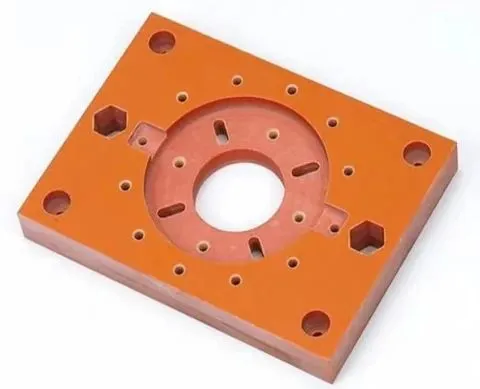
Understanding Bakelite Sheet Machining Challenges and Tool Selection Importance
It's important to know how phenolic resin materials behave during mechanical processes if you want to work with them. Softer thermoplastics can be worked with regular welding tools, but Bakelite sheets need special methods because of their mixed structure and how they harden.
Common Machining Difficulties with Bakelite Sheets
When manufacturers try to work with phenolic laminates, they often run into a number of technical problems. Because the material is so rough, regular cutting edges get dull very quickly, which results in bad surface finishes and errors in measurements. Another big problem is delamination, which can happen near the edges of cuts where the paper or cloth base can separate from the resin core.
The production of heat during cutting adds to the problems. When cutting speeds are higher than what is recommended, the glue can quickly soften. This can cause material to build up on the sides of the tool and make the surface rough and burned. The dust that is made when machines are used has phenolic particles in it that need to be properly ventilated and collected in order to keep the workplace safe.
The cutting direction in relation to the laminate layers has a big effect on the quality of the edges. When you cut across the grain, the edges are usually harder than when you cut parallel to the material direction. For best results, you need to use different tool shapes and cutting settings.
Why Proper Tool Selection Matters for Efficiency and Quality?
Strategically choosing the right tools has a direct effect on how quickly and well parts are made and how much they cost altogether. Cutting tools that are sharp and well-designed keep the shear lines clean through the laminate structure. This keeps delamination to a minimum and cuts down on the need for extra finishing steps.
Using the right tool shape lowers cutting forces, which leads to better control of dimensions and less movement of the workpiece during grinding. Lower cutting forces also reduce stress on machine tools, make them last longer, and make them safer for operators by lowering noise and sound.
Tool selection influences surface quality characteristics that affect subsequent operations. Parts that will be used in electrical systems need smooth surfaces to stop corona discharge. On the other hand, controlled surface textures help bonding or sealing work better for mechanical parts.
Cost Implications of Wrong Tool Choices in Industrial Production
Choosing the wrong tools can cause costs to rise and rise throughout the manufacturing process. Tools that are dull or poorly made take longer to work, produce less, and need to be changed more often, which stops the flow of production.
Problems with quality caused by choosing the wrong tools for Bakelite sheet lead to scrap costs and the possibility of warranty claims. Delaminated edges, burned surfaces, or differences in size can make expensive raw materials useless. This is especially important for precise uses like circuit board bases or high-voltage insulators.
When the first cutting doesn't meet the requirements, secondary processes are needed. More sanding, filing, or repainting increases work costs and wait times, and it's possible for the original material's qualities to be damaged by too much heat or surface contamination.
Essential Tool Categories for Bakelite Sheet Machining Operations
To meet all of the needs for handling phenolic sheets, professional cutting processes need a wide range of tool types. Each type of tool is used for a specific job and needs different shape, material makeup, and working settings.
Cutting Tools: Circular Saws, Band Saws, and Router Bits
When cutting laminates, circular saw blades with alternate top bevel and triple-chip grind tooth shapes make clean cuts through phenolic sheets both entering and exiting the saw. For most jobs, carbide-tipped blades with 60 to 80 teeth per 10-inch circle are the best compromise between cutting speed and surface quality.
Band saws are better than circle saws at making bent cuts and working with thick sections. Different tooth spacing helps get rid of chips quickly while keeping the cutting action even when the material is dense. Depending on the width of the cloth, blade speeds between 3000 and 5000 square feet per minute usually give the best results.
Cutting forces are directed into the workpiece by router bits with downshear spiral shape, which stops surface splintering and delamination. Compression bits use both upcut and downcut circles to clean both sides at the same time. This is especially helpful for through-cutting jobs where both sides need high-quality finishes.
Drilling Tools: HSS vs Carbide Drill Bits for Clean Holes
For small production runs and making prototypes, high-speed steel drill bits are still a good value. Sharp point angles of about 118 degrees make it easy to center, and the right flute shape makes sure that chips don't get stuck and cause heat buildup or material bonding.
Carbide drill bits are worth the extra money because they last longer and make better holes in industrial settings. Because it is more resistant to wear, it can handle the roughness of phenolic materials and keep cutting edges sharp for longer. Thrust forces that can cause delamination breakout are lessened by specialized point shapes.
The width and depth of the hole also affect the choice of drill. Solid carbide construction is best for holes with a smaller diameter. For bigger holes, you may need indexable insert drills that let you change the edge without having to throw away the whole tool. To control breakthrough quality, approach methods for through-holes must be different from those for blind holes.
Finishing Tools: Sanders, Files, and Surface Preparation Equipment
Pneumatic sanders that can collect dust allow for controlled surface preparation while taking care of health and safety issues related to phenolic dust. Random circular action stops directed scratching that could damage the insulation qualities of electrical components or cause stress concentrations.
If you are working with phenolic materials, diamond-coated files last longer and cut better than regular steel files. Because the gritty particles are always the same size, it is possible to predict how much material will be removed and get a surface finish that is good for precision fitting.
Specialized cleaning tools clean machined surfaces of dust and loose fibers without adding contaminants that could affect the bonding or finishing steps that follow. When you use natural hair brushes, you don't get static electricity, which can attract more dirt to areas that have already been cleaned.
Specialized Tools for Custom Bakelite Sheet Applications
Custom punch and die sets for Bakelite sheet make it possible to make a lot of the same forms while keeping the measurements accurate. Progressive dies can do more than one thing at once, like cutting, making, and shaping, in a single move, which increases output.
Water-jet cutting devices can cut through complicated shapes without using heat, which could change the qualities of the material. With cold cutting, you don't have to worry about heat stress or plastic breakdown, and the limits are about the same as with precision machining.
To keep the laser from putting out too much heat, which can burn the edges or make heat-affected zones, the parameters must be carefully controlled. When set up correctly, pulsed laser systems with the right bands can make clean cuts with little heat effect.
Material Properties Impact on Tool Performance and Selection Criteria
Knowing how certain features of a material affect how well a tool cuts makes it possible to make choices that improve both cutting speed and tool life. The qualities of phenolic sheets make them very different from metals or plastics that aren't strengthened.
Bakelite Sheet Thermal Conductivity and Heat Management During Machining
Because phenolic materials don't transfer heat very well, the heat from cutting stays where it is where the tool meets the workpiece instead of spreading out across the whole piece. This amount of glue can soften in certain areas, making it stick to cutting edges and lowering the quality of the surface.
For heat management to work well, cutting speeds and feed rates need to be balanced so that chips are formed properly and too much heat doesn't build up. Interrupted cuts, which can be done with methods like climb milling, help cool down the tool between cutting processes and make it last a lot longer.
Tool coats made especially for non-metallic materials can cut down on friction and heat production while making surfaces that don't let material build up. Even though they cost more at first, these specialty finishes often work better than general-purpose choices in phenolic uses.
Electrical Insulation Properties and Safety Tool Requirements
When cutting Bakelite, safety must be taken into account because of its great electrical protection properties that make it useful for electrical uses. When cutting, static electricity can build up and attract dust particles, making it hard to move the tool.
Ionizing tools and grounding bands help get rid of static charges while keeping the shielding qualities of the material. When choosing a tool, you should think about whether cutting might add conductive dirt that could affect how well the electrical system works in real life.
When electrical qualities of the finished part are important, the cutting fluid choice becomes very important. Fluids that contain water must be fully removed to stop moisture uptake, which over time could weaken the dielectric strength.
Chemical Resistance Considerations for Tool Materials
Phenolic materials are very resistant to chemicals, but this trait can make tools less effective when cutting fluids or cleaning solvents are used with them. Some chemicals can briefly make the plastic material softer, which can change how well it cuts.
The materials used for tools can't react chemically with the object or any process fluids that are used during cutting. In general, carbide tools are better at resisting chemicals than high-speed steel tools.
It is important to think about how cutting fluids will work with processes that come after them. Fluids that are still useful during cutting could get in the way of later steps in the manufacturing process, such as glue bonding or sealing.
Thickness Tolerance Requirements and Precision Tool Selection
Needs for precise measurements for Bakelite sheet steer the choice of tools toward more hard and accurate options. When it comes to support and gluing, thin sheets and thick plates are not the same. This affects both the shape of the tools and how the machine is set up.
It's important for workholding devices to provide enough support without distorting the end measurements. Most of the time, vacuum tables and low-force holding systems work better than mechanical clamps, which can bend thin pieces.
As tolerances get tighter, tool runout becomes more and more important. Cutting tools stay accurate for as long as they are used if they are kept in precise tool cases and inspected regularly.
Optimizing Tool Parameters for Different Bakelite Sheet Applications
To optimize parameters, you have to find the best balance between many factors that are at odds with each other, such as cutting speed, tool life, surface quality, and output flow. To optimize well, you need to think about the needs of the application and the limits of the production rate.
Speed and Feed Rate Optimization for Various Sheet Thicknesses
Thin sheets can usually handle higher cutting speeds because heat can escape more easily through the lighter material. But because the stiffness is lower, the feed rate needs to be carefully controlled to avoid shaking and chatter that could damage the surface quality.
To keep heat from building up, cutting speeds need to be slowed down for thick parts. At the same time, feed rates can be raised to improve chip formation and surface quality. As the section width goes above 10 mm, the link between speed and feed becomes more important.
When the grade of a material in the phenolic family changes, the parameters need to be changed. Fabric-reinforced grades have tougher threads that make cutting harder and increase the rate of tool wear. Paper-based grades often cut more easily than fabric-reinforced grades.
Coolant and Lubrication Strategies for Extended Tool Life
Air blast cooling is a good way to get rid of chips and moderately control temperatures without the contamination problems that come with using liquid coolants. Filtration is important in compressed air systems to stop oil from carrying over and changing the qualities of materials.
Fewer waste and cleanup steps are needed with minimal quantity lube systems because they only use the right amount of cutting fluid where it's needed. The smaller amount of fluid reduces the chance of pollution while still effectively lubricating.
Flood cooling may be necessary for heavy-duty operations but requires careful fluid selection and removal procedures to maintain material quality. Most of the time, water-based fluids cool better, but they may need to be completely removed to keep them from breaking down over time.
Dust Collection and Safety Protocols During Machining
Getting rid of dust effectively protects both worker health and the quality of the work by getting rid of particles that could get in the way of cutting or contaminate final surfaces. The small particles that make up phenolic dust must be dealt with by collection devices.
To keep filters from getting clogged or starting fires, it's important to know how phenolic dust behaves electrically when choosing a filter. It may be necessary to use HEPA filters to meet air quality guidelines in sensitive factory areas.
Personal safety equipment (PPE) must be made to protect against the unique risks of phenolic dust exposure. The amount of production and how well air works affect the need for respiratory protection, but it's always better to be safe than sorry.
Quality Control Checkpoints for Consistent Results
Cutting tools stay accurate as they wear down with regular measurements checks. Statistical process control methods help figure out when to change tools so that quality problems don't happen.
Monitoring the quality of the surface through touch or eye measurements lets you know right away if the cutting parameters change or the state of the tool changes. Setting up standard measures makes it possible to evaluate the performance of a tool in an objective way.
Edge quality checking stops broken or delaminated parts from moving on to later steps, where they would be harder or more expensive to fix. When used regularly, simple eye checking procedures can find most problems with the quality.
Tool Selection Framework for Different Production Requirements
The amount of work that needs to be done and the needs of the program for Bakelite sheet determine which tool to use and where the best improvement point is. By understanding these trade-offs, you can make sure that your production goals and equipment investment are a good fit.
High-Volume Production: Automated vs Manual Tool Solutions
Automated systems can handle more expensive tools because they are more consistent and need less work. Computer-controlled tools can keep the best cutting settings more exactly than people can, and they can also keep track of the process.
Tool tracking systems track the wear on tools and guess when they need to be replaced so that unplanned downtime is kept to a minimum. Monitoring vibrations and measuring cutting force give you real-time information about the state of the tool and the steadiness of the process.
While keeping placement accuracy, quick-change tooling methods cut down on the time needed to set up between jobs. Standardized tool mounts and fixed methods make it possible to change tools quickly, which makes the most of machine use in high-volume settings.
Custom Cutting Applications: Precision vs Speed Trade-offs
When working with complex shapes, you often need special tools that put accuracy over cutting speed. When normal tools don't work right for a job, custom tool grinding services can make tools with the right shape.
Tooling that is flexible and can handle changes to designs without requiring a lot of money is good for prototyping uses. When it comes to low-volume special work, manual tools run by skilled people are often more cost-effective than automatic systems.
Tolerance needs may mean that high-quality materials and building are needed for tools, even if the production number doesn't warrant automatic systems. Most of the time, the value added by more accurate parts is much higher than the cost of the precise tools used to make them.
Prototype Development: Flexible Tooling for Small Batches
Standard tools that have been changed to fit special needs can be used to make prototypes quickly and cheaply. Without custom making, small changes like changing the edge radius or the finish can make a big difference in how well something works.
Modular tools systems can be set up in different ways to work with different part shapes in the same setting. Building block methods reduce the number of tools that need to be kept on hand while increasing their usefulness for a wide range of tasks.
Writing down the choices of tools that worked well is a good way to learn how to increase production in the future. During the pilot process, optimizing parameters gives us basic information that we can use to make decisions about production tools.
Industrial Grade vs Commercial Grade Tool Specifications
Industrial-grade tools are more expensive because they are made with better materials, are manufactured with tighter precision, and last longer. These new features help production settings that use them often by cutting down on downtime and improving quality consistency.
Commercial-grade tools work well in situations where the use doesn't warrant the higher prices of expensive tools. Knowing the limits of the speed lets you make a good application without setting too high of goals.
Hybrid methods that use high-end tools for important tasks and standard tools for easier cuts can lower total tooling costs while keeping quality levels high. Strategic upgrading based on real-world performance data gives tools choices a solid basis in reality.
Conclusion
Choosing the right tools for cutting Bakelite sheets strategically has a direct effect on the success of manufacturing because it affects quality, speed, and production costs. Figuring out the special problems that phenolic materials cause lets you make smart choices that improve both short-term performance and long-term operating reliability. Investing in the right cutting tools, making sure the settings are adjusted correctly, and using a structured management approach pays off in the form of better part quality, longer tool life, and higher production output. Even though production technologies are always getting better, the basic idea of matching the powers of the tool to the needs of the material is still the most important thing to remember when handling phenolic sheets.
FAQ
What are the most important things to think about when choosing cutting tools for different sizes of bakelite sheets?
Cutting speed and feed rate are directly affected by the thickness of the material. For example, faster speeds are needed for thinner parts to keep heat from building up. As the thickness goes up, the shape of the tool becomes more important. Correct relief angles keep the tool from sticking and lower the cutting forces. To keep heat from building up and surfaces getting dirty, chip clearance must match the rate of material removal.
How can I figure out what the best cutting speed and feed rate are for my bakelite sheet job?
Start with what the maker says about similar phenolic materials, and then make changes based on how well they cut and how smooth the surface is. Keep an eye on the cutting temperature and how the tools are wearing down to find the best mix between speed and tool life. Different grades of materials need different refining settings. For example, fabric-reinforced grades usually need stricter limits than paper-based materials.
What safety measures should be taken when cutting bakelite sheets, and how does this affect the choice of tools?
Due to the health risks of phenolic dust inhalation, dust collection devices are necessary. When choosing tools, you should look for ones with designs that make the least amount of dust while still working well. When choosing a cutting fluid, both the performance of the machine and the safety of the workers should be taken into account. Personal protective equipment must include the right breathing protection.
Partner with J&Q for Superior Bakelite Sheet Machining Solutions
With J&Q's knowledge of how to handle Bakelite sheets and make tools work better, you can make your manufacturing more efficient. With over 20 years of experience working with insulation materials and a wide range of machining skills, we can provide solutions that help you be more productive while still meeting the highest quality standards. Our engineering team has the skills your projects need, whether you need custom cutting services, large supplies of Bakelite sheets, or professional advice on how to choose the best tools. Get in touch with our experts at info@jhd-material.com to talk about your unique needs and find out how our unified approach to tool selection and material supply gives Bakelite sheet makers a competitive edge.
References
Manufacturing Engineering Society. "Advanced Machining Techniques for Composite Materials: Tool Selection and Parameter Optimization." Journal of Manufacturing Processes, Vol. 45, 2019.
Industrial Cutting Tools Association. "Phenolic Resin Material Processing: Best Practices for Tool Selection and Application." Technical Publication Series, 2020.
American Society for Testing and Materials. "Standard Test Methods for Mechanical Properties of Thermoset Materials and Their Machining Characteristics." ASTM International Standards, 2021.International Association of Plastics Processing. "Tool Wear Analysis in Phenolic Composite Machining: Comparative Study of Cutting Tool Materials." Processing Technology Review, Vol. 32, 2022.
Society of Manufacturing Engineers. "Optimization Strategies for Non-Metallic Material Machining: Focus on Electrical Insulation Components." SME Technical Paper Series, 2021.
Composite Materials Machining Institute. "Safety and Efficiency in Phenolic Sheet Processing: Tool Selection Guidelines for Industrial Applications." Industrial Safety and Technology Journal, Vol. 28, 2023.

Get a complete product list and quotation

J&Q New Composite Materials Company



